Neuroscience and Ophthalmology, Institute of Inflammation and Ageing, University of Birmingham, Birmingham B15 2TT, UK.
Academic Department of Military Surgery and Trauma, Royal Centre for Defence Medicine, Birmingham B45 9NU, UK.
Cells. 2019 Aug 22;8(9):956. doi: 10.3390/cells8090956.
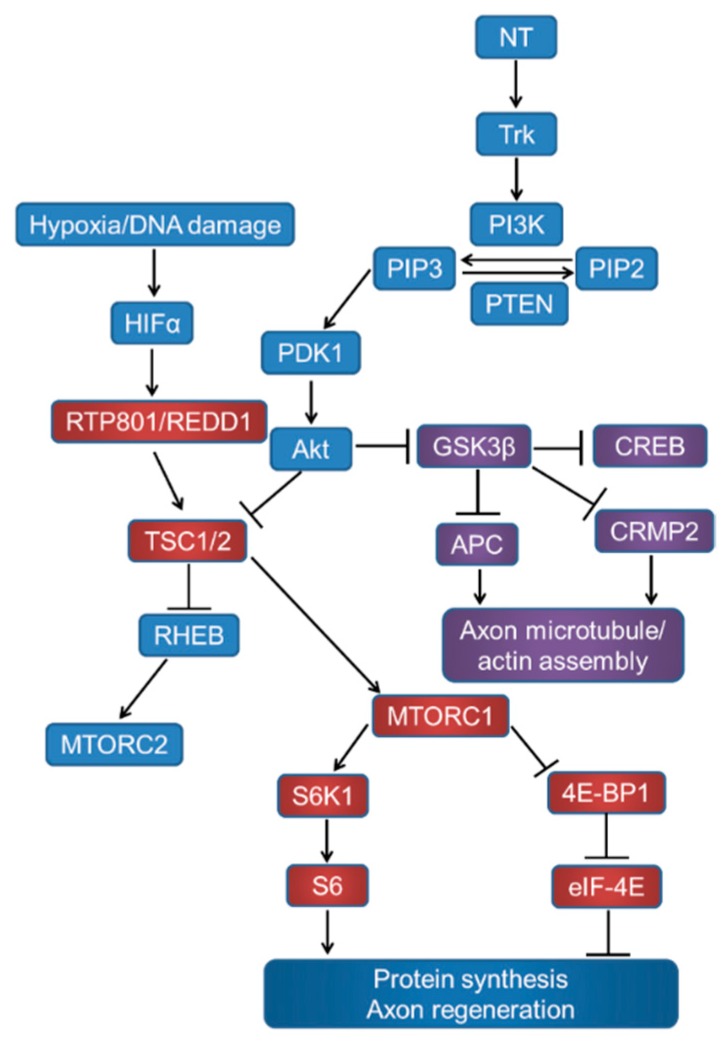
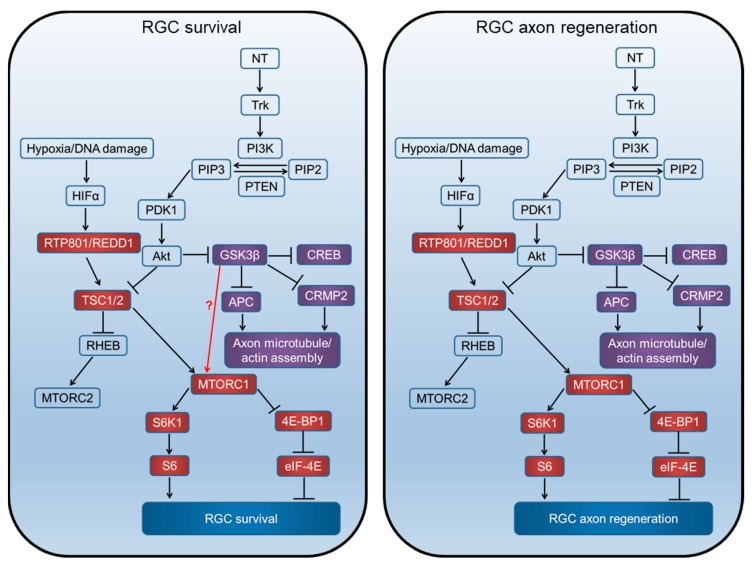
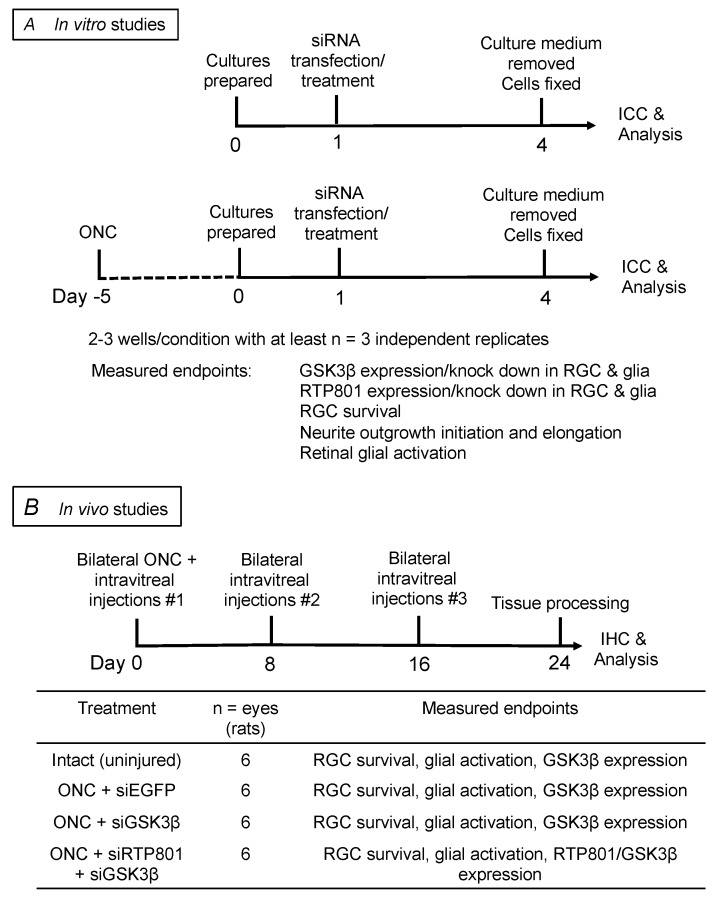
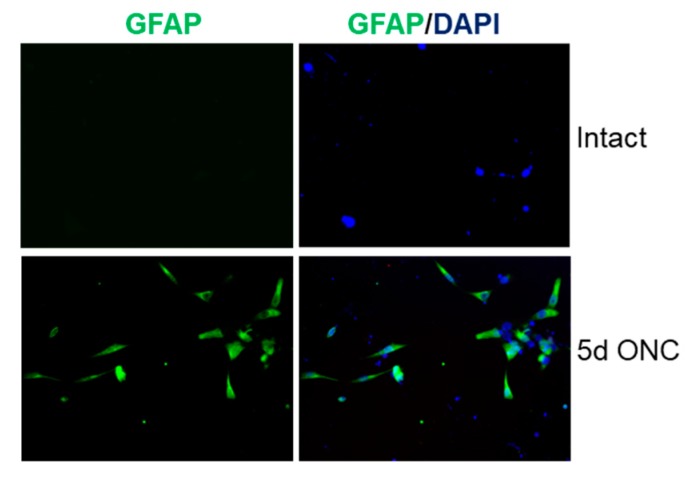
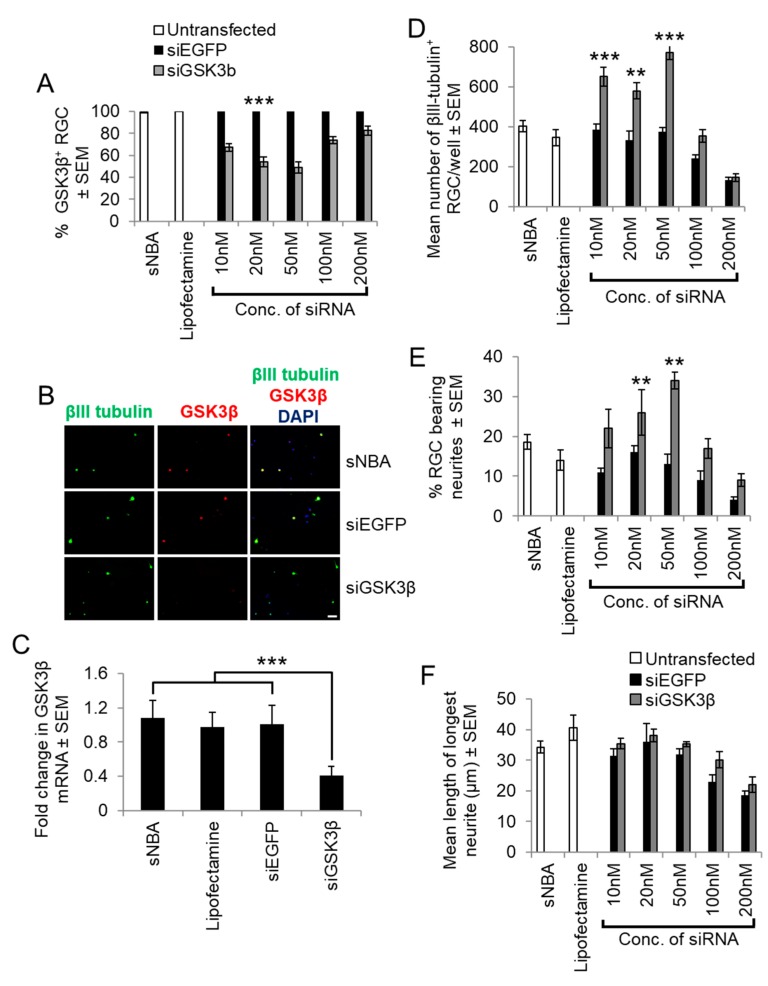
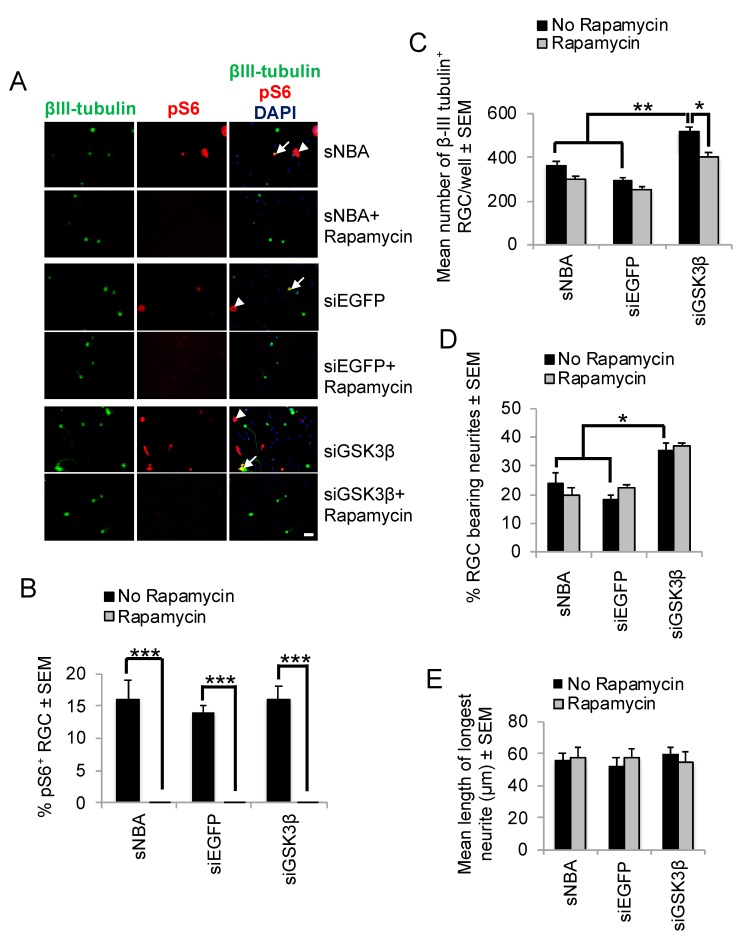
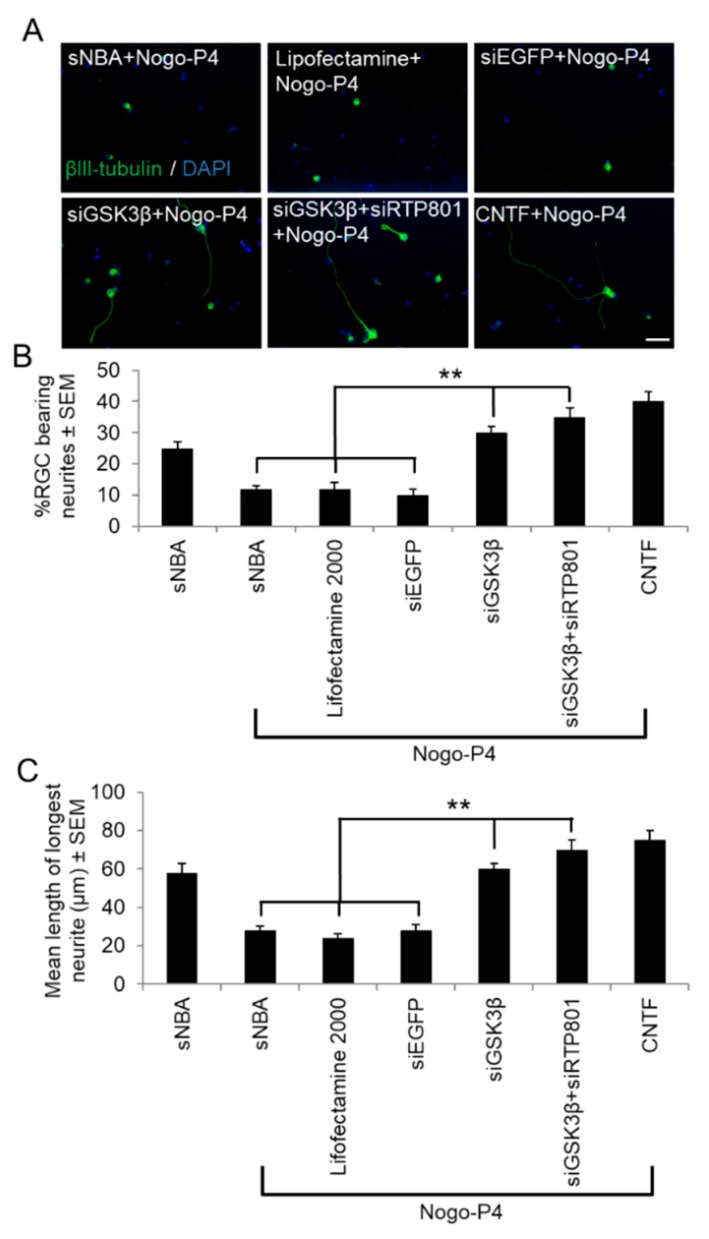
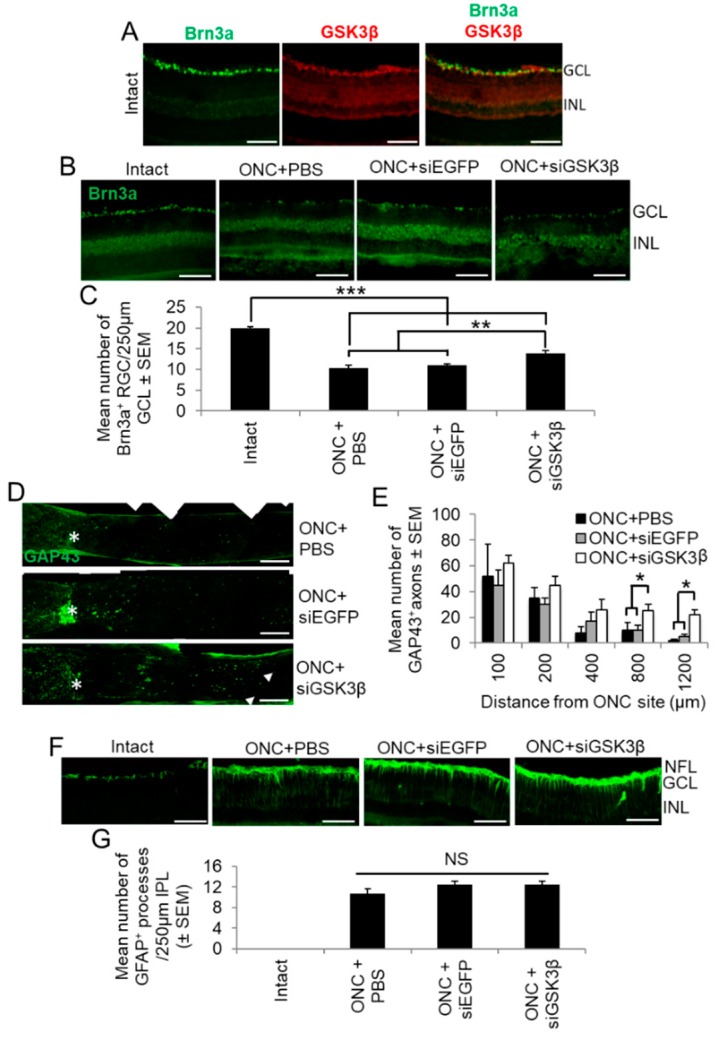
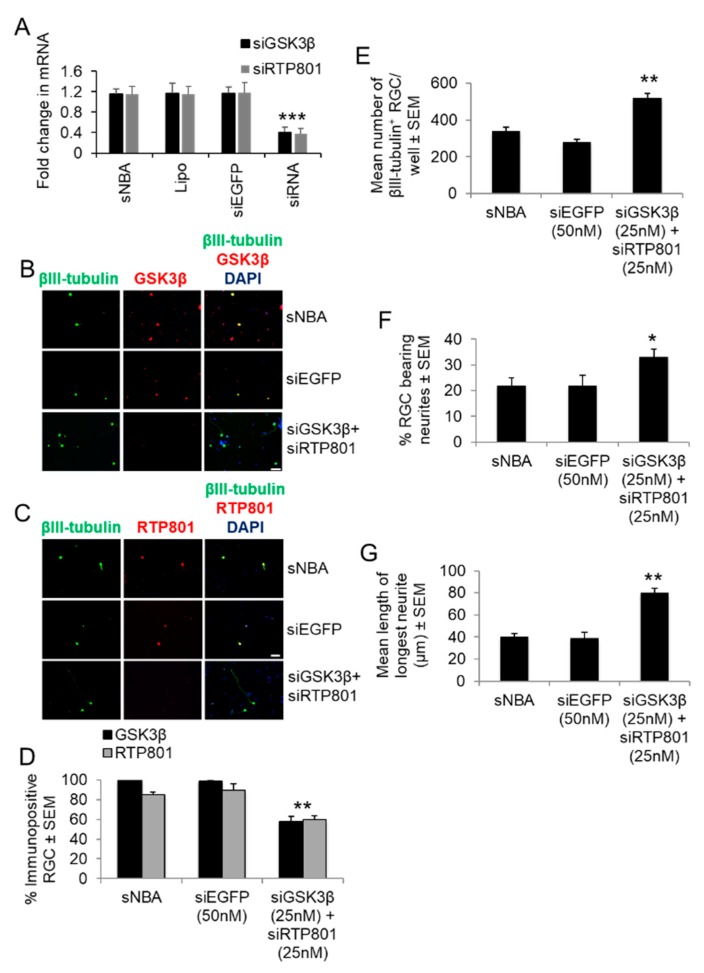
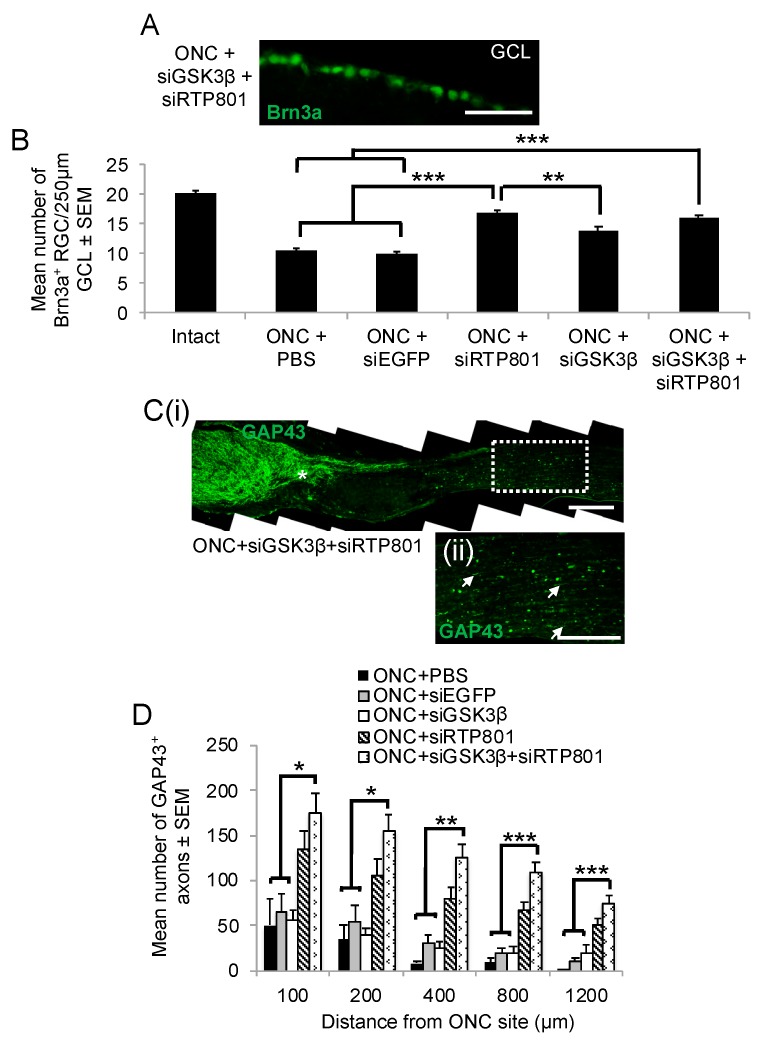
There are contradictory reports on the role of the serine/threonine kinase isoform glycogen synthase kinase-3β (GSK3β) after injury to the central nervous system (CNS). Some report that GSK3 activity promotes axonal growth or myelin disinhibition, whilst others report that GSK3 activity prevents axon regeneration. In this study, we sought to clarify if suppression of GSK3β alone and in combination with the cellular-stress-induced factor RTP801 (also known as REDD1: regulated in development and DNA damage response protein), using translationally relevant siRNAs, promotes retinal ganglion cell (RGC) survival and neurite outgrowth/axon regeneration. Adult mixed retinal cell cultures, prepared from rats at five days after optic nerve crush (ONC) to activate retinal glia, were treated with siRNA to GSK3β (siGSK3β) alone or in combination with siRTP801 and RGC survival and neurite outgrowth were quantified in the presence and absence of Rapamycin or inhibitory Nogo-A peptides. In in vivo experiments, either siGSK3β alone or in combination with siRTP801 were intravitreally injected every eight days after ONC and RGC survival and axon regeneration was assessed at 24 days. Optimal doses of siGSK3β alone promoted significant RGC survival, increasing the number of RGC with neurites without affecting neurite length, an effect that was sensitive to Rapamycin. In addition, knockdown of GSK3β overcame Nogo-A-mediated neurite growth inhibition. Knockdown of GSK3β after ONC in vivo enhanced RGC survival but not axon number or length, without potentiating glial activation. Knockdown of RTP801 increased both RGC survival and axon regeneration, whilst the combined knockdown of GSK3β and RTP801 significantly increased RGC survival, neurite outgrowth, and axon regeneration over and above that observed for siGSK3β or siRTP801 alone. These results suggest that GSK3β suppression promotes RGC survival and axon initiation whilst, when in combination with RTP801, it also enhanced disinhibited axon elongation.
中枢神经系统(CNS)损伤后丝氨酸/苏氨酸激酶同工型糖原合酶激酶-3β(GSK3β)的作用存在相互矛盾的报告。一些报告称 GSK3 活性促进轴突生长或髓鞘抑制解除,而另一些报告称 GSK3 活性阻止轴突再生。在这项研究中,我们试图阐明单独抑制 GSK3β 以及与细胞应激诱导因子 RTP801(也称为 REDD1:发育和 DNA 损伤反应蛋白的调节)结合使用翻译相关的 siRNA 是否促进视网膜神经节细胞(RGC)存活和轴突再生/轴突再生。从视神经挤压(ONC)后 5 天的大鼠中制备的成年混合视网膜细胞培养物,用于激活视网膜神经胶质,用 siRNA 单独处理 GSK3β(siGSK3β)或与 siRTP801 联合处理,并在存在或不存在雷帕霉素或抑制性 Nogo-A 肽的情况下定量 RGC 存活和神经突生长。在体内实验中,在 ONC 后每隔 8 天单独注射 siGSK3β或 siGSK3β 与 siRTP801 联合,并在 24 天评估 RGC 存活和轴突再生。单独使用最佳剂量的 siGSK3β 可显著促进 RGC 存活,增加有神经突的 RGC 数量,而不影响神经突长度,该作用对雷帕霉素敏感。此外,GSK3β 的敲低克服了 Nogo-A 介导的神经突生长抑制。体内 ONC 后 GSK3β 的敲低增强了 RGC 的存活,但不增加轴突数量或长度,而不会增强神经胶质的激活。RTP801 的敲低增加了 RGC 的存活和轴突再生,而 GSK3β 和 RTP801 的联合敲低显著增加了 RGC 的存活、神经突生长和轴突再生,超过了单独使用 siGSK3β 或 siRTP801 的观察结果。这些结果表明,GSK3β 的抑制促进了 RGC 的存活和轴突起始,而与 RTP801 结合使用时,它还增强了抑制解除的轴突伸长。