Division of Infection and Immunity, Cardiff University School of Medicine, Cardiff, CF14 4XN, UK.
Section of Endocrinology, School of Medicine, Yale University, New Haven, CT, USA.
Diabetologia. 2019 Nov;62(11):2052-2065. doi: 10.1007/s00125-019-04974-y. Epub 2019 Aug 23.
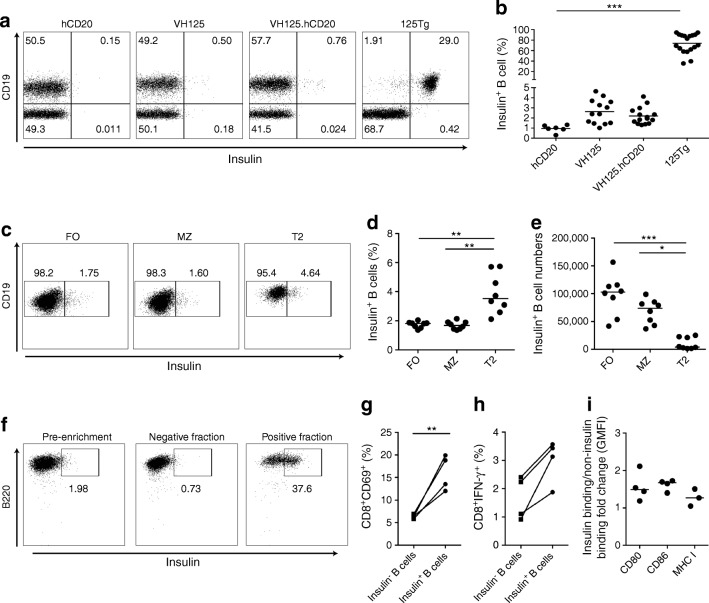
AIMS/HYPOTHESIS: Autoreactive B cells escape immune tolerance and contribute to the pathogenesis of type 1 diabetes. While global B cell depletion is a successful therapy for autoimmune disease, the fate of autoreactive cells during this treatment in autoimmune diabetes is unknown. We aimed to identify and track anti-insulin B cells in pancreatic islets and understand their repopulation after anti-CD20 treatment.
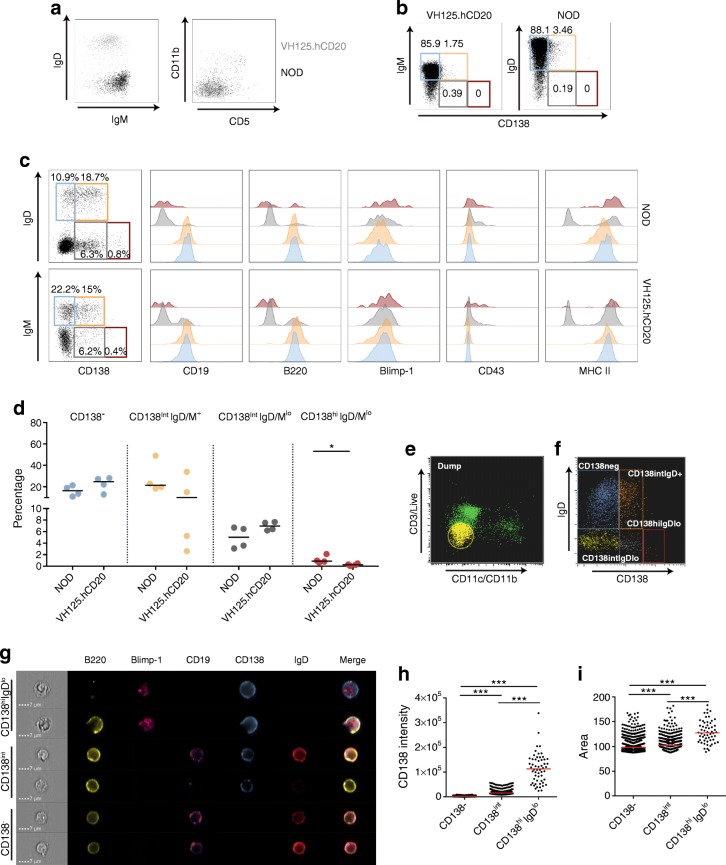
We generated a double transgenic system, the VH125.hCD20/NOD mouse. The VH125 transgenic mouse, expressing an increased frequency of anti-insulin B cells, was crossed with a human CD20 (hCD20) transgenic mouse, to facilitate B cell depletion using anti-CD20. B cells were analysed using multiparameter and ImageStream flow cytometry.
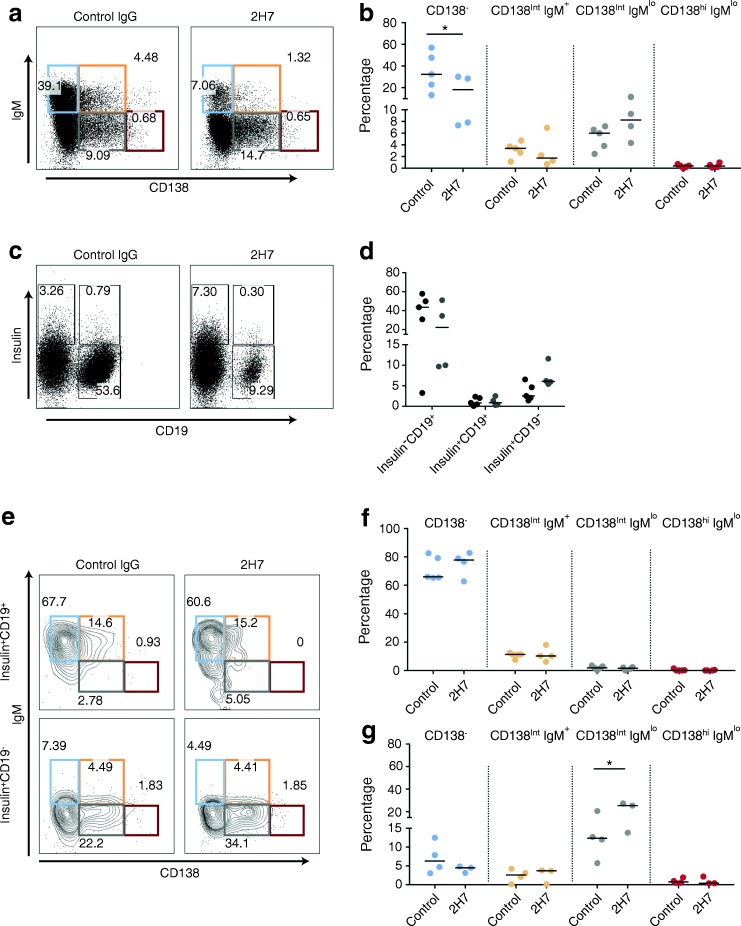
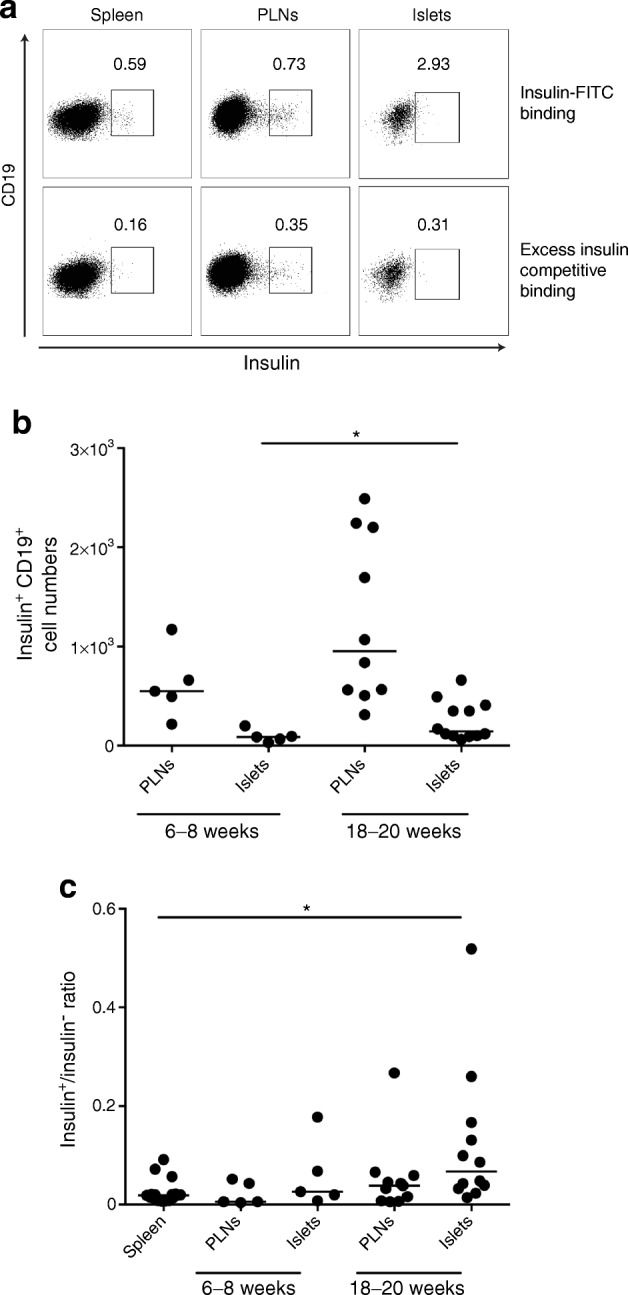
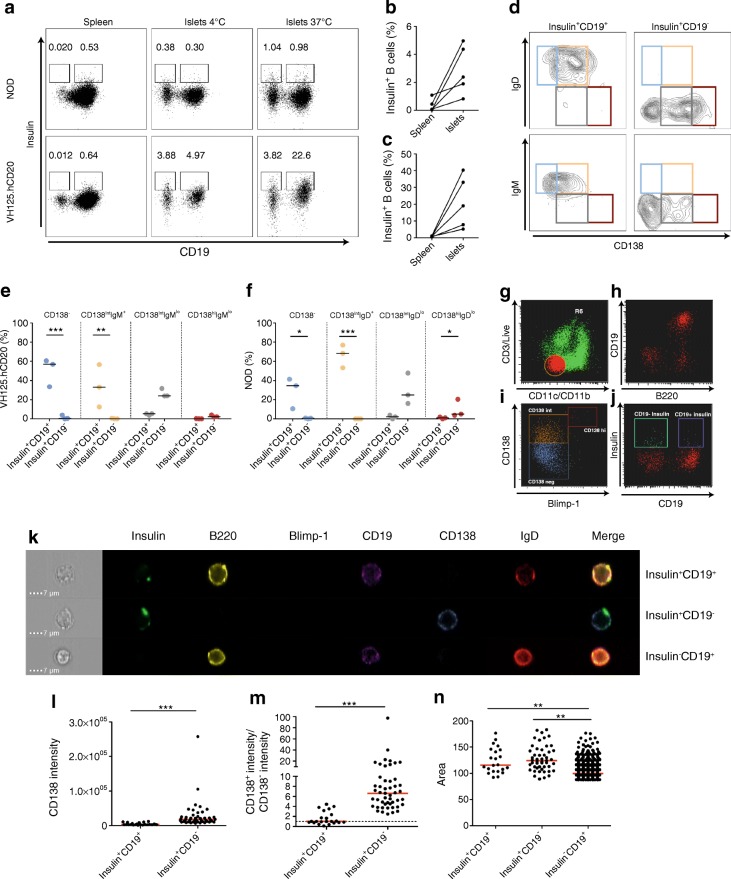
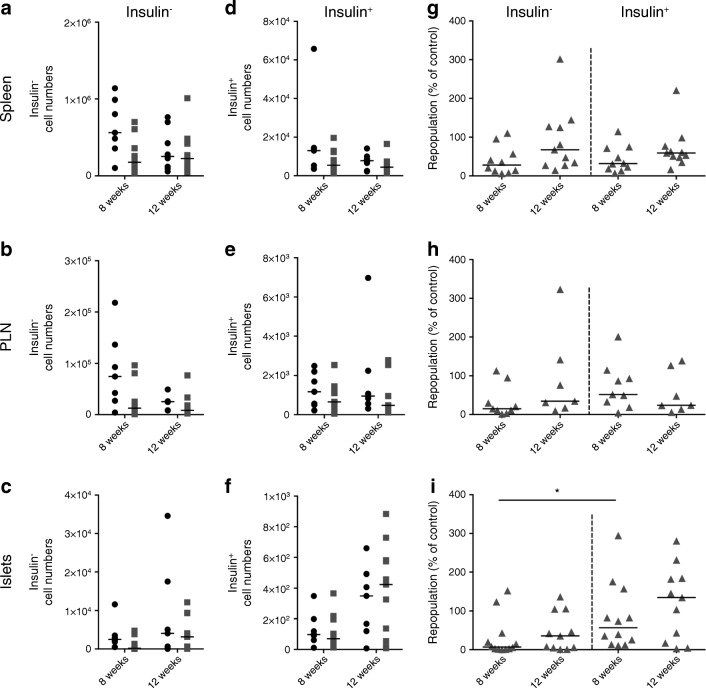
We demonstrated that anti-insulin B cells were recruited to the pancreas during disease progression in VH125.hCD20/NOD mice. We identified two distinct populations of anti-insulin B cells in pancreatic islets, based on CD19 expression, with both populations enriched in the CD138 fraction. Anti-insulin B cells were not identified in the plasma-cell CD138 fraction, which also expressed the transcription factor Blimp-1. After anti-CD20 treatment, anti-insulin B cells repopulated the pancreatic islets earlier than non-specific B cells. Importantly, we observed that a CD138insulinCD19 population was particularly enriched after B cell depletion, possibly contributing to the persistence of disease still observed in some mice after anti-CD20 treatment.
CONCLUSIONS/INTERPRETATION: Our observations may indicate why the loss of C-peptide is only temporarily delayed following anti-CD20 treatment in human type 1 diabetes.
目的/假设:自身反应性 B 细胞逃避免疫耐受,并有助于 1 型糖尿病的发病机制。虽然全球 B 细胞耗竭是自身免疫性疾病的成功治疗方法,但在自身免疫性糖尿病中,这种治疗过程中自身反应性细胞的命运尚不清楚。我们旨在鉴定和追踪胰岛中的抗胰岛素 B 细胞,并了解其在抗 CD20 治疗后的再增殖情况。
我们生成了一个双转基因系统,即 VH125.hCD20/NOD 小鼠。VH125 转基因小鼠表达增加频率的抗胰岛素 B 细胞,与人类 CD20(hCD20)转基因小鼠杂交,以便使用抗 CD20 进行 B 细胞耗竭。使用多参数和 ImageStream 流式细胞术分析 B 细胞。
我们证明了 VH125.hCD20/NOD 小鼠在疾病进展过程中,抗胰岛素 B 细胞被募集到胰腺中。我们根据 CD19 表达,在胰岛中鉴定了两种不同的抗胰岛素 B 细胞群体,这两种群体都在 CD138 部分富集。在浆细胞 CD138 部分未鉴定出抗胰岛素 B 细胞,该部分也表达转录因子 Blimp-1。抗 CD20 治疗后,抗胰岛素 B 细胞比非特异性 B 细胞更早地重新定植胰岛。重要的是,我们观察到 CD138insulinCD19 群体在 B 细胞耗竭后特别富集,这可能有助于解释为什么在抗 CD20 治疗后,一些小鼠的疾病仍持续存在。
结论/解释:我们的观察结果可能表明,为什么在人类 1 型糖尿病中,抗 CD20 治疗后 C 肽的丧失仅被暂时延迟。