
耳迷走神经刺激的当前研究方向I——生理学视角
Current Directions in the Auricular Vagus Nerve Stimulation I - A Physiological Perspective.
作者信息
Kaniusas Eugenijus, Kampusch Stefan, Tittgemeyer Marc, Panetsos Fivos, Gines Raquel Fernandez, Papa Michele, Kiss Attila, Podesser Bruno, Cassara Antonino Mario, Tanghe Emmeric, Samoudi Amine Mohammed, Tarnaud Thomas, Joseph Wout, Marozas Vaidotas, Lukosevicius Arunas, Ištuk Niko, Šarolić Antonio, Lechner Sarah, Klonowski Wlodzimierz, Varoneckas Giedrius, Széles Jozsef Constantin
机构信息
Institute of Electrodynamics, Microwave and Circuit Engineering, Vienna University of Technology, Vienna, Austria.
SzeleSTIM GmbH, Vienna, Austria.
出版信息
Front Neurosci. 2019 Aug 9;13:854. doi: 10.3389/fnins.2019.00854. eCollection 2019.
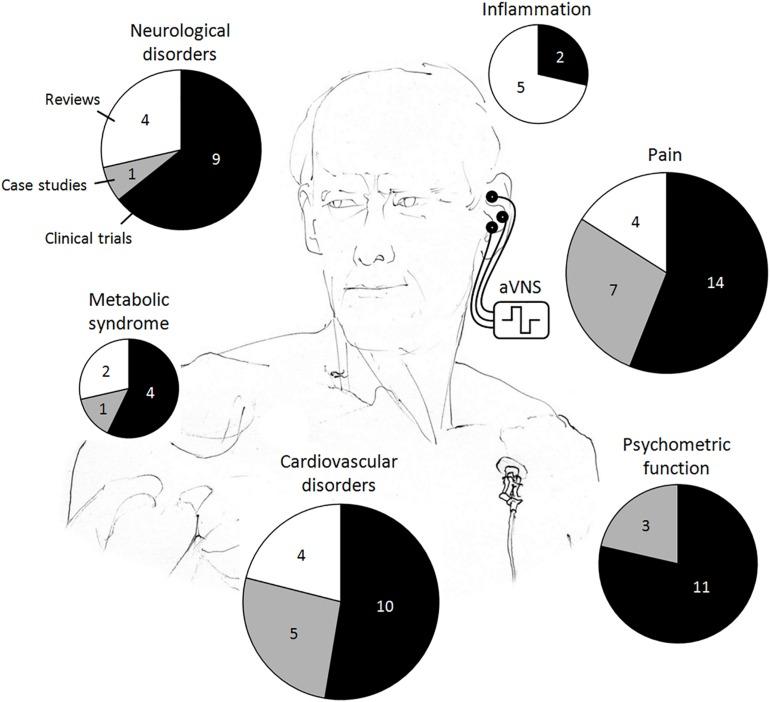
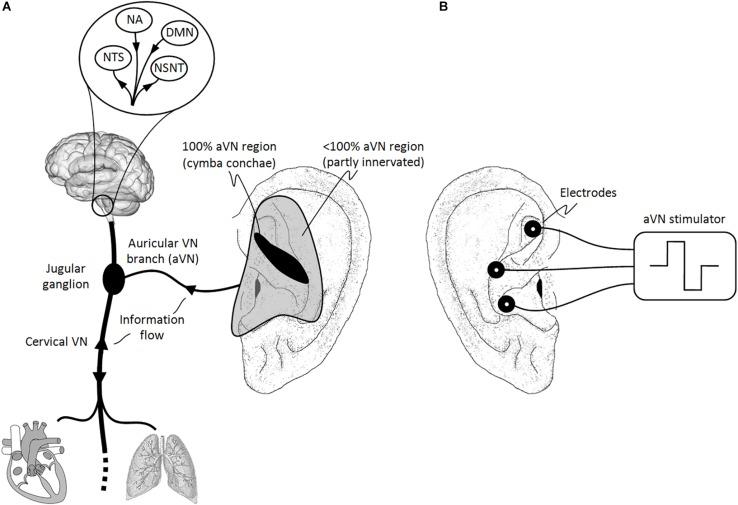
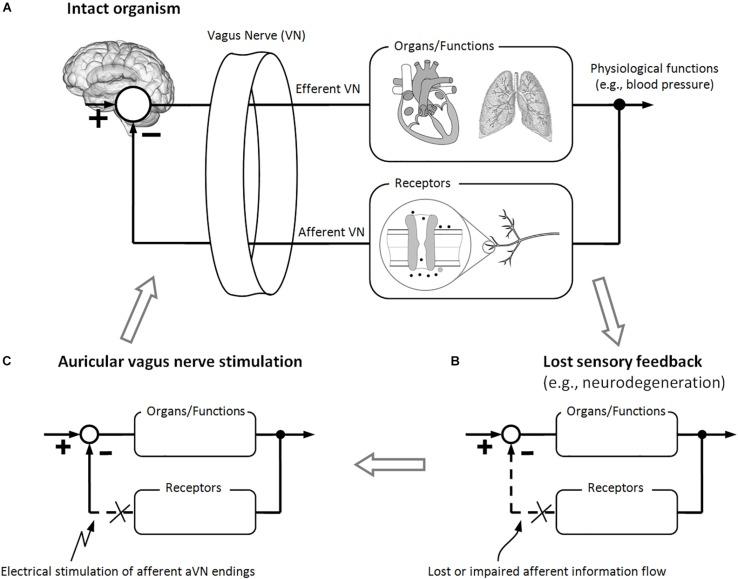
Electrical stimulation of the auricular vagus nerve (aVNS) is an emerging technology in the field of bioelectronic medicine with applications in therapy. Modulation of the afferent vagus nerve affects a large number of physiological processes and bodily states associated with information transfer between the brain and body. These include disease mitigating effects and sustainable therapeutic applications ranging from chronic pain diseases, neurodegenerative and metabolic ailments to inflammatory and cardiovascular diseases. Given the current evidence from experimental research in animal and clinical studies we discuss basic aVNS mechanisms and their potential clinical effects. Collectively, we provide a focused review on the physiological role of the vagus nerve and formulate a biology-driven rationale for aVNS. For the first time, two international workshops on aVNS have been held in Warsaw and Vienna in 2017 within the framework of EU COST Action "European network for innovative uses of EMFs in biomedical applications (BM1309)." Both workshops focused critically on the driving physiological mechanisms of aVNS, its experimental and clinical studies in animals and humans, aVNS studies, technological advancements, and regulatory barriers. The results of the workshops are covered in two reviews, covering physiological and engineering aspects. The present review summarizes on physiological aspects - a discussion of engineering aspects is provided by our accompanying article (Kaniusas et al., 2019). Both reviews build a reasonable bridge from the rationale of aVNS as a therapeutic tool to current research lines, all of them being highly relevant for the promising aVNS technology to reach the patient.
耳迷走神经电刺激(aVNS)是生物电子医学领域一项新兴技术,具有治疗应用价值。传入迷走神经的调制会影响大量与大脑和身体之间信息传递相关的生理过程和身体状态。这些包括疾病缓解作用以及从慢性疼痛疾病、神经退行性和代谢性疾病到炎症性和心血管疾病等可持续治疗应用。鉴于目前动物实验研究和临床研究的证据,我们讨论了aVNS的基本机制及其潜在临床效果。总体而言,我们对迷走神经的生理作用进行了重点综述,并为aVNS制定了基于生物学的理论依据。2017年,在欧盟COST行动“生物医学应用中电磁场创新利用欧洲网络(BM1309)”框架内,在华沙和维也纳首次举办了两次关于aVNS的国际研讨会。两次研讨会都重点关注aVNS的驱动生理机制、其在动物和人类中的实验及临床研究、aVNS研究、技术进步以及监管障碍。研讨会的结果在两篇综述中进行了阐述,涵盖生理和工程方面。本综述总结了生理方面——我们的配套文章(卡纽萨斯等人,2019年)提供了工程方面的讨论。两篇综述都为aVNS作为一种治疗工具的理论依据与当前研究方向搭建了合理的桥梁,所有这些对于有前景的aVNS技术应用于患者都高度相关。
 Zotero 插件