National Institute for Biotechnology and Genetic Engineering, Faisalabad, Pakistan.
Boyce Thompson Institute, Ithaca, NY, USA.
Plant Biotechnol J. 2020 Mar;18(3):691-706. doi: 10.1111/pbi.13236. Epub 2019 Sep 30.
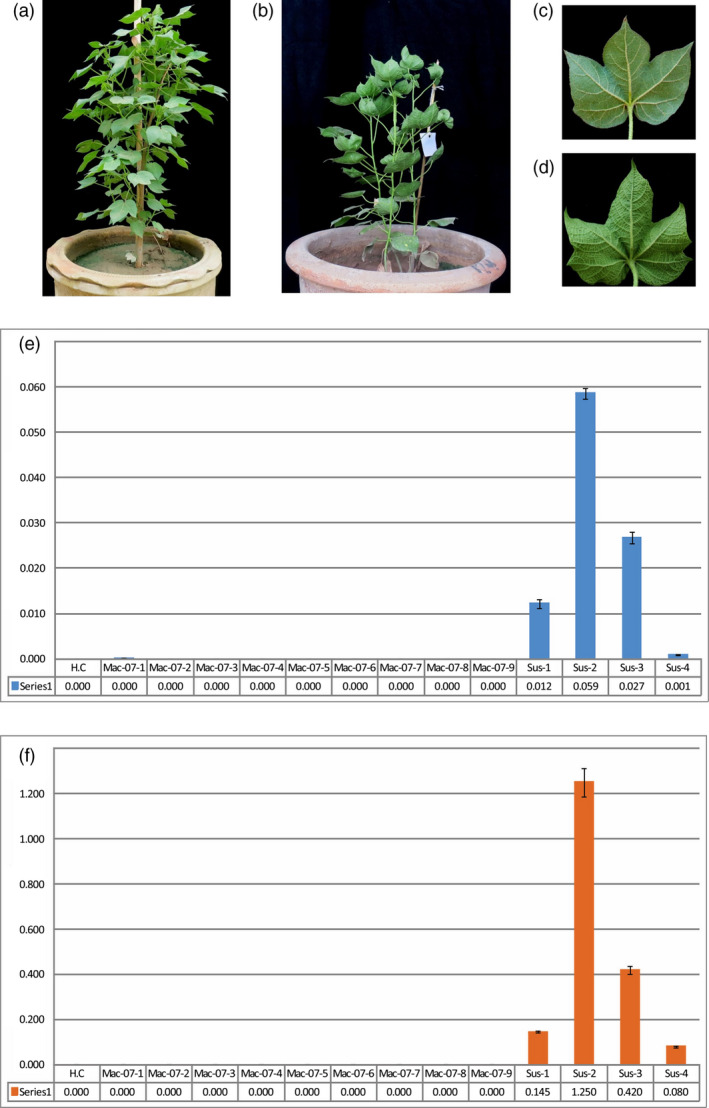
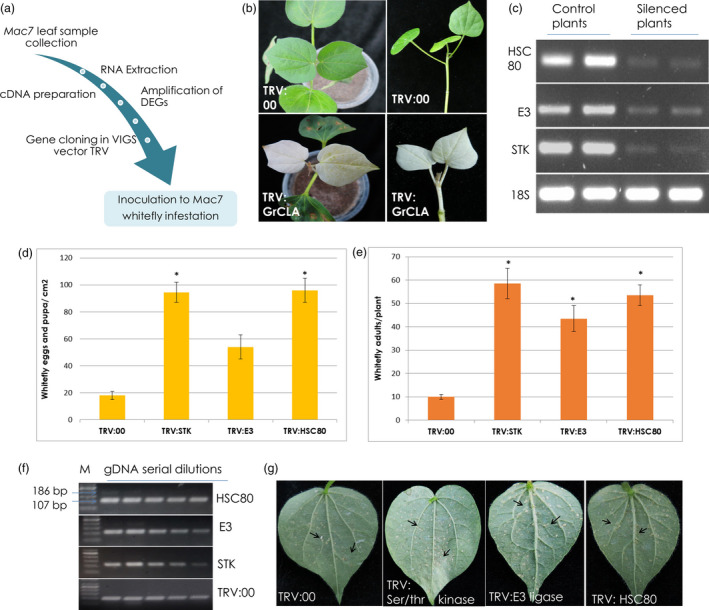
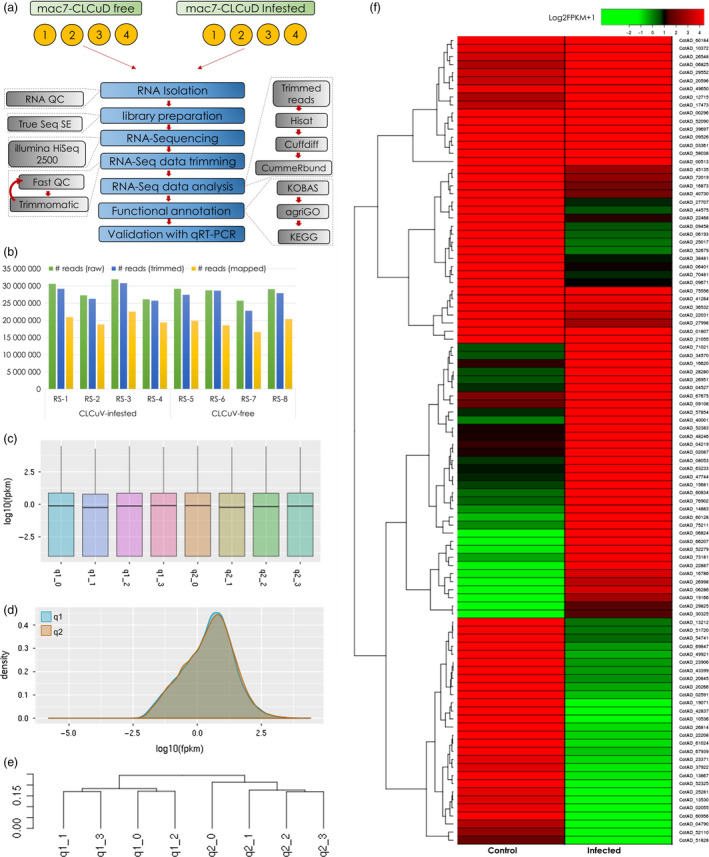
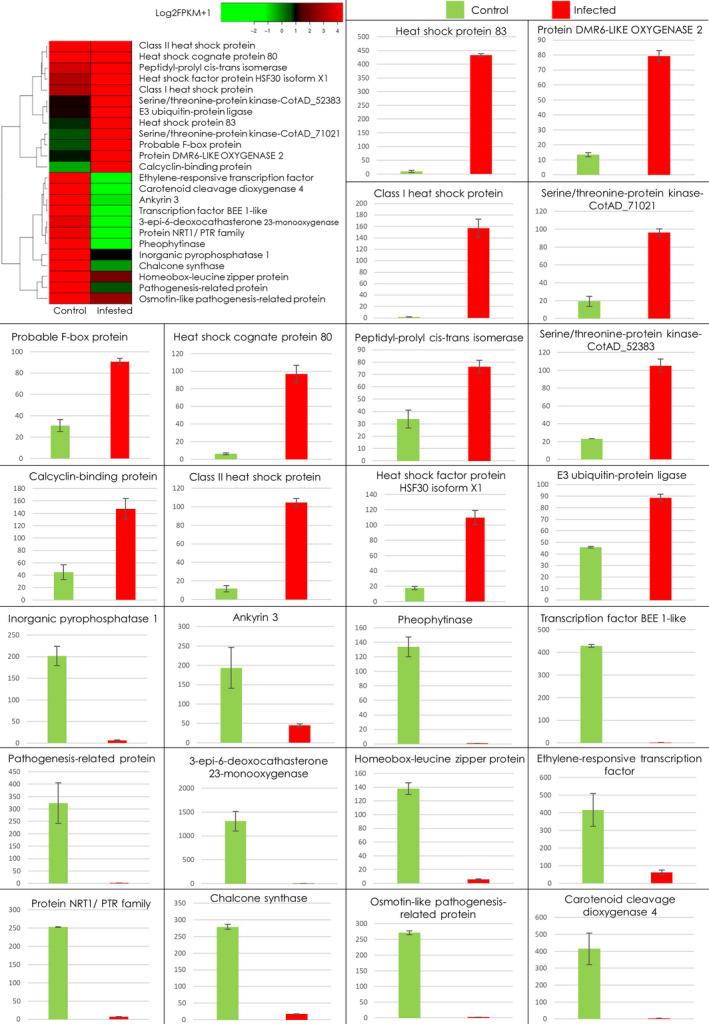
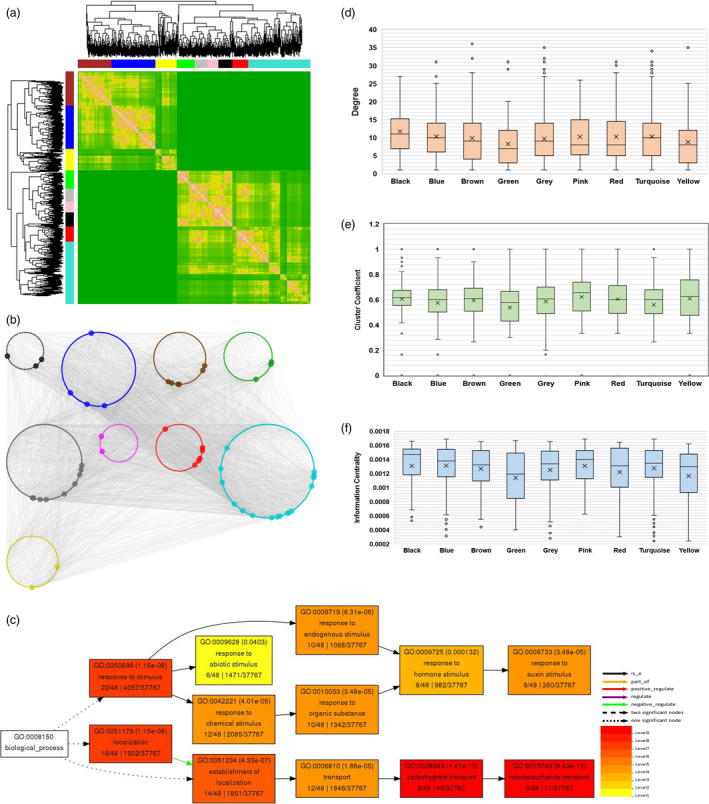
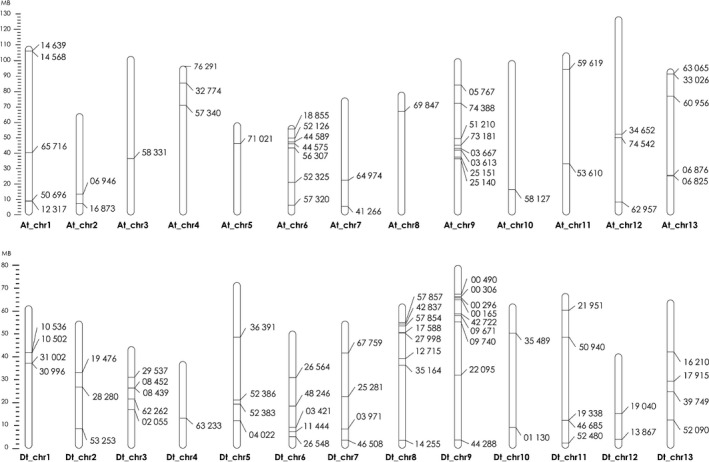
Cultivated cotton (Gossypium hirsutum) is the most important fibre crop in the world. Cotton leaf curl disease (CLCuD) is the major limiting factor and a threat to textile industry in India and Pakistan. All the local cotton cultivars exhibit moderate to no resistance against CLCuD. In this study, we evaluated an exotic cotton accession Mac7 as a resistance source to CLCuD by challenging it with viruliferous whiteflies and performing qPCR to evaluate the presence/absence and relative titre of CLCuD-associated geminiviruses/betasatellites. The results indicated that replication of pathogenicity determinant betasatellite is significantly attenuated in Mac7 and probably responsible for resistance phenotype. Afterwards, to decipher the genetic basis of CLCuD resistance in Mac7, we performed RNA sequencing on CLCuD-infested Mac7 and validated RNA-Seq data with qPCR on 24 independent genes. We performed co-expression network and pathway analysis for regulation of geminivirus/betasatellite-interacting genes. We identified nine novel modules with 52 hubs of highly connected genes in network topology within the co-expression network. Analysis of these hubs indicated the differential regulation of auxin stimulus and cellular localization pathways in response to CLCuD. We also analysed the differential regulation of geminivirus/betasatellite-interacting genes in Mac7. We further performed the functional validation of selected candidate genes via virus-induced gene silencing (VIGS). Finally, we evaluated the genomic context of resistance responsive genes and found that these genes are not specific to A or D sub-genomes of G. hirsutum. These results have important implications in understanding CLCuD resistance mechanism and developing a durable resistance in cultivated cotton.
栽培棉(Gossypium hirsutum)是世界上最重要的纤维作物。棉花曲叶病(CLCuD)是印度和巴基斯坦纺织业的主要限制因素和威胁。所有当地的棉花品种对 CLCuD 表现出中等至无抗性。在这项研究中,我们通过用带毒白蝇挑战和进行 qPCR 来评估外来棉花品系 Mac7 作为抗 CLCuD 的来源,以评估 CLCuD 相关的双生病毒/卫星伴随体的存在/缺失和相对丰度。结果表明,Mac7 中致病性决定因素卫星伴随体的复制明显减弱,可能是抗性表型的原因。之后,为了解 Mac7 中抗 CLCuD 的遗传基础,我们对 CLCuD 感染的 Mac7 进行了 RNA 测序,并在 24 个独立基因上用 qPCR 验证了 RNA-Seq 数据。我们对双生病毒/卫星伴随体相互作用基因的调控进行了共表达网络和途径分析。我们在共表达网络中发现了拓扑结构中有 52 个高连接基因的九个新模块。网络分析表明,在响应 CLCuD 时,生长素刺激和细胞定位途径的差异调节。我们还分析了 Mac7 中双生病毒/卫星伴随体相互作用基因的差异调节。我们进一步通过病毒诱导的基因沉默(VIGS)对选定候选基因进行了功能验证。最后,我们评估了抗性响应基因的基因组结构,发现这些基因不仅存在于 G. hirsutum 的 A 或 D 亚基因组中。这些结果对理解 CLCuD 抗性机制和在栽培棉中开发持久抗性具有重要意义。