Department of Zoology, Jomo Kenyatta University of Agriculture and Technology, Nairobi, Kenya.
Department of Tropical and Infectious Diseases, Institute of Primate Research (IPR), Karen, Kenya.
PLoS Negl Trop Dis. 2019 Aug 26;13(8):e0007704. doi: 10.1371/journal.pntd.0007704. eCollection 2019 Aug.
Schistosoma mansoni is one of the most common helminth infections affecting a large population of people in sub-Saharan Africa. This helminth infection is known to cause immunomodulation which has affected the efficacy of a number of vaccines. This study examined whether a chronic schistosoma infection has an effect on the immunogenicity of HPV vaccine which is currently administered to girls and women aged 9 to 24. Little is known about the immune responses of the HPV vaccine in individuals with chronic schistosomiasis.
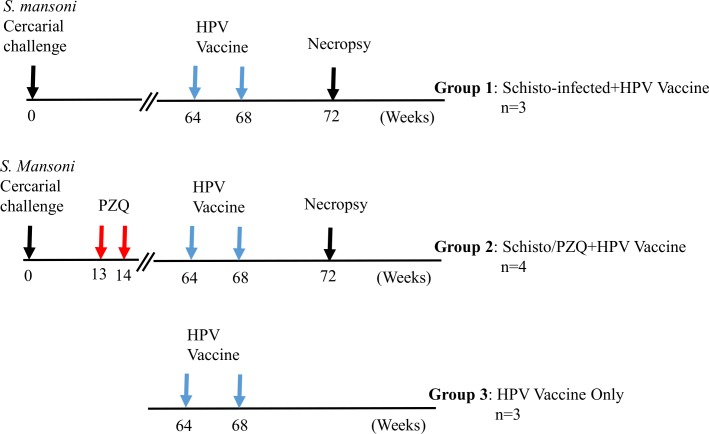
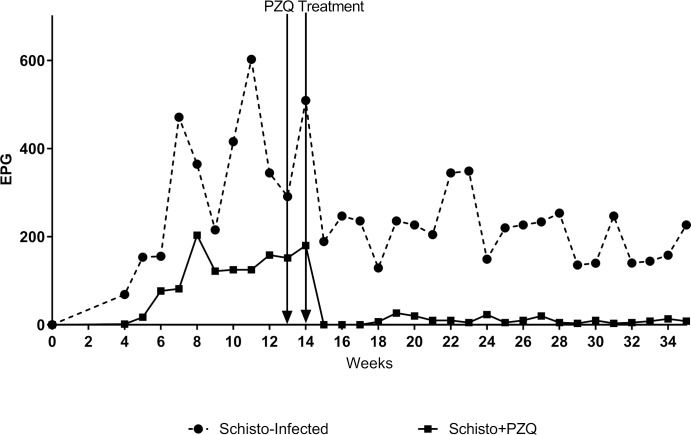
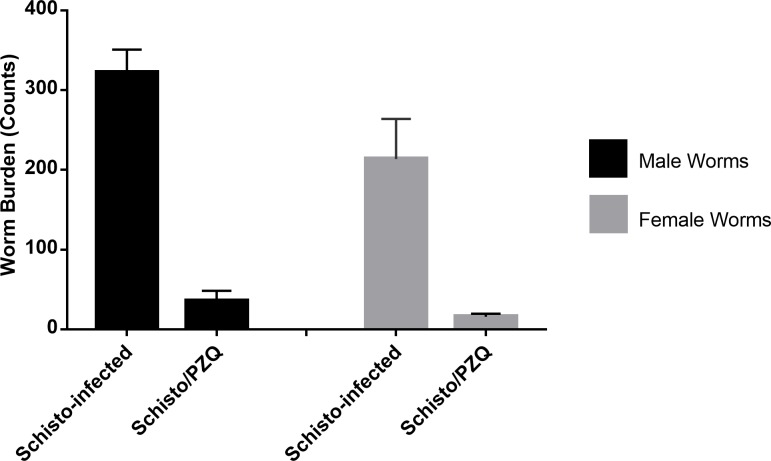
This study was carried out at the Institute of Primate Research (IPR) and involved an Olive baboon model. The experimental animals were randomly placed into three groups (n = 3-4); Two groups were infected with S. mansoni cercaria, and allowed to reach chronic stage (week 12 onwards), at week 13 and 14 post-infection, one group was treated with 80mg/kg of praziquantel (PZQ). Sixty four weeks post schistosoma infection, all groups received 2 doses of the Cervarix HPV vaccine a month apart. Specific immune responses to the HPV and parasite specific antigens were evaluated.
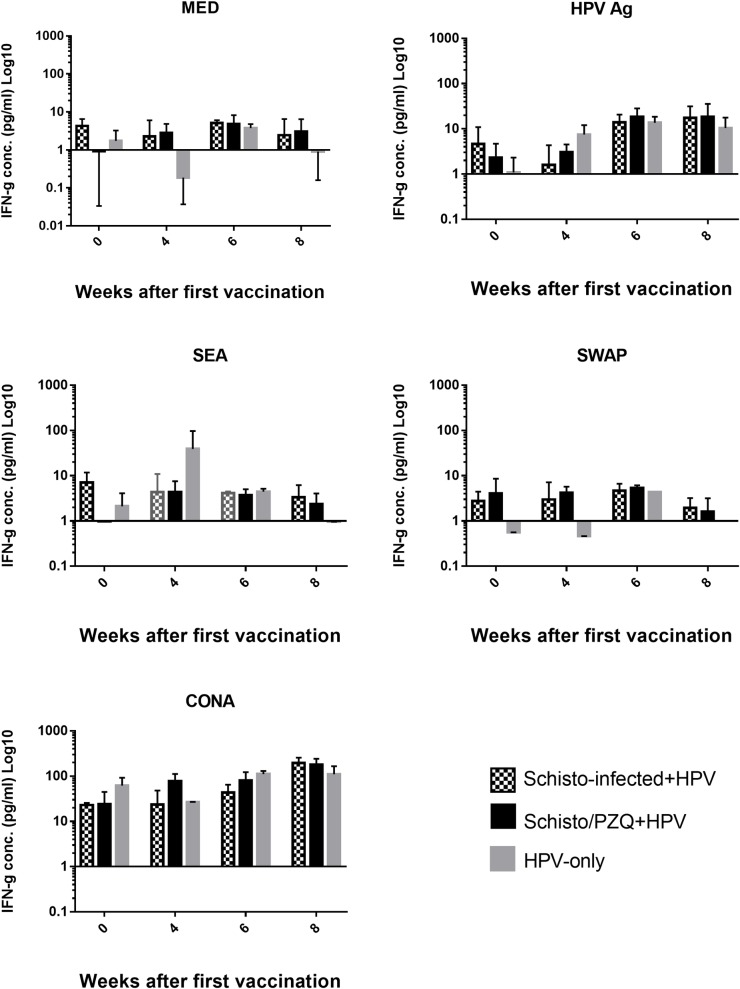
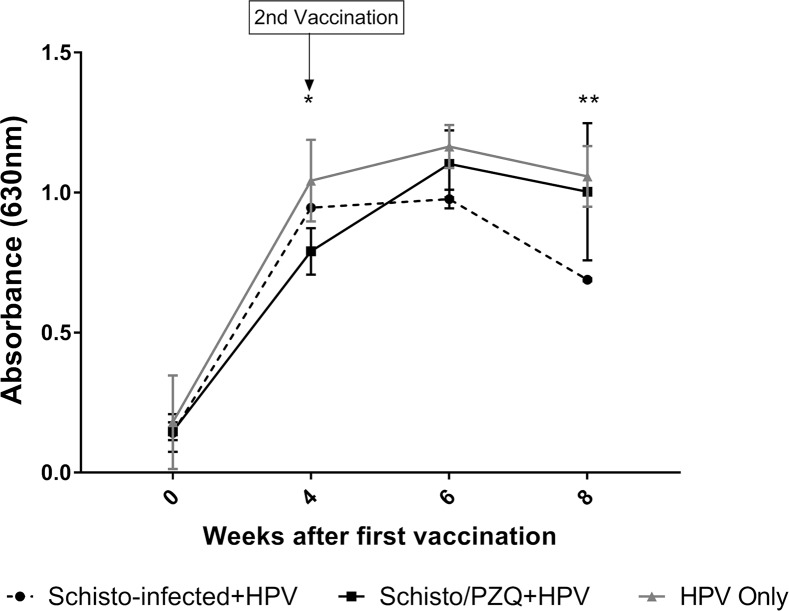
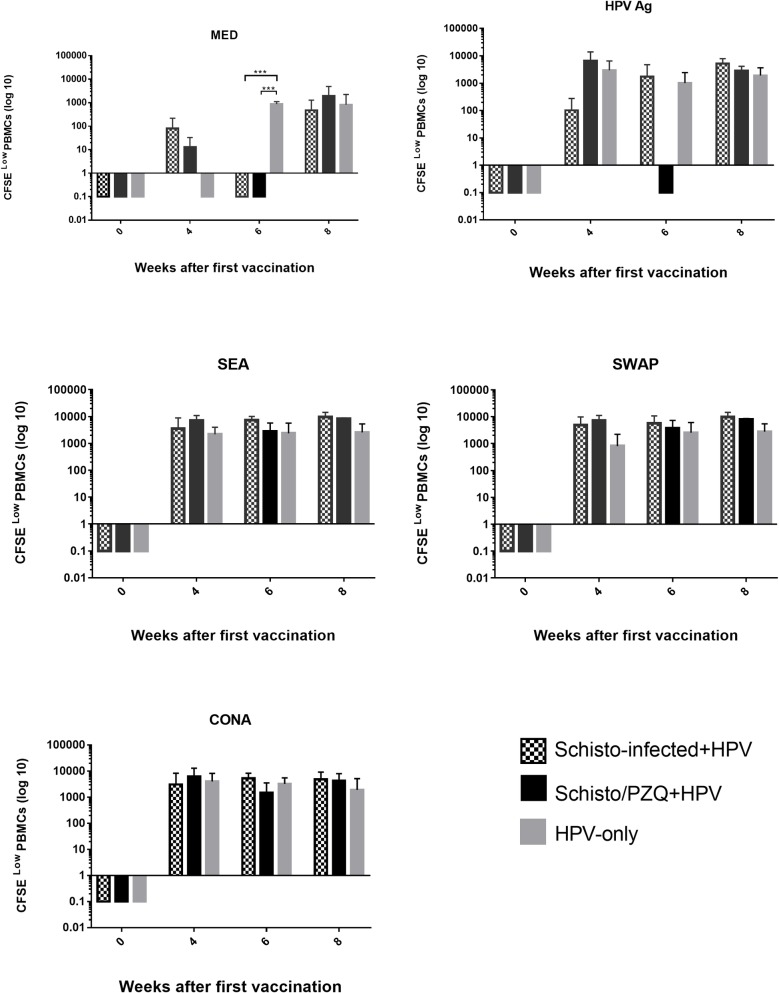
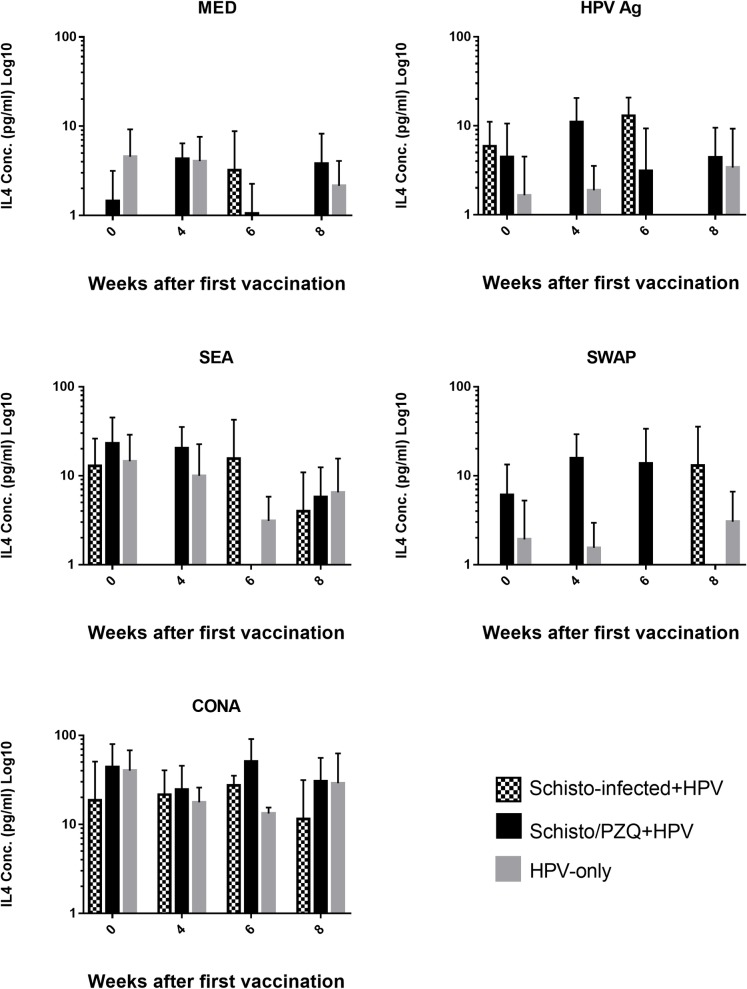
Animals with chronic S. mansoni infection elicited significantly reduced levels of HPV specific IgG antibodies 8 weeks after vaccination compared the PZQ treated and uninfected groups. There was no significant difference in cellular proliferation nor IL-4 and IFN-γ production in all groups.
Chronic S. mansoni infection results in reduction of protective HPV specific IgG antibodies in a Nonhuman Primate model, suggesting a compromised effect of the vaccine. Treatment of schistosomiasis infection with PZQ prior to HPV vaccination, however, reversed this effect supporting anti-helminthic treatment before vaccination.
曼氏血吸虫是影响撒哈拉以南非洲大量人群的最常见寄生虫感染之一。这种寄生虫感染会导致免疫调节,从而影响多种疫苗的效果。本研究旨在探讨慢性血吸虫感染是否会影响目前为 9 至 24 岁女孩和妇女接种的 HPV 疫苗的免疫原性。目前对于慢性血吸虫病患者接种 HPV 疫苗后的免疫反应知之甚少。
该研究在灵长类动物研究所(IPR)进行,使用了橄榄狒狒模型。实验动物被随机分为三组(n = 3-4);两组感染曼氏血吸虫尾蚴,并允许其达到慢性期(第 12 周及以后),在感染后第 13 和 14 周,一组用 80mg/kg 的吡喹酮(PZQ)治疗。在感染血吸虫 64 周后,所有组均在一个月的间隔内接受两剂 Cervarix HPV 疫苗。评估针对 HPV 和寄生虫特异性抗原的特异性免疫反应。
与 PZQ 治疗组和未感染组相比,感染慢性曼氏血吸虫的动物在接种疫苗 8 周后,HPV 特异性 IgG 抗体水平显著降低。所有组的细胞增殖以及 IL-4 和 IFN-γ 的产生均无显著差异。
在非人类灵长类动物模型中,慢性曼氏血吸虫感染导致保护性 HPV 特异性 IgG 抗体减少,表明疫苗效果受损。然而,在 HPV 疫苗接种前用 PZQ 治疗血吸虫感染,可逆转这种影响,支持在疫苗接种前进行抗寄生虫治疗。