Department of Drug Sciences, University of Pavia, Viale Taramelli 12, 27100 Pavia, Italy.
Center for Diagnosis of Inherited Alpha1-antitrypsin Deficiency, Department of Internal Medicine and Therapeutics, Pneumology Unit, IRCCS San Matteo Hospital Foundation, University of Pavia, 27100 Pavia, Italy.
Cells. 2019 Aug 23;8(9):965. doi: 10.3390/cells8090965.
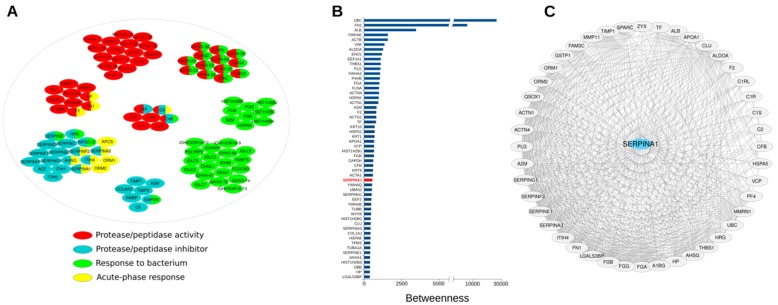
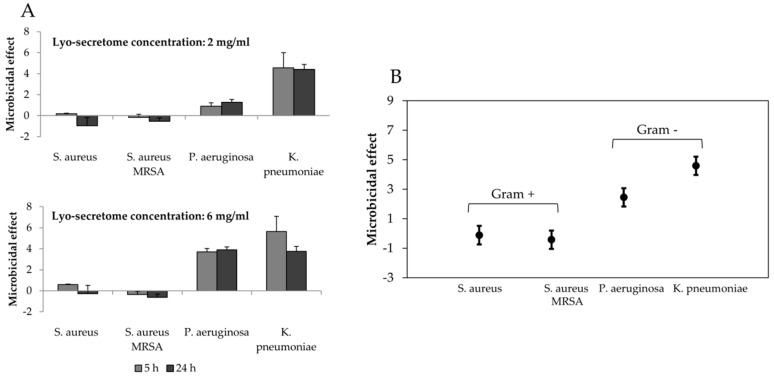
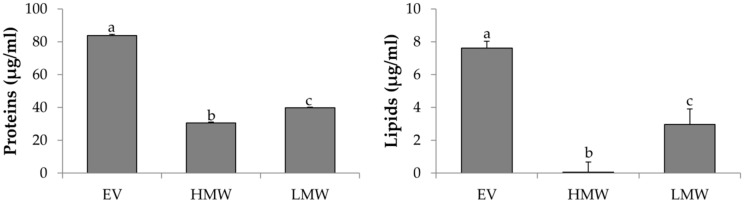
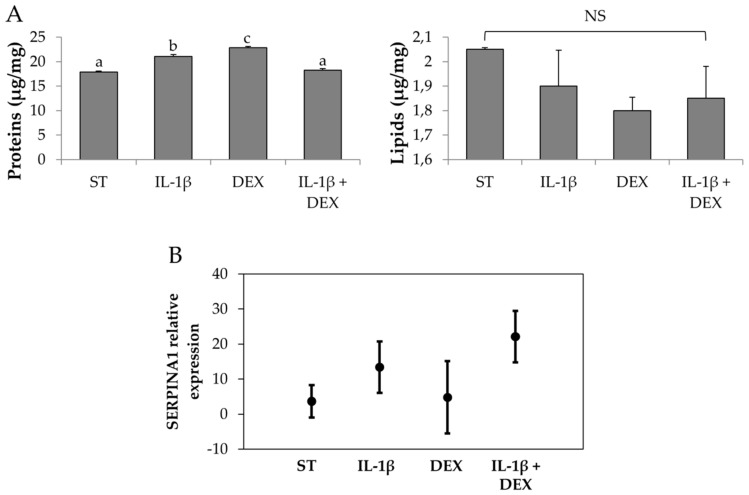
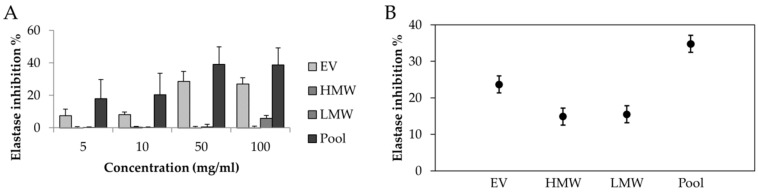
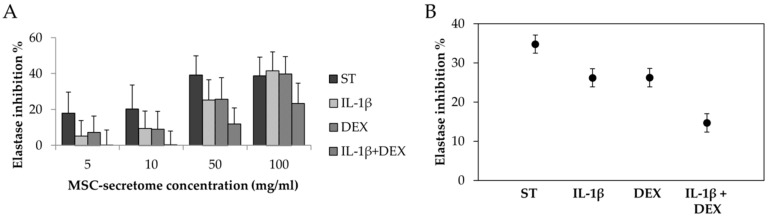
Accumulating evidence shows that Mesenchymal Stem/Stromal Cells (MSCs) exert their therapeutic effects by the release of secretome, made of both soluble proteins and nano/microstructured extracellular vesicles (EVs). In this work, for the first time, we proved by a proteomic investigation that adipose-derived (AD)-MSC-secretome contains alpha-1-antitrypsin (AAT), the main elastase inhibitor in the lung, 72 other proteins involved in protease/antiprotease balance, and 46 proteins involved in the response to bacteria. By secretome fractionation, we proved that AAT is present both in the soluble fraction of secretome and aggregated and/or adsorbed on the surface of EVs, that can act as natural carriers promoting AAT in vivo stability and activity. To modulate secretome composition, AD-MSCs were cultured in different stimulating conditions, such as serum starvation or chemicals (IL-1β and/or dexamethasone) and the expression of the gene encoding for AAT was increased. By testing in vitro the anti-elastase activity of MSC-secretome, a dose-dependent effect was observed; chemical stimulation of AD-MSCs did not increase their secretome anti-elastase activity. Finally, MSC-secretome showed anti-bacterial activity on Gram-negative bacteria, especially for . These preliminary results, in addition to the already demonstrated immunomodulation, pave the way for the use of MSC-secretome in the treatment of AAT-deficiency lung diseases.
越来越多的证据表明,间充质干细胞(MSCs)通过释放细胞外囊泡(EVs)的分泌组来发挥治疗作用,分泌组由可溶性蛋白和纳米/微结构的细胞外囊泡组成。在这项工作中,我们首次通过蛋白质组学研究证明,脂肪来源(AD)MSC 分泌组中含有α-1-抗胰蛋白酶(AAT),这是肺中主要的弹性蛋白酶抑制剂,还含有 72 种其他参与蛋白酶/抗蛋白酶平衡的蛋白质,以及 46 种参与细菌反应的蛋白质。通过对分泌组进行分级分离,我们证明 AAT 不仅存在于分泌组的可溶性部分中,而且还聚集和/或吸附在 EVs 的表面上,EVs 可以作为天然载体促进 AAT 在体内的稳定性和活性。为了调节分泌组的组成,将 AD-MSCs 在不同的刺激条件下培养,如血清饥饿或化学物质(IL-1β 和/或地塞米松),并增加编码 AAT 的基因的表达。通过在体外测试 MSC 分泌组的抗弹性酶活性,观察到剂量依赖性效应;AD-MSCs 的化学刺激并没有增加其分泌组的抗弹性酶活性。最后,MSC 分泌组对革兰氏阴性菌表现出抗菌活性,特别是对 。这些初步结果,除了已经证明的免疫调节作用外,为 MSC 分泌组在治疗 AAT 缺乏性肺病中的应用铺平了道路。