Trigo Catarina M, Rodrigues Joana S, Camões Sérgio P, Solá Susana, Miranda Joana P
Research Institute for Medicines, Faculty of Pharmacy, Universidade de Lisboa, Lisbon, Portugal.
Research Institute for Medicines, Faculty of Pharmacy, Universidade de Lisboa, Lisbon, Portugal.
J Adv Res. 2025 Apr;70:103-124. doi: 10.1016/j.jare.2024.05.004. Epub 2024 May 9.
Mesenchymal stem cell (MSC)-based therapies have yielded beneficial effects in a broad range of preclinical models and clinical trials for human diseases. In the context of MSC transplantation, it is widely recognized that the main mechanism for the regenerative potential of MSCs is not their differentiation, with in vivo data revealing transient and low engraftment rates. Instead, MSCs therapeutic effects are mainly attributed to its secretome, i.e., paracrine factors secreted by these cells, further offering a more attractive and innovative approach due to the effectiveness and safety of a cell-free product.
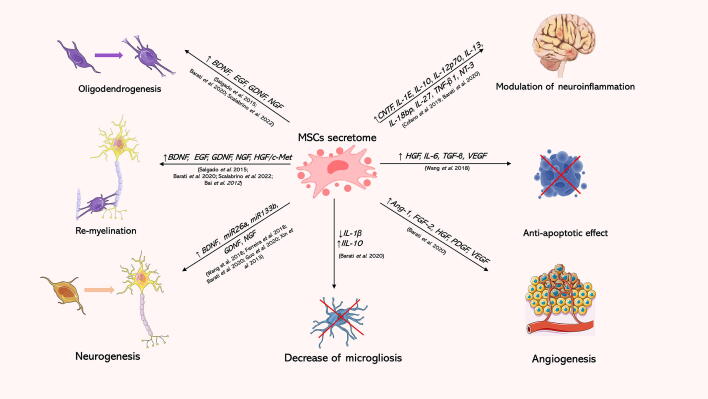
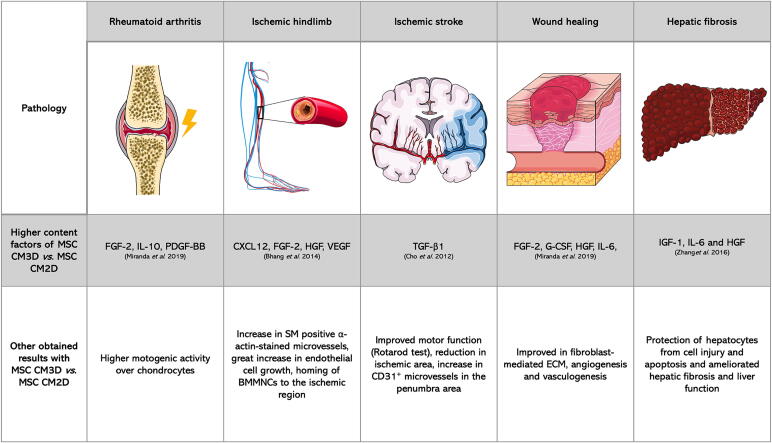
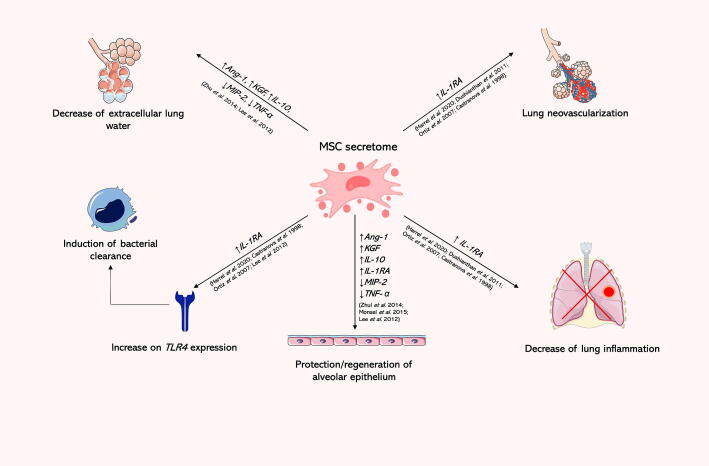
In this review, we will discuss the potential benefits of MSC-derived secretome in regenerative medicine with particular focus on respiratory, hepatic, and neurological diseases. Both free and vesicular factors of MSC secretome will be detailed. We will also address novel potential strategies capable of improving their healing potential, namely by delivering important regenerative molecules according to specific diseases and tissue needs, as well as non-clinical and clinical studies that allow us to dissect their mechanisms of action.
MSC-derived secretome includes both soluble and non-soluble factors, organized in extracellular vesicles (EVs). Importantly, besides depending on the cell origin, the characteristics and therapeutic potential of MSC secretome is deeply influenced by external stimuli, highlighting the possibility of optimizing their characteristics through preconditioning approaches. Nevertheless, the clarity around their mechanisms of action remains ambiguous, whereas the need for standardized procedures for the successful translation of those products to the clinics urges.
基于间充质干细胞(MSC)的疗法在多种人类疾病的临床前模型和临床试验中均产生了有益效果。在MSC移植的背景下,人们普遍认为MSC再生潜力的主要机制并非其分化,体内数据显示其植入率短暂且较低。相反,MSC的治疗效果主要归因于其分泌组,即这些细胞分泌的旁分泌因子,由于无细胞产品的有效性和安全性,这进一步提供了一种更具吸引力和创新性的方法。
在本综述中,我们将讨论MSC来源的分泌组在再生医学中的潜在益处,特别关注呼吸系统、肝脏和神经系统疾病。将详细介绍MSC分泌组的游离因子和囊泡因子。我们还将探讨能够提高其治愈潜力的新策略,即根据特定疾病和组织需求递送重要的再生分子,以及使我们能够剖析其作用机制的非临床和临床研究。
MSC来源的分泌组包括可溶性和不可溶性因子,这些因子存在于细胞外囊泡(EVs)中。重要的是,除了取决于细胞来源外,MSC分泌组的特性和治疗潜力还受到外部刺激的深刻影响,这突出了通过预处理方法优化其特性的可能性。然而,其作用机制仍不明确,而将这些产品成功转化为临床应用所需的标准化程序也亟待完善。