Computational Biology, Department of Computer Science, University of Oxford, Oxford, United Kingdom.
School of Physiology, Pharmacology and Neuroscience, and Cardiovascular Research Laboratories, School of Medical Sciences, University of Bristol, Bristol, United Kingdom.
Biophys J. 2019 Dec 17;117(12):2455-2470. doi: 10.1016/j.bpj.2019.07.030. Epub 2019 Jul 25.
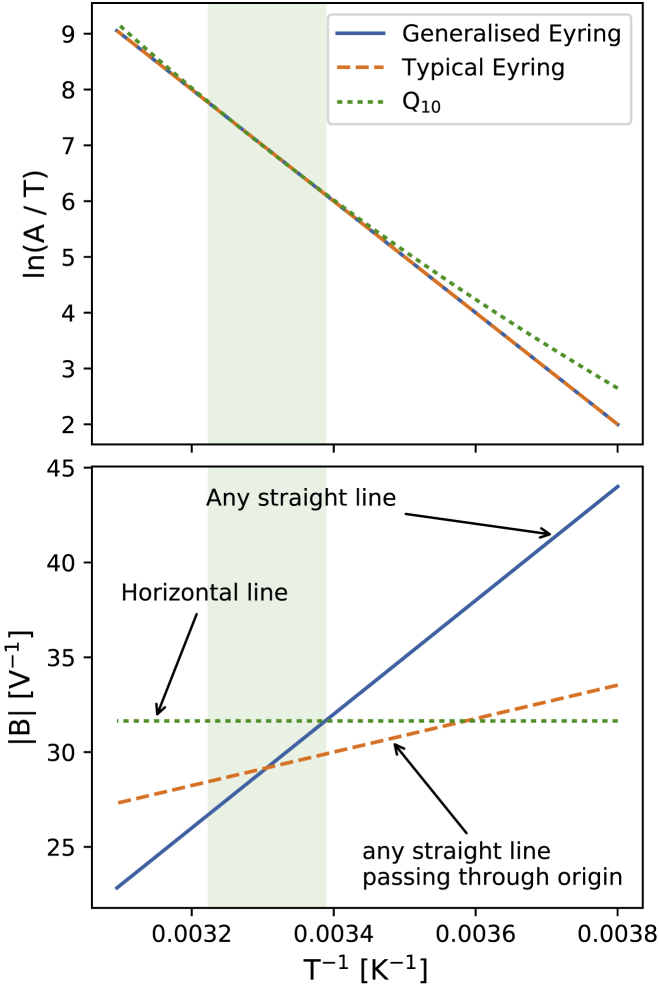
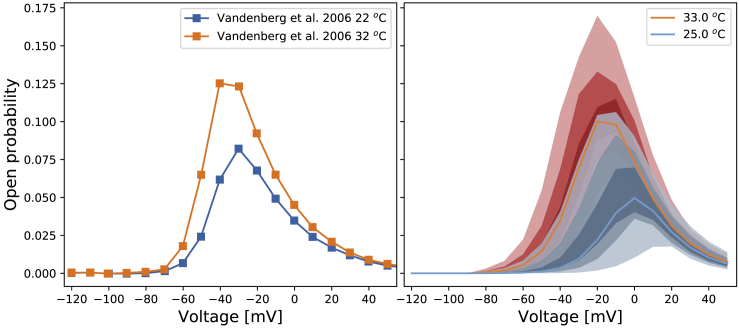
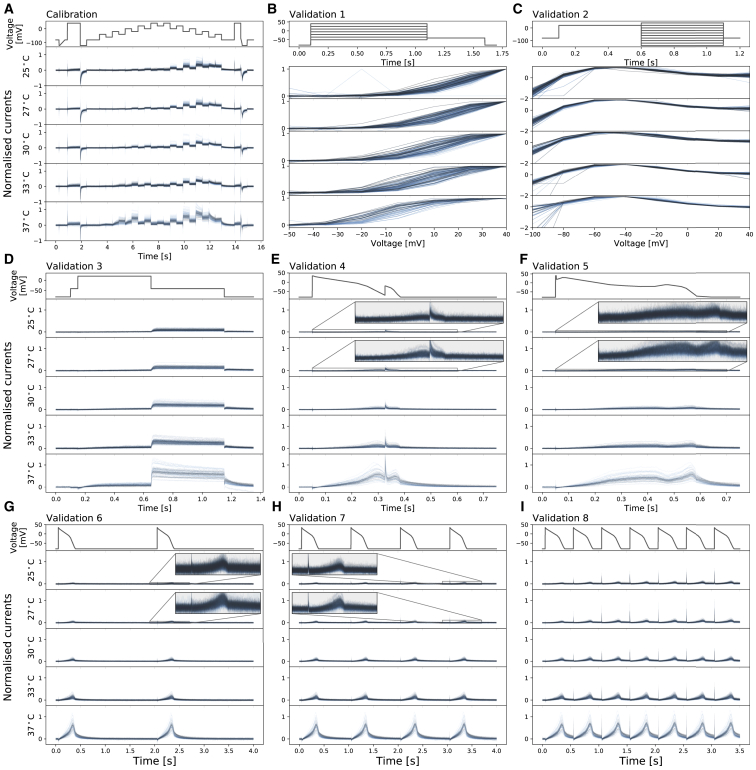
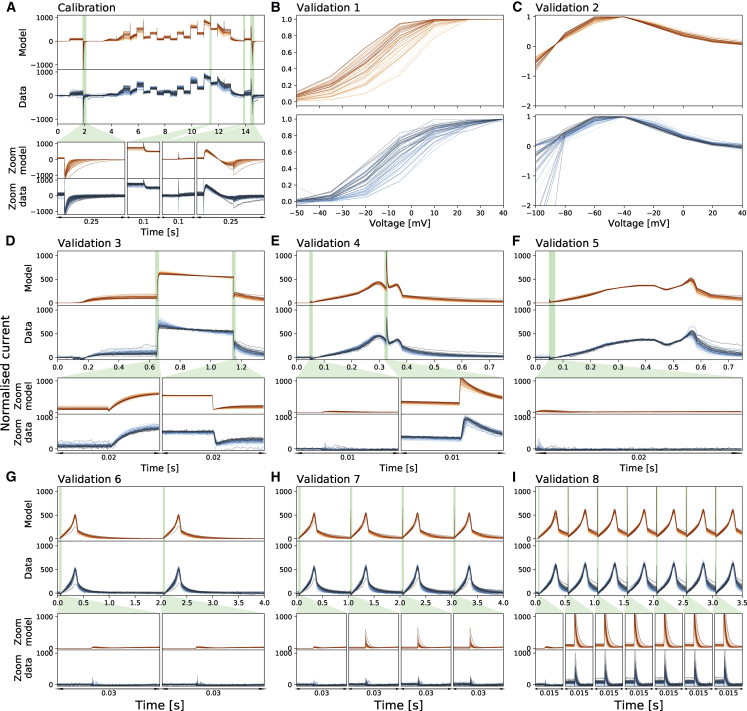
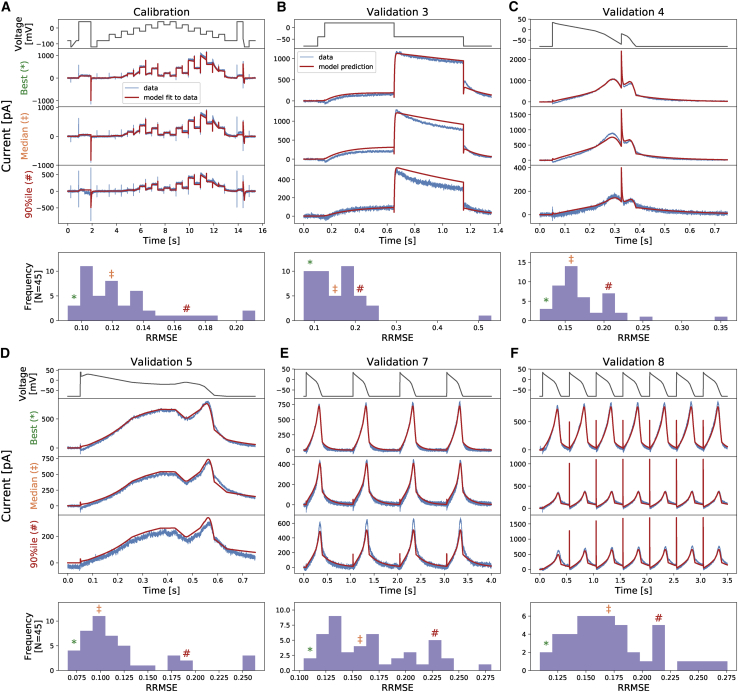
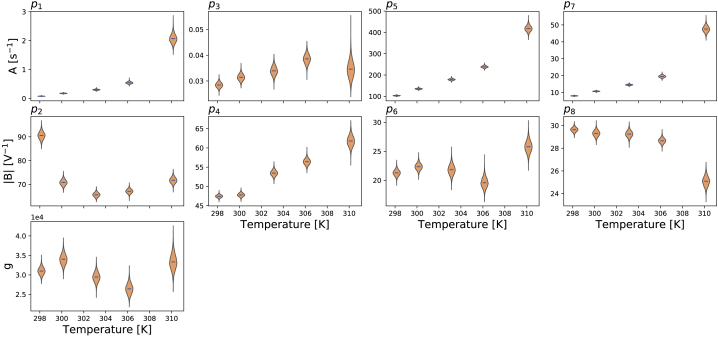
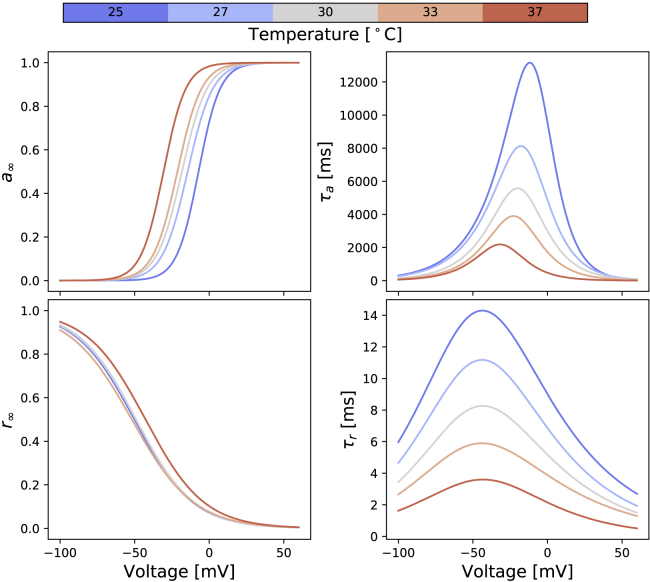
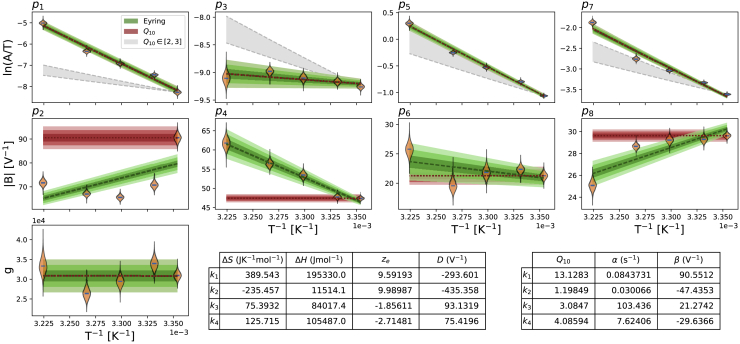
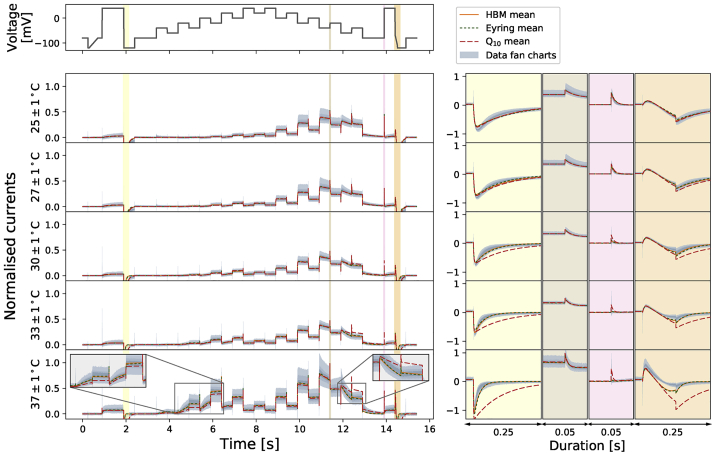
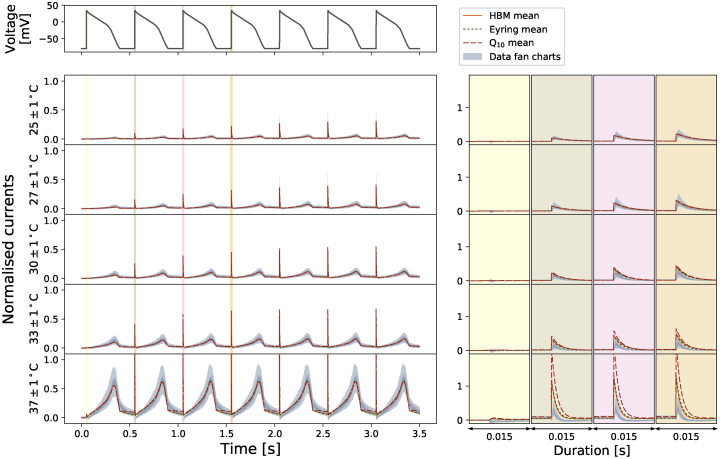
Ion channel behavior can depend strongly on temperature, with faster kinetics at physiological temperatures leading to considerable changes in currents relative to room temperature. These temperature-dependent changes in voltage-dependent ion channel kinetics (rates of opening, closing, inactivating, and recovery) are commonly represented with Q coefficients or an Eyring relationship. In this article, we assess the validity of these representations by characterizing channel kinetics at multiple temperatures. We focus on the human Ether-à-go-go-Related Gene (hERG) channel, which is important in drug safety assessment and commonly screened at room temperature so that results require extrapolation to physiological temperature. In Part I of this study, we established a reliable method for high-throughput characterization of hERG1a (Kv11.1) kinetics, using a 15-second information-rich optimized protocol. In this Part II, we use this protocol to study the temperature dependence of hERG kinetics using Chinese hamster ovary cells overexpressing hERG1a on the Nanion SyncroPatch 384PE, a 384-well automated patch-clamp platform, with temperature control. We characterize the temperature dependence of hERG gating by fitting the parameters of a mathematical model of hERG kinetics to data obtained at five distinct temperatures between 25 and 37°C and validate the models using different protocols. Our models reveal that activation is far more temperature sensitive than inactivation, and we observe that the temperature dependency of the kinetic parameters is not represented well by Q coefficients; it broadly follows a generalized, but not the standardly-used, Eyring relationship. We also demonstrate that experimental estimations of Q coefficients are protocol dependent. Our results show that a direct fit using our 15-s protocol best represents hERG kinetics at any given temperature and suggests that using the Generalized Eyring theory is preferable if no experimental data are available to derive model parameters at a given temperature.
离子通道的行为对温度非常敏感,在生理温度下,动力学过程更快,从而导致电流相对于室温发生显著变化。电压依赖性离子通道动力学(开启、关闭、失活和恢复的速率)的这些温度依赖性变化通常用 Q 系数或 Eyring 关系来表示。在本文中,我们通过在多个温度下对通道动力学进行特征化来评估这些表示的有效性。我们重点关注人类 Ether-à-go-go-Related Gene (hERG) 通道,该通道在药物安全性评估中很重要,并且通常在室温下进行筛选,因此结果需要外推至生理温度。在本研究的第一部分中,我们使用 15 秒信息丰富的优化方案,建立了一种可靠的高通量 hERG1a(Kv11.1)动力学特征化方法。在本部分中,我们使用该方案在 Nanion SyncroPatch 384PE 上使用过表达 hERG1a 的中国仓鼠卵巢细胞研究 hERG 动力学的温度依赖性,这是一个 384 孔自动化膜片钳平台,具有温度控制功能。我们通过将 hERG 动力学数学模型的参数拟合到在 25 到 37°C 之间的五个不同温度下获得的数据来描述 hERG 门控的温度依赖性,并使用不同的方案对模型进行验证。我们的模型表明,激活比失活对温度更敏感,我们观察到动力学参数的温度依赖性不能很好地用 Q 系数表示;它广泛遵循广义的但不是标准的 Eyring 关系。我们还证明了实验估计的 Q 系数是协议依赖性的。我们的结果表明,使用我们的 15 秒方案进行直接拟合可以在任何给定温度下最好地表示 hERG 动力学,并表明如果没有实验数据可用于在给定温度下推导出模型参数,则使用广义 Eyring 理论更为可取。