Childhood Nutrition Research Centre, UCL Great Ormond Street Institute of Child Health, 30 Guilford Street, London, WC1N 1EH, UK.
Diabetologia. 2019 Oct;62(10):1740-1750. doi: 10.1007/s00125-019-4944-8. Epub 2019 Aug 27.
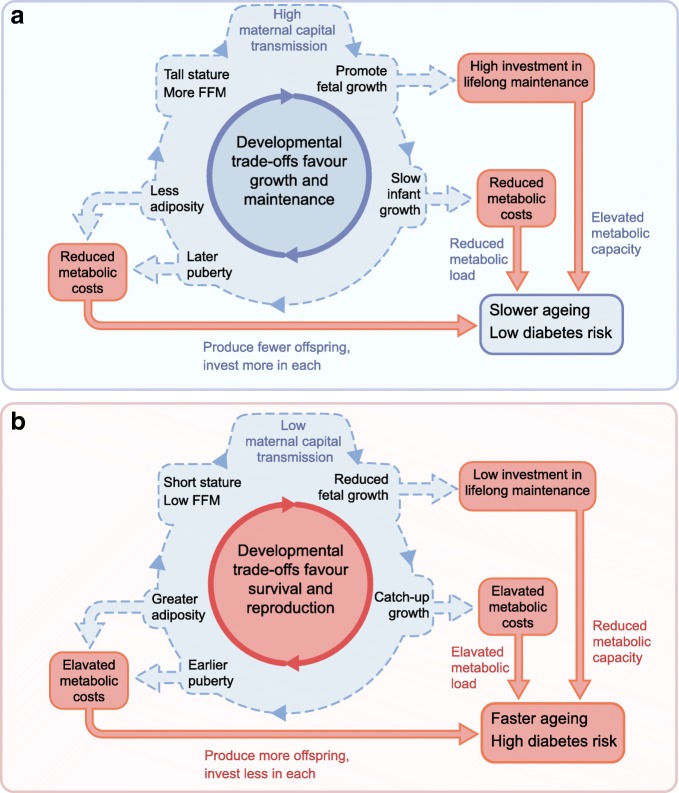
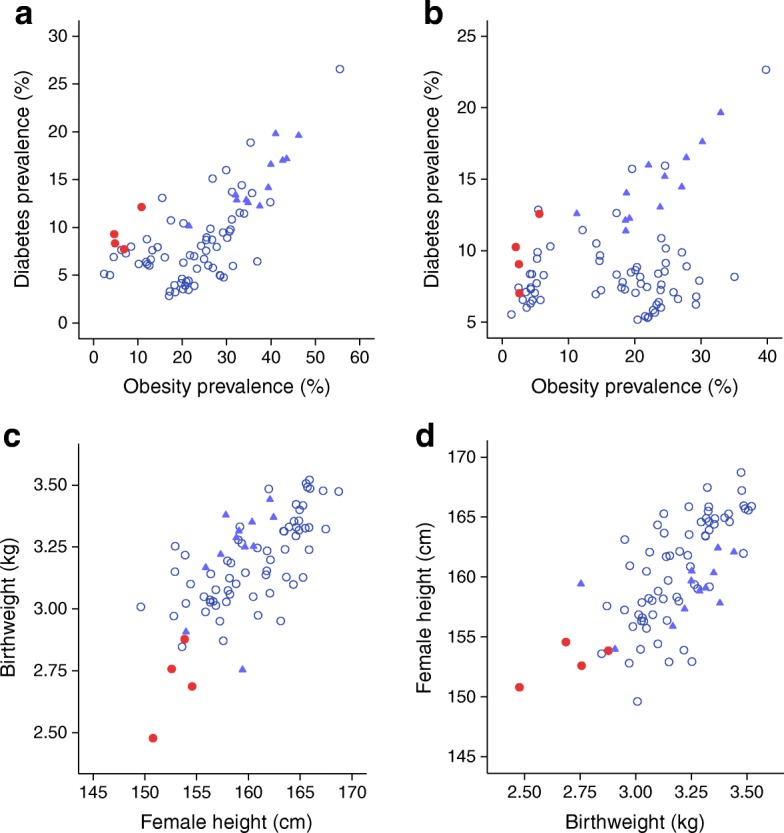
The global nutrition transition, which embraces major changes in how food is produced, distributed and consumed, is associated with rapid increases in the prevalence of obesity, but the implications for diabetes differ between populations. A simple conceptual model treats diabetes risk as the function of two interacting traits: 'metabolic capacity,' which promotes glucose homeostasis, and 'metabolic load', which challenges glucose homoeostasis. Population variability in diabetes prevalence is consistent with this conceptual model, indicating that the effect of obesity varies by ethnicity. Evolutionary life history theory can help explain why variability in metabolic capacity and metabolic load emerges. At the species level (hominin evolution), across human populations and within individual life courses, phenotypic variability emerges under selective pressure to maximise reproductive fitness rather than metabolic health. Those exposed to adverse environments may express or develop several metabolic traits that are individually beneficial for reproductive fitness, but which cumulatively increase diabetes risk. Public health interventions can help promote metabolic capacity, but there are limits to the benefits that can emerge within a single generation. This means that efforts to curb metabolic load (obesity, unhealthy lifestyles) must remain at the forefront of diabetes prevention. Such efforts should go beyond individuals and target the broader food system and socioeconomic factors, in order to maximise their efficacy.
全球营养转型涵盖了食物生产、分配和消费方式的重大变化,与肥胖症的患病率迅速增加有关,但对糖尿病的影响因人群而异。一个简单的概念模型将糖尿病风险视为两个相互作用的特征的函数:“代谢能力”,促进葡萄糖稳态,以及“代谢负荷”,挑战葡萄糖同稳态。糖尿病患病率的人群差异与这一概念模型一致,表明肥胖对不同种族的影响不同。进化史理论可以帮助解释代谢能力和代谢负荷的变异性是如何出现的。在物种水平(人类进化)、在人类种群之间以及在个体生命过程中,表型变异性是在最大限度地提高生殖适应性而不是代谢健康的选择压力下出现的。那些暴露在不利环境中的人可能会表现出或发展出几种对生殖适应性有益的代谢特征,但这些特征加在一起会增加糖尿病的风险。公共卫生干预措施可以帮助促进代谢能力,但在一代人中可能会出现的好处是有限的。这意味着遏制代谢负荷(肥胖、不健康的生活方式)的努力必须始终是糖尿病预防的重中之重。这些努力应该超越个人,针对更广泛的食物系统和社会经济因素,以最大限度地提高其效果。