O'Hara Crystal, Ojo Babajide, Emerson Sam R, Simenson Ashley J, Peterson Sandra, Perkins-Veazie Penelope, Payton Mark E, Hermann Janice, Smith Brenda J, Lucas Edralin A
Department of Nutritional Sciences, College of Human Sciences, Oklahoma State University, Stillwater, OK, USA.
Department of Horticultural Science, North Carolina State University, Kannapolis, NC, USA.
Nutr Metab Insights. 2019 Aug 19;12:1178638819869946. doi: 10.1177/1178638819869946. eCollection 2019.
Postprandial fluxes in oxidative stress, inflammation, glucose, and lipids, particularly after a high-fat meal (HFM), have been implicated in the development of cardiovascular disease (CVD). The aim of this study is to determine whether acute freeze-dried mango consumption modulates the postprandial response to an HFM. We hypothesized that the addition of mango, which is a rich source of many bioactive components, to an HFM would lower postprandial triglycerides, glucose, and inflammation, and increase antioxidant enzymes, compared to a standard HFM alone.
In a randomized cross-over study, 24 healthy adult males (18-25 years old) consumed a typical American breakfast (670 kcal; 58% fat) with or without the freeze-dried mango pulp (50 g). Lipids, glucose, antioxidant enzymes, and inflammatory markers were assessed at baseline/fasting and 1, 2, and 4 hours after the HFM.
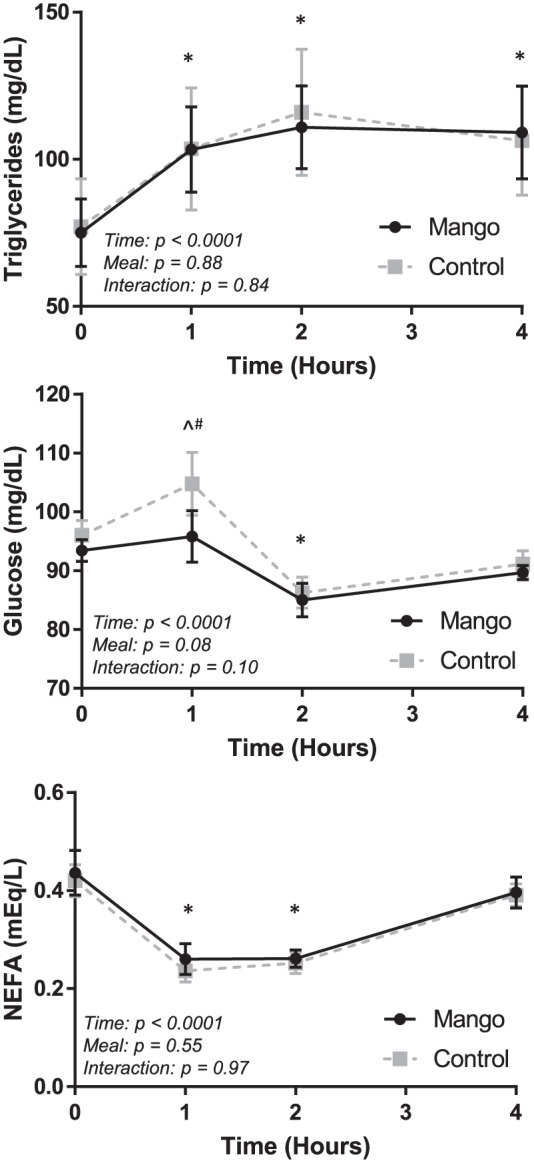
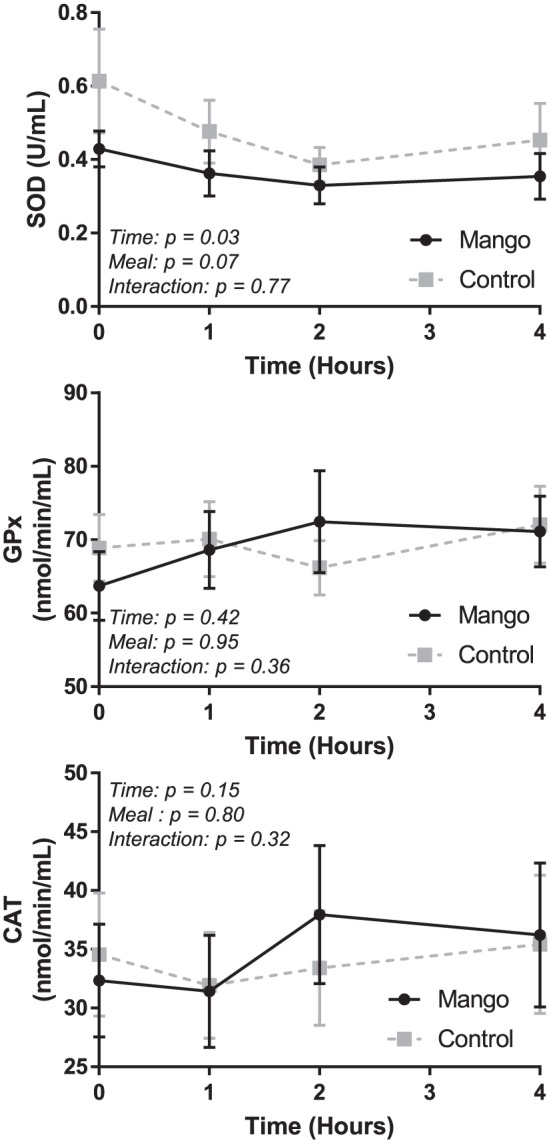
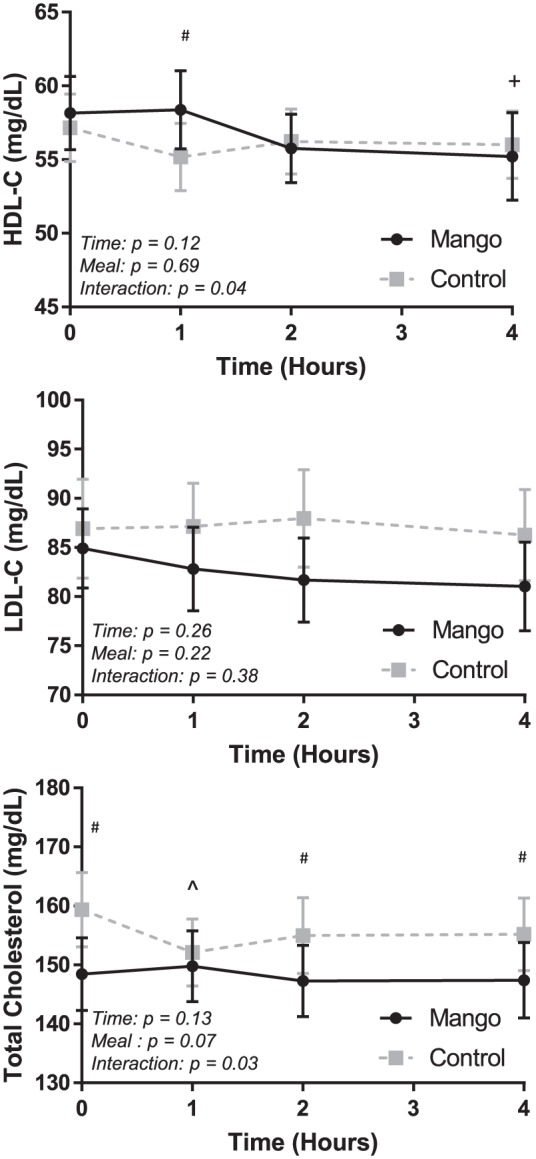
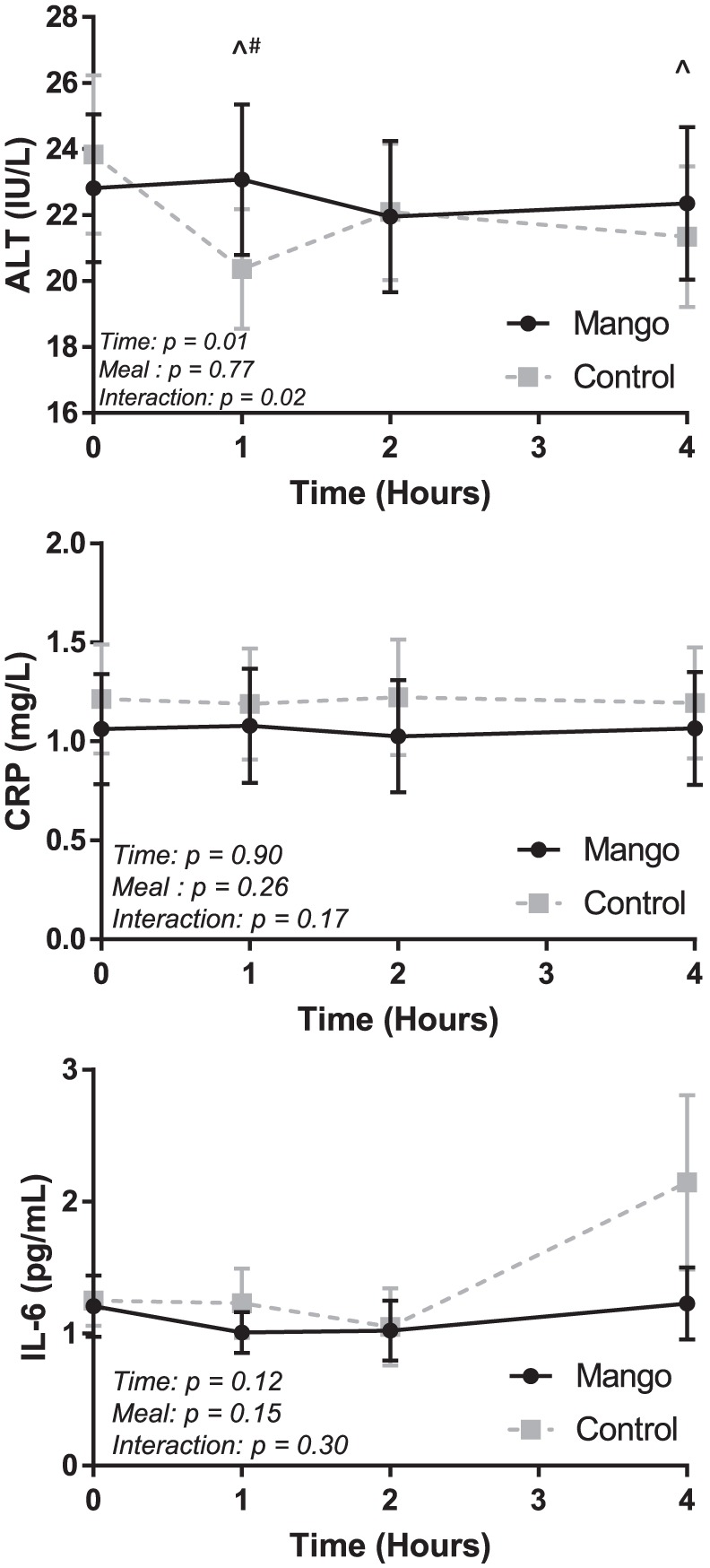
Addition of mango resulted in lower glucose (95.8 ± 4.4 mg/dL; = .002) and higher high-density lipoprotein cholesterol (HDL-C; 58.4 ± 2.7 mg/dL; = .01) 1 hour post-HFM compared to control (glucose: 104.8 ± 5.4 mg/dL; HDL-C: 55.2 ± 2.3 mg/dL), although no differences were observed in triglycerides ( = .88 for interaction). No significant meal × time interactions were detected in markers of inflammation (C-reactive protein, = .17; interleukin-6, = .30) or antioxidant enzymes (superoxide dismutase, = .77; glutathione peroxidase, = .36; catalase, = .32) in the postprandial period.
When added to an HFM, acute mango consumption had modest beneficial effects on postprandial glucose and HDL-C responses, but did not alter triglyceride, inflammatory, or antioxidant enzymes.
餐后氧化应激、炎症、葡萄糖和脂质水平的变化,尤其是高脂餐后,与心血管疾病(CVD)的发生有关。本研究旨在确定食用急性冻干芒果是否能调节对高脂餐的餐后反应。我们假设,在高脂餐中添加富含多种生物活性成分的芒果,与单纯的标准高脂餐相比,会降低餐后甘油三酯、葡萄糖水平,减轻炎症反应,并增加抗氧化酶的活性。
在一项随机交叉研究中,24名健康成年男性(18 - 25岁)食用了一份典型的美式早餐(670千卡;58%为脂肪),其中一份添加了50克冻干芒果果肉,另一份未添加。在高脂餐前后的基线/空腹状态以及餐后1、2和4小时,对脂质、葡萄糖、抗氧化酶和炎症标志物进行了评估。
与对照组相比(葡萄糖:104.8±5.4毫克/分升;高密度脂蛋白胆固醇(HDL - C):55.2±2.3毫克/分升),餐后1小时添加芒果组的葡萄糖水平较低(95.8±4.4毫克/分升;P = 0.002),HDL - C水平较高(58.4±2.7毫克/分升;P = 0.01),尽管甘油三酯水平未观察到差异(交互作用P = 0.88)。在餐后期间,炎症标志物(C反应蛋白,P = 0.17;白细胞介素 - 6,P = 0.30)或抗氧化酶(超氧化物歧化酶,P = 0.77;谷胱甘肽过氧化物酶,P = 0.36;过氧化氢酶,P = 0.32)未检测到显著的餐次×时间交互作用。
在高脂餐中添加芒果,急性食用芒果对餐后葡萄糖和HDL - C反应有适度的有益影响,但未改变甘油三酯、炎症或抗氧化酶水平。