Molina Sonia Jazmín, Buján Gustavo Ezequiel, Rodriguez Gonzalez Monserrat, Capani Francisco, Gómez-Casati Maria Eugenia, Guelman Laura Ruth
Centro de Estudios Farmacológicos y Botánicos (CEFyBO, UBA-CONICET), Facultad de Medicina, Consejo Nacional de Investigaciones Científicas y Técnicas, Universidad de Buenos Aires, Buenos Aires, Argentina.
Facultad de Medicina, Cátedra de Farmacología, Universidad de Buenos Aires, Buenos Aires, Argentina.
Front Behav Neurosci. 2019 Aug 13;13:182. doi: 10.3389/fnbeh.2019.00182. eCollection 2019.
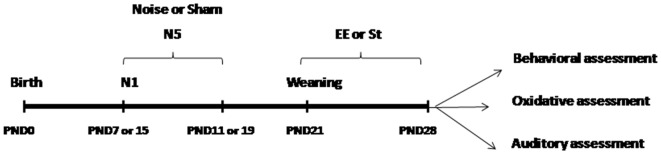
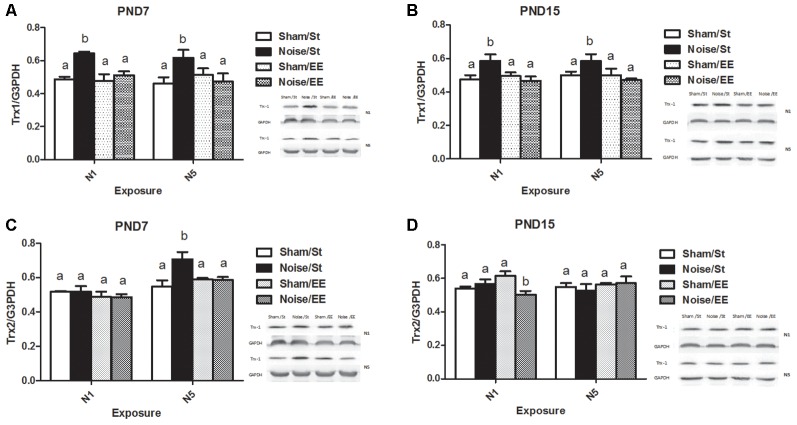
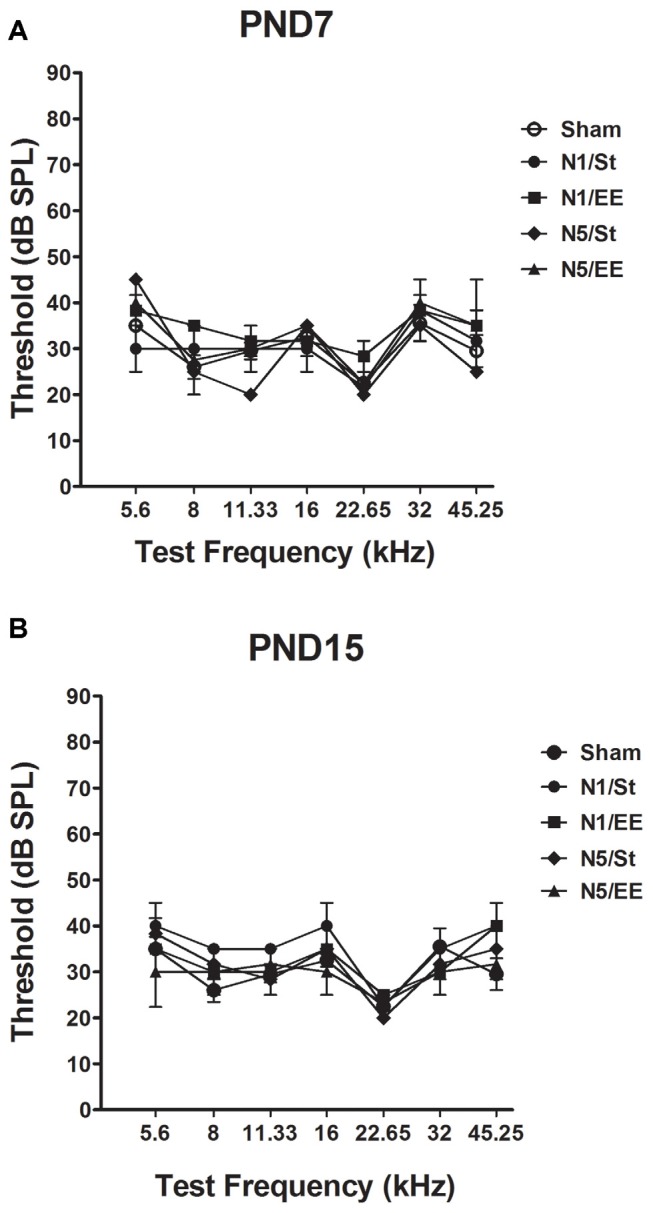
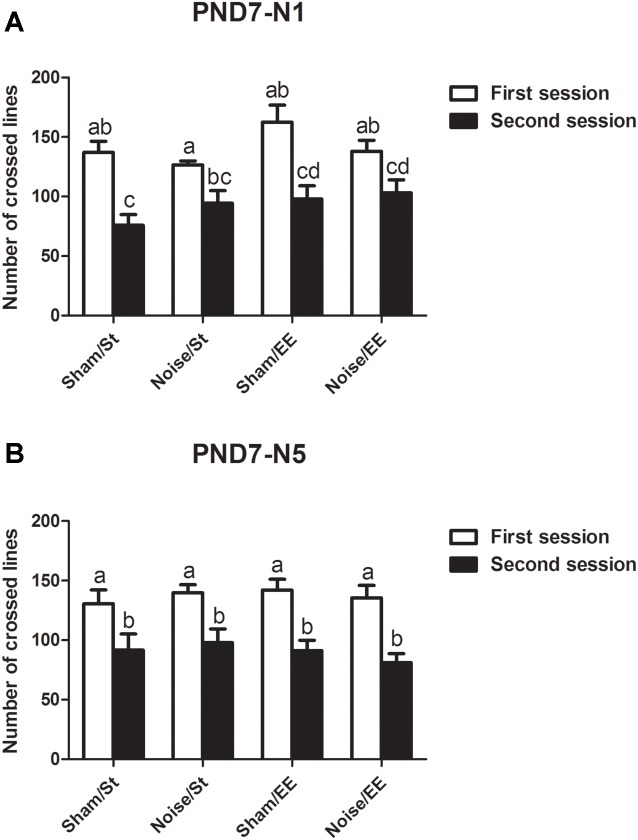
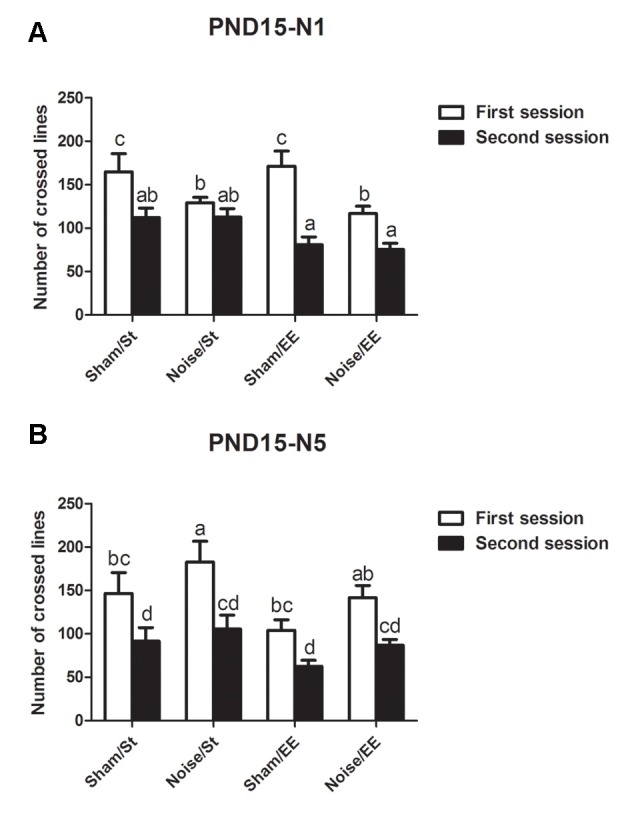
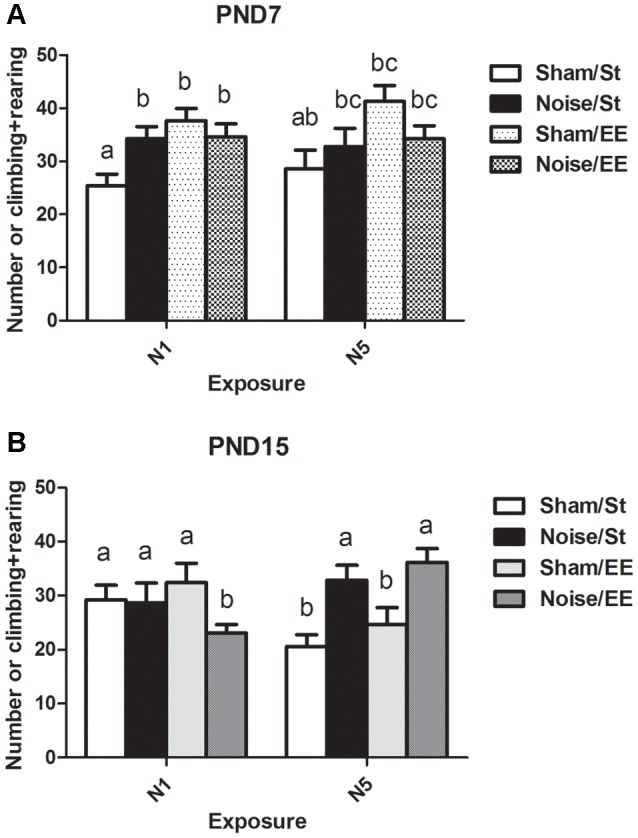
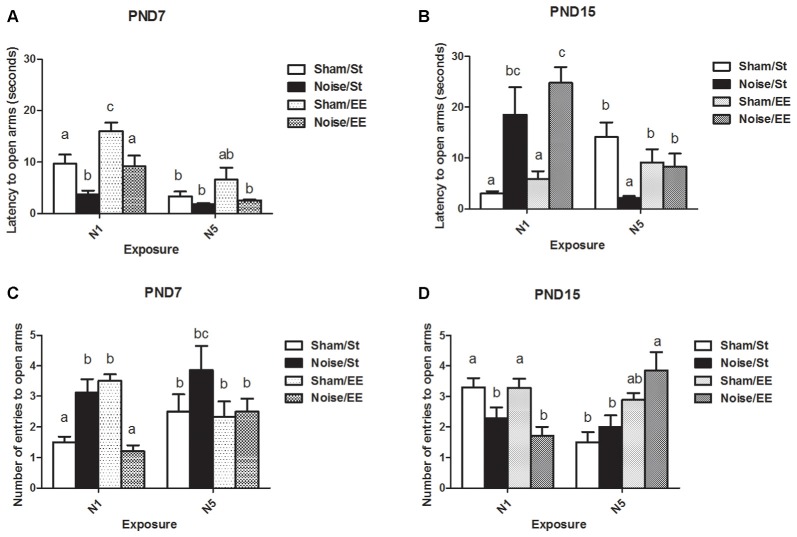
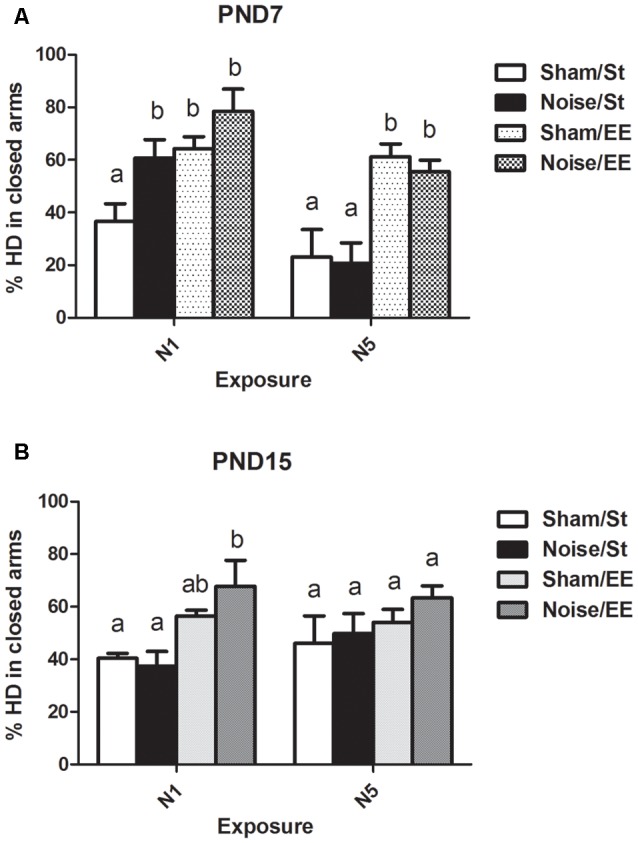
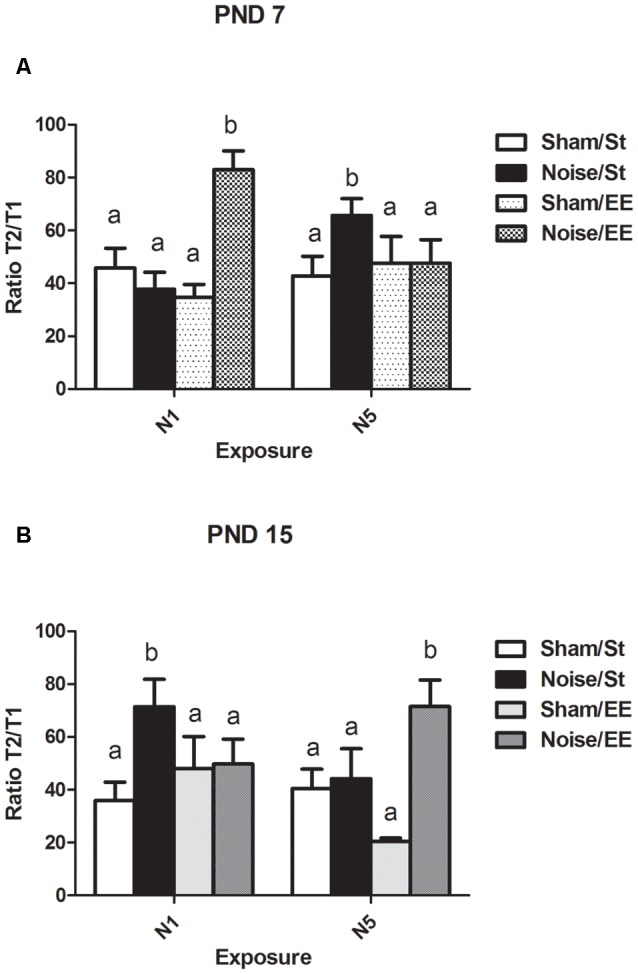
Exposure of developing rats to noise has shown to induce hippocampal-related behavioral alterations that were prevented after a week of housing in an enriched environment. However, neither the effect of repeated exposures nor its impact on key endogenous antioxidants had been studied yet. Thus, the aim of the present work was to reveal novel data about hippocampal oxidative state through the measurement of possible age-related differences in the levels of hippocampal thioredoxins in rats exposed to noise at different developmental ages and subjected to different schemes and housing conditions. In addition, the possibility that oxidative changes could underlie hippocampal-related behavioral changes was also analyzed. Developing male Wistar rats were exposed to noise for 2 h, either once or for 5 days. Upon weaning, some animals were transferred to an enriched cage for 1 week, whereas others were kept in standard cages. One week later, auditory and behavioral assessments, as well as measurement of hippocampal thioredoxin, were performed. Whereas no changes in the auditory function were observed, significant behavioral differences were found, that varied according to the age, scheme of exposure and housing condition. In addition, a significant increase in Trx-1 levels was found in all noise-exposed groups housed in standard cages. Housing animals in an enriched environment for 1 week was effective in preventing most of these changes. These findings suggest that animals become less susceptible to undergo behavioral alterations after repeated exposure to an environmental challenge, probably due to the ability of adaptation to an unfavorable condition. Moreover, it could be hypothesized that damage to younger individuals could be more easily prevented by a housing manipulation.
发育中的大鼠暴露于噪声中已被证明会诱发与海马体相关的行为改变,而在丰富环境中饲养一周后这些改变会被预防。然而,重复暴露的影响及其对关键内源性抗氧化剂的影响尚未得到研究。因此,本研究的目的是通过测量不同发育年龄暴露于噪声并经历不同方案和饲养条件的大鼠海马体硫氧还蛋白水平中可能存在的年龄相关差异,揭示有关海马体氧化状态的新数据。此外,还分析了氧化变化可能是与海马体相关的行为变化基础的可能性。将发育中的雄性Wistar大鼠暴露于噪声中2小时,暴露一次或暴露5天。断奶后,一些动物被转移到丰富的笼子中饲养1周,而其他动物则饲养在标准笼子中。一周后,进行听觉和行为评估以及海马体硫氧还蛋白的测量。虽然未观察到听觉功能的变化,但发现了显著的行为差异,这些差异因年龄、暴露方案和饲养条件而异。此外,在饲养于标准笼子中的所有噪声暴露组中,Trx-1水平显著升高。将动物在丰富环境中饲养1周可有效预防这些变化中的大多数。这些发现表明,动物在反复暴露于环境挑战后对行为改变的易感性降低,这可能是由于适应不利条件的能力。此外,可以推测,通过饲养操作可以更容易地预防年轻个体的损伤。