Kohri Michinari, Yamazaki Shigeaki, Irie Saki, Teramoto Naozumi, Taniguchi Tatsuo, Kishikawa Keiki
Department of Applied Chemistry and Biotechnology, Graduate School of Engineering, Chiba University, 1-33 Yayoi-cho, Inage-ku, Chiba 263-8522, Japan.
Department of Applied Chemistry, Faculty of Engineering, Chiba Institute of Technology, 2-17-1 Tsudanuma, Narashino, Chiba 275-0016, Japan.
ACS Omega. 2018 Dec 5;3(12):16626-16632. doi: 10.1021/acsomega.8b02768. eCollection 2018 Dec 31.
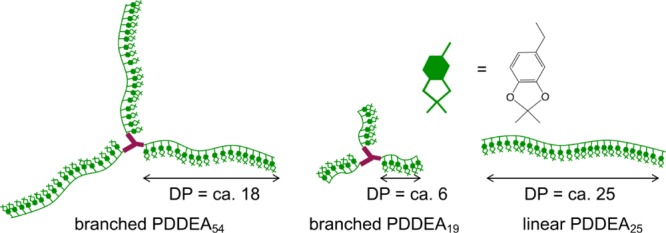
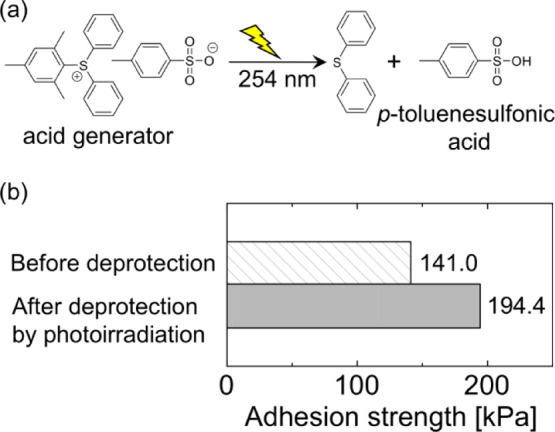
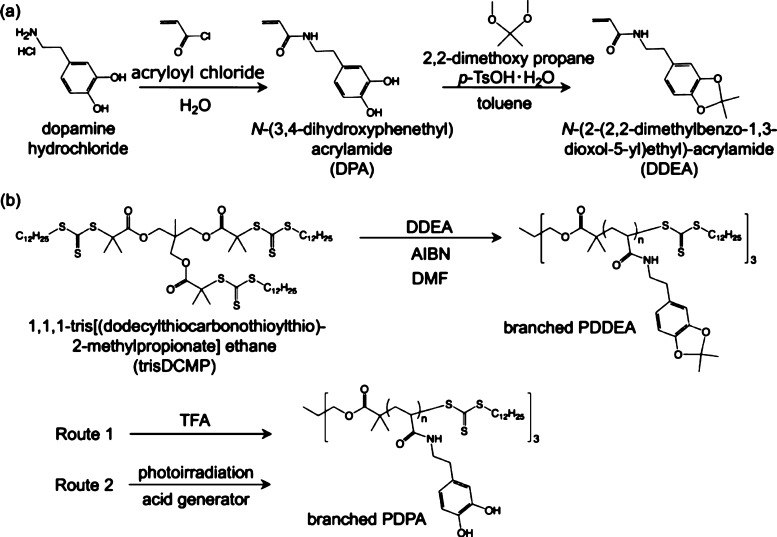
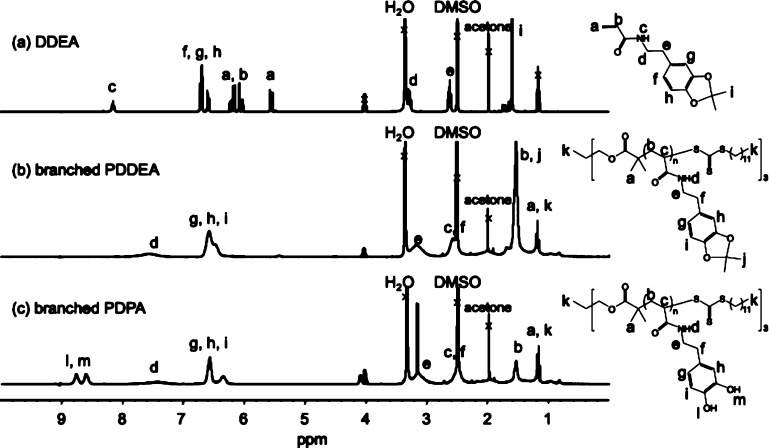
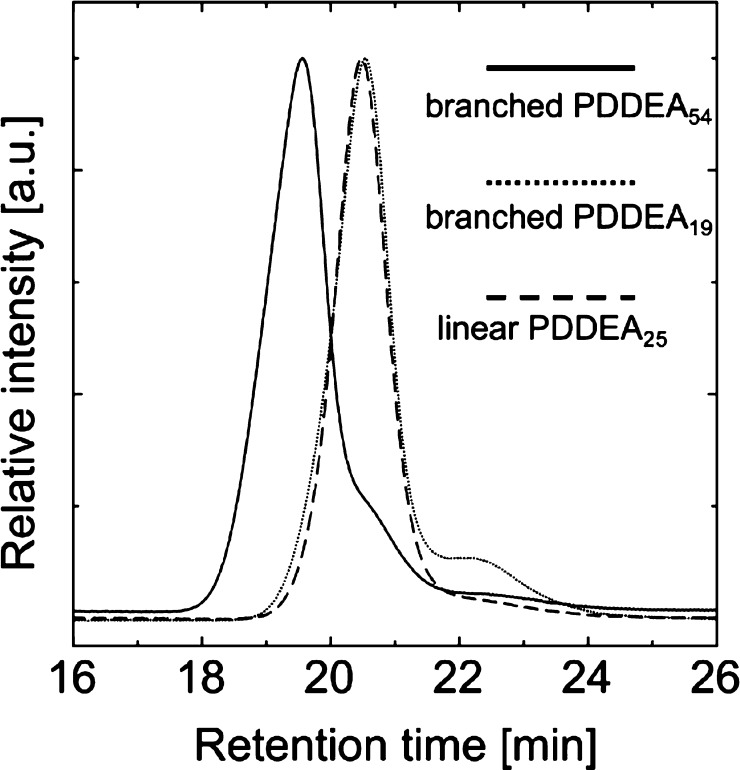
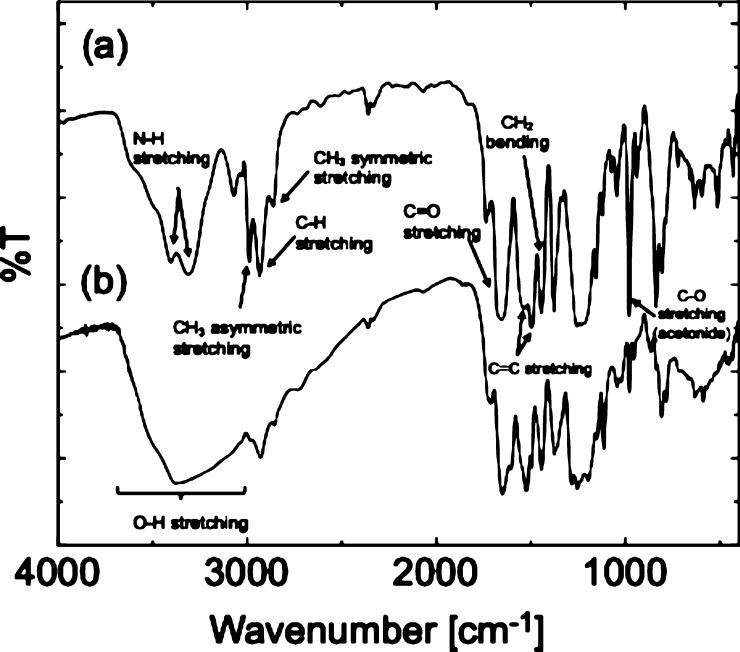
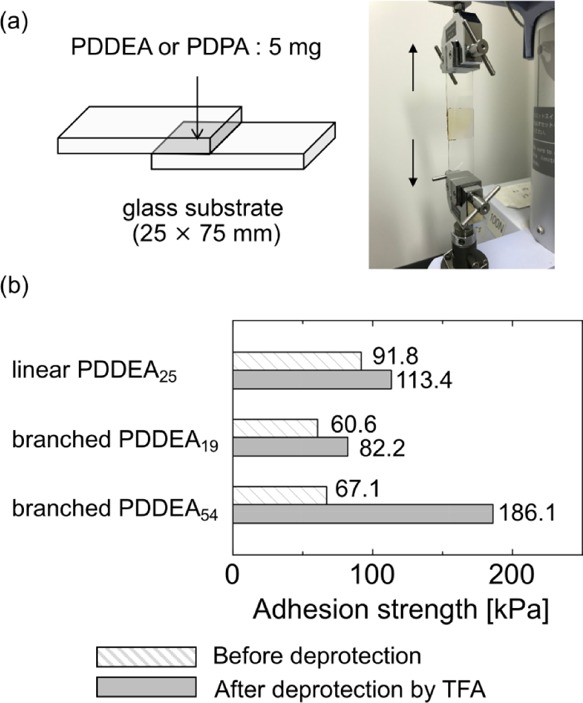
Biomimetic material design is a useful method for producing new functional materials. In recent years, catecholic polymers inspired from the adhesion mechanism of marine organisms have attracted attention. Here, we demonstrated the preparation of catecholic polymers by reversible addition-fragmentation chain transfer (RAFT) polymerization of an acetonide-protected catecholic monomer, that is, -(2-(2,2-dimethylbenzo-1,3-dioxol-5-yl)ethyl)-acrylamide (DDEA). By selecting the specific RAFT reagents, well-defined branched PDDEA and linear PDDEA were obtained. These PDDEA samples showed stronger adhesion strength after deprotection by acid stimulation compared with that before deprotection. In addition, we demonstrated the adhesion control of synthetic polymers by photoirradiation in the presence of photoacid generators, which decompose under light and release an acid.
仿生材料设计是制备新型功能材料的一种有用方法。近年来,受海洋生物粘附机制启发的儿茶酚聚合物受到了关注。在此,我们展示了通过对一种丙酮保护的儿茶酚单体,即-(2-(2,2-二甲基苯并-1,3-二氧杂环戊烯-5-基)乙基)-丙烯酰胺(DDEA)进行可逆加成-断裂链转移(RAFT)聚合来制备儿茶酚聚合物。通过选择特定的RAFT试剂,获得了结构明确的支化PDDEA和线性PDDEA。与脱保护前相比,这些PDDEA样品在酸刺激脱保护后表现出更强的粘附强度。此外,我们展示了在光酸发生器存在下通过光照射对合成聚合物进行粘附控制,光酸发生器在光照下分解并释放出酸。