Mishra Amit Kumar, Lahiri Barid Baran, Philip John
Smart Materials Section, Corrosion Science and Technology Division, Materials Characterization Group, Metallurgy and Materials Group, Indira Gandhi Centre for Atomic Research, HBNI, Kalpakkam 603102, Tamil Nadu, India.
ACS Omega. 2018 Aug 20;3(8):9487-9504. doi: 10.1021/acsomega.8b01084. eCollection 2018 Aug 31.
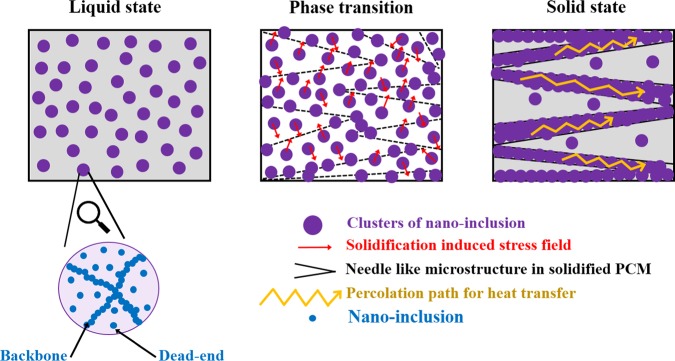
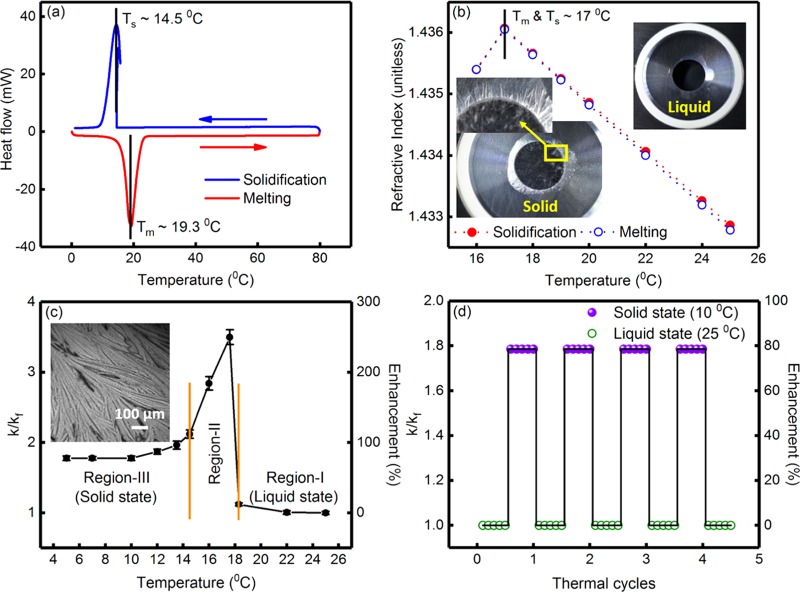
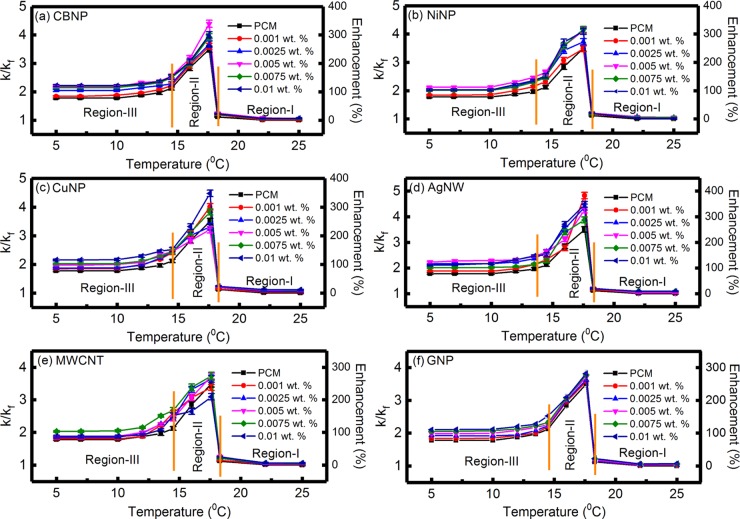
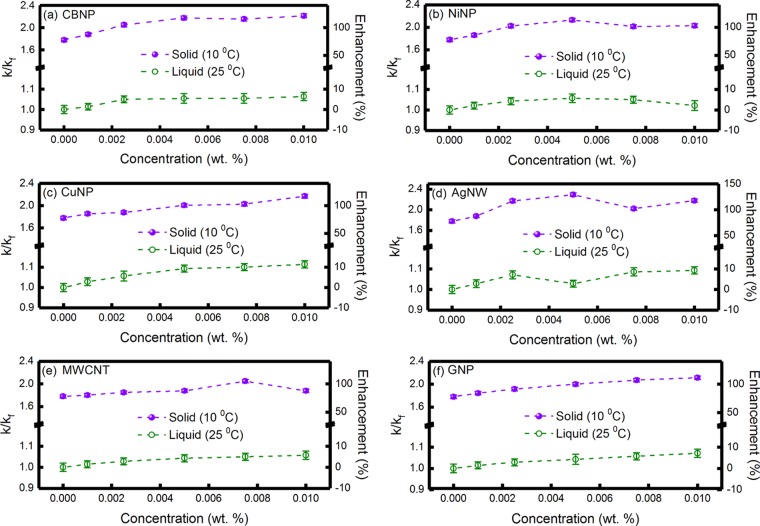
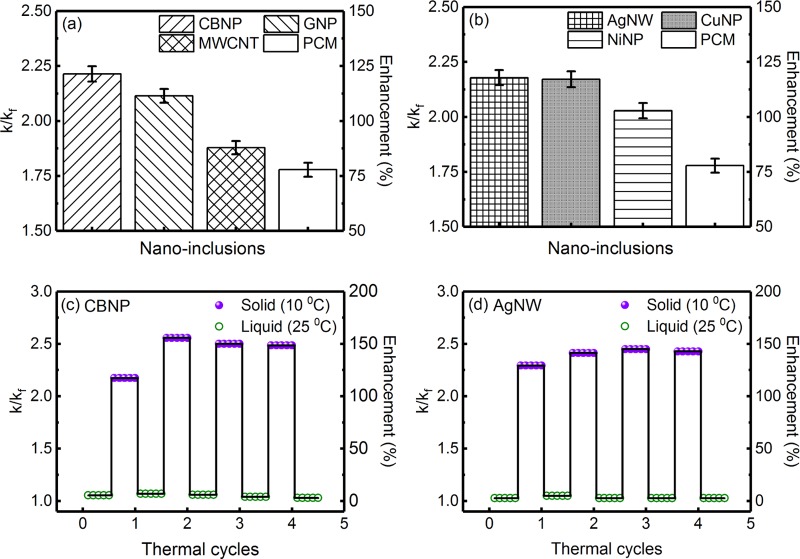
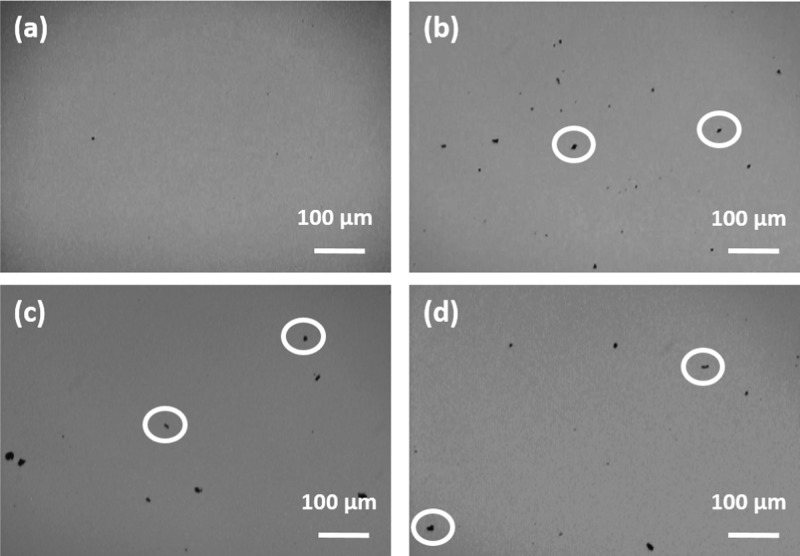
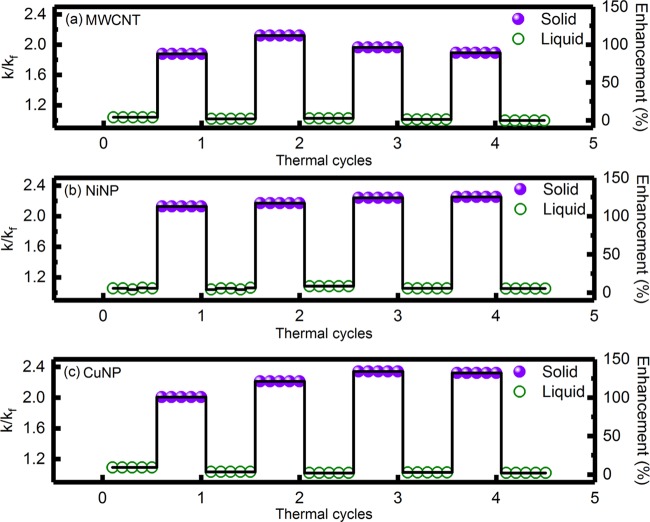
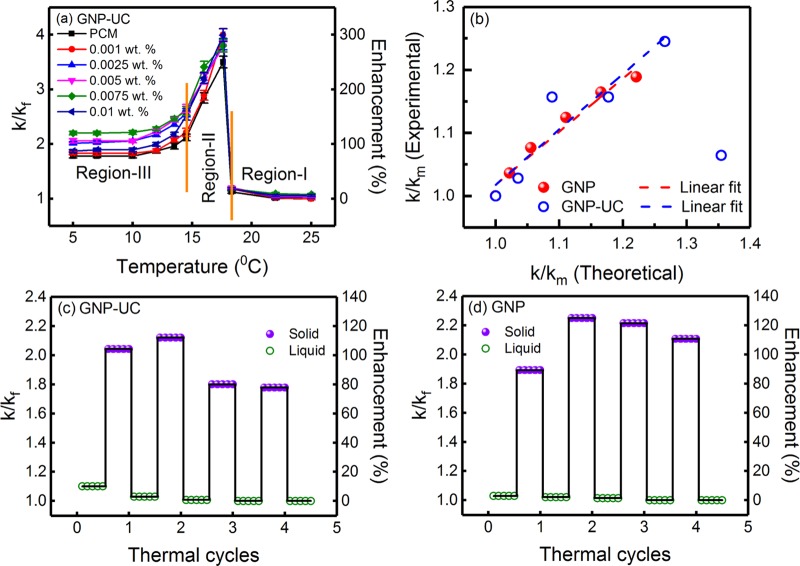
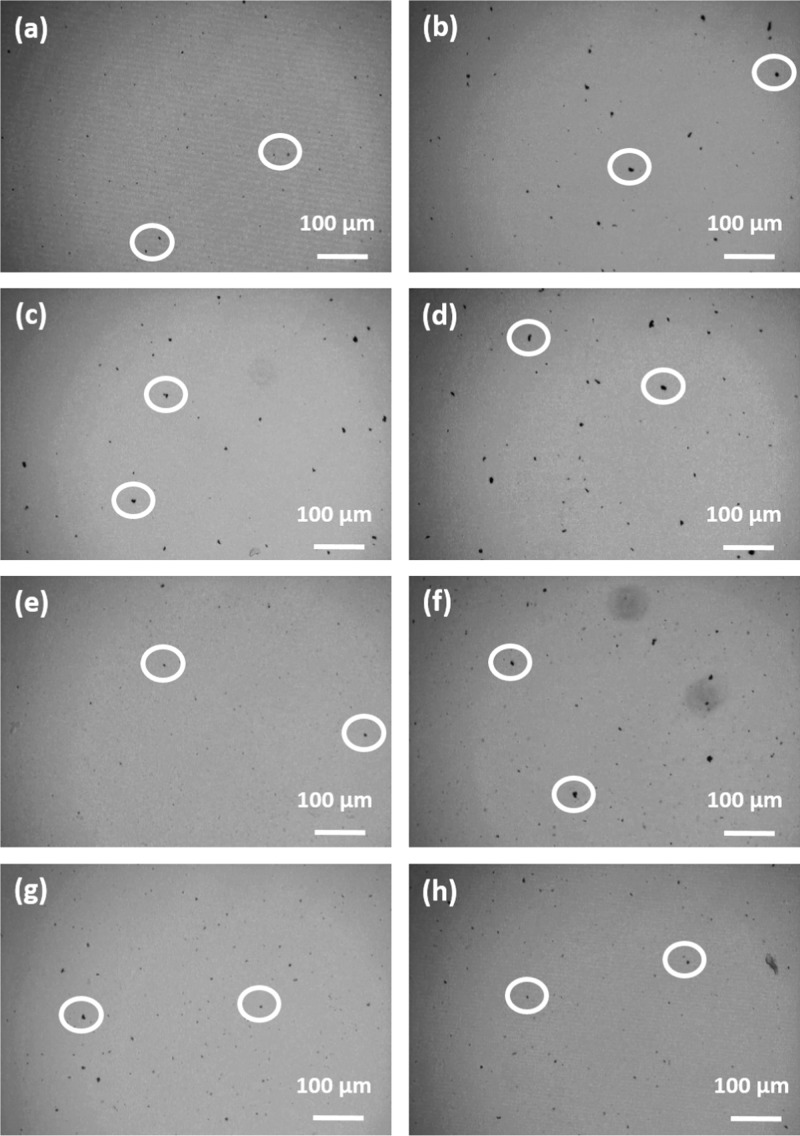
We probe the role of surface functionalization and physical properties of nanoinclusions in thermal conductivity enhancement during liquid-solid phase transition in a hexadecane-based phase change material (PCM). Hexadecane-based PCM is loaded with six different nanoinclusions: carbon black nanopowder (CBNP), nickel nanoparticles (NiNPs), copper nanoparticles, silver nanowires (AgNWs), multiwalled carbon nanotubes, and graphene nanoplatelets (GNPs). The nanoinclusions CBNP, NiNP, AgNW, and GNP are surface-functionalized with oleic acid. Nanoinclusion-loaded PCM showed a large enhancement in thermal conductivity, which was more prominent in the solid state. Interestingly, a maximum thermal conductivity enhancement of ∼122% was observed in the solid state for the PCM loaded with 0.01 wt % CBNP. Higher thermal conductivity enhancement in the solid state is attributed to the formation of a nanocrystalline network structure during freezing of the PCM, consisting of a needlelike microstructure, which is confirmed by optical phase contrast microscopy. During solidification, the nanoinclusions are driven toward the grain boundaries, thereby forming a quasi-two-dimensional network of percolating structures with high thermal transport efficiency due to the enhancement of phonon-mediated heat transfer and near-field radiative heat transfer. Thermal conductivity increases with the increased loading of the nanoinclusions due to the formation of more interconnecting aggregates. Among the carbon-based nanoinclusions, the highest thermal conductivity enhancement is obtained for the PCM loaded with CBNP, which is attributed to the low fractal dimensions and volume-filling capability of CBNP aggregates. In the case of metallic nanoinclusions, the highest thermal conductivity enhancement is obtained for the PCM loaded with AgNW, which is due to the large aspect ratio of AgNW. The carboxylic group of oleic acid attached to the nanoinclusions is found to provide better steric stability with insignificant aggregation and improved thermal stability, which are beneficial for practical applications. Our results indicate that the initial thermal conductivity of carbon-based nanoinclusions has an insignificant role in the thermal conductivity enhancement of the PCM but the volume-filling capability of the nanoinclusion has a prominent role. The findings from the present study will be beneficial for tailoring the properties of nanoinclusion-loaded organic PCM for thermal energy storage and reversible thermal switching applications at room temperature.
我们探究了纳米夹杂物的表面功能化及其物理性质在基于十六烷的相变材料(PCM)液 - 固相变过程中提高热导率方面的作用。基于十六烷的PCM中负载了六种不同的纳米夹杂物:炭黑纳米粉末(CBNP)、镍纳米颗粒(NiNPs)、铜纳米颗粒、银纳米线(AgNWs)、多壁碳纳米管和石墨烯纳米片(GNPs)。纳米夹杂物CBNP、NiNP、AgNW和GNP用油酸进行了表面功能化处理。负载纳米夹杂物的PCM热导率有大幅提高,在固态时更为显著。有趣的是,对于负载0.01 wt% CBNP的PCM,在固态时观察到热导率最大提高约122%。固态时更高的热导率提高归因于PCM凝固过程中形成了纳米晶网络结构,该结构由针状微观结构组成,这通过光学相衬显微镜得到证实。在凝固过程中,纳米夹杂物被驱向晶界,从而形成具有高热传输效率的准二维渗流结构网络,这是由于声子介导的热传递和近场辐射热传递增强所致。由于形成了更多相互连接的聚集体,热导率随纳米夹杂物负载量的增加而增加。在碳基纳米夹杂物中,负载CBNP的PCM热导率提高最高,这归因于CBNP聚集体的低分形维数和体积填充能力。在金属纳米夹杂物的情况下,负载AgNW的PCM热导率提高最高,这是由于AgNW的大长径比。发现附着在纳米夹杂物上的油酸羧基能提供更好的空间稳定性,聚集不显著且热稳定性提高,这对实际应用有益。我们的结果表明,碳基纳米夹杂物的初始热导率在PCM热导率提高中作用不显著,但纳米夹杂物的体积填充能力起显著作用。本研究的结果将有助于定制负载纳米夹杂物的有机PCM的性能,用于室温下的热能存储和可逆热开关应用。