Scheiner Karina C, Maas-Bakker Roel F, Nguyen Thanh T, Duarte Ana M, Hendriks Gert, Sequeira Lídia, Duffy Garry P, Steendam Rob, Hennink Wim E, Kok Robbert J
Department of Pharmaceutics, Utrecht Institute of Pharmaceutical Sciences, Utrecht University, Universiteitsweg 99, 3584 CG Utrecht, The Netherlands.
InnoCore Pharmaceuticals B.V., L.J. Zielstraweg 1, 9713 GX Groningen, The Netherlands.
ACS Omega. 2019 Jul 1;4(7):11481-11492. doi: 10.1021/acsomega.9b01272. eCollection 2019 Jul 31.
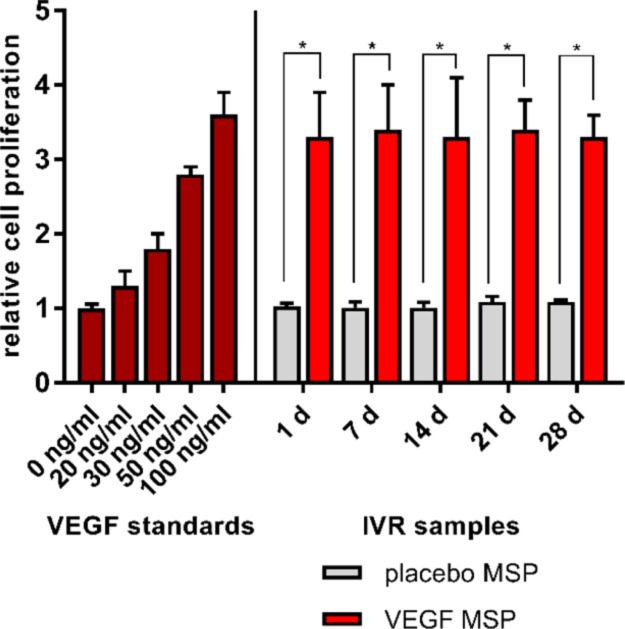
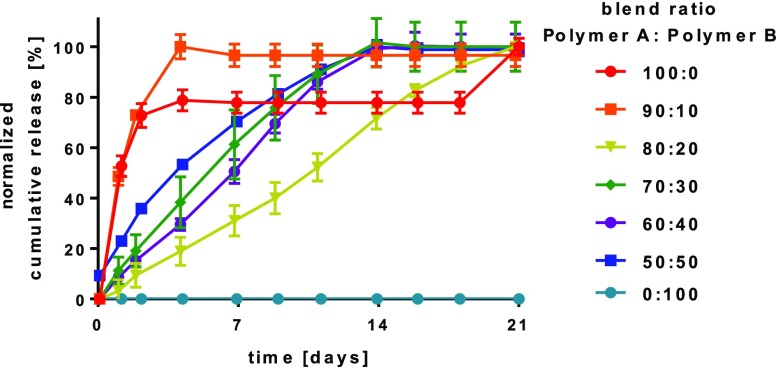
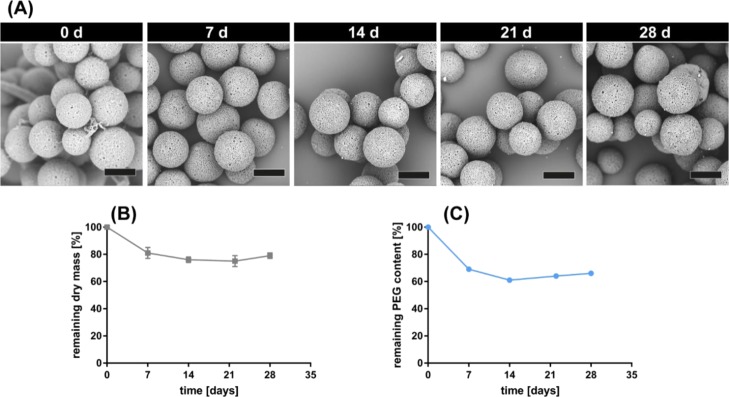
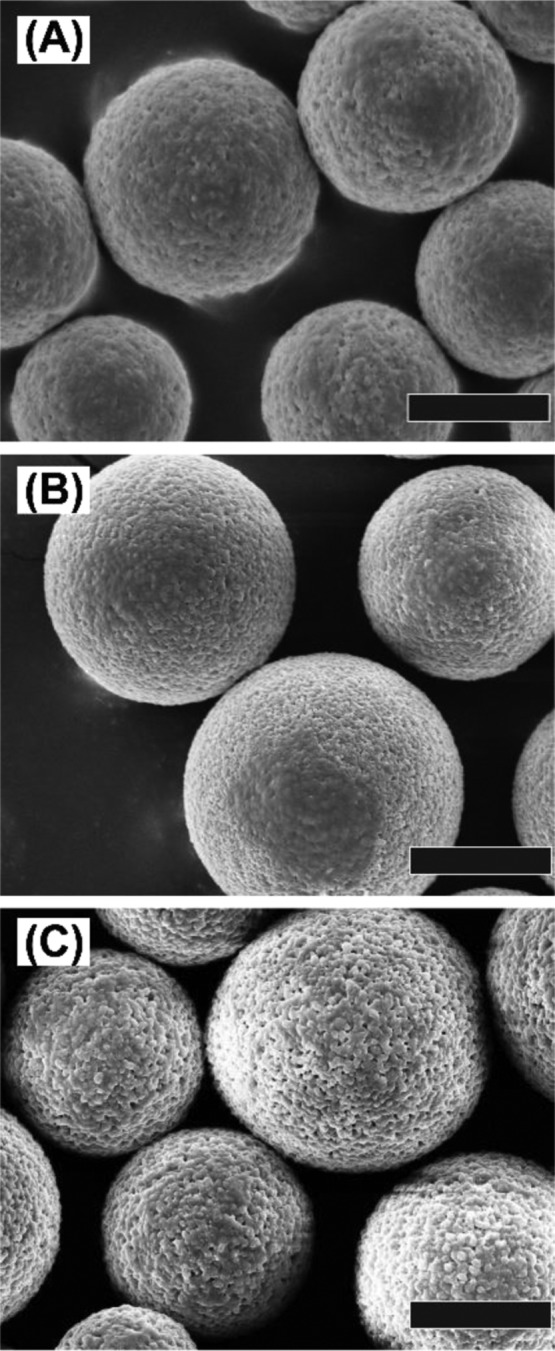
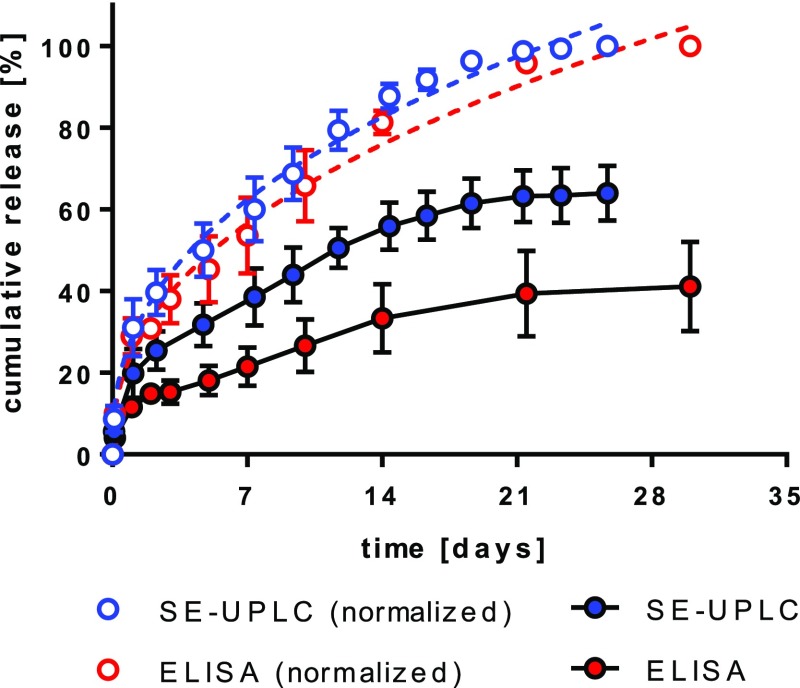
Vascular endothelial growth factor (VEGF) is the major regulating factor for the formation of new blood vessels, also known as angiogenesis. VEGF is often incorporated in synthetic scaffolds to promote vascularization and to enhance the survival of cells that have been seeded in these devices. Such applications require sustained local delivery of VEGF of around 4 weeks for stable blood vessel formation. Most delivery systems for VEGF only provide short-term release for a couple of days, followed by a release phase with very low VEGF release. We now have developed VEGF-loaded polymeric microspheres that provide sustained release of bioactive VEGF for 4 weeks. Blends of two swellable poly(ε-caprolactone)-poly(ethylene glycol)-poly(ε-caprolactone)--poly(l-lactide) ([PCL-PEG-PCL]--[PLLA])-based multiblock copolymers with different PEG content and PEG molecular weight were used to prepare the microspheres. Loading of the microspheres was established by a solvent evaporation-based membrane emulsification method. The resulting VEGF-loaded microspheres had average sizes of 40-50 μm and a narrow size distribution. Optimized formulations of a 50:50 blend of the two multiblock copolymers had an average VEGF loading of 0.79 ± 0.09%, representing a high average VEGF loading efficiency of 78 ± 16%. These microspheres released VEGF continuously over 4 weeks in phosphate-buffered saline pH 7.4 at 37 °C. This release profile was preserved after repeated and long-term storage at -20 °C for up to 9 months, thereby demonstrating excellent storage stability. VEGF release was governed by diffusion through the water-filled polymer matrix, depending on PEG molecular weight and PEG content of the polymers. The bioactivity of the released VEGF was retained within the experimental error in the 4-week release window, as demonstrated using a human umbilical vein endothelial cells proliferation assay. Thus, the microspheres prepared in this study are suitable for embedment in polymeric scaffolds with the aim of promoting their functional vascularization.
血管内皮生长因子(VEGF)是新血管形成的主要调节因子,新血管形成也被称为血管生成。VEGF常被整合到合成支架中,以促进血管化并提高接种于这些装置中的细胞的存活率。此类应用需要VEGF持续局部递送约4周,以实现稳定的血管形成。大多数VEGF递送系统仅提供几天的短期释放,随后是VEGF释放量极低的释放阶段。我们现已开发出负载VEGF的聚合物微球,可实现生物活性VEGF持续释放4周。使用具有不同聚乙二醇(PEG)含量和PEG分子量的两种可膨胀聚(ε-己内酯)-聚(乙二醇)-聚(ε-己内酯)-聚(L-丙交酯)([PCL-PEG-PCL]-[PLLA])基多嵌段共聚物的共混物来制备微球。通过基于溶剂蒸发的膜乳化法确定微球的负载量。所得负载VEGF的微球平均尺寸为40 - 50μm,尺寸分布狭窄。两种多嵌段共聚物50:50共混物的优化配方平均VEGF负载量为0.79±0.09%,代表了78±16%的高平均VEGF负载效率。这些微球在37°C、pH 7.4的磷酸盐缓冲盐水中4周内持续释放VEGF。在-20°C下重复长期储存长达9个月后,这种释放曲线得以保持,从而证明了优异的储存稳定性。VEGF的释放受通过充满水的聚合物基质的扩散控制,这取决于聚合物的PEG分子量和PEG含量。如使用人脐静脉内皮细胞增殖试验所证明的,在4周释放窗口内,释放的VEGF的生物活性在实验误差范围内得以保留。因此,本研究中制备的微球适用于嵌入聚合物支架中,以促进其功能性血管化。