Departamento de Ciencia de los Alimentos y Tecnología Química, Facultad de Ciencias Químicas y Farmacéuticas, Universidad de Chile, Santos Dumont 964, Independencia, Santiago 8380494, Chile.
Center for Systems Biotechnology, Fraunhofer Chile Research, Av. Del Cóndor 844 floor 3, Santiago 8580704, Chile.
Molecules. 2019 Aug 27;24(17):3108. doi: 10.3390/molecules24173108.
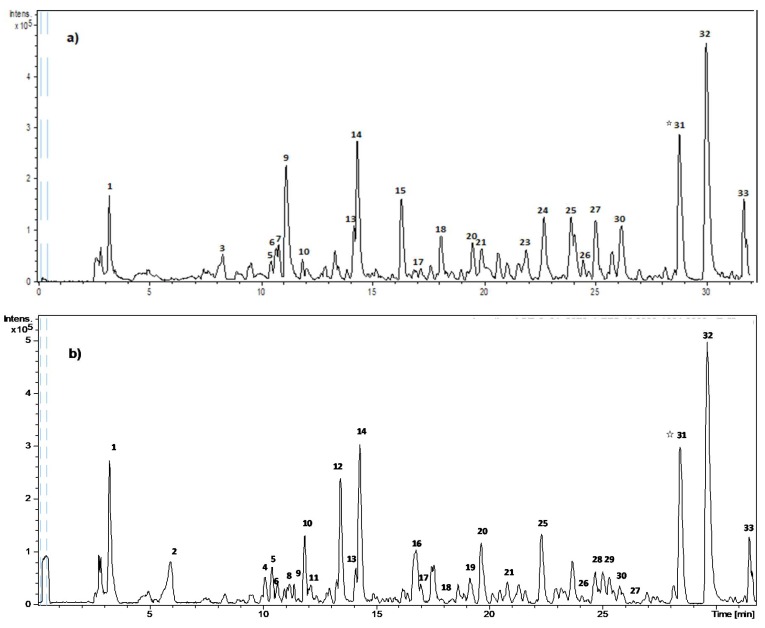
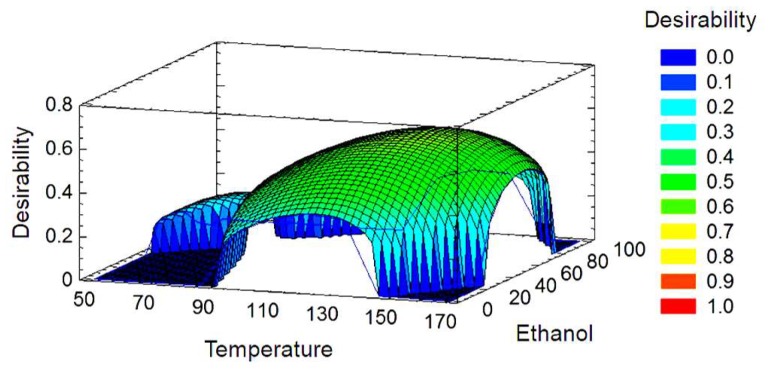
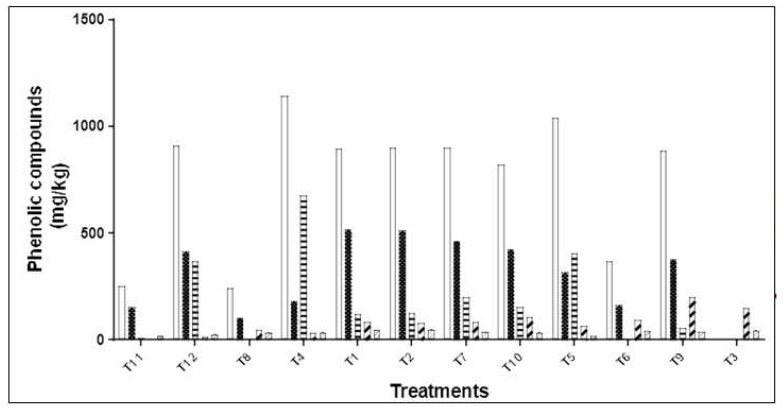
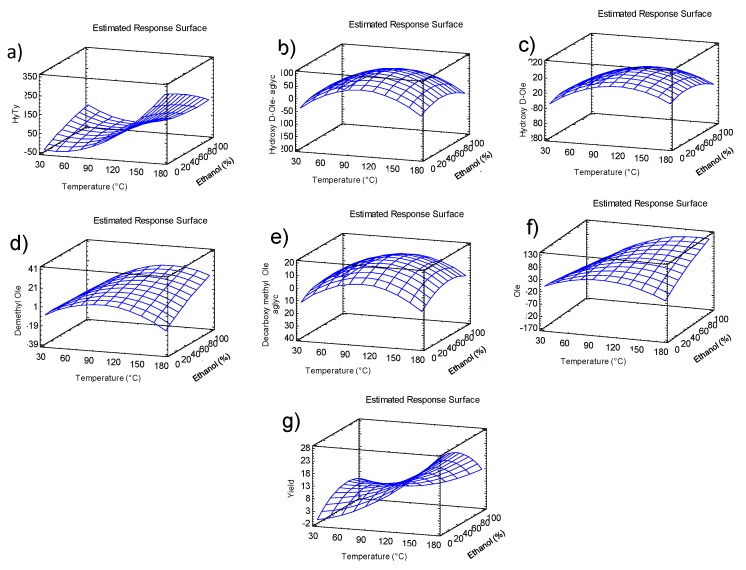
The olive oil industry produces large volumes of wastes, which are also potential sources of bioactive compounds by developing healthy and/or functional foods. Extraction of phenolic compounds from the residues of the olive oil is mainly carried out with solvents. However, there is currently a growing public awareness about the use of organic solvents in food processing, which has pointed out the need for the application of clean technologies such as pressurized liquid extraction (PLE). Therefore, the aim of this research was to optimize the phenolic compound extraction from olive pomace by PLE, establishing the qualitative and quantitative phenolic profile by HPLC-ESI-TOF/MS. The extraction design to recover phenolics from olive pomace demonstrates a great compositional variability of PLE extracts obtained under different experimental conditions. Indeed, quantitative results have pointed out the selectivity of PLE extraction when this technique is applied to the treatment of olive pomace. PLE-optimized conditions showed higher total phenolic compound content than conventional extraction (1659 mg/kg d.w. and 281.7 mg/kg d.w., respectively). Among these phenolics, the quantity of secoiridoids and flavonoids in the optimized PLE extract was three and four times higher than in conventional extracts. Furthermore, optimal PLE conditions allowed to obtain an enriched hydroxytyrosol extract which was not detected in the conventional one.
橄榄油产业会产生大量的废物,这些废物也是通过开发健康和/或功能性食品来生产生物活性化合物的潜在来源。从橄榄油残渣中提取酚类化合物主要使用溶剂。然而,目前公众越来越关注在食品加工中使用有机溶剂,这就需要应用清洁技术,如加压液体萃取(PLE)。因此,本研究的目的是通过 PLE 优化从橄榄渣中提取酚类化合物,并通过 HPLC-ESI-TOF/MS 建立酚类化合物的定性和定量分析方法。从橄榄渣中回收酚类化合物的萃取设计表明,在不同实验条件下获得的 PLE 提取物具有很大的组成可变性。实际上,定量结果指出了 PLE 萃取的选择性,当该技术应用于橄榄渣处理时。与传统萃取相比(分别为 1659 mg/kg d.w. 和 281.7 mg/kg d.w.),优化 PLE 条件下的总酚类化合物含量更高。在这些酚类化合物中,优化 PLE 提取物中橄榄苦苷和类黄酮的含量分别比传统提取物高 3 倍和 4 倍。此外,优化 PLE 条件可以获得一种富含羟基酪醇的提取物,而在传统提取物中则没有检测到这种物质。