Verster Joris C, Vermeulen Sterre A, Loo Aurora J A E van de, Balikji Stephanie, Kraneveld Aletta D, Garssen Johan, Scholey Andrew
Division of Pharmacology, Utrecht Institute for Pharmaceutical Sciences, Utrecht University, 3584CG Utrecht, The Netherlands.
Institute for Risk Assessment Sciences (IRAS), Utrecht University, 3584CM Utrecht, The Netherlands.
J Clin Med. 2019 Aug 27;8(9):1316. doi: 10.3390/jcm8091316.
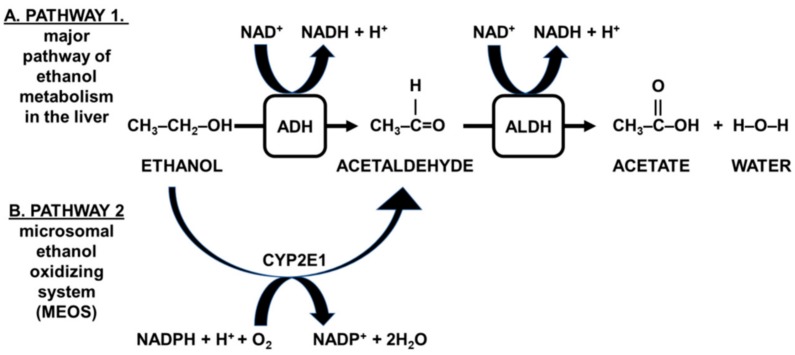
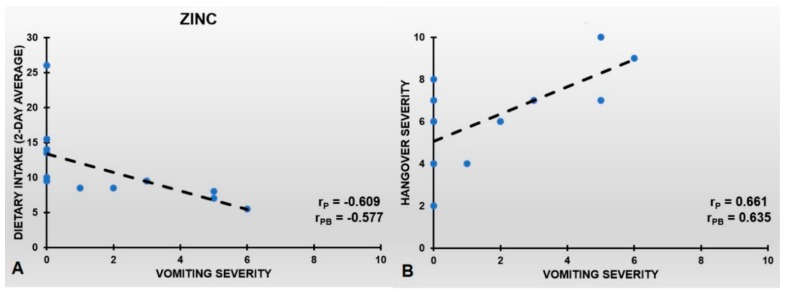
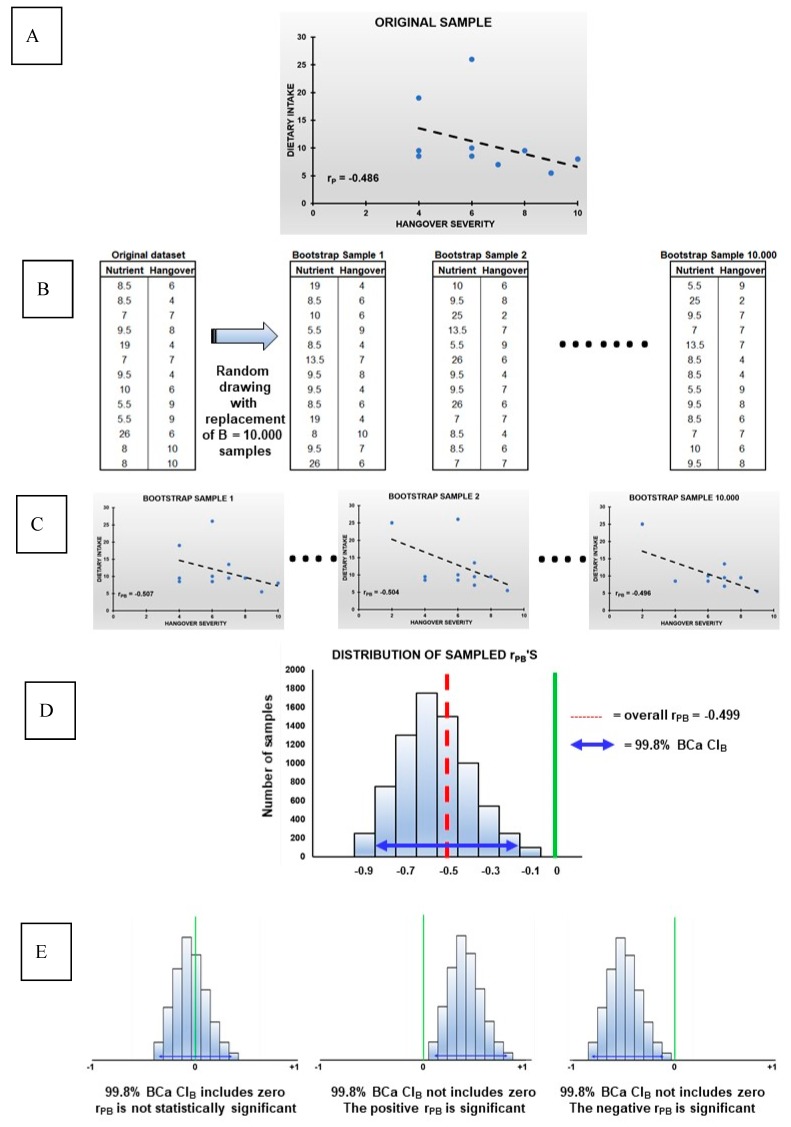
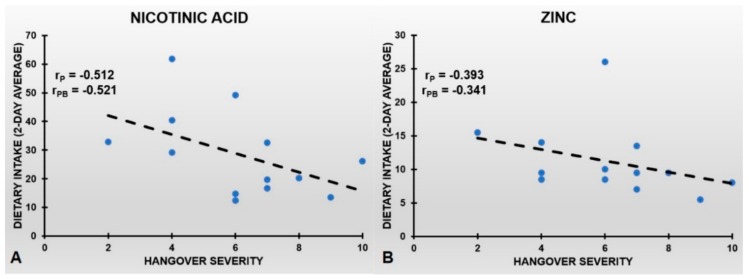
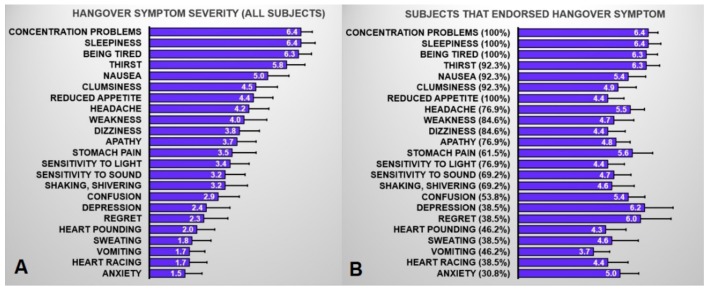
Several dietary components have been shown to influence alcohol metabolism and thereby potentially affect the development of a hangover. From the literature, it is evident that dietary nicotinic acid and zinc play a pivotal role in the oxidation of ethanol into acetaldehyde. The aim of the current study was to associate dietary intake of nicotinic acid and zinc with hangover severity. To this end, data from = 23 healthy social drinkers who participated in a naturalistic hangover study were analyzed. = 10 of them reported to be hangover-resistant (the control group), whereas = 13 reported to have regular hangovers (the hangover-sensitive group). Two 24 h dietary recall records were completed, one for the day of alcohol consumption and another one for an alcohol-free control day. Dietary nutrient intake was averaged and did not significantly differ between hangover-sensitive and hangover-resistant drinkers. For the hangover-sensitive drinkers, partial correlations with overall hangover severity were computed, controlling for estimated blood alcohol concentration. A bootstrapping technique was applied to account for the relatively small sample size. The results showed that dietary intake of nicotinic acid (r = -0.521) and zinc (r = -0.341) were significantly and negatively associated ( < 0.002) with overall hangover severity. Dietary zinc intake was also significantly and negatively associated with severity of vomiting (r = -0.577, < 0.002). No significant associations with hangover severity were found for other nutrients, such as fat and fibers. In conclusion, this study suggests that social drinkers who have a higher dietary intake of nicotinic acid and zinc report significantly less severe hangovers. As hangover-resistant and hangover-sensitive drinkers had a similar dietary nutrient intake, the claim of being hangover-resistant must be based on other unknown biopsychosocial factors. These findings should be replicated in a larger sample and include more elaborate food frequency questionnaires or nutrient-specific dietary intake records for zinc and nicotinic acid, and preferably accompanied by nutrient assessments in urine and/or blood.
已有研究表明,几种饮食成分会影响酒精代谢,从而可能影响宿醉的形成。从文献中可以明显看出,饮食中的烟酸和锌在乙醇氧化为乙醛的过程中起着关键作用。本研究的目的是将烟酸和锌的饮食摄入量与宿醉严重程度联系起来。为此,分析了23名参与自然主义宿醉研究的健康社交饮酒者的数据。其中10人报告称对宿醉有抵抗力(对照组),而13人报告称经常宿醉(宿醉敏感组)。完成了两份24小时饮食回忆记录,一份是饮酒当天的,另一份是无酒精对照日的。对饮食营养摄入量进行了平均,宿醉敏感饮酒者和宿醉抵抗饮酒者之间没有显著差异。对于宿醉敏感的饮酒者,计算了与总体宿醉严重程度的偏相关性,并控制了估计的血液酒精浓度。应用了一种自抽样技术来考虑相对较小的样本量。结果表明,烟酸(r = -0.521)和锌(r = -0.341)的饮食摄入量与总体宿醉严重程度显著负相关(P < 0.002)。饮食锌摄入量也与呕吐严重程度显著负相关(r = -0.577,P < 0.002)。未发现其他营养素(如脂肪和纤维)与宿醉严重程度有显著关联。总之,本研究表明,烟酸和锌饮食摄入量较高的社交饮酒者报告的宿醉严重程度明显较低。由于宿醉抵抗者和宿醉敏感者的饮食营养摄入量相似,因此对宿醉有抵抗力的说法一定基于其他未知的生物心理社会因素。这些发现应在更大的样本中进行重复,并包括更详细的食物频率问卷或锌和烟酸的特定营养素饮食摄入记录,最好同时进行尿液和/或血液中的营养素评估。