Gu Wen-Yuan, Li Yan, Liu Bao-Jing, Wang Jing, Yuan Guang-Fu, Chen Shao-Jie, Zuo Yu-Zhu, Fan Jing-Hui
College of Veterinary Medicine, Agricultural University of Hebei, Baoding, 071001, People's Republic of China.
Animal Diseases Control Center of Hebei, Shijiazhuang, 050053, China.
Virus Genes. 2019 Dec;55(6):795-801. doi: 10.1007/s11262-019-01701-y. Epub 2019 Aug 28.
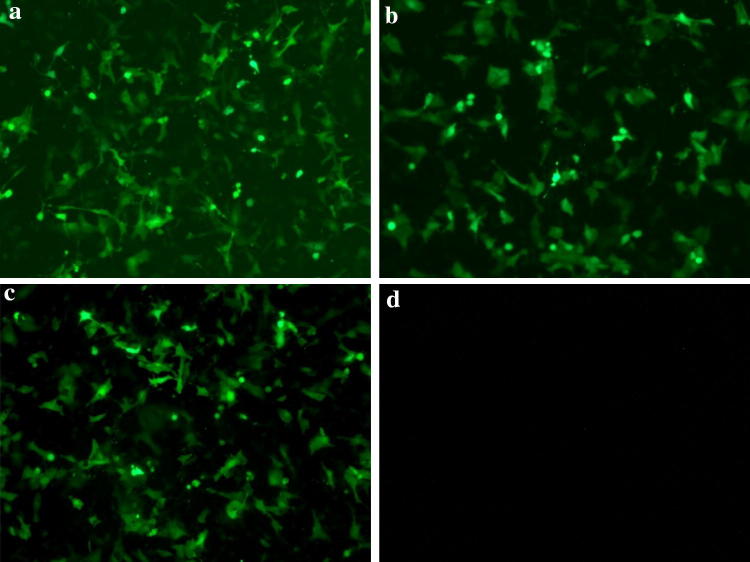
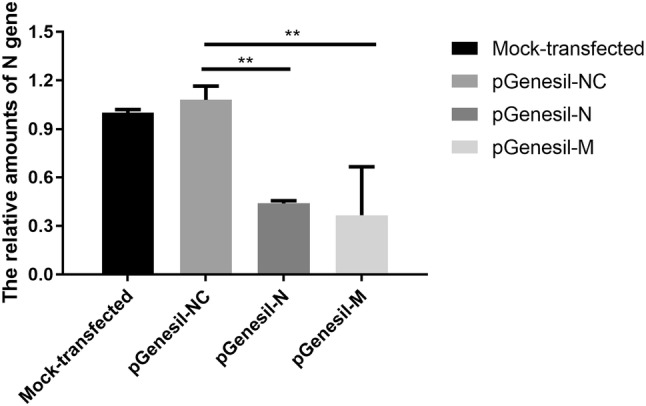
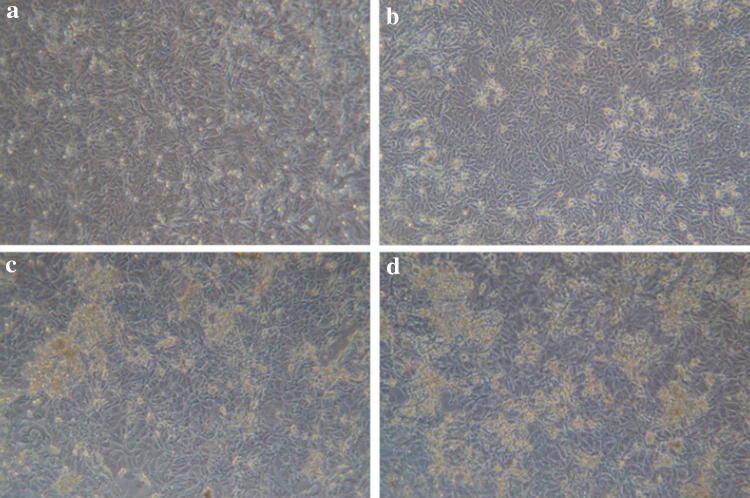
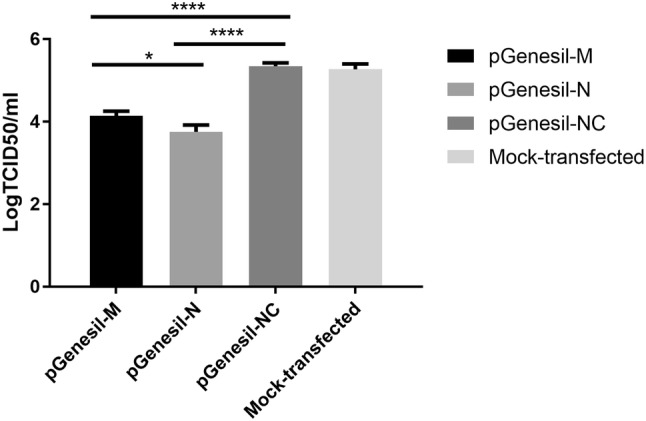
Porcine deltacoronavirus (PDCoV) is a recently identified coronavirus that causes intestinal diseases in neonatal piglets with diarrhea, vomiting, dehydration, and post-infection mortality of 50-100%. Currently, there are no effective treatments or vaccines available to control PDCoV. To study the potential of RNA interference (RNAi) as a strategy against PDCoV infection, two short hairpin RNA (shRNA)-expressing plasmids (pGenesil-M and pGenesil-N) that targeted the M and N genes of PDCoV were constructed and transfected separately into swine testicular (ST) cells, which were then infected with PDCoV strain HB-BD. The potential of the plasmids to inhibit PDCoV replication was evaluated by cytopathic effect, virus titers, and real-time quantitative RT-PCR assay. The cytopathogenicity assays demonstrated that pGenesil-M and pGenesil-N protected ST cells against pathological changes with high specificity and efficacy. The 50% tissue culture infective dose showed that the PDCoV titers in ST cells treated with pGenesil-M and pGenesil-N were reduced 13.2- and 32.4-fold, respectively. Real-time quantitative RT-PCR also confirmed that the amount of viral RNA in cell cultures pre-transfected with pGenesil-M and pGenesil-N was reduced by 45.8 and 56.1%, respectively. This is believed to be the first report to show that shRNAs targeting the M and N genes of PDCoV exert antiviral effects in vitro, which suggests that RNAi is a promising new strategy against PDCoV infection.
猪德尔塔冠状病毒(PDCoV)是一种最近发现的冠状病毒,可导致新生仔猪患肠道疾病,出现腹泻、呕吐、脱水症状,感染后死亡率达50%-100%。目前,尚无有效的治疗方法或疫苗可用于控制PDCoV。为了研究RNA干扰(RNAi)作为对抗PDCoV感染策略的潜力,构建了两种靶向PDCoV的M基因和N基因的短发夹RNA(shRNA)表达质粒(pGenesil-M和pGenesil-N),并分别将其转染到猪睾丸(ST)细胞中,然后用PDCoV HB-BD毒株感染这些细胞。通过细胞病变效应、病毒滴度和实时定量RT-PCR检测评估质粒抑制PDCoV复制的潜力。细胞病变检测表明,pGenesil-M和pGenesil-N能高度特异性且有效地保护ST细胞免受病理变化影响。50%组织培养感染剂量显示,用pGenesil-M和pGenesil-N处理的ST细胞中PDCoV滴度分别降低了13.2倍和32.4倍。实时定量RT-PCR也证实,预先用pGenesil-M和pGenesil-N转染的细胞培养物中病毒RNA的量分别减少了45.8%和56.1%。据信,这是第一份表明靶向PDCoV的M基因和N基因的shRNAs在体外发挥抗病毒作用的报告,这表明RNAi是一种有前景的对抗PDCoV感染的新策略。