Shen Haiyan, Zhang Chunhong, Guo Pengju, Liu Zhicheng, Zhang Jianfeng
Institute of Animal Health, Guangdong Academy of Agricultural Sciences, Guangdong Open Laboratory of Veterinary Public Health, Guangdong Provincial Key Laboratory of Livestock Disease Prevention, Guangzhou, 510640, Guangdong, China.
Guangdong Laboratory Animals Monitoring Institute, Guangzhou, 510640, Guangdong, China.
Virus Genes. 2015 Oct;51(2):252-9. doi: 10.1007/s11262-015-1242-5. Epub 2015 Sep 2.
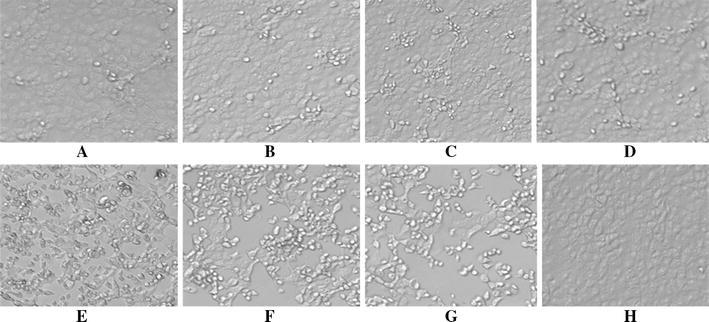
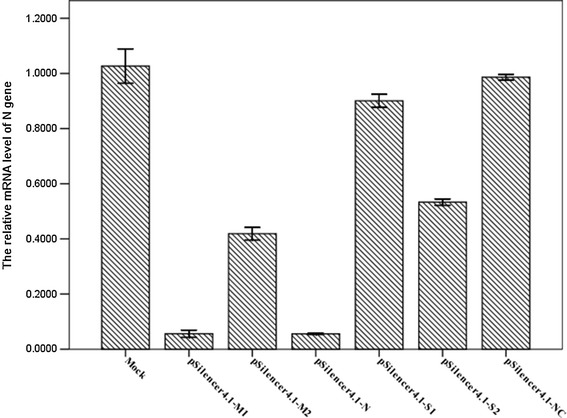
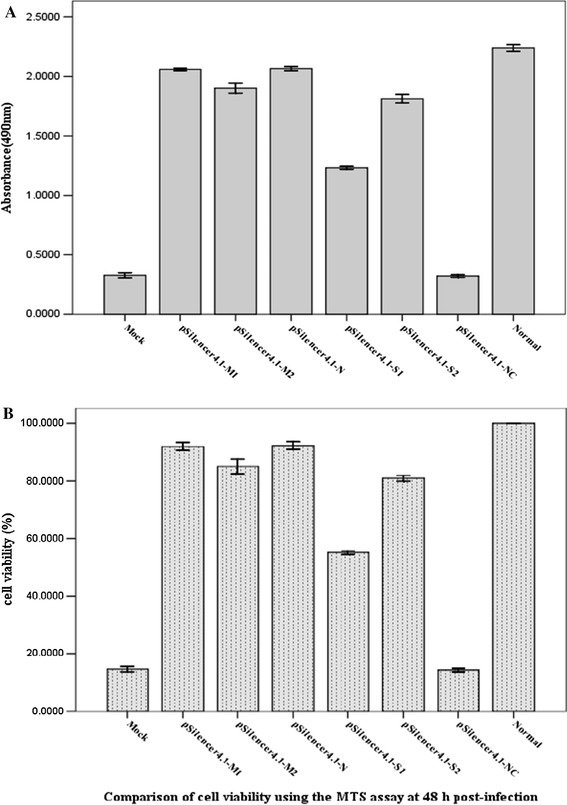
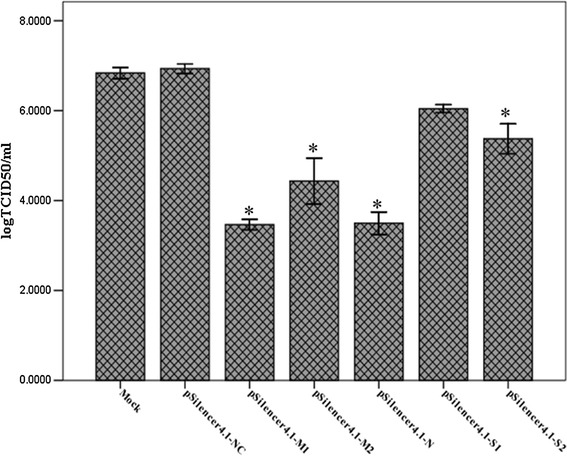
Porcine epidemic diarrhea virus (PEDV) is a member of the coronaviridae family, which can cause acute and highly contagious enteric disease of swine characterized by severe entero-pathogenic diarrhea in piglets. Currently, the vaccines of PEDV are only partially effective and there is no specific drug available for treatment of PEDV infection. To exploit the possibility of using RNA interference (RNAi) as a strategy against PEDV infection, five shRNA-expressing plasmids targeting the N, M, and S genes of PEDV were constructed and transfected into Vero cells. The cytopathic effect and MTS assays demonstrated that two shRNAs (pSilencer4.1-M1 and pSilencer4.1-N) were capable of protecting cells against PEDV invasion with very high specificity and efficiency. The two shRNA expression plasmids were also able to inhibit the PEDV replication significantly, as shown by detection of virus titers (TCID50/mL). A real-time quantitative RT-PCR further confirmed that the amounts of viral RNAs in cell cultures pre-transfected with these two plasmids were reduced by 95.0 %. Our results suggest that RNAi might be a promising new strategy against PEDV infection.
猪流行性腹泻病毒(PEDV)是冠状病毒科的成员,可引起猪的急性高度传染性肠道疾病,其特征为仔猪严重的肠道致病性腹泻。目前,PEDV疫苗仅部分有效,且尚无用于治疗PEDV感染的特效药物。为探索利用RNA干扰(RNAi)作为对抗PEDV感染的策略的可能性,构建了5种靶向PEDV的N、M和S基因的shRNA表达质粒,并将其转染至Vero细胞中。细胞病变效应和MTS检测表明,两种shRNA(pSilencer4.1-M1和pSilencer4.1-N)能够以非常高的特异性和效率保护细胞免受PEDV侵袭。如病毒滴度(TCID50/mL)检测所示,这两种shRNA表达质粒也能够显著抑制PEDV复制。实时定量RT-PCR进一步证实,用这两种质粒预转染的细胞培养物中病毒RNA的量减少了95.0%。我们的结果表明,RNAi可能是一种有前景的对抗PEDV感染的新策略。