Max Ludo, Daliri Ayoub
Department of Speech and Hearing Sciences, University of Washington, Seattle.
Haskins Laboratories, New Haven, CT.
J Speech Lang Hear Res. 2019 Aug 29;62(8S):3071-3084. doi: 10.1044/2019_JSLHR-S-CSMC7-18-0358.
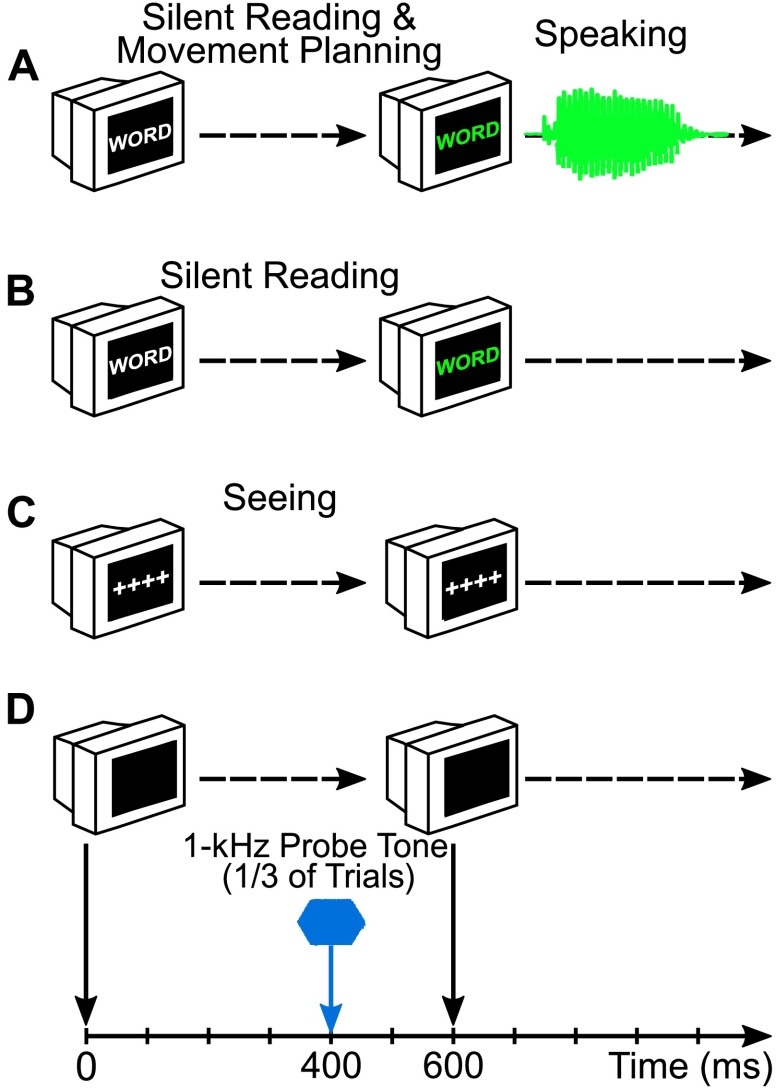
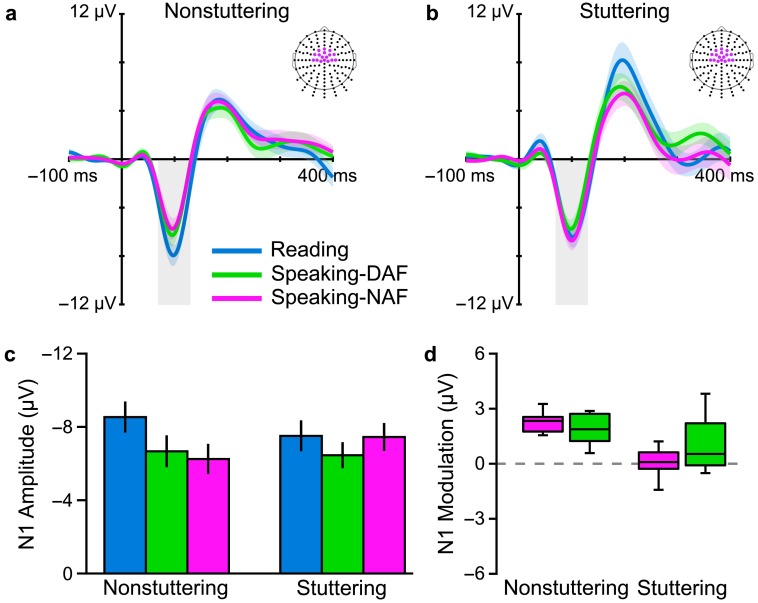
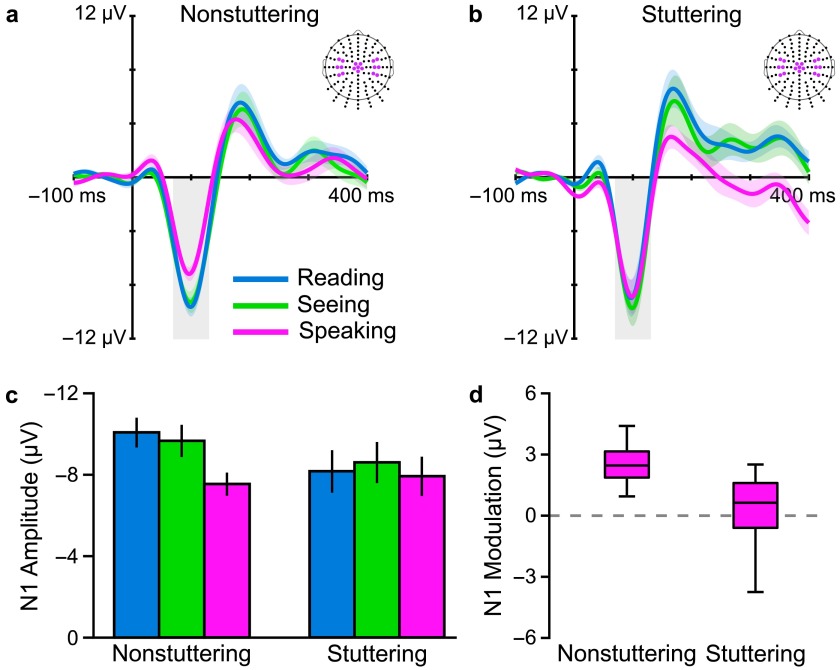
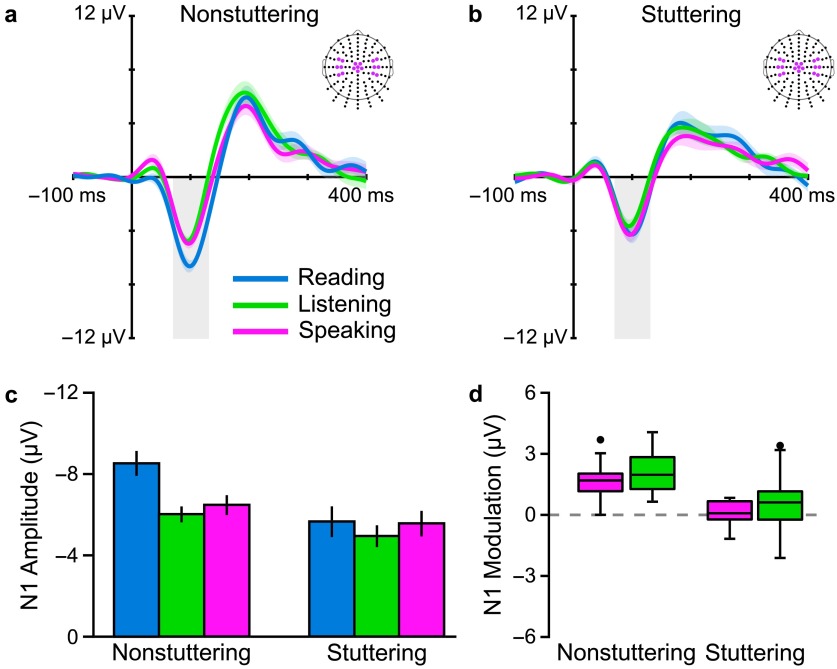
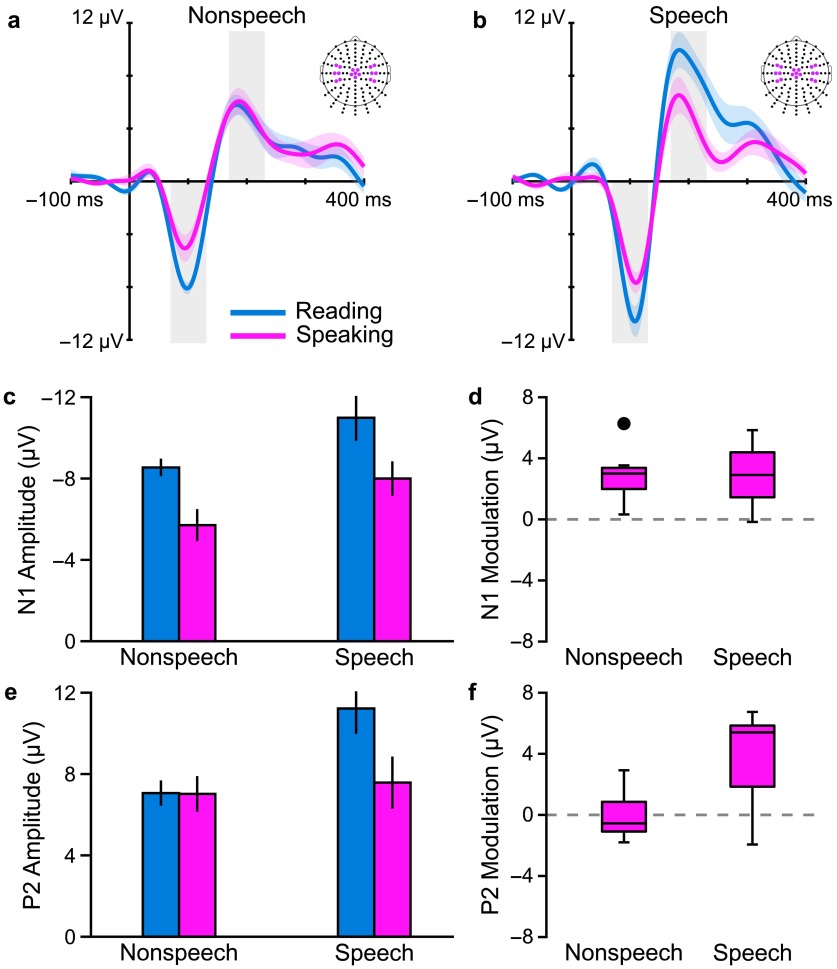
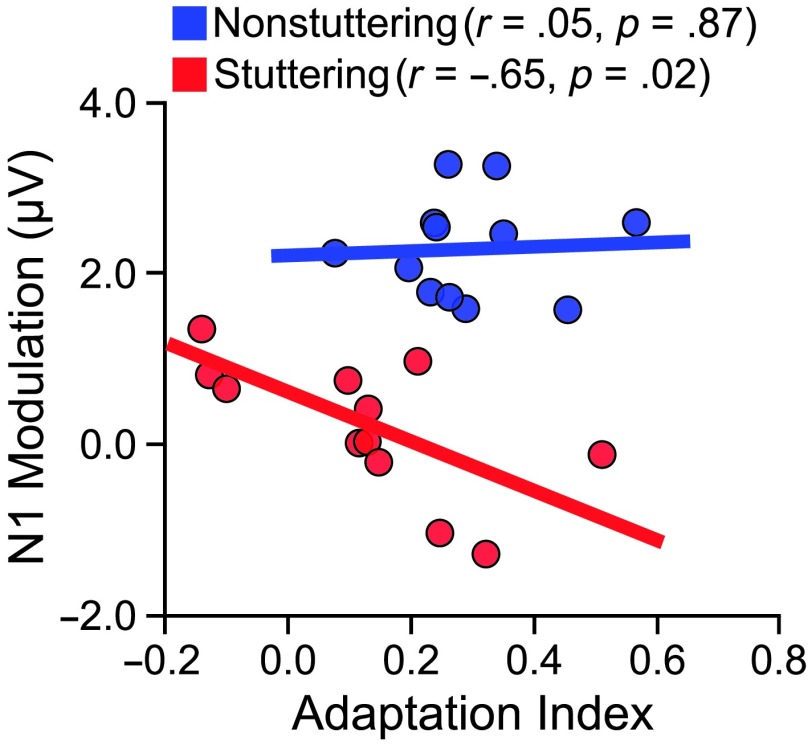
Purpose We review and interpret our recent series of studies investigating motor-to-auditory influences during speech movement planning in fluent speakers and speakers who stutter. In those studies, we recorded auditory evoked potentials in response to probe tones presented immediately prior to speaking or at the equivalent time in no-speaking control conditions. As a measure of pre-speech auditory modulation (PSAM), we calculated changes in auditory evoked potential amplitude in the speaking conditions relative to the no-speaking conditions. Whereas adults who do not stutter consistently showed PSAM, this phenomenon was greatly reduced or absent in adults who stutter. The same between-group difference was observed in conditions where participants expected to hear their prerecorded speech played back without actively producing it, suggesting that the speakers who stutter use inefficient forward modeling processes rather than inefficient motor command generation processes. Compared with fluent participants, adults who stutter showed both less PSAM and less auditory-motor adaptation when producing speech while exposed to formant-shifted auditory feedback. Across individual participants, however, PSAM and auditory-motor adaptation did not correlate in the typically fluent group, and they were negatively correlated in the stuttering group. Interestingly, speaking with a consistent 100-ms delay added to the auditory feedback signal-normalized PSAM in speakers who stutter, and there no longer was a between-group difference in this condition. Conclusions Combining our own data with human and animal neurophysiological evidence from other laboratories, we interpret the overall findings as suggesting that (a) speech movement planning modulates auditory processing in a manner that may optimize its tuning characteristics for monitoring feedback during speech production and, (b) in conditions with typical auditory feedback, adults who stutter do not appropriately modulate the auditory system prior to speech onset. Lack of modulation of speakers who stutter may lead to maladaptive feedback-driven movement corrections that manifest themselves as repetitive movements or postural fixations.
目的 我们回顾并解读了我们最近一系列的研究,这些研究调查了流利说话者和口吃者在言语运动计划过程中运动对听觉的影响。在这些研究中,我们记录了在说话前或在无说话对照条件下的等效时间呈现探测音时的听觉诱发电位。作为言语前听觉调制(PSAM)的一种测量方法,我们计算了说话条件下相对于无说话条件下听觉诱发电位幅度的变化。不口吃的成年人始终表现出PSAM,而这种现象在口吃的成年人中大大减少或不存在。在参与者预期听到他们预先录制的语音回放而不主动发出语音的条件下,也观察到了相同的组间差异,这表明口吃者使用的是低效的前向建模过程,而不是低效的运动命令生成过程。与流利的参与者相比,口吃的成年人在产生言语时暴露于共振峰移位的听觉反馈时,表现出较少的PSAM和较少的听觉运动适应。然而,在个体参与者中,典型流利组中PSAM和听觉运动适应不相关,而在口吃组中它们呈负相关。有趣的是,在听觉反馈信号中添加持续100毫秒的延迟会使口吃者的PSAM正常化,并且在这种情况下不再存在组间差异。结论 将我们自己的数据与其他实验室的人类和动物神经生理学证据相结合,我们将总体研究结果解释为表明:(a)言语运动计划以一种可能优化其调谐特性以在言语产生过程中监测反馈的方式调节听觉处理,并且(b)在具有典型听觉反馈的条件下,口吃的成年人在言语开始前没有适当地调节听觉系统。口吃者缺乏调制可能导致适应不良的反馈驱动的运动校正,表现为重复运动或姿势固定。