Escribano-López Irene, de Marañon Aranzazu M, Iannantuoni Francesca, López-Domènech Sandra, Abad-Jiménez Zaida, Díaz Pedro, Solá Eva, Apostolova Nadezda, Rocha Milagros, Víctor Víctor M
Service of Endocrinology, University Hospital Doctor Peset, Foundation for the Promotion of Health and Biomedical Research in the Valencian Region (FISABIO), 46017 Valencia, Spain.
CIBERehd-Department of Pharmacology, University of Valencia, 46010 Valencia, Spain.
J Clin Med. 2019 Aug 28;8(9):1322. doi: 10.3390/jcm8091322.
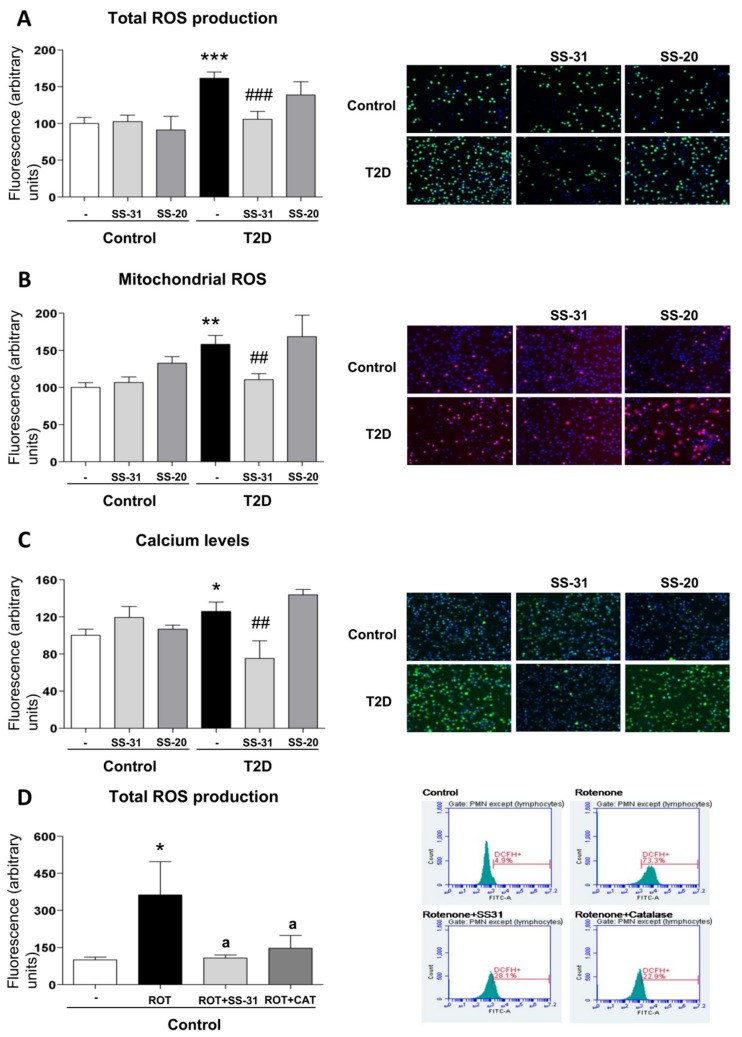
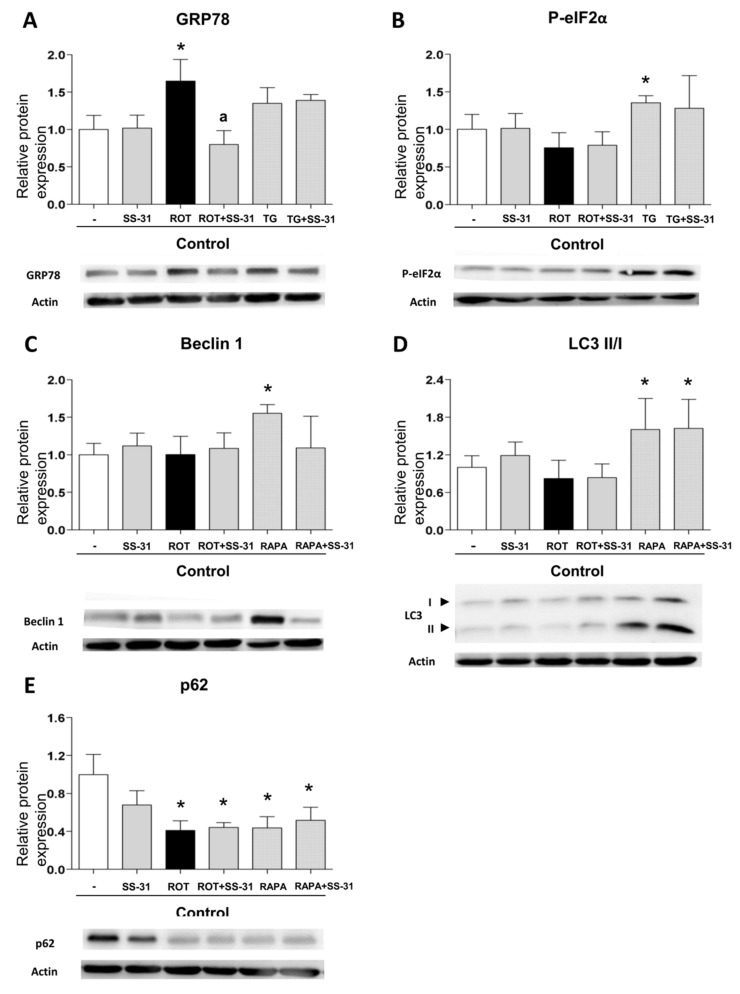
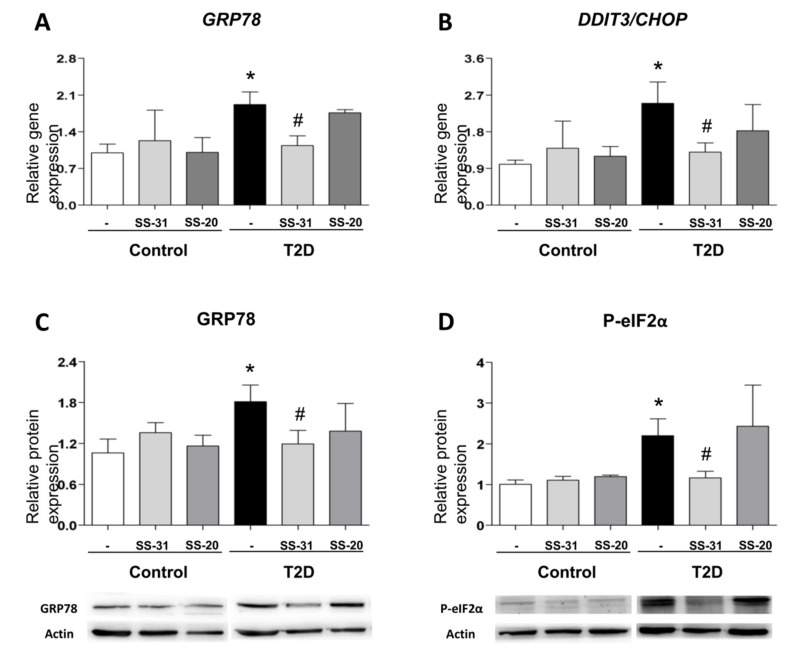
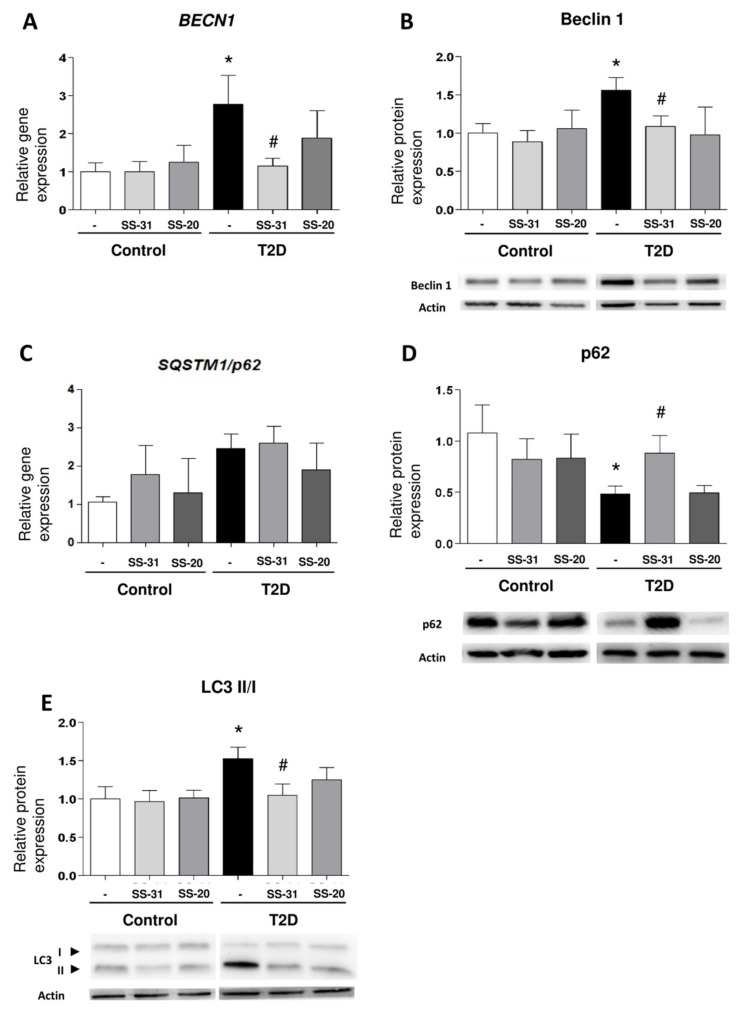
Mitochondrial dysfunction has been shown to play a central role in the pathophysiology of type 2 diabetes (T2D), and mitochondria-targeted agents such as SS-31 are emerging as a promising strategy for its treatment. We aimed to study the effects of SS-31 on leukocytes from T2D patients by evaluating oxidative stress, endoplasmic reticulum (ER) stress and autophagy. Sixty-one T2D patients and 53 controls were included. Anthropometric and analytical measurements were performed. We also assessed reactive oxygen species (ROS) production, calcium content, the expression of ER stress markers GRP78, CHOP, P-eIF2α, and autophagy-related proteins Beclin1, LC3 II/I, and p62 in leukocytes from T2D and control subjects treated or not with SS-31. Furthermore, we have evaluated the action of SS-31 on leukocyte-endothelium interactions. T2D patients exhibited elevated ROS concentration, calcium levels and presence of ER markers ( and gene expression, and GRP78 and P-eIF2α protein expression), all of which were reduced by SS-31 treatment. SS-31 also led to a drop in gene expression, and Beclin1 and LC3 II/I protein expression in T2D patients. In contrast, the T2D group displayed reduced p62 protein levels that were restored by SS-31. SS-20 (with non-antioxidant activity) did not change any analyzed parameter. In addition, SS-31 decreased rolling flux and leukocyte adhesion, and increased rolling velocity in T2D patients. Our findings suggest that SS-31 exerts potentially beneficial effects on leukocytes of T2D patients modulating oxidative stress and autophagy, and ameliorating ER stress.
线粒体功能障碍已被证明在2型糖尿病(T2D)的病理生理学中起核心作用,而诸如SS - 31等靶向线粒体的药物正成为一种有前景的治疗策略。我们旨在通过评估氧化应激、内质网(ER)应激和自噬来研究SS - 31对T2D患者白细胞的影响。纳入了61例T2D患者和53例对照。进行了人体测量和分析测量。我们还评估了在接受或未接受SS - 31治疗的T2D和对照受试者的白细胞中活性氧(ROS)产生、钙含量、ER应激标志物GRP78、CHOP、P - eIF2α以及自噬相关蛋白Beclin1、LC3 II/I和p62的表达。此外,我们评估了SS - 31对白细胞与内皮细胞相互作用的影响。T2D患者表现出ROS浓度升高、钙水平升高以及ER标志物( 和 基因表达,以及GRP78和P - eIF2α蛋白表达)的存在,所有这些在SS - 31治疗后均降低。SS - 31还导致T2D患者 基因表达、Beclin1和LC3 II/I蛋白表达下降。相反,T2D组显示p62蛋白水平降低,而SS - 31使其恢复。SS - 20(无抗氧化活性)未改变任何分析参数。此外,SS - 31降低了T2D患者的滚动通量和白细胞黏附,并增加了滚动速度。我们的研究结果表明,SS - 31对T2D患者的白细胞具有潜在的有益作用,可调节氧化应激和自噬,并改善ER应激。