Instituto de Física Interdisciplinar y Sistemas Complejos IFISC (CSIC-UIB), Campus UIB, 07122, Palma de Mallorca, Spain.
Irstea, UMR TETIS, 500 rue JF Breton, 34093, Montpellier, France.
Nat Commun. 2019 Aug 29;10(1):3895. doi: 10.1038/s41467-019-11841-2.
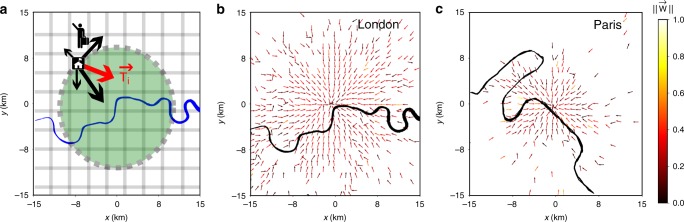
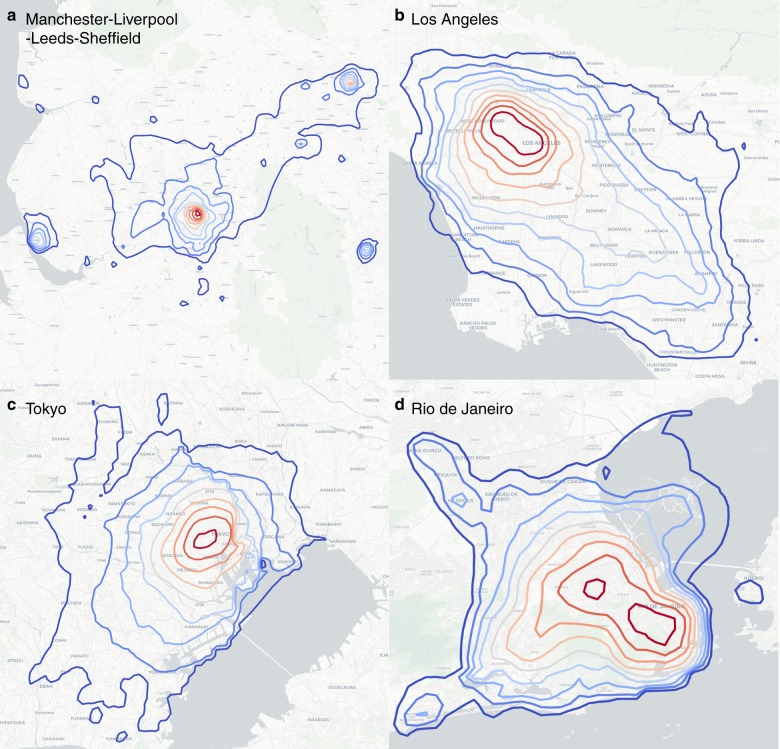
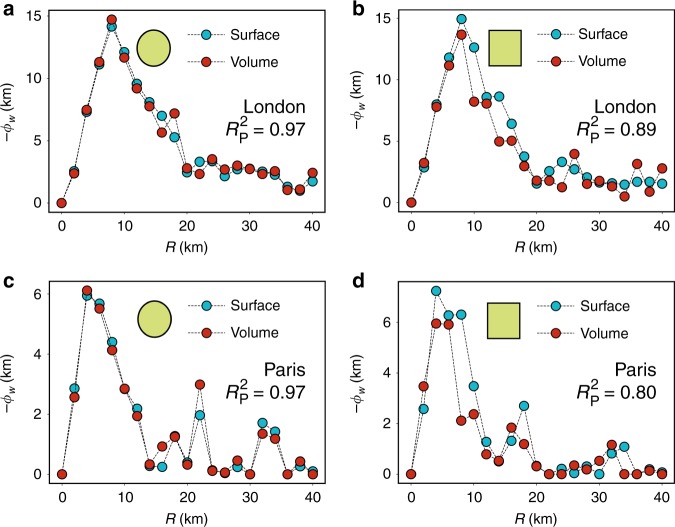
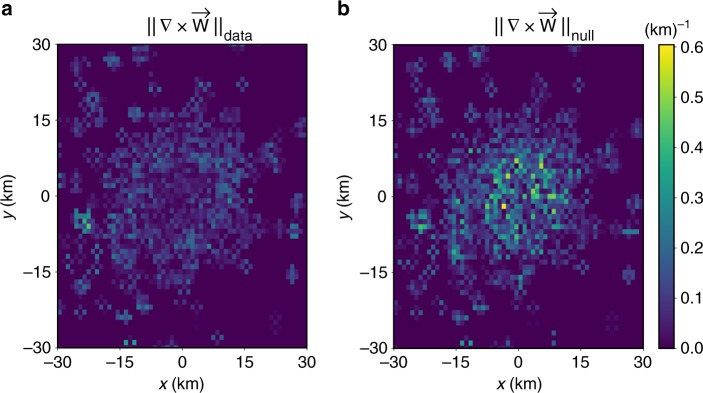
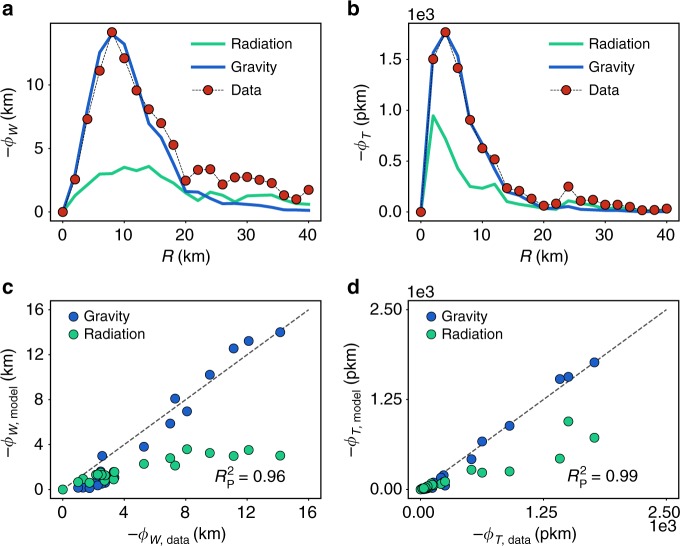
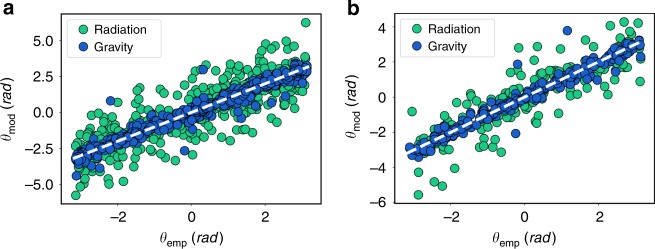
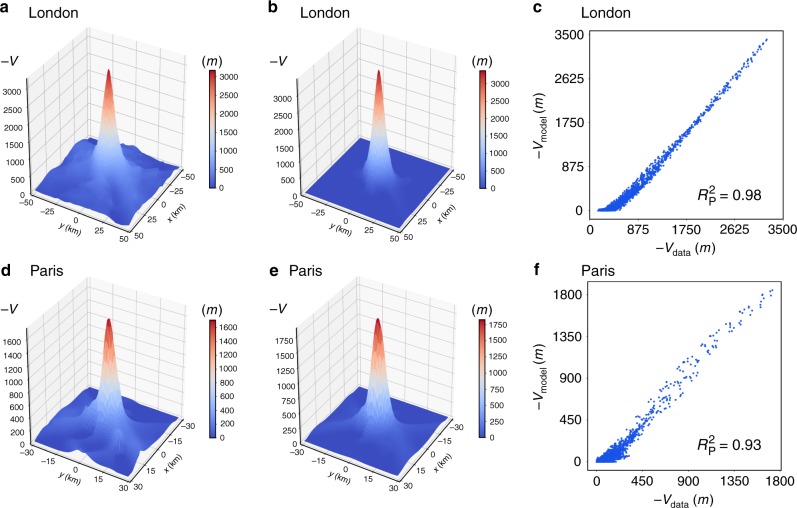
Understanding human mobility is crucial for applications such as forecasting epidemic spreading, planning transport infrastructure and urbanism in general. While, traditionally, mobility information has been collected via surveys, the pervasive adoption of mobile technologies has brought a wealth of (real time) data. The easy access to this information opens the door to study theoretical questions so far unexplored. In this work, we show for a series of worldwide cities that commuting daily flows can be mapped into a well behaved vector field, fulfilling the divergence theorem and which is, besides, irrotational. This property allows us to define a potential for the field that can become a major instrument to determine separate mobility basins and discern contiguous urban areas. We also show that empirical fluxes and potentials can be well reproduced and analytically characterized using the so-called gravity model, while other models based on intervening opportunities have serious difficulties.
理解人类移动性对于预测传染病传播、规划交通基础设施和城市规划等应用至关重要。虽然传统上移动性信息是通过调查收集的,但移动技术的广泛采用带来了大量(实时)数据。这些信息的便捷获取为研究迄今为止尚未探索的理论问题打开了大门。在这项工作中,我们展示了一系列全球城市的情况,即日常通勤流可以映射到一个表现良好的向量场中,满足散度定理,并且是无旋的。这一特性使得我们可以为该场定义一个势,这个势可以成为确定独立移动盆地和区分连续城市区域的主要工具。我们还表明,使用所谓的引力模型可以很好地再现和分析描述经验通量和势,而基于中间机会的其他模型则存在严重困难。