Department of Orthopedics, the Second Affiliated Hospital of Xi 'an Jiaotong University, Xi'an, 710004, Shaanxi, People's Republic of China.
Department of Orthopedics, the Second Affiliated Hospital of Xi 'an Jiaotong University, Xi'an, 710004, Shaanxi, People's Republic of China
Biosci Rep. 2019 Sep 20;39(9). doi: 10.1042/BSR20191711. Print 2019 Sep 30.
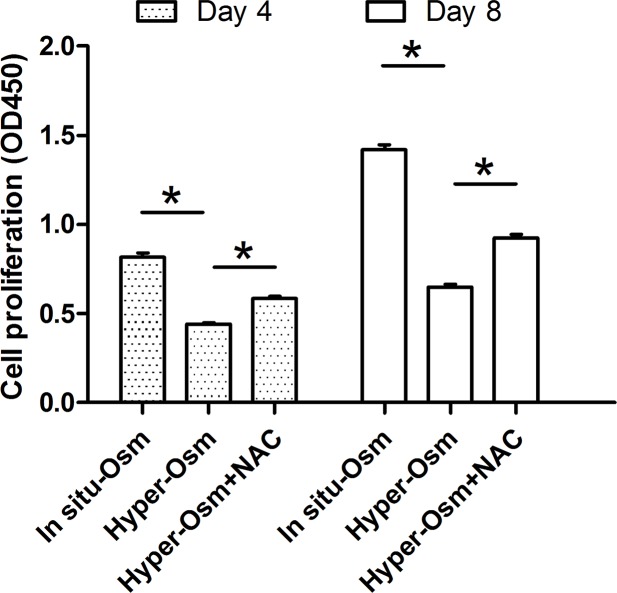
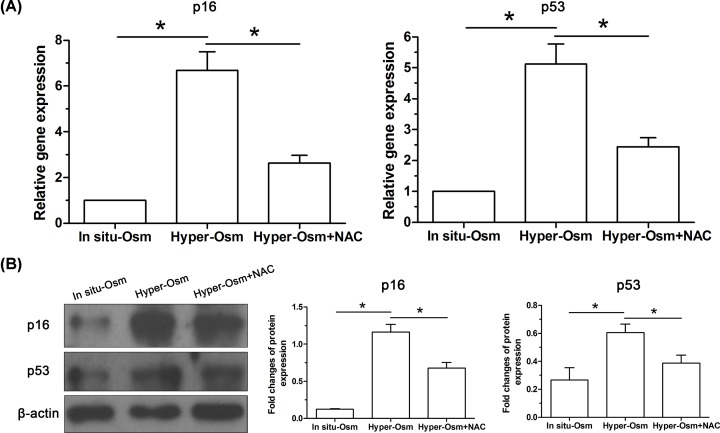
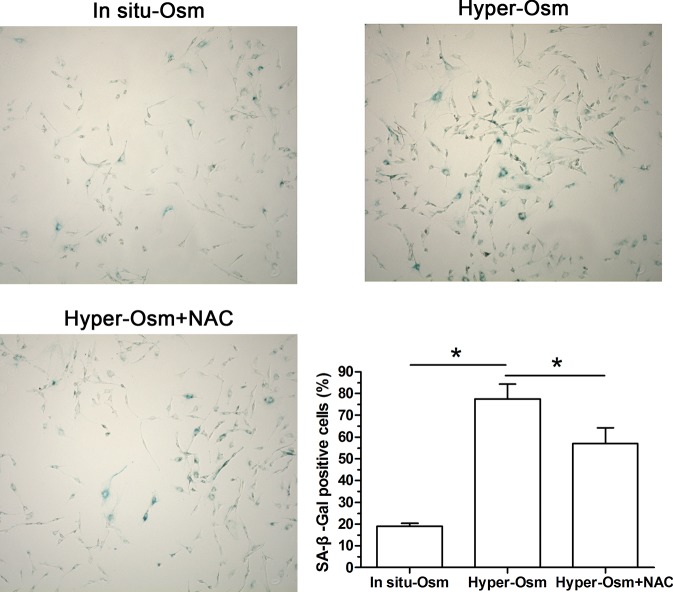
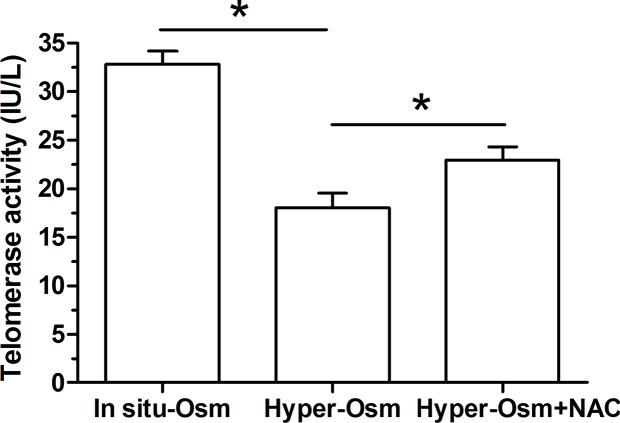
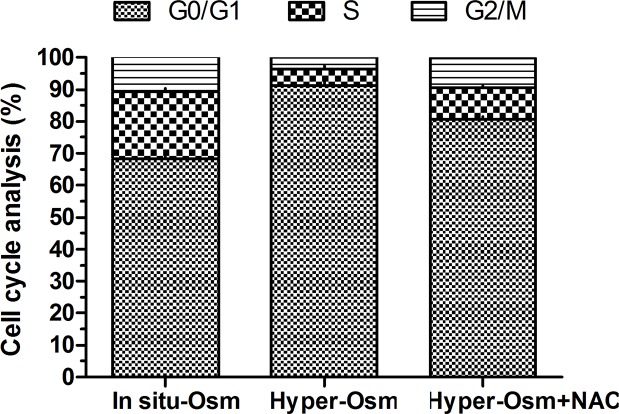
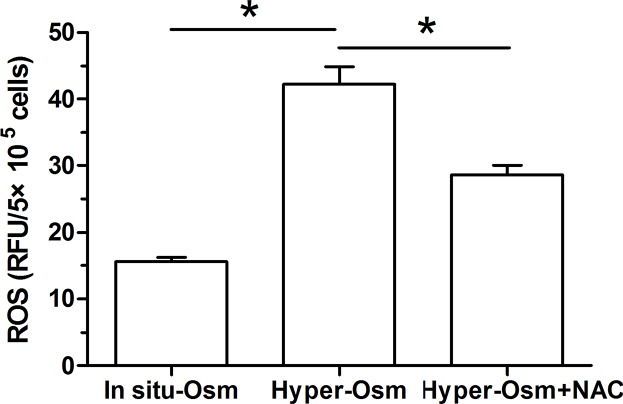
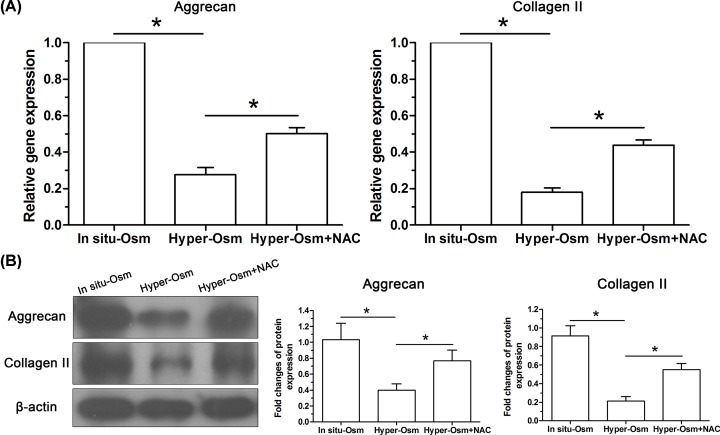
Nucleus pulposus (NP) cell senescence is involved in disc degeneration. The osmolarity within the NP region is an important regulator of disc cell's biology. However, its effects on NP cell senescence remain unclear. The present study was aimed to investigate the effects and mechanism of hyper-osmolarity on NP cell senescence. Rat NP cells were cultured in the -osmolarity medium and hyper-osmolarity medium. The reactive oxygen species (ROS) scavenger N-acetylcysteine (NAC) was added along with the medium to investigate the role of oxidative injury. Cell cycle, cell proliferation, senescence associated β-galactosidase (SA-β-Gal) activity, telomerase activity, expression of senescence markers (p16 and p53) and matrix molecules (aggrecan and collagen II) were tested to assess NP cell senescence. Compared with the -osmolarity culture, hyper-osmolarity culture significantly decreased cell proliferation and telomerase activity, increased SA-β-Gal activity and cell fraction in the G/G phase, up-regulated expression of senescence markers (p16 and p53) and down-regulated expression of matrix molecules (aggrecan and collagen II), and increased intracellular ROS accumulation. However, addition of NAC partly reversed these effects of hyper-osmolarity culture on cellular senescence and decreased ROS content in NP cells. In conclusion, a hyper-osmolarity culture promotes NP cell senescence through inducing oxidative stress injury. The present study provides new knowledge on NP cell senescence and helps us to better understand the mechanism of disc degeneration.
核髓细胞(NP)衰老与椎间盘退变有关。NP 区域的渗透压是调节椎间盘细胞生物学的重要因素。然而,其对 NP 细胞衰老的影响尚不清楚。本研究旨在探讨高渗透压对 NP 细胞衰老的影响及其机制。将大鼠 NP 细胞分别在低渗透压和高渗透压培养基中培养。向培养基中加入活性氧(ROS)清除剂 N-乙酰半胱氨酸(NAC),以研究氧化损伤的作用。通过细胞周期、细胞增殖、衰老相关β-半乳糖苷酶(SA-β-Gal)活性、端粒酶活性、衰老标志物(p16 和 p53)和基质分子(聚集蛋白聚糖和胶原 II)的表达,评估 NP 细胞衰老情况。与低渗透压培养相比,高渗透压培养显著降低了细胞增殖和端粒酶活性,增加了 SA-β-Gal 活性和 G/G 期细胞比例,上调了衰老标志物(p16 和 p53)的表达,下调了基质分子(聚集蛋白聚糖和胶原 II)的表达,并增加了细胞内 ROS 的积累。然而,添加 NAC 部分逆转了高渗透压培养对细胞衰老的这些影响,并降低了 NP 细胞内的 ROS 含量。总之,高渗透压培养通过诱导氧化应激损伤促进 NP 细胞衰老。本研究为 NP 细胞衰老提供了新知识,有助于我们更好地理解椎间盘退变的机制。