State Key Laboratory of Molecular Oncology, Department of Etiology and Carcinogenesis, National Cancer Center/National Clinical Research Center for Cancer/Cancer Hospital, Chinese Academy of Medical Sciences and Peking Union Medical College, Beijing 100021, China.
Department of Thoracic Surgery, National Cancer Center/National Clinical Research Center for Cancer/Cancer Hospital, Chinese Academy of Medical Sciences and Peking Union Medical College, Beijing 100021, China.
Genomics Proteomics Bioinformatics. 2019 Jun;17(3):287-296. doi: 10.1016/j.gpb.2018.10.005. Epub 2019 Aug 31.
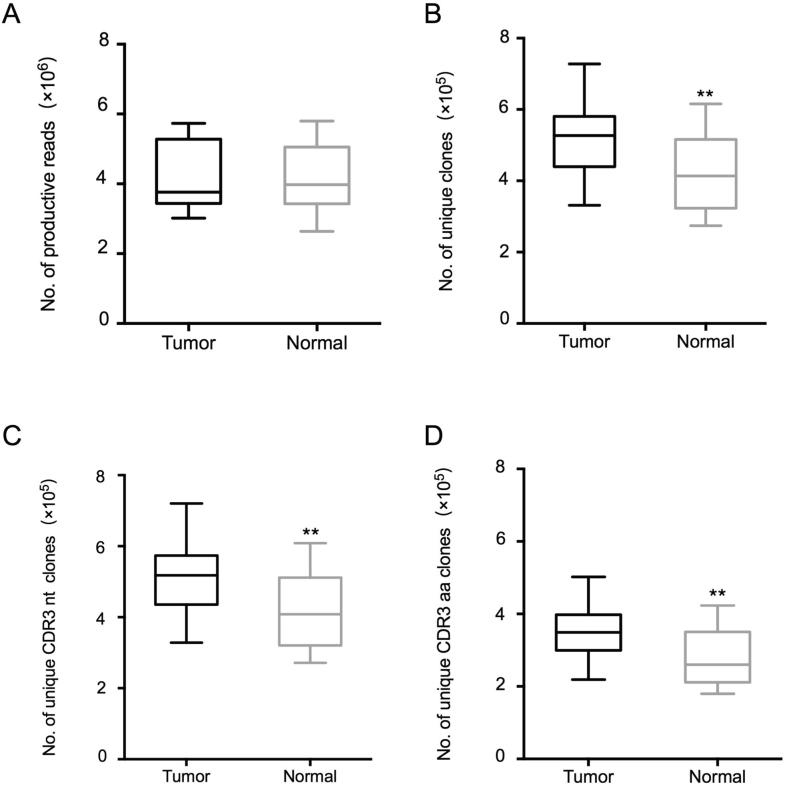
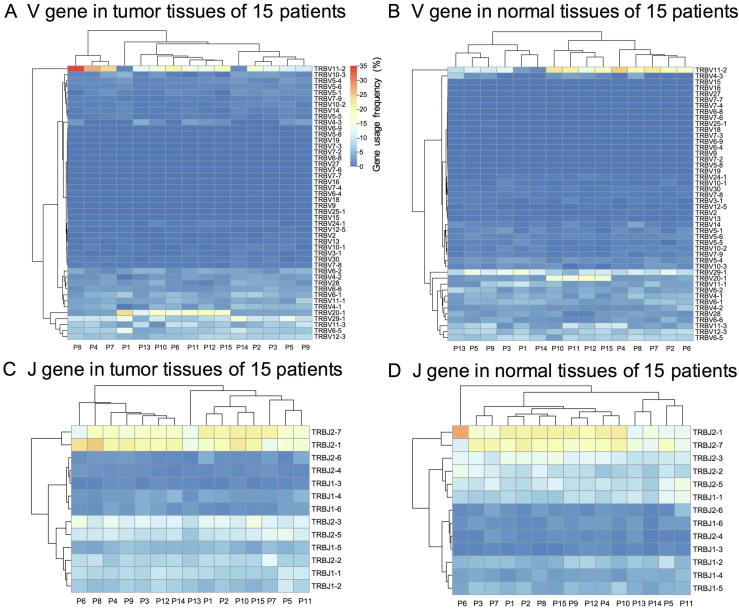
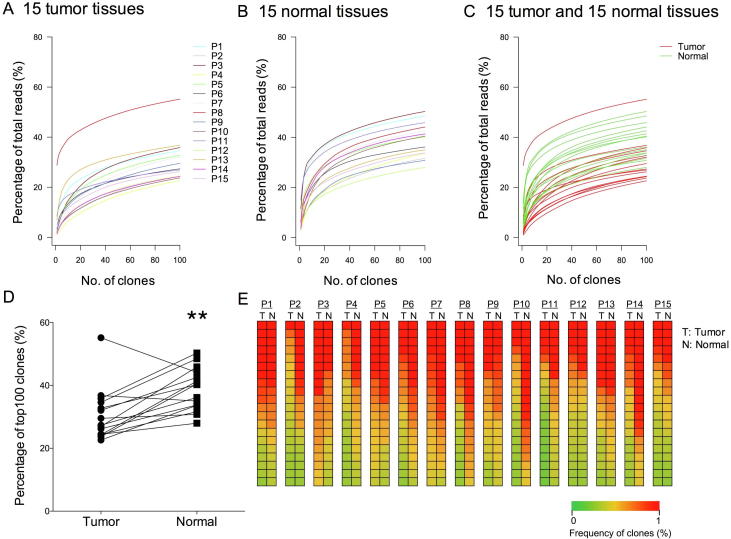
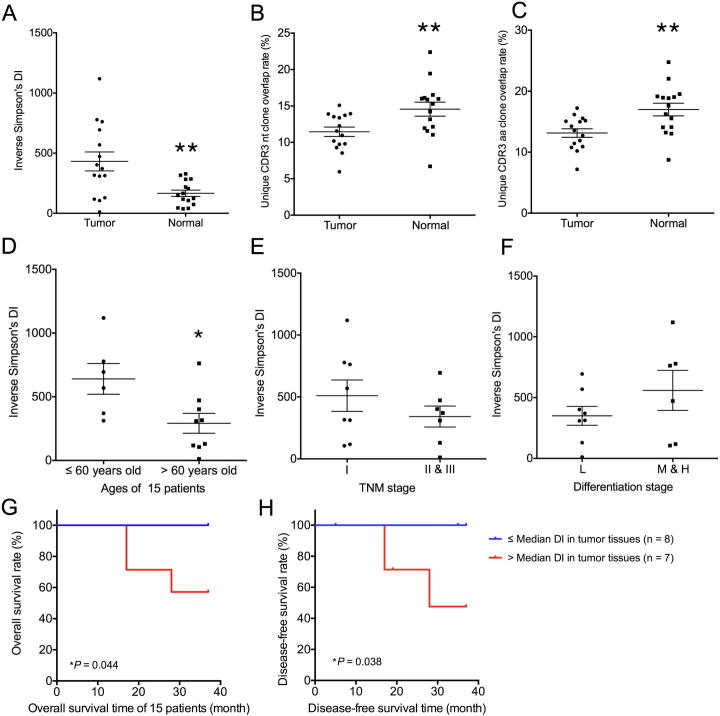
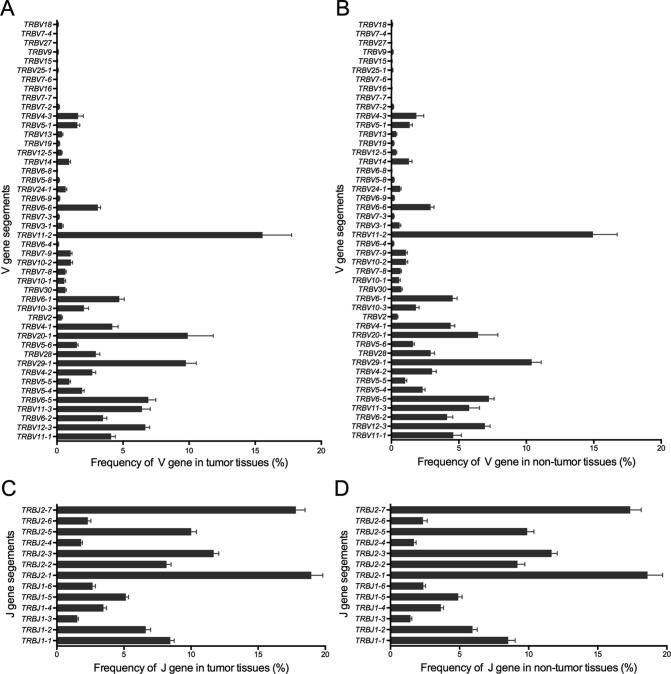
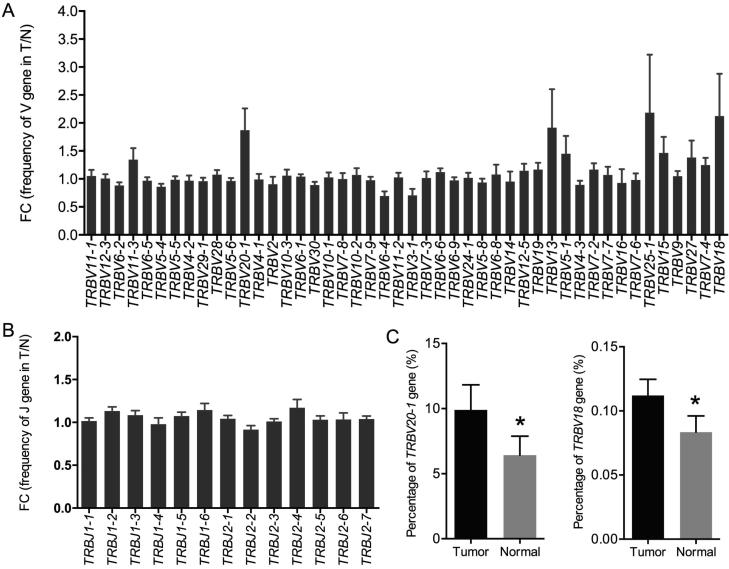
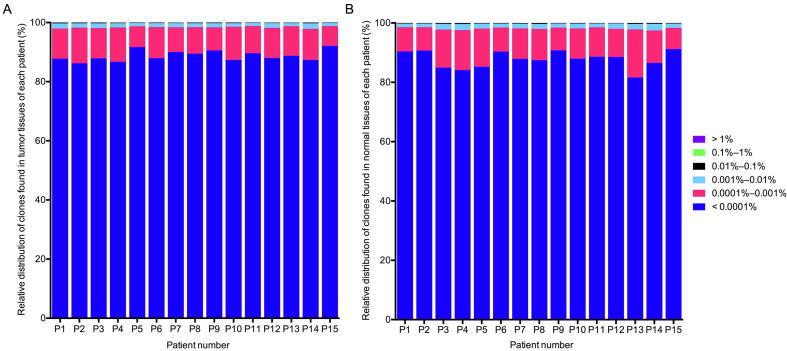
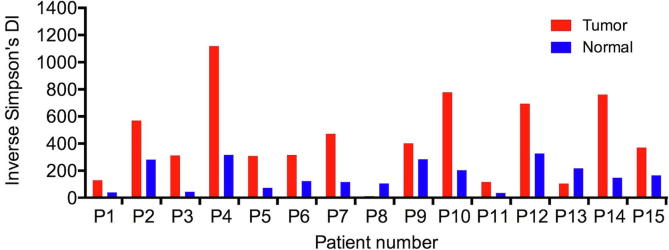
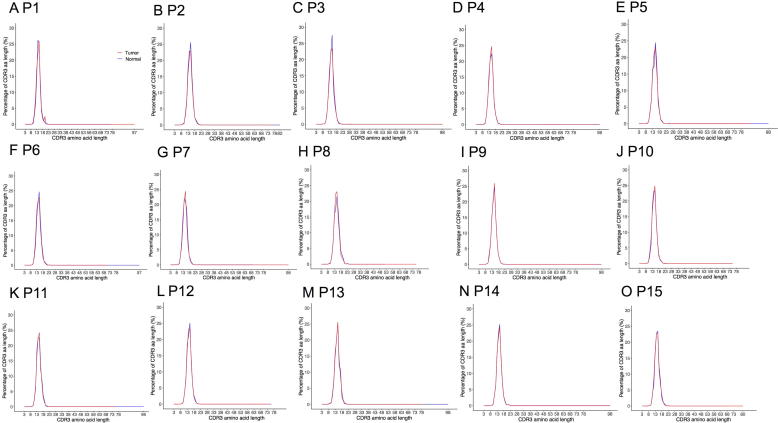
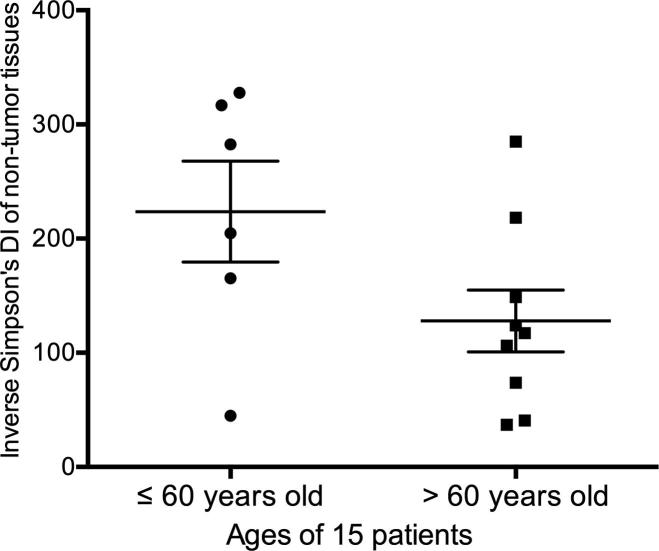
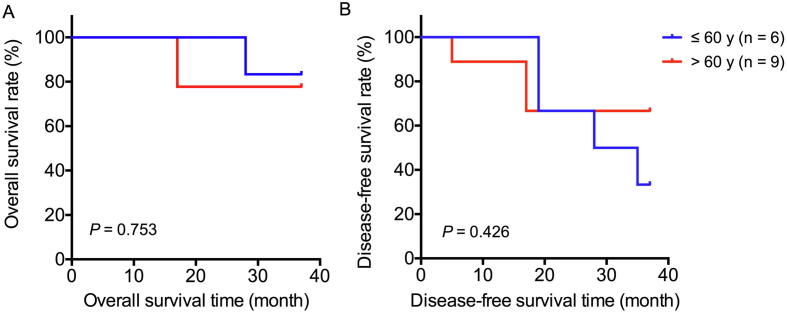
T cells and T cell receptors (TCRs) play pivotal roles in adaptive immune responses against tumors. The development of next-generation sequencing technologies has enabled the analysis of the TCRβ repertoire usage. Given the scarce investigations on the TCR repertoire in lung cancer tissues, in this study, we analyzed TCRβ repertoires in lung cancer tissues and the matched distant non-tumor lung tissues (normal lung tissues) from 15 lung cancer patients. Based on our results, the general distribution of T cell clones was similar between cancer tissues and normal lung tissues; however, the proportion of highly expanded clones was significantly higher in normal lung tissues than in cancer tissues (0.021% ± 0.002% vs. 0.016% ± 0.001%, P = 0.0054, Wilcoxon signed rank test). In addition, a significantly higher TCR diversity was observed in cancer tissues than in normal lung tissues (431.37 ± 305.96 vs. 166.20 ± 101.58, P = 0.0075, Mann-Whitney U test). Moreover, younger patients had a significantly higher TCR diversity than older patients (640.7 ± 295.3 vs. 291.8 ± 233.6, P = 0.036, Mann-Whitney U test), and the higher TCR diversity in tumors was significantly associated with worse cancer outcomes. Thus, we provided a comprehensive comparison of the TCR repertoires between cancer tissues and matched normal lung tissues and demonstrated the presence of distinct T cell immune microenvironments in lung cancer patients.
T 细胞和 T 细胞受体(TCRs)在针对肿瘤的适应性免疫反应中发挥着关键作用。下一代测序技术的发展使得 TCRβ 库的使用分析成为可能。鉴于对肺癌组织中 TCR 库的研究甚少,在本研究中,我们分析了 15 例肺癌患者的肺癌组织和匹配的远处非肿瘤肺组织(正常肺组织)中的 TCRβ 库。基于我们的结果,癌症组织和正常肺组织中 T 细胞克隆的总体分布相似;然而,正常肺组织中高度扩增克隆的比例明显高于癌症组织(0.021%±0.002%vs.0.016%±0.001%,P=0.0054,Wilcoxon 符号秩检验)。此外,癌症组织中的 TCR 多样性明显高于正常肺组织(431.37±305.96vs.166.20±101.58,P=0.0075,Mann-Whitney U 检验)。此外,年轻患者的 TCR 多样性明显高于老年患者(640.7±295.3vs.291.8±233.6,P=0.036,Mann-Whitney U 检验),肿瘤中更高的 TCR 多样性与更差的癌症预后显著相关。因此,我们全面比较了癌症组织和匹配的正常肺组织中的 TCR 库,并证明了肺癌患者存在不同的 T 细胞免疫微环境。