Paciorek-Sadowska Joanna, Borowicz Marcin, Isbrandt Marek, Czupryński Bogusław, Apiecionek Łukasz
Department of Chemistry and Technology of Polyurethanes, Technical Institute, Faculty of Mathematics, Physics and Technical Science, Kazimierz Wielki University, J. K. Chodkiewicza Street 30, 85-064 Bydgoszcz, Poland.
Department of Computer Science, Technical Institute, Faculty of Mathematics, Physics and Technical Science, Kazimierz Wielki University, J. K. Chodkiewicza Street 30, 85-064 Bydgoszcz, Poland.
Polymers (Basel). 2019 Aug 31;11(9):1431. doi: 10.3390/polym11091431.
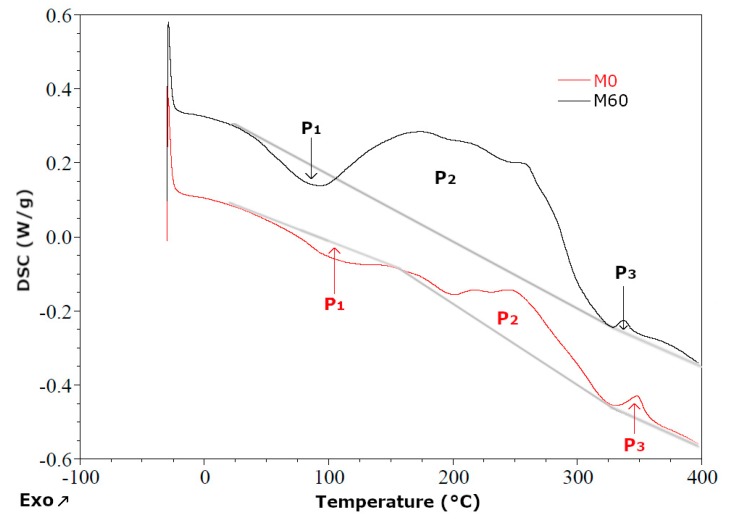
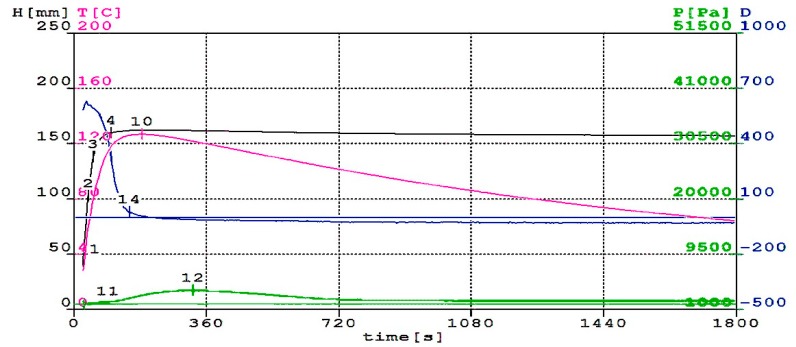
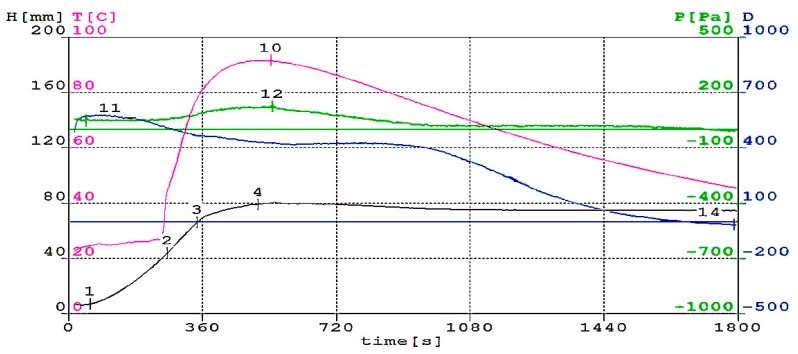
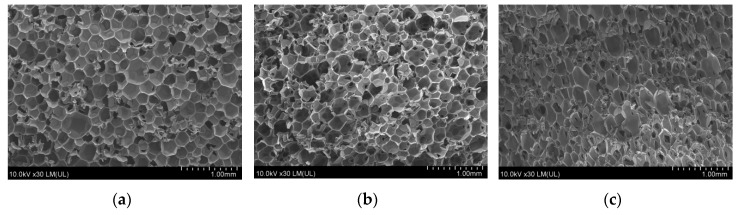
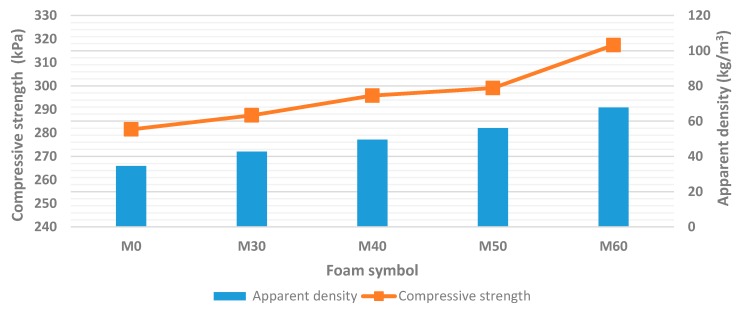
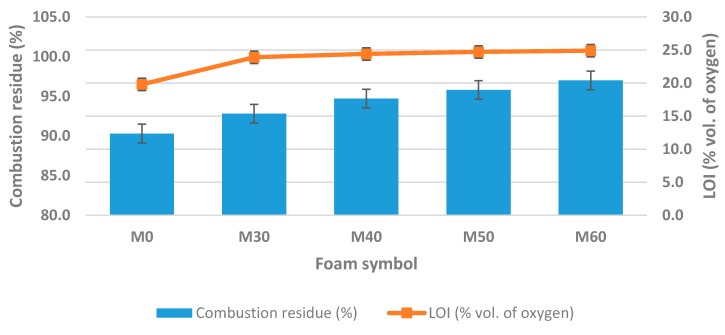
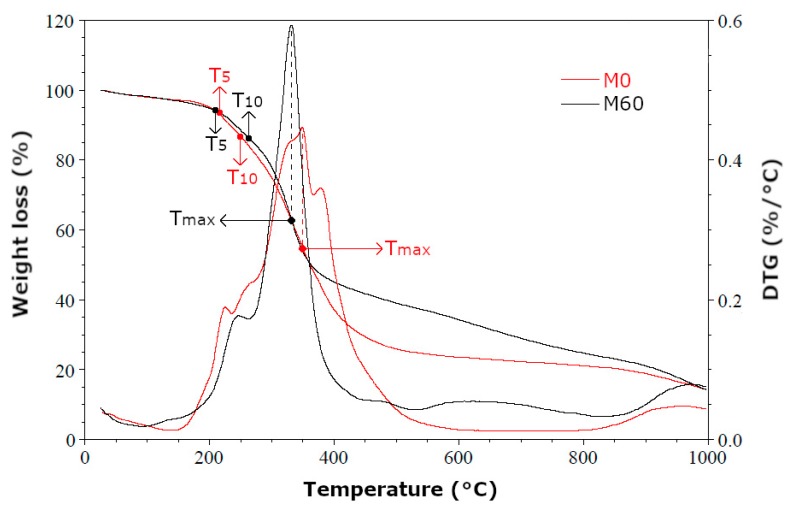
This article presents the results of research on obtaining new polyurethane materials modified by a by-product from vegetable oils industry-rapeseed cake. The chemical composition of rapeseed cake was examined. Rigid polyurethane-polyisocyanurate (RPU/PIR) foams containing a milled rapeseed cake in their composition were obtained as part of the conducted research. Biofiller was added in amount of 30 wt.% up to 60 wt.%. Effects of rapeseed cake on the foaming process, cell structure and selected properties of foams, such as apparent density, compressive strength, brittleness, flammability, absorbability, water absorption, thermal resistance and thermal conductivity are described. The foaming process of RPU/PIR foams modified by rapeseed cake was characterized by a lower reactivity, lower foaming temperature and decrease in dielectric polarization. This resulted in a slowed formation of the polyurethane matrix. Apparent density of RPU/PIR foams with biofiller was higher than in unmodified foam. Addition of rapeseed cake did not have a significant influence on the thermal conductivity of obtained materials. However, we observed a tendency for opening the cells of modified foams and obtaining a smaller cross-sectional area of cells. This led to an increase of absorbability and water absorption of obtained materials. However, an advantageous effect of using rapeseed cake in polyurethane formulations was noted. Modified RPU/PIR foams had higher compressive strength, lower brittleness and lower flammability than reference foam.
本文介绍了利用植物油工业副产品菜籽饼改性制备新型聚氨酯材料的研究成果。对菜籽饼的化学成分进行了检测。作为所开展研究的一部分,制备了在其组成中含有磨碎菜籽饼的硬质聚氨酯-聚异氰脲酸酯(RPU/PIR)泡沫材料。生物填料的添加量为30重量%至60重量%。描述了菜籽饼对泡沫的发泡过程、泡孔结构以及泡沫的表观密度、抗压强度、脆性、可燃性、吸收性、吸水性、耐热性和热导率等选定性能的影响。经菜籽饼改性的RPU/PIR泡沫的发泡过程具有反应性较低、发泡温度较低和介电极化降低的特点。这导致聚氨酯基体的形成速度减慢。含有生物填料的RPU/PIR泡沫的表观密度高于未改性泡沫。菜籽饼的添加对所得材料的热导率没有显著影响。然而,我们观察到改性泡沫的泡孔有开孔趋势,且泡孔的横截面积变小。这导致所得材料的吸收性和吸水性增加。然而,注意到在聚氨酯配方中使用菜籽饼有一个有利效果。改性RPU/PIR泡沫比参比泡沫具有更高的抗压强度、更低的脆性和更低的可燃性。