ARTES Biotechnology GmbH, Langenfeld, Germany.
Laboratory of Plant and Process Design, Technical University of Dortmund, Dortmund, Germany.
PLoS One. 2019 Sep 4;14(9):e0221394. doi: 10.1371/journal.pone.0221394. eCollection 2019.
Malaria caused by Plasmodium falciparum is one of the major threats to human health globally. Despite huge efforts in malaria control and eradication, highly effective vaccines are urgently needed, including vaccines that can block malaria transmission. Chimeric virus-like particles (VLP) have emerged as a promising strategy to develop new malaria vaccine candidates.
We developed yeast cell lines and processes for the expression of malaria transmission-blocking vaccine candidates Pfs25 and Pfs230 as VLP and VLP were analyzed for purity, size, protein incorporation rate and expression of malaria antigens.
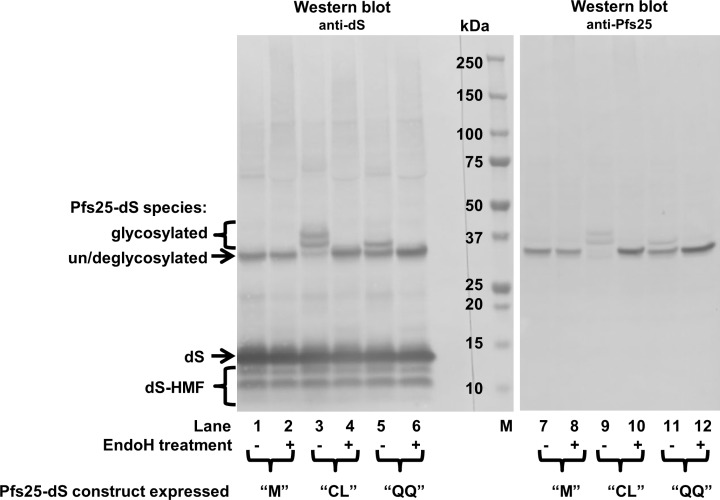
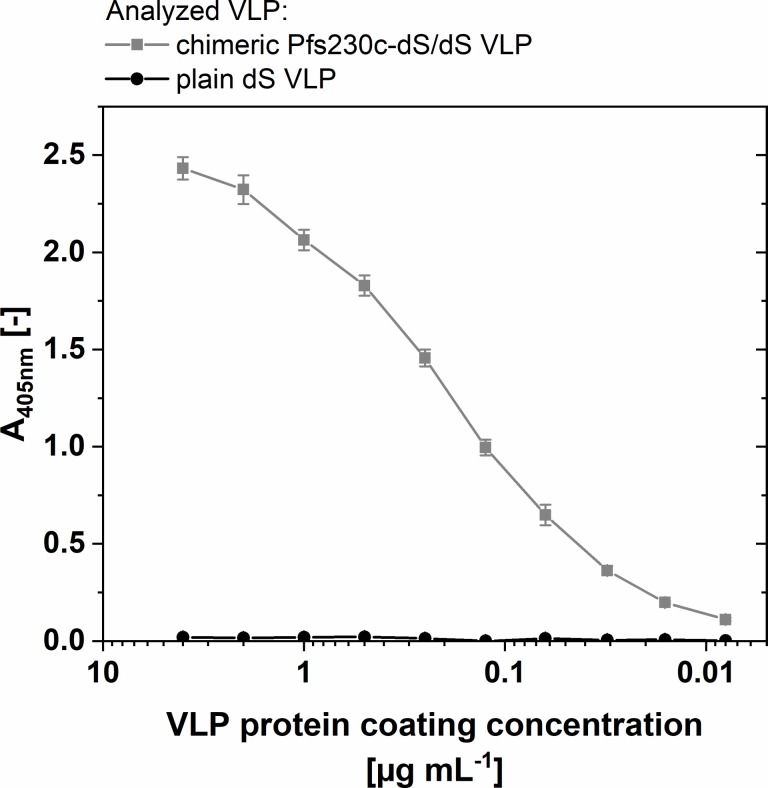
In this study, a novel platform for the display of Plasmodium falciparum antigens on chimeric VLP is presented. Leading transmission-blocking vaccine candidates Pfs25 and Pfs230 were genetically fused to the small surface protein (dS) of the duck hepatitis B virus (DHBV). The resulting fusion proteins were co-expressed in recombinant Hansenula polymorpha (syn. Pichia angusta, Ogataea polymorpha) strains along with the wild-type dS as the VLP scaffold protein. Through this strategy, chimeric VLP containing Pfs25 or the Pfs230-derived fragments Pfs230c or Pfs230D1M were purified. Up to 100 mg chimeric VLP were isolated from 100 g dry cell weight with a maximum protein purity of 90% on the protein level. Expression of the Pfs230D1M construct was more efficient than Pfs230c and enabled VLP with higher purity. VLP showed reactivity with transmission-blocking antibodies and supported the surface display of the malaria antigens on the native VLP.
The incorporation of leading Plasmodium falciparum transmission-blocking antigens into the dS-based VLP scaffold is a promising novel strategy for their display on nano-scaled particles. Competitive processes for efficient production and purification were established in this study.
恶性疟原虫引起的疟疾是全球人类健康的主要威胁之一。尽管在疟疾控制和消除方面做出了巨大努力,但仍迫切需要高度有效的疫苗,包括能够阻断疟疾传播的疫苗。嵌合病毒样颗粒(VLP)已成为开发新疟疾疫苗候选物的一种有前途的策略。
我们开发了酵母细胞系和工艺,用于表达作为 VLP 的疟疾传播阻断疫苗候选物 Pfs25 和 Pfs230,分析了 VLP 的纯度、大小、蛋白掺入率和疟疾抗原的表达。
在这项研究中,提出了一种在嵌合 VLP 上展示恶性疟原虫抗原的新型平台。将主要的传播阻断疫苗候选物 Pfs25 和 Pfs230 基因融合到鸭乙型肝炎病毒(DHBV)的小表面蛋白(dS)上。所得融合蛋白与野生型 dS 一起在重组汉逊酵母(syn. Pichia angusta、Ogataea polymorpha)菌株中共同表达作为 VLP 支架蛋白。通过该策略,纯化了含有 Pfs25 或 Pfs230 衍生片段 Pfs230c 或 Pfs230D1M 的嵌合 VLP。从 100g 干细胞重量中分离出多达 100mg 的嵌合 VLP,在蛋白水平上的最大蛋白纯度为 90%。Pfs230D1M 构建体的表达效率高于 Pfs230c,并且能够使 VLP 具有更高的纯度。VLP 显示出与传播阻断抗体的反应性,并支持疟疾抗原在天然 VLP 上的表面展示。
将主要的恶性疟原虫传播阻断抗原纳入基于 dS 的 VLP 支架是在纳米级颗粒上展示它们的一种很有前途的新策略。本研究建立了高效生产和纯化的竞争工艺。