Institute for Risk Assessment Sciences, Division of Environmental Epidemiology, Utrecht University, Utrecht, Netherlands.
Division of Cancer Epidemiology and Genetics, National Cancer Institute, National Institutes of Health, Rockville, Maryland, USA.
Environ Health Perspect. 2019 Sep;127(9):97001. doi: 10.1289/EHP4913. Epub 2019 Sep 5.
Lung cancer rates among never-smoking women in Xuanwei and Fuyuan in China are among the highest in the world and have been attributed to the domestic use of smoky (bituminous) coal for heating and cooking. However, the key components of coal that drive lung cancer risk have not been identified.
We aimed to investigate the relationship between lifelong exposure to the constituents of smoky coal (and other fuel types) and lung cancer.
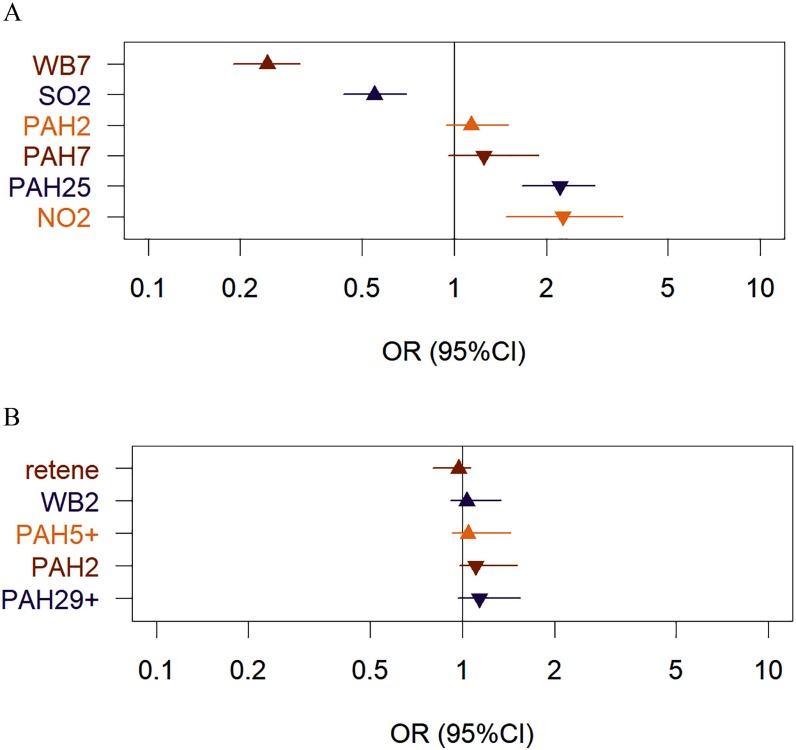
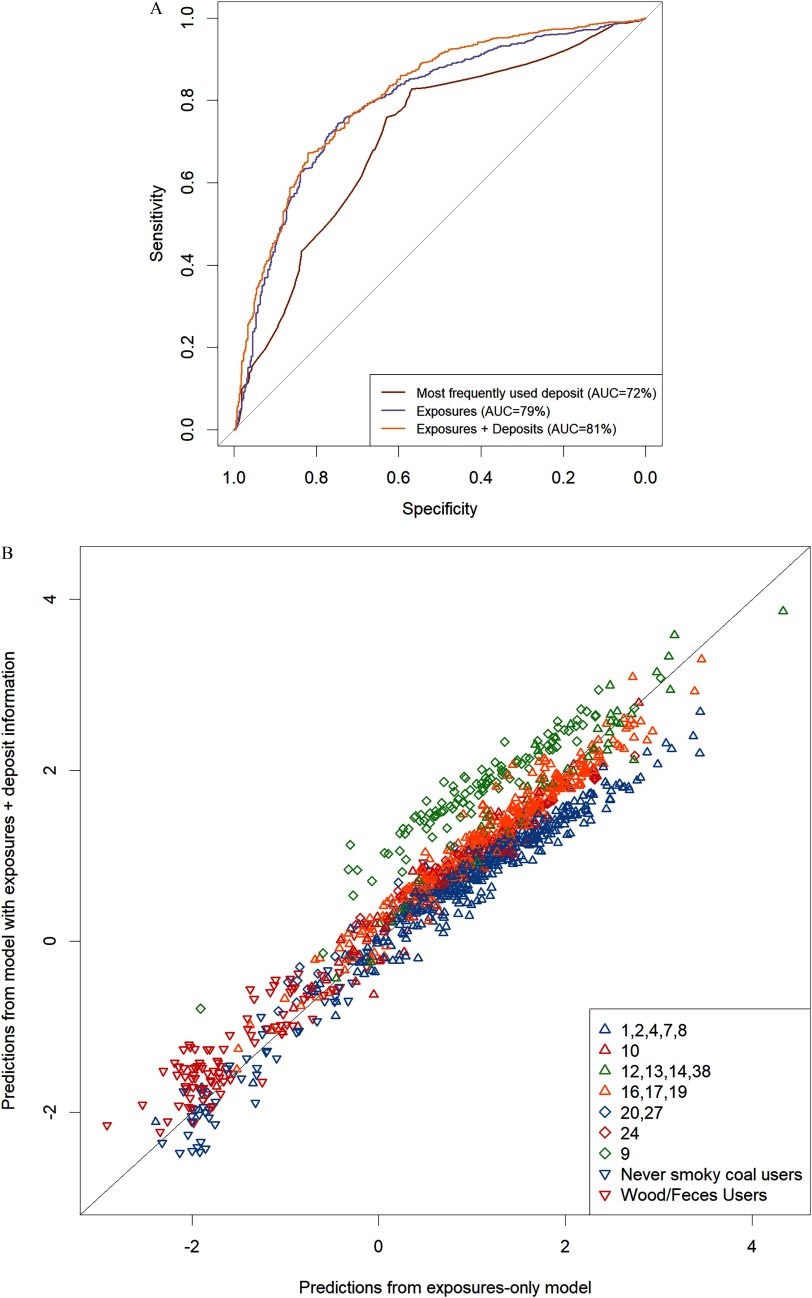
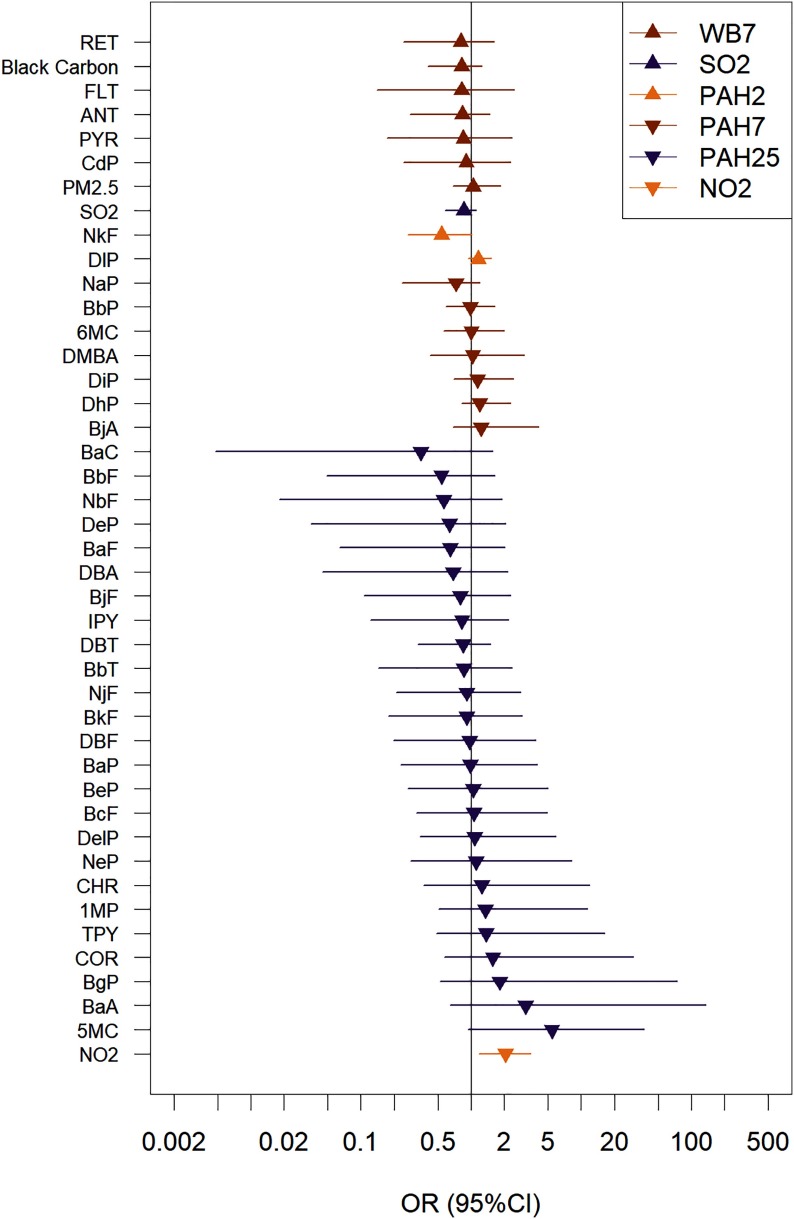
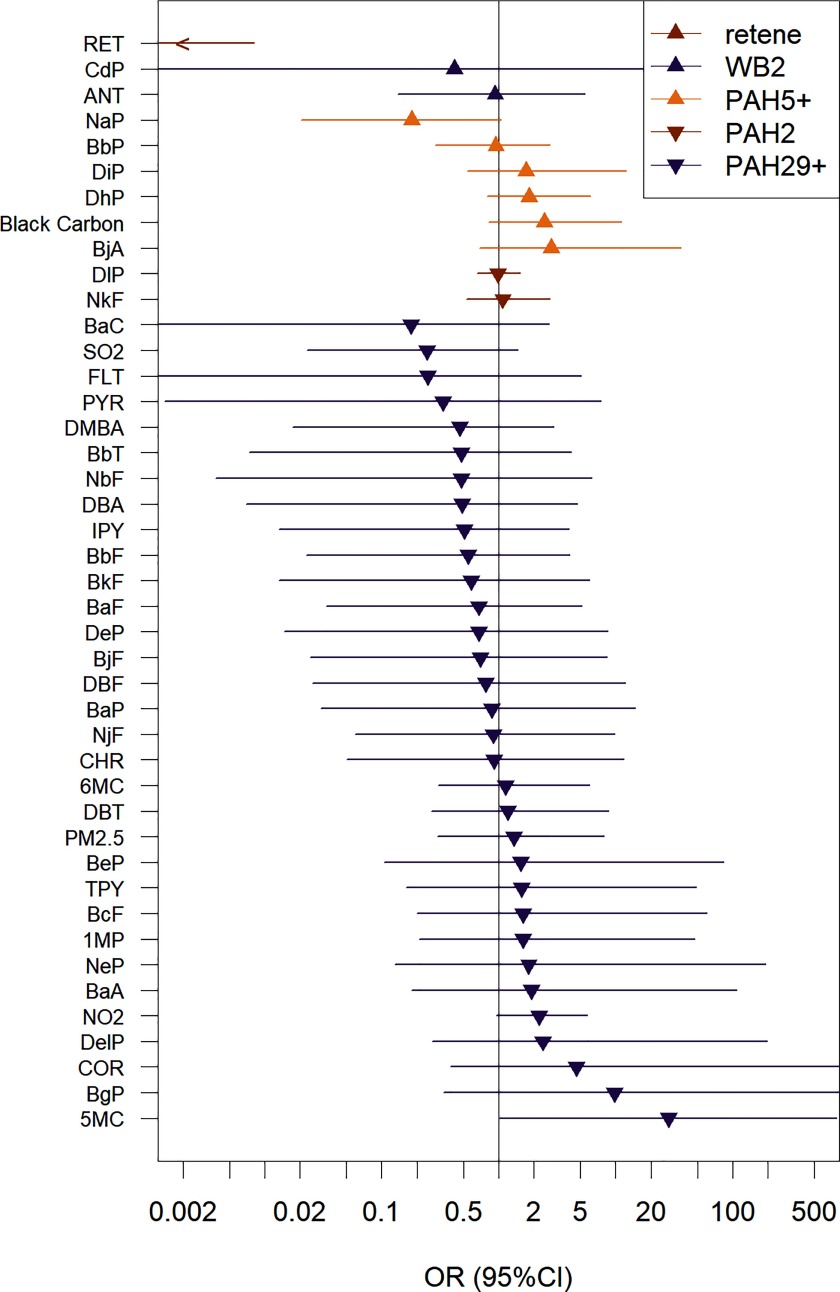
Using a population-based case-control study of lung cancer among 1,015 never-smoking female cases and 485 controls, we examined the association between exposure to 43 household air pollutants and lung cancer. Pollutant predictions were derived from a comprehensive exposure assessment study, which included methylated polycyclic aromatic hydrocarbons (PAHs), which have never been directly evaluated in an epidemiological study of any cancer. Hierarchical clustering and penalized regression were applied in order to address high colinearity in exposure variables.
The strongest association with lung cancer was for a cluster of 25 PAHs [odds ratio (OR): 2.21; 95% confidence interval (CI): 1.67, 2.87 per 1 standard deviation (SD) change], within which 5-methylchrysene (5-MC), a mutagenic and carcinogenic PAH, had the highest individual observed OR (5.42; 95% CI: 0.94, 27.5). A positive association with nitrogen dioxide ([Formula: see text]) was also observed (OR: 2.06; 95% CI: 1.19, 3.49). By contrast, neither benzo(a)pyrene (BaP) nor fine particulate matter with aerodynamic diameter [Formula: see text] ([Formula: see text]) were associated with lung cancer in the multipollutant models.
To our knowledge, this is the first study to comprehensively evaluate the association between lung cancer and household air pollution (HAP) constituents estimated over the entire life course. Given the global ubiquity of coal use domestically for indoor cooking and heating and commercially for electric power generation, our study suggests that more extensive monitoring of coal combustion products, including methylated PAHs, may be warranted to more accurately assess health risks and develop prevention strategies from this exposure. https://doi.org/10.1289/EHP4913.
中国宣威和富源的不吸烟女性的肺癌发病率位居世界之首,这被归因于家庭使用烟熏(烟煤)煤进行取暖和烹饪。然而,导致肺癌风险的煤的关键成分尚未确定。
我们旨在研究终生暴露于烟熏煤(和其他燃料类型)的成分与肺癌之间的关系。
我们使用一项基于人群的肺癌病例对照研究,共纳入了 1015 名从不吸烟的女性病例和 485 名对照,研究了暴露于 43 种室内空气污染物与肺癌之间的关系。污染物预测值源自一项综合暴露评估研究,其中包括甲基多环芳烃(PAHs),这在任何癌症的流行病学研究中从未被直接评估过。我们应用层次聚类和惩罚回归来解决暴露变量之间的高度共线性问题。
与肺癌最强相关的是一组 25 种 PAHs[比值比(OR):2.21;95%置信区间(CI):每 1 个标准差(SD)变化 1 个单位,2.67,2.87],其中 5-甲基胆蒽(5-MC),一种致突变和致癌的 PAH,其个体观察到的 OR 最高(5.42;95%CI:0.94,27.5)。还观察到与二氧化氮([Formula: see text])呈正相关(OR:2.06;95%CI:1.19,3.49)。相比之下,多污染物模型中,苯并(a)芘(BaP)和空气动力学直径小于 2.5μm 的细颗粒物([Formula: see text])均与肺癌无关。
据我们所知,这是第一项全面评估一生中整个过程中肺癌与家庭空气污染(HAP)成分之间关联的研究。鉴于全球范围内家庭普遍使用煤进行室内烹饪和取暖,以及商业上用于发电,我们的研究表明,可能需要更广泛地监测煤燃烧产物,包括甲基化 PAHs,以更准确地评估健康风险并制定预防策略。