Department of Clinical Neurosciences, Service ORL & CCF, University hospital of Geneva, Geneva, Switzerland.
University Department of Otorhinolaryngology, Head and Neck Surgery, Inselspital, Bern, Switzerland.
Anat Rec (Hoboken). 2020 Mar;303(3):461-470. doi: 10.1002/ar.24228. Epub 2019 Sep 5.
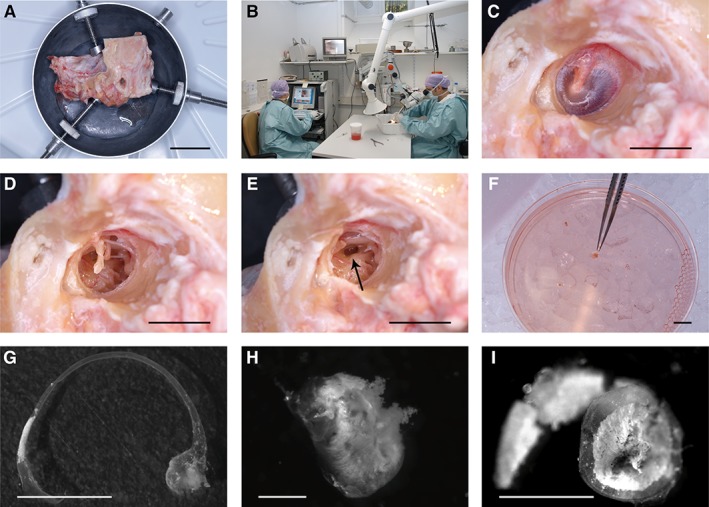
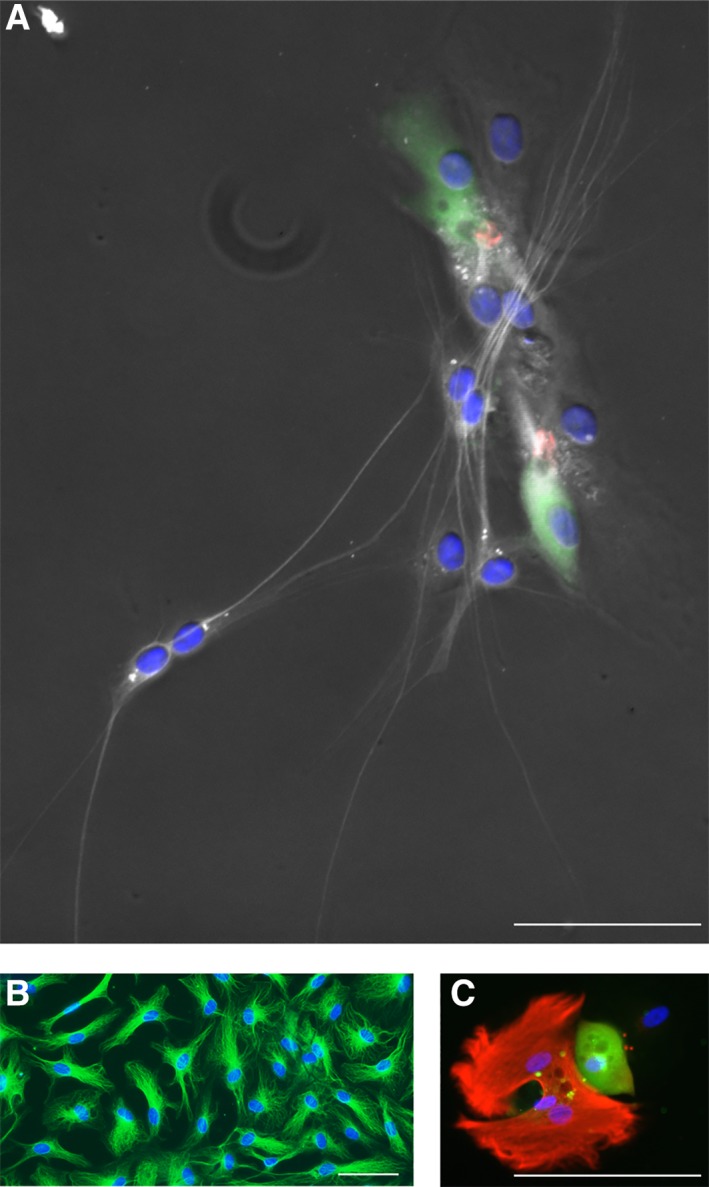
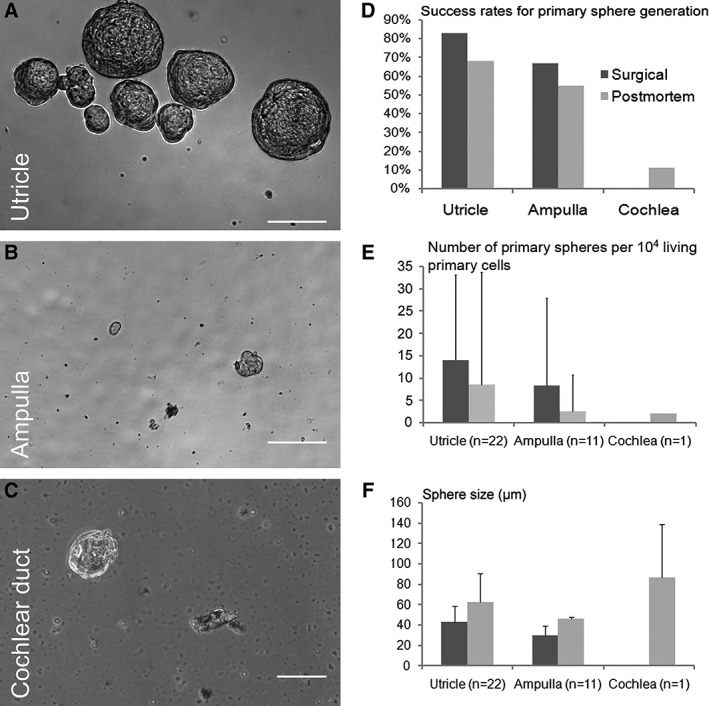
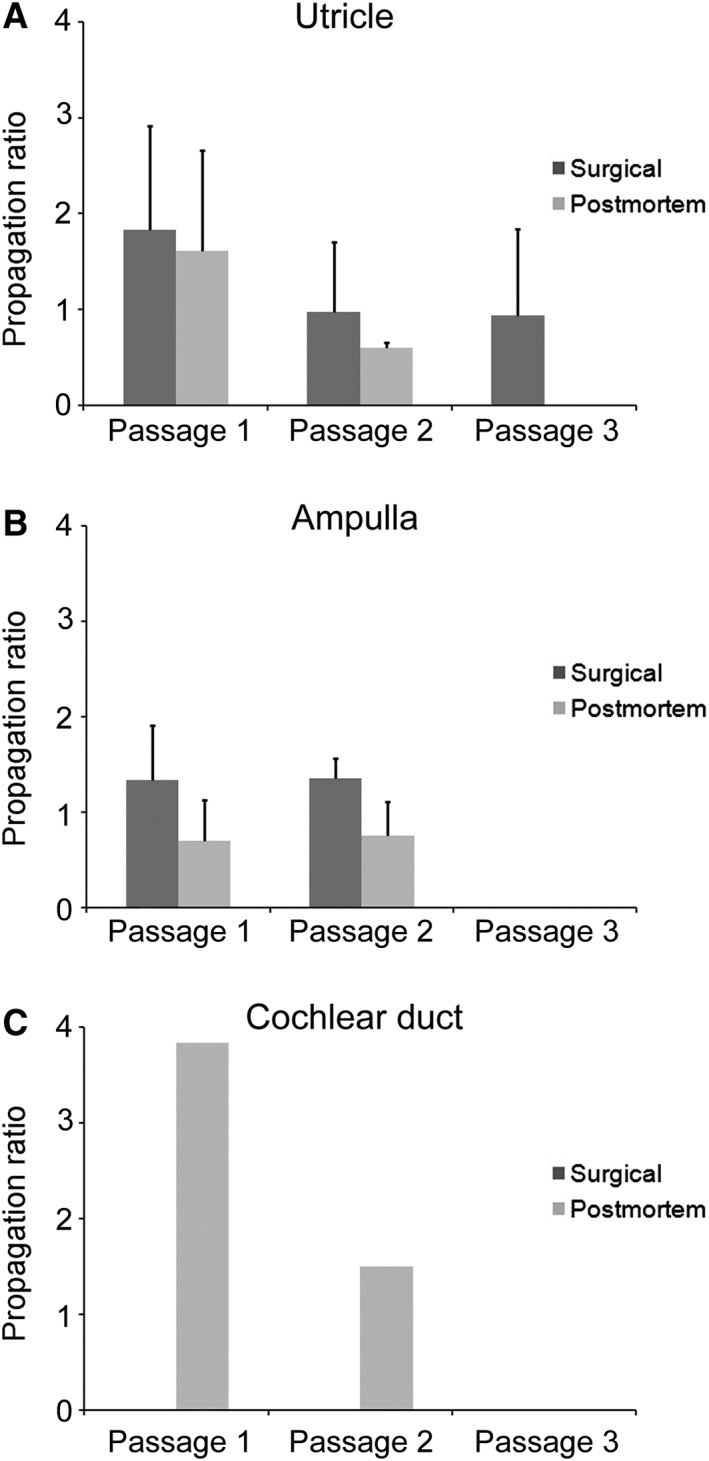
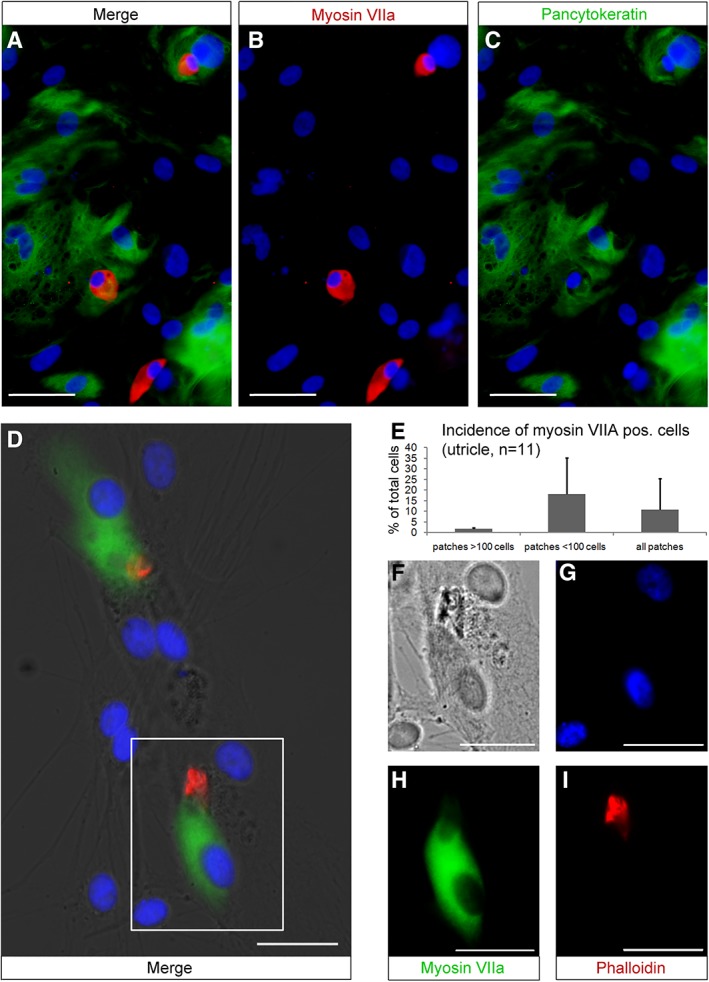
Loss of inner ear hair cells leads to incurable balance and hearing disorders because these sensory cells do not effectively regenerate in humans. A potential starting point for therapy would be the stimulation of quiescent progenitor cells within the damaged inner ear. Inner ear progenitor/stem cells, which have been described in rodent inner ears, would be principal candidates for such an approach. Despite the identification of progenitor cell populations in the human fetal cochlea and in the adult human spiral ganglion, no proliferative cell populations with the capacity to generate hair cells have been reported in vestibular and cochlear tissues of adult humans. The present study aimed at filling this gap by isolating colony-forming progenitor cells from surgery- and autopsy-derived adult human temporal bones in order to generate inner ear cell types in vitro. Sphere-forming and mitogen-responding progenitor cells were isolated from vestibular and cochlear tissues. Clonal spheres grown from adult human utricle and cochlear duct were propagated for a limited number of generations. When differentiated in absence of mitogens, the utricle-derived spheres robustly gave rise to hair cell-like cells, as well as to cells expressing supporting cell-, neuron-, and glial markers, indicating that the adult human utricle harbors multipotent progenitor cells. Spheres derived from the adult human cochlear duct did not give rise to hair cell-like or neuronal cell types, which is an indication that human cochlear cells have limited proliferative potential but lack the ability to differentiate into major inner ear cell types. Anat Rec, 303:461-470, 2020. © 2019 The Authors. The Anatomical Record published by Wiley Periodicals, Inc. on behalf of American Association of Anatomists.
内耳毛细胞的丧失会导致无法治愈的平衡和听力障碍,因为这些感觉细胞在人类中不能有效再生。治疗的一个潜在起点是刺激受损内耳中的静止祖细胞。在内耳中已被描述的内耳祖细胞/干细胞将是这种方法的主要候选者。尽管已经在人类胎儿耳蜗和成人人类螺旋神经节中鉴定出祖细胞群体,但尚未在成人前庭和耳蜗组织中报道具有产生毛细胞能力的增殖细胞群体。本研究旨在通过从手术和尸检获得的成人颞骨中分离形成菌落的祖细胞来填补这一空白,以便在体外产生内耳细胞类型。从前庭和耳蜗组织中分离出形成球体和有丝分裂原反应的祖细胞。从成人内耳椭圆囊和耳蜗管生长的克隆球体繁殖了有限的几代。当在没有有丝分裂原的情况下分化时,来源于内耳椭圆囊的球体强烈地产生毛细胞样细胞,以及表达支持细胞、神经元和神经胶质标记的细胞,表明成人内耳椭圆囊中存在多能祖细胞。源自成人耳蜗管的球体不能产生毛细胞样或神经元细胞类型,这表明人类耳蜗细胞具有有限的增殖潜力,但缺乏分化为主要内耳细胞类型的能力。解剖记录,303:461-470,2020。©2019 作者。解剖记录由 Wiley 期刊出版公司代表美国解剖学家协会出版。