Wu Jia-Ren, Thakur Diksha, Chiang Shou-En, Chandel Anjali, Wang Jyh-Shyang, Chiu Kuan-Cheng, Chang Sheng Hsiung
Department of Physics, Chung Yuan Christian University, Taoyuan32023, Taiwan.
Center for Nano Technology, Chung Yuan Christian University, Taoyuan 32023, Taiwan.
Nanomaterials (Basel). 2019 Sep 5;9(9):1269. doi: 10.3390/nano9091269.
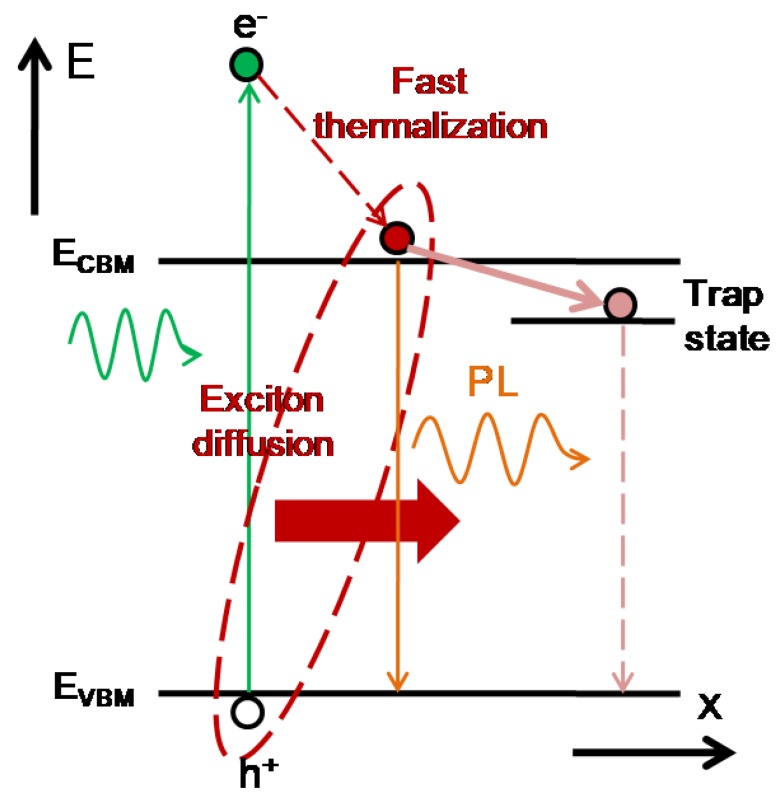
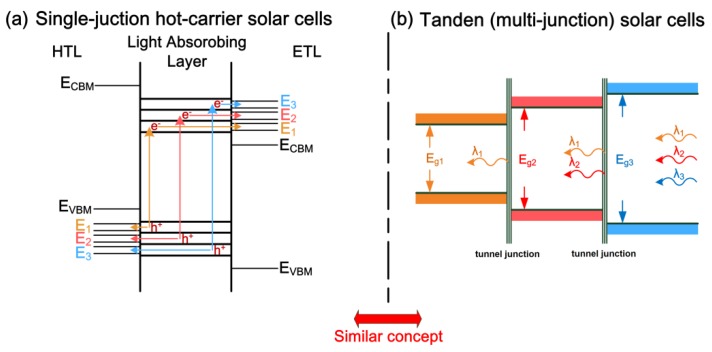
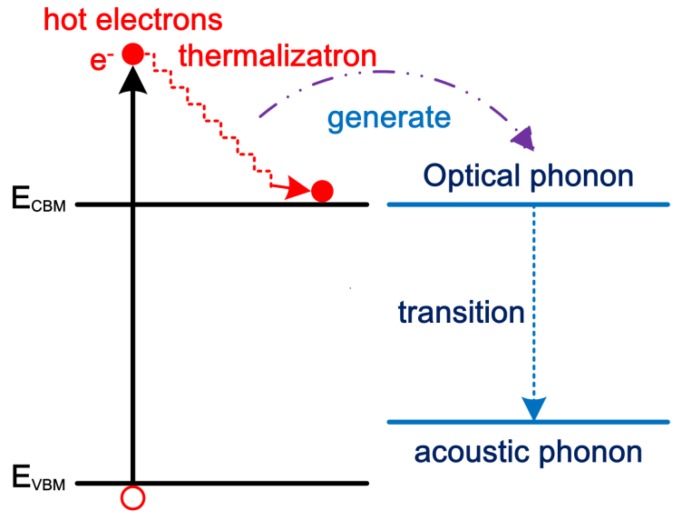
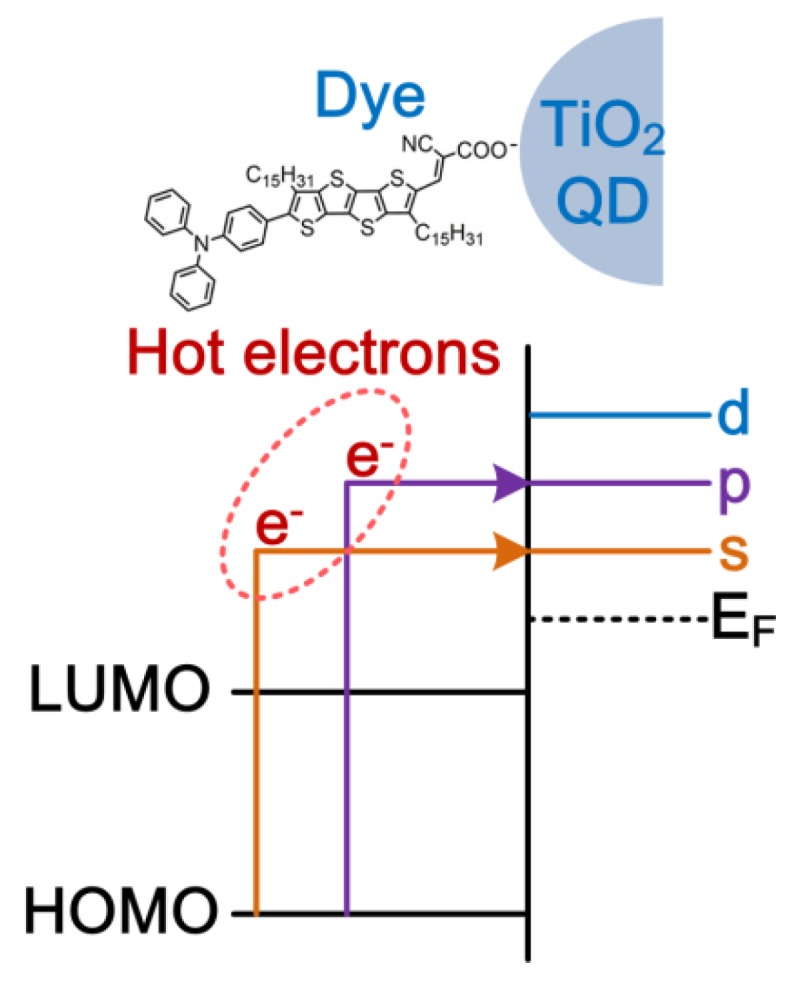
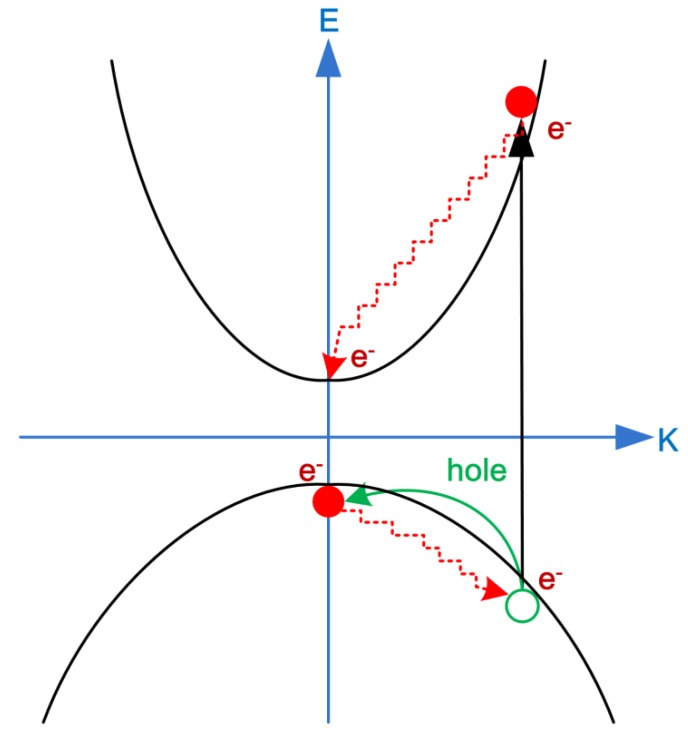
The power conversion efficiency (PCE) of single-junction solar cells was theoretically predicted to be limited by the Shockley-Queisser limit due to the intrinsic potential loss of the photo-excited electrons in the light absorbing materials. Up to now, the optimized GaAs solar cell has the highest PCE of 29.1%, which is close to the theoretical limit of ~33%. To pursue the perfect photovoltaic performance, it is necessary to extend the lifetimes of the photo-excited carriers (hot electrons and hot holes) and to collect the hot carriers without potential loss. Thanks to the long-lived hot carriers in perovskite crystal materials, it is possible to completely convert the photon energy to electrical power when the hot electrons and hot holes can freely transport in the quantized energy levels of the electron transport layer and hole transport layer, respectively. In order to achieve the ideal PCE, the interactions between photo-excited carriers and phonons in perovskite solar cells has to be completely understood.
由于光吸收材料中光激发电子的固有势能损失,理论上预测单结太阳能电池的功率转换效率(PCE)受肖克利-奎塞尔极限的限制。到目前为止,优化后的砷化镓太阳能电池具有29.1%的最高PCE,这接近约33%的理论极限。为了追求完美的光伏性能,有必要延长光激发载流子(热电子和热空穴)的寿命,并在无势能损失的情况下收集热载流子。得益于钙钛矿晶体材料中长寿命的热载流子,当热电子和热空穴能够分别在电子传输层和空穴传输层的量子化能级中自由传输时,有可能将光子能量完全转换为电能。为了实现理想的PCE,必须全面了解钙钛矿太阳能电池中光激发载流子与声子之间的相互作用。