Department of Psychiatry and Psychotherapy, Jena University Hospital, Jena, Germany.
Department of Psychiatry and Psychotherapy, Jena University Hospital, Jena, Germany; Department of Neurology, Jena University Hospital, Jena, Germany.
Neuroimage Clin. 2019;24:101976. doi: 10.1016/j.nicl.2019.101976. Epub 2019 Aug 7.
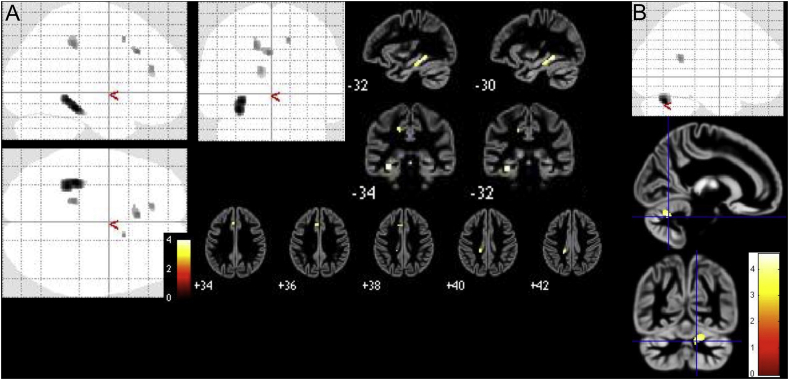
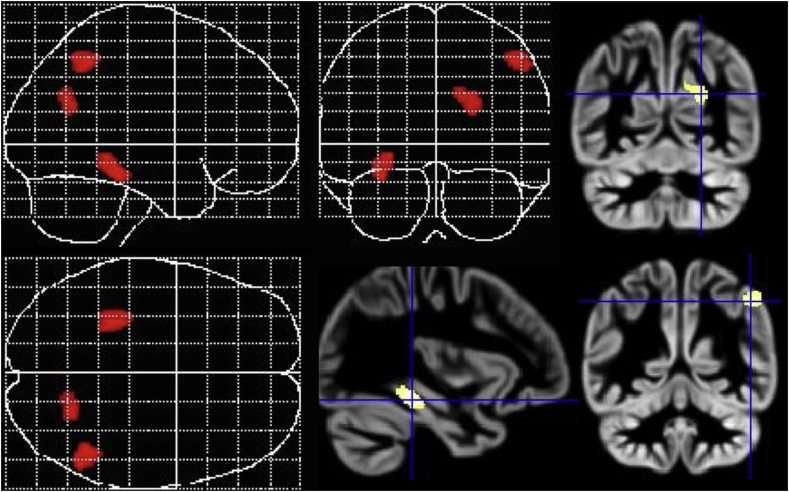
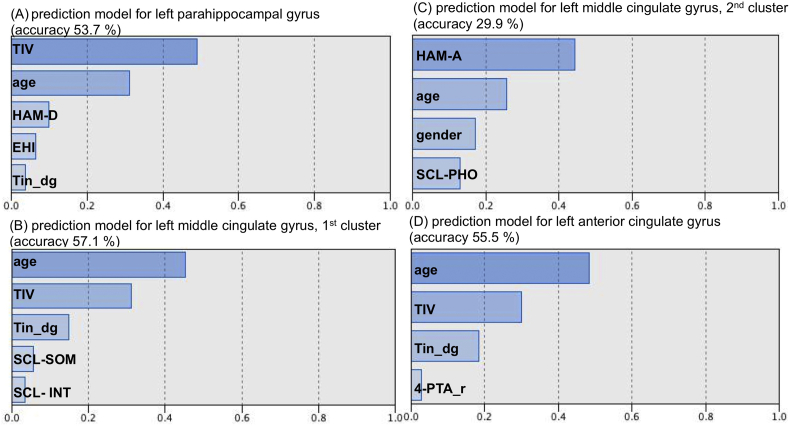
Chronic tinnitus has been associated with brain structural changes in both the auditory system as well as limbic system. While there is considerable inconsistency across brain structural findings, growing evidence suggests that distress and other non-auditory symptoms modulate effects. In this study we addressed this issue, testing the hypothesis that limbic changes in tinnitus relate to both disease-related distress as well as co-morbid psychopathology. We obtained high-resolution structural magnetic resonance imaging (MRI) scans from a total of 125 subjects: 59 patients with bilateral chronic tinnitus (29 with a co-morbid psychiatric condition, 30 without), 40 healthy controls and 26 psychiatric controls with depression/anxiety disorders (without tinnitus). Voxel-based morphometry with the CAT12 software package was used to analyse data. First, we analysed data based on a 2 × 2 factorial design (tinnitus; psychiatric co-morbidity), showing trend-level effects for tinnitus in ROI analyses of the anterior cingulate cortex and superior/transverse temporal gyri, and for voxel-based analysis in the left parahippocampal cortex. Multiple regression analyses showed that the parahippocampal finding was mostly predicted by tinnitus rather than (dimensional) psychopathology ratings. Comparing only low-distress tinnitus patients (independent of co-morbid conditions) with healthy controls also showed reduced left parahippocampal grey matter. Our findings demonstrate that depression and anxiety (not only subjective distress) are major modulators of brain structural effects in tinnitus, calling for a stronger consideration of psychopathology in future neurobiological and clinical studies of tinnitus.
慢性耳鸣与听觉系统和边缘系统的大脑结构变化有关。尽管大脑结构研究结果存在相当大的不一致,但越来越多的证据表明,痛苦和其他非听觉症状会调节这些影响。在这项研究中,我们解决了这个问题,检验了这样一个假设,即耳鸣的边缘变化与疾病相关的痛苦以及共病精神病理学有关。我们从总共 125 名受试者中获得了高分辨率结构磁共振成像 (MRI) 扫描:59 名双侧慢性耳鸣患者(29 名合并有精神疾病,30 名没有),40 名健康对照者和 26 名有抑郁/焦虑障碍的精神科对照者(无耳鸣)。使用 CAT12 软件包进行基于体素的形态测量学分析数据。首先,我们根据 2×2 因子设计(耳鸣;精神共病)进行数据分析,在 ROI 分析中,前扣带皮层和上/横颞回的分析显示出耳鸣的趋势水平效应,在左海马旁回的基于体素分析中也显示出趋势水平效应。多元回归分析表明,海马旁回的发现主要是由耳鸣而不是(维度)精神病理学评分预测的。仅将低痛苦的耳鸣患者(与共病情况无关)与健康对照组进行比较,也显示左侧海马旁回灰质减少。我们的研究结果表明,抑郁和焦虑(不仅仅是主观痛苦)是耳鸣大脑结构效应的主要调节因素,呼吁在未来的耳鸣神经生物学和临床研究中更加重视精神病理学。