Berger Joel I, Billig Alexander J, Sedley William, Kumar Sukhbinder, Griffiths Timothy D, Gander Phillip E
Department of Neurosurgery, University of Iowa, Iowa City, Iowa, USA.
Ear Institute, University College London, London, UK.
Hum Brain Mapp. 2024 Feb 15;45(3):e26627. doi: 10.1002/hbm.26627.
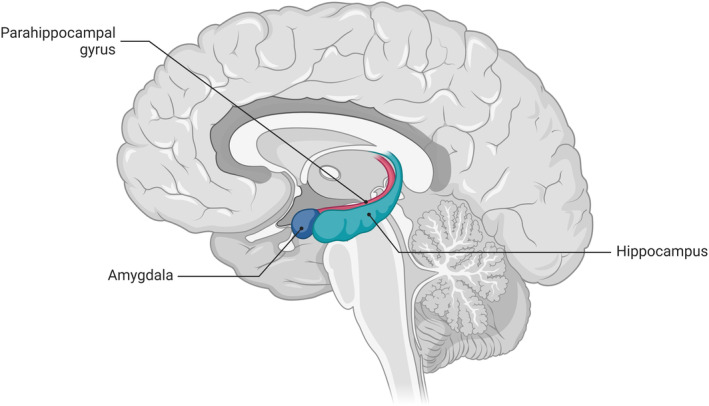
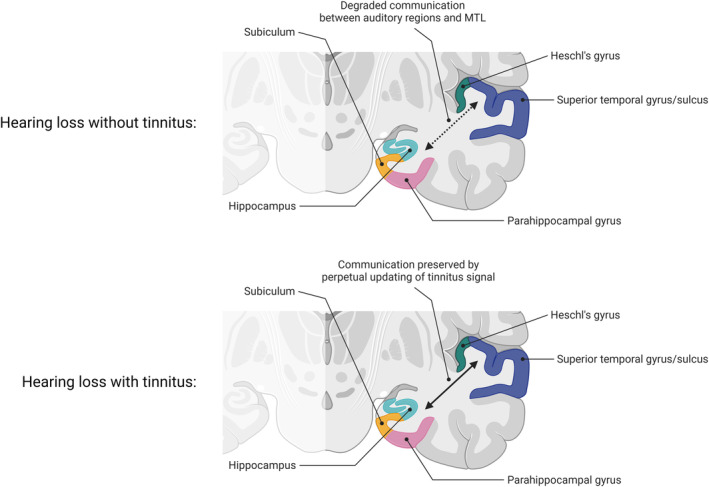
The hippocampus and parahippocampal gyrus have been implicated as part of a tinnitus network by a number of studies. These structures are usually considered in the context of a "limbic system," a concept typically invoked to explain the emotional response to tinnitus. Despite this common framing, it is not apparent from current literature that this is necessarily the main functional role of these structures in persistent tinnitus. Here, we highlight a different role that encompasses their most commonly implicated functional position within the brain-that is, as a memory system. We consider tinnitus as an auditory object that is held in memory, which may be made persistent by associated activity from the hippocampus and parahippocampal gyrus. Evidence from animal and human studies implicating these structures in tinnitus is reviewed and used as an anchor for this hypothesis. We highlight the potential for the hippocampus/parahippocampal gyrus to facilitate maintenance of the memory of the tinnitus percept via communication with auditory cortex, rather than (or in addition to) mediating emotional responses to this percept.
多项研究表明,海马体和海马旁回是耳鸣网络的一部分。这些结构通常在“边缘系统”的背景下被考虑,这一概念通常用于解释对耳鸣的情绪反应。尽管有这种常见的框架,但从当前文献中并不明显看出这必然是这些结构在持续性耳鸣中的主要功能作用。在这里,我们强调了一个不同的作用,它涵盖了它们在大脑中最常涉及的功能位置,即作为一个记忆系统。我们将耳鸣视为一种保存在记忆中的听觉对象,海马体和海马旁回的相关活动可能使其持续存在。本文回顾了动物和人类研究中表明这些结构与耳鸣有关的证据,并将其作为这一假设的依据。我们强调,海马体/海马旁回有可能通过与听觉皮层的通信来促进耳鸣感知记忆的维持,而不是(或除了)介导对这种感知的情绪反应。