Corona Giovanni, Rastrelli Giulia, Morelli Annamaria, Sarchielli Erica, Cipriani Sarah, Vignozzi Linda, Maggi Mario
Endocrinology Unit, Medical Department, Azienda Usl, Maggiore-Bellaria Hospital, Bologna, Italy.
Andrology, Female Endocrinology and Gender Incongruence Unit and Department of Experimental, Clinical and Biomedical Sciences, University of Florence, Florence, Italy.
World J Mens Health. 2020 Jul;38(3):256-270. doi: 10.5534/wjmh.190061. Epub 2019 Aug 29.
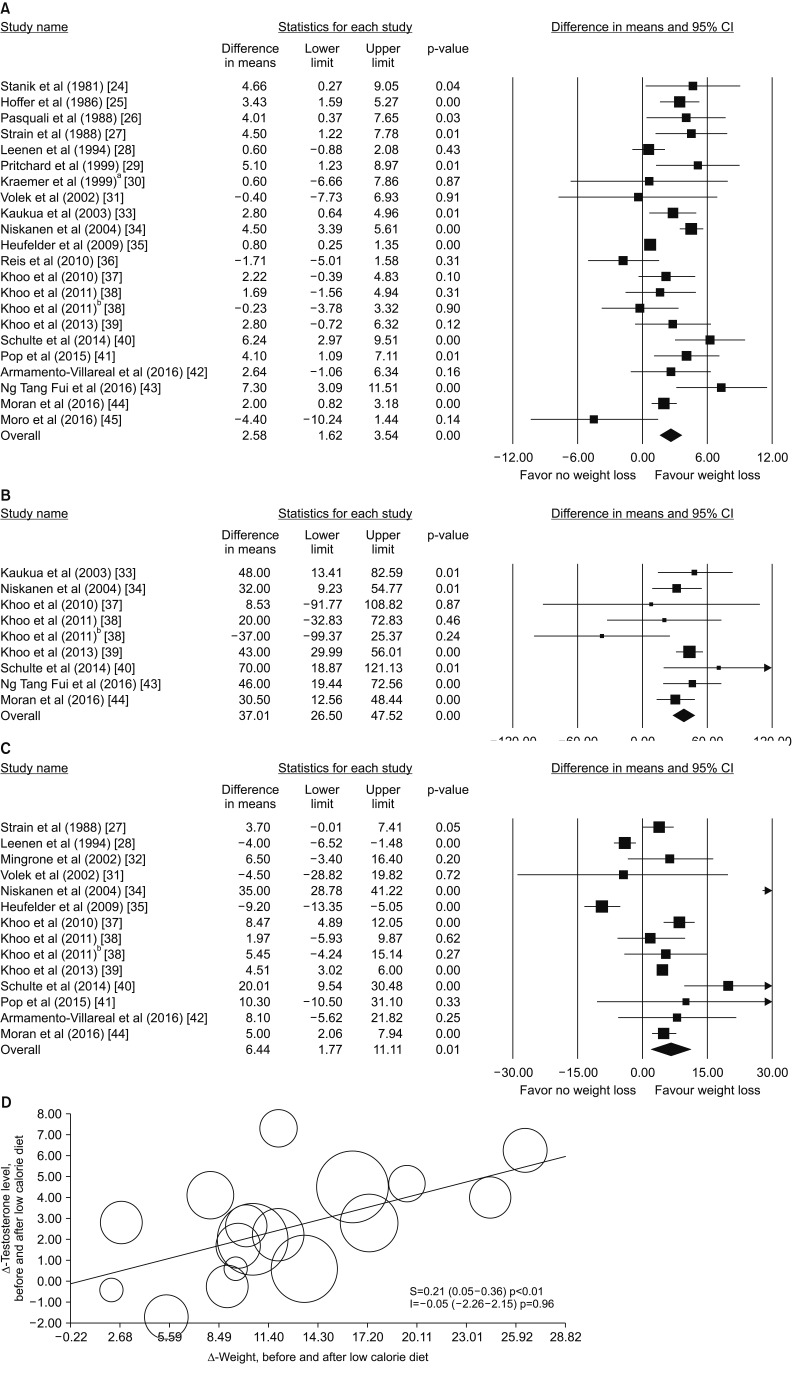
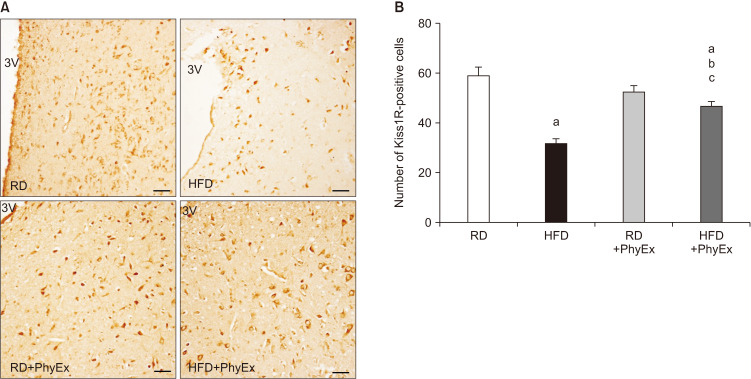
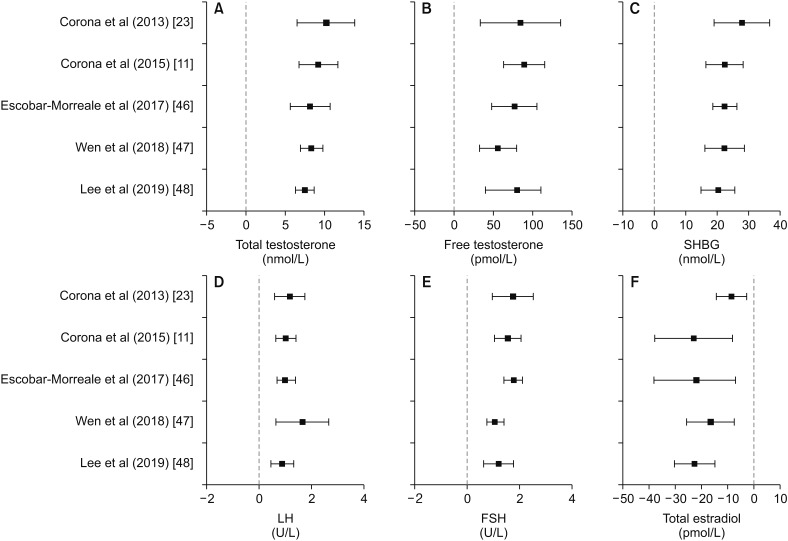
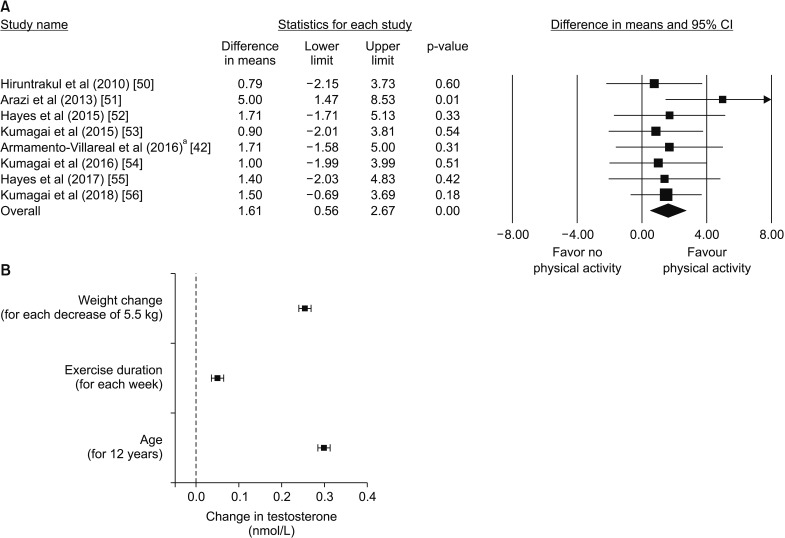
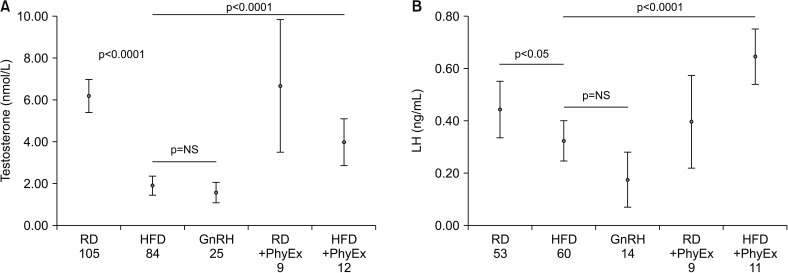
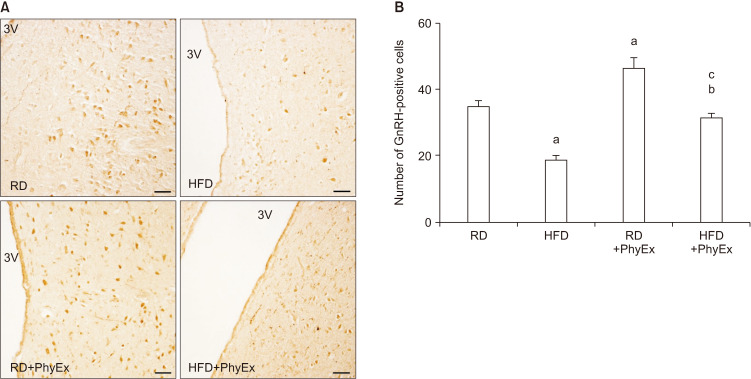
A dichotomic distinction between "organic" and "functional" hypogonadism is emerging. The former is an irreversible condition due to congenital or "acquired" "organic" damage of the brain centers or of the testis. Conversely, the latter is a potentially reversible form, characterized by borderline low testosterone (T) levels mainly secondary to age-related comorbidities and metabolic derangements, including metabolic syndrome (MetS). Life-style modifications, - here reviewed and, when possible, meta-analyzed -, have documented that weight-loss and physical exercise are able to improve obesity-associated functional hypogonadism and its related sexual symptoms. A rabbit experimental model, of MetS originally obtained in our lab, showed that endurance training (PhyEx) completely reverted MetS-induced hypogonadotropic hypogonadism by reducing hypothalamus inflammation and testis fibrosis eventually allowing for a better corpora cavernosa relaxation and response to sildenafil. Physicians should strongly adapt all the reasonable strategies to remove/mitigate the known conditions underlying functional hypogonadism, including MetS and obesity. Physical limitations, including reduced muscle mass and increased fat mass, along with low self-confidence, also due to the sexual problems, might limit a subject's propensity to increase physical activity and dieting. A short term T treatment trial, by improving muscle mass and sexual function, might help hypogonadal obese patients to overcome the overfed, inactive state and to become physically and psychologically ready for changing their lifestyle.
“器质性”和“功能性”性腺功能减退之间的二分法正在显现。前者是由于脑中枢或睾丸的先天性或“后天性”“器质性”损伤导致的不可逆病症。相反,后者是一种潜在可逆的形式,其特征是睾酮(T)水平临界降低,主要继发于与年龄相关的合并症和代谢紊乱,包括代谢综合征(MetS)。生活方式的改变——在此进行综述并在可能的情况下进行荟萃分析——已证明,体重减轻和体育锻炼能够改善肥胖相关的功能性性腺功能减退及其相关的性症状。我们实验室最初获得的一种MetS兔实验模型表明,耐力训练(体育锻炼)通过减轻下丘脑炎症和睾丸纤维化,最终使海绵体更好地松弛并对西地那非产生反应,从而完全逆转了MetS诱导的促性腺激素缺乏性性腺功能减退。医生应大力采用所有合理策略来消除/减轻功能性性腺功能减退的已知潜在病症,包括MetS和肥胖症。身体限制,包括肌肉量减少和脂肪量增加,以及同样由于性问题导致的自信心不足,可能会限制受试者增加身体活动和节食的倾向。短期睾酮治疗试验通过改善肌肉量和性功能,可能有助于性腺功能减退的肥胖患者克服过度进食、不活动的状态,并在身体和心理上做好改变生活方式的准备。