Peng Jian, Long Huiling, Liu Weiwei, Wu Zhaoying, Wang Tao, Zeng Zhu, Guo Guo, Wu Jianwei
Key Laboratory of Biology and Medical Engineering, Department of Biotechnology, School of Biology & Engineering, Guizhou Medical University, Guiyang 550004, People's Republic of China.
Key Laboratory of Environmental Pollution Monitoring and Disease Control, Ministry of Education, Guizhou Medical University, Guiyang 550004, People's Republic of China.
Infect Drug Resist. 2019 Aug 5;12:2417-2428. doi: 10.2147/IDR.S214057. eCollection 2019.
A case of (), known as gram-negative bacteria, causes a range of nosocomial infections. Due to the continuous detection of multi-drug resistant in the clinic, there is an urgent need to find alternative therapies, including broad-spectrum antibacterial peptides (AMP). Recently it has been found that the peptide Cec4 has good antibacterial activity against , but the antibacterial mechanism remains elusive.
The basic structure of Cec4 was analyzed by circular dichroism (CD) spectroscopy, and the potential antibacterial mechanism of Cec4 was detected by flow cytometry, transmission electron microscopy, fluorescence and confocal microscopy. The minimum inhibitory concentration (MIC) of antimicrobial peptides against various was determinated with broth microdilution techniques. The biofilm formation and the sensitivity detection of biofilms to antimicrobial peptides were detected by crystal violet staining.
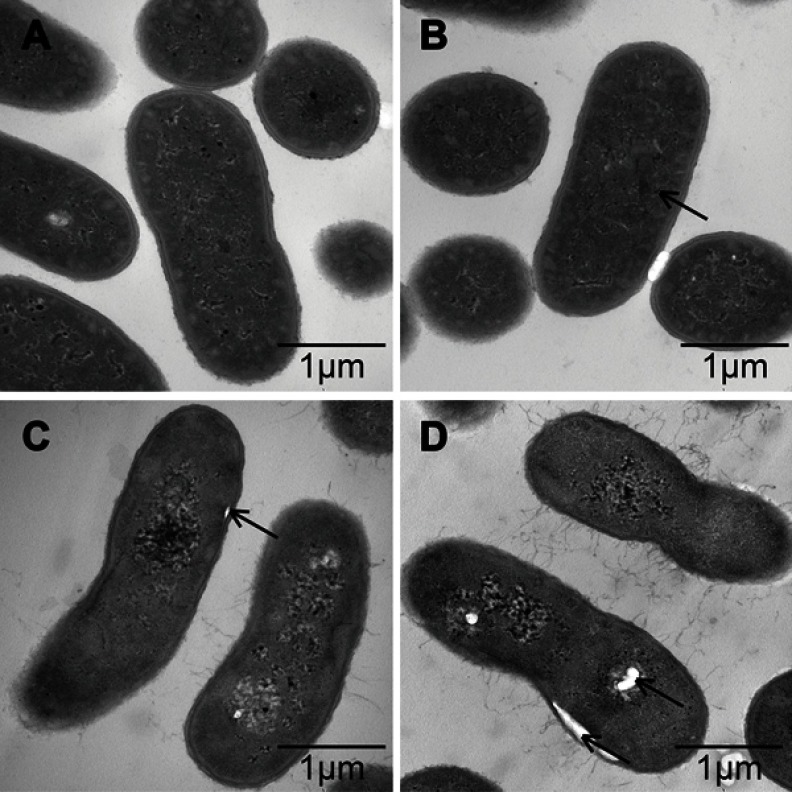
In this study, the main secondary structure of the antibacterial peptide Cec4 is α-helix (99.7%) in the hydrophobic environment. Furthermore, after the treatment with Cec4, an amount of leakage of and the destruction of its cell membrane were detected. Moreover, it was observed that FITC-Cec4 can enter the cell, and more cells were held in the G1 phase with peptide Cec4. However, the DNA binding assay of the peptide Cec4 indicates that the peptide does not target DNA. In addition, peptide Cec4 was superior in reducing adherent biofilms of compared to conventional antibiotics and has no cytotoxicity.
It is apparent that the antibacterial peptide Cec4 may achieve rapid sterilization by multi-target interaction and presents an attractive therapeutic option for the prevention and control of infections.
某例(),即革兰氏阴性菌,可引发一系列医院感染。由于临床中不断检测到对多种药物耐药的(),迫切需要寻找替代疗法,包括广谱抗菌肽(AMP)。最近发现,肽Cec4对()具有良好的抗菌活性,但其抗菌机制仍不清楚。
通过圆二色性(CD)光谱分析Cec4的基本结构,并通过流式细胞术、透射电子显微镜、荧光和共聚焦显微镜检测Cec4的潜在抗菌机制。采用肉汤微量稀释技术测定抗菌肽对各种()的最低抑菌浓度(MIC)。通过结晶紫染色检测生物膜的形成以及生物膜对抗菌肽的敏感性。
在本研究中,抗菌肽Cec4在疏水环境中的主要二级结构为α-螺旋(99.7%)。此外,用Cec4处理后,检测到()有一定量的渗漏及其细胞膜被破坏。而且,观察到FITC-Cec4可进入细胞,并且肽Cec4使更多细胞停滞在G1期。然而肽Cec4的DNA结合试验表明该肽不靶向DNA。此外,与传统抗生素相比,肽Cec4在减少()附着生物膜方面更具优势且无细胞毒性。
显然,抗菌肽Cec4可能通过多靶点相互作用实现快速杀菌,为预防和控制()感染提供了一种有吸引力的治疗选择。