Msibi Zama N P, Mabandla Musa V
Department of Human Physiology, School of Laboratory Medicine and Medical Sciences, College of Health Sciences, University of KwaZulu-Natal, Durban, South Africa.
Laboratory Medicine and Medical Sciences, Nelson R Mandela School of Medicine, College of Health Sciences, University of KwaZulu-Natal, Durban, South Africa.
Front Physiol. 2019 Aug 21;10:1059. doi: 10.3389/fphys.2019.01059. eCollection 2019.
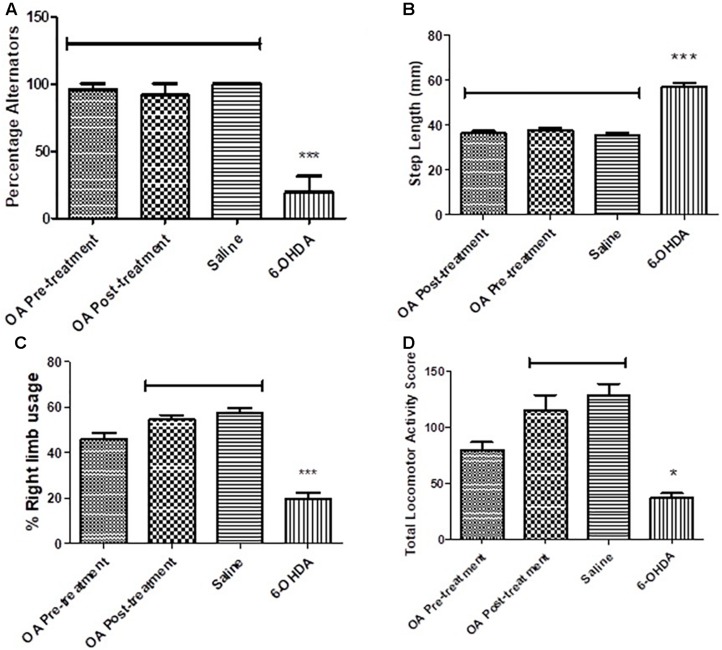
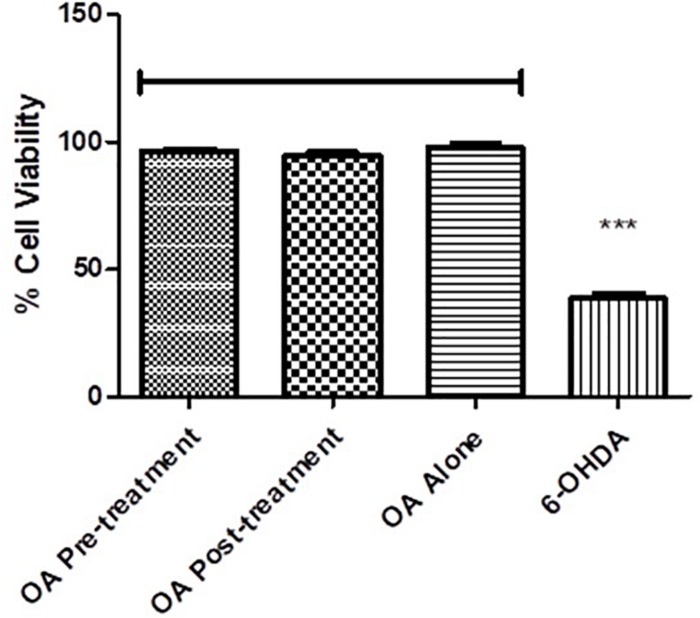
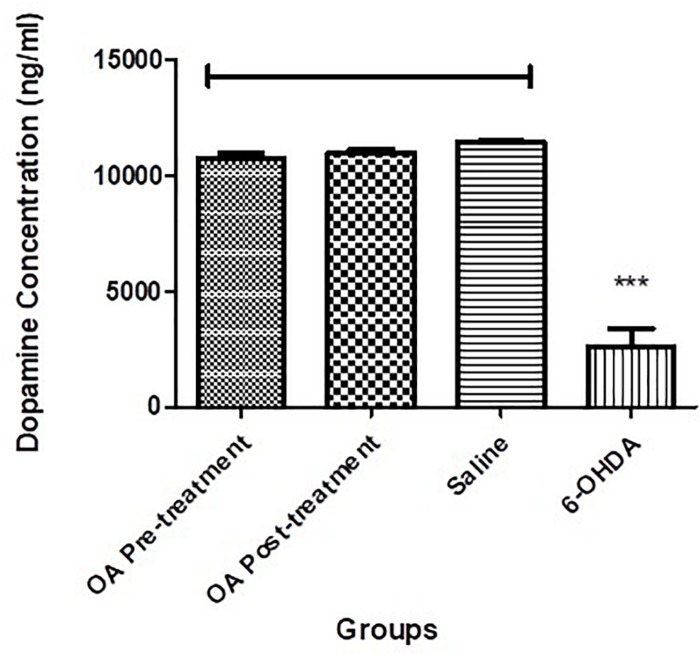
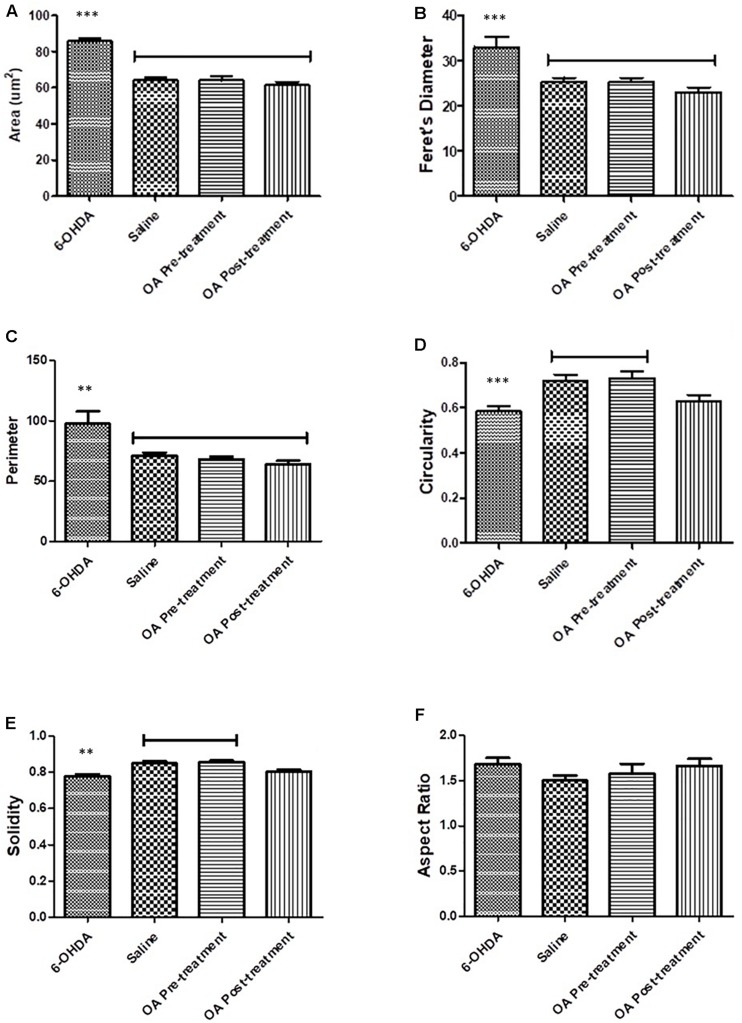
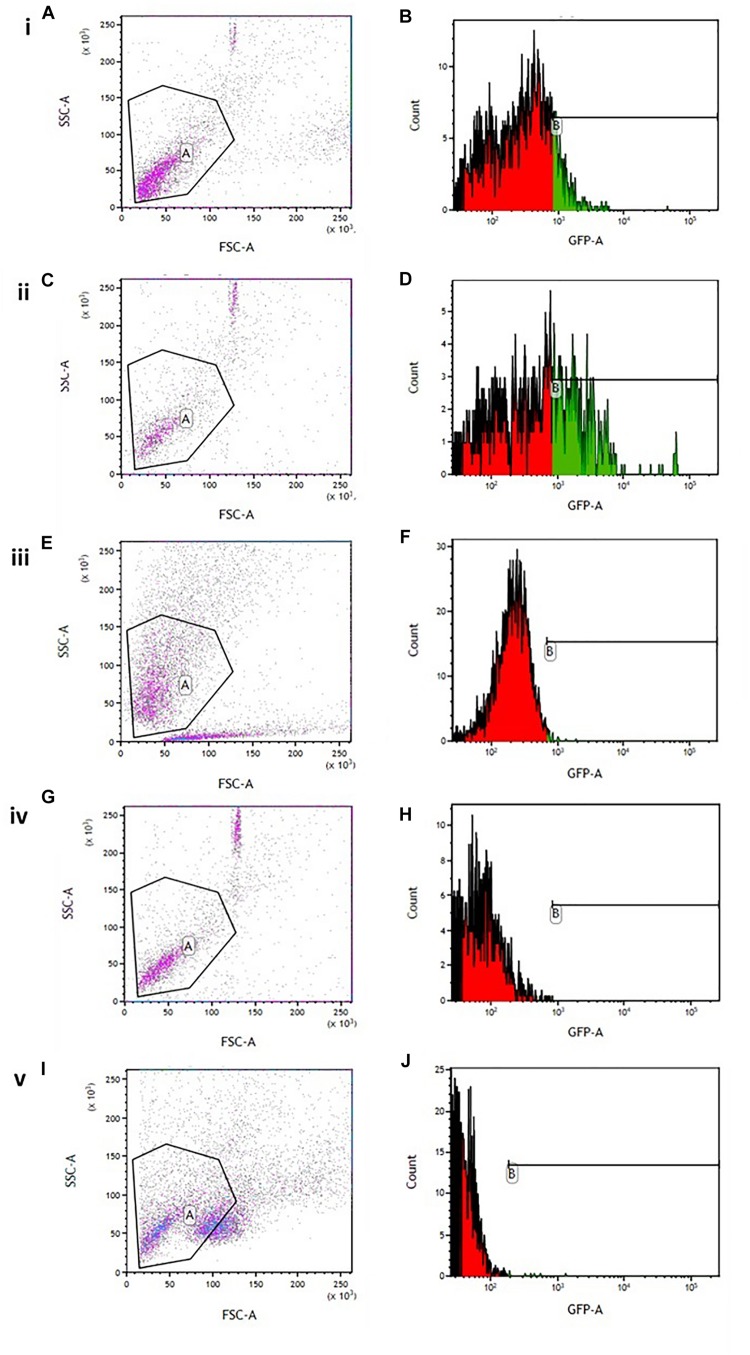
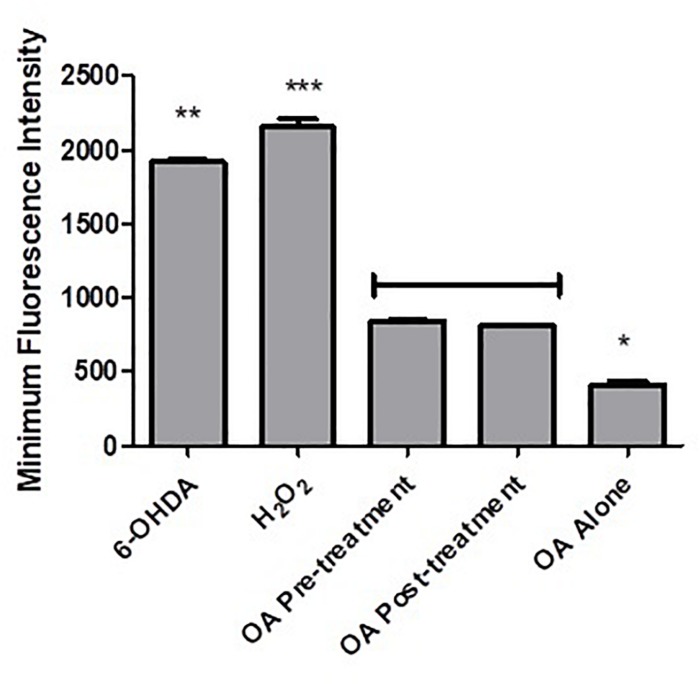
Oleanolic acid (OA), a biologically active pentacyclic triterpenoid compound, has been implicated in a number of clinical benefits including antioxidant, and anti-inflammatory properties. OA has been previously shown to ameliorate the toxic effects of 6-hydroxydopamine (6-OHDA), however, the mechanism by which this effect is exhibited is not clearly understood. In the present study, we investigated the role of OA in attenuation of microglial activation in 6-OHDA induced Parkinsonian rat model. We also explored the ability of OA to attenuate 6-OHDA-induced intracellular reactive oxygen species (ROS), and thus prevent cell death in PC12 cells. We accessed the utility of immunohistochemistry to assess striatal microglial activation, where shape descriptors such as area, perimeter, Feret's diameter, aspect ratio and solidity were determined using the Fiji ImageJ software. Intracellular ROS and cell viability were assessed in PC12 cells using the OxiSelect Intracellular ROS Assay Kit and MTT assay, respectively. We found that microglial activation was decreased in rats pre-treated with OA prior to 6-OHDA insult as well as in rats treated with OA 1 day post 6-OHDA exposure when compared to untreated rats, as determined by shape descriptors. This finding was in correlation with significantly improved motor symptoms and increased striatal dopamine in treated rats as compared to non-treated rats. Flow cytometry assessment of PC12 cells revealed a decreased amount of intracellular ROS in cells pre-treated with OA 6 h prior to 6-OHDA exposure and cells treated with OA 1 h post 6-OHDA exposure, suggesting that OA provides neuroprotection in PC12 cells by removing intracellular ROS, thereby reducing oxidative stress. Our finding suggest that OA exhibits its neuroprotective effect by attenuating striatal microglial activation, which results in neuroinflammation that is implicated in Parkinson's disease pathology. Further studies detailing the mechanism by which OA interacts with microglia may be useful in understanding the role of OA in attenuating neuroinflammation.
齐墩果酸(OA)是一种具有生物活性的五环三萜类化合物,具有多种临床益处,包括抗氧化和抗炎特性。先前已表明OA可改善6-羟基多巴胺(6-OHDA)的毒性作用,然而,这种作用的表现机制尚不清楚。在本研究中,我们调查了OA在6-OHDA诱导的帕金森病大鼠模型中对小胶质细胞活化的抑制作用。我们还探讨了OA减轻6-OHDA诱导的细胞内活性氧(ROS)的能力,从而预防PC12细胞死亡。我们利用免疫组织化学评估纹状体小胶质细胞活化情况,使用Fiji ImageJ软件确定诸如面积、周长、费雷特直径、纵横比和紧实度等形状描述符。分别使用OxiSelect细胞内ROS检测试剂盒和MTT法评估PC12细胞内的ROS和细胞活力。我们发现,与未处理的大鼠相比,在6-OHDA损伤前用OA预处理的大鼠以及在6-OHDA暴露后1天用OA处理的大鼠,根据形状描述符确定,小胶质细胞活化减少。这一发现与治疗组大鼠与未治疗组大鼠相比运动症状明显改善和纹状体多巴胺增加相关。对PC12细胞的流式细胞术评估显示,在6-OHDA暴露前6小时用OA预处理的细胞和在6-OHDA暴露后1小时用OA处理的细胞内ROS含量降低,这表明OA通过去除细胞内ROS在PC12细胞中提供神经保护,从而减少氧化应激。我们的研究结果表明,OA通过减轻纹状体小胶质细胞活化发挥其神经保护作用,而纹状体小胶质细胞活化会导致与帕金森病病理学相关的神经炎症。进一步详细研究OA与小胶质细胞相互作用的机制可能有助于理解OA在减轻神经炎症中的作用。