Shtark Oksana Y, Puzanskiy Roman K, Avdeeva Galina S, Yurkov Andrey P, Smolikova Galina N, Yemelyanov Vladislav V, Kliukova Marina S, Shavarda Alexey L, Kirpichnikova Anastasiia A, Zhernakov Aleksandr I, Afonin Alexey M, Tikhonovich Igor A, Zhukov Vladimir A, Shishova Maria F
Department of Biotechnology, All-Russia Research Institute for Agricultural Microbiology, Pushkin, St. Petersburg, Russia.
Faculty of Biology, St. Petersburg State University, St. Petersburg, Russia.
PeerJ. 2019 Aug 23;7:e7495. doi: 10.7717/peerj.7495. eCollection 2019.
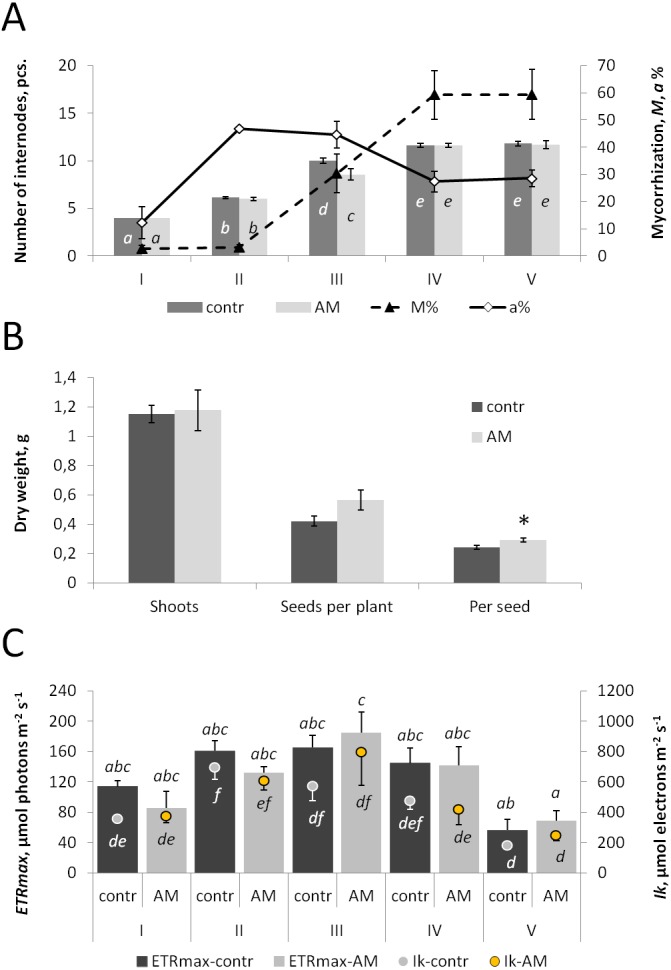
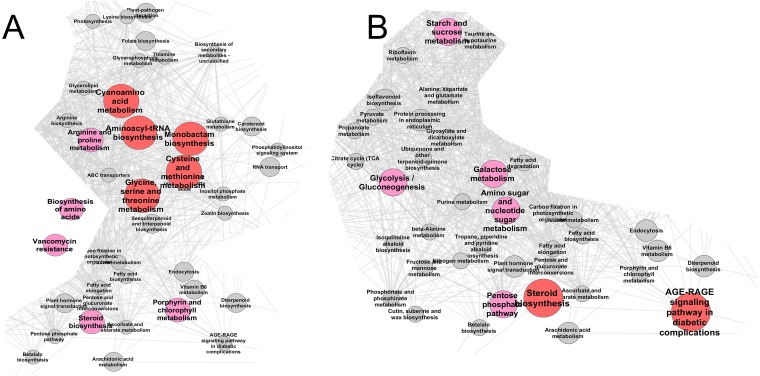
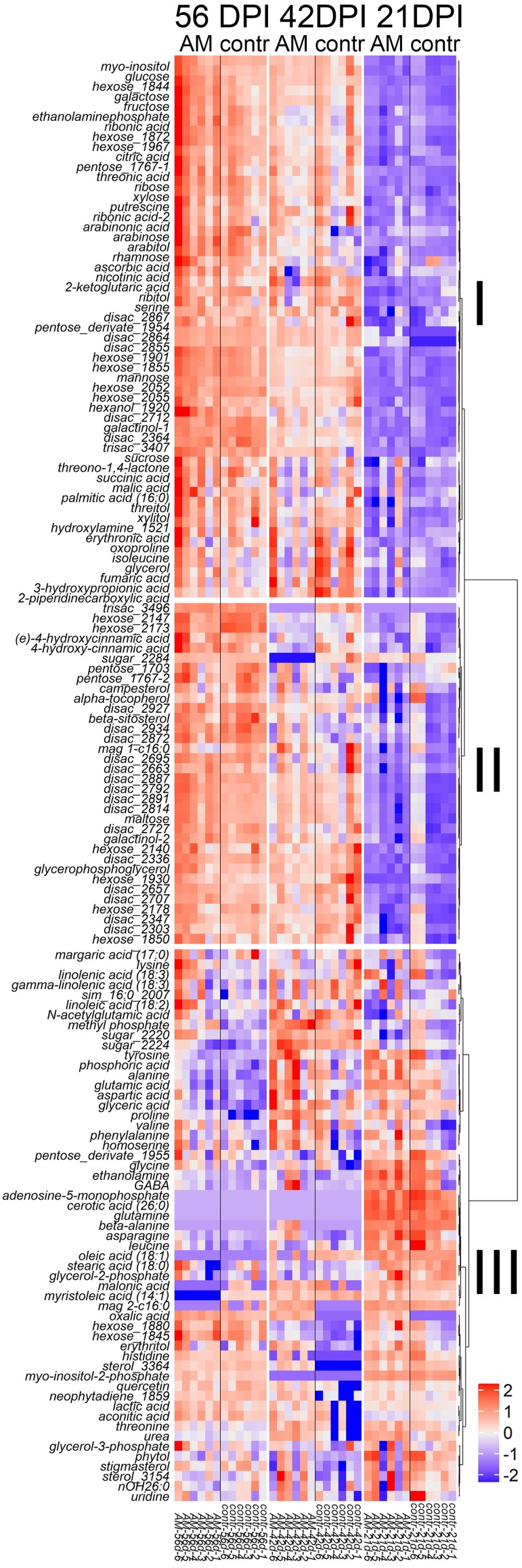
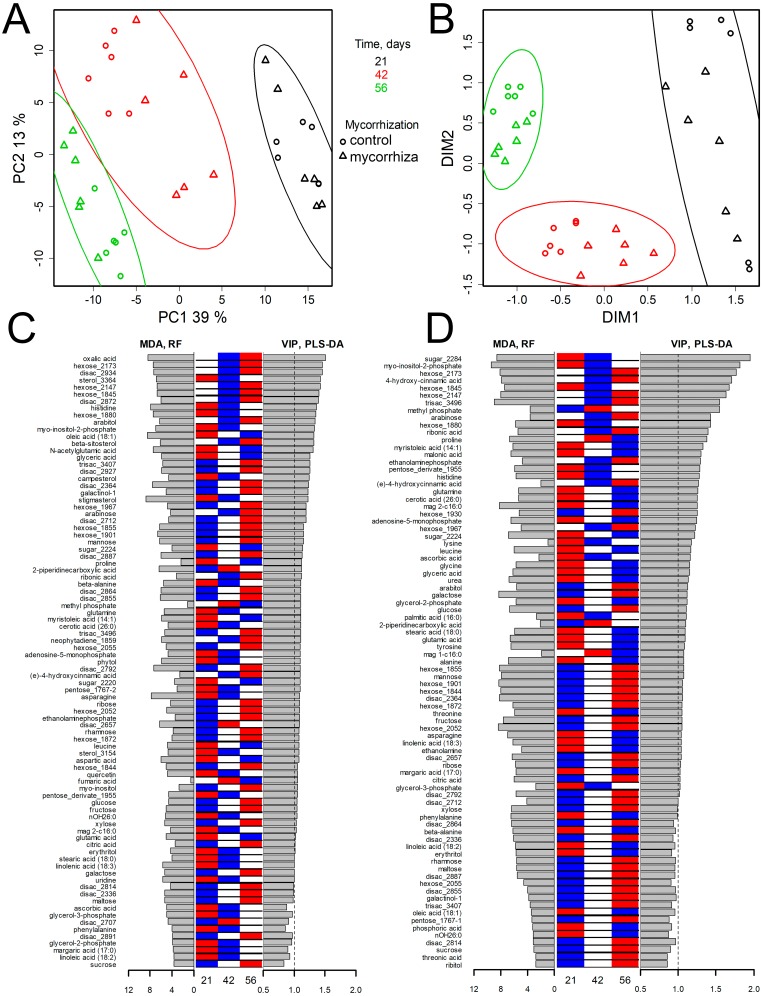
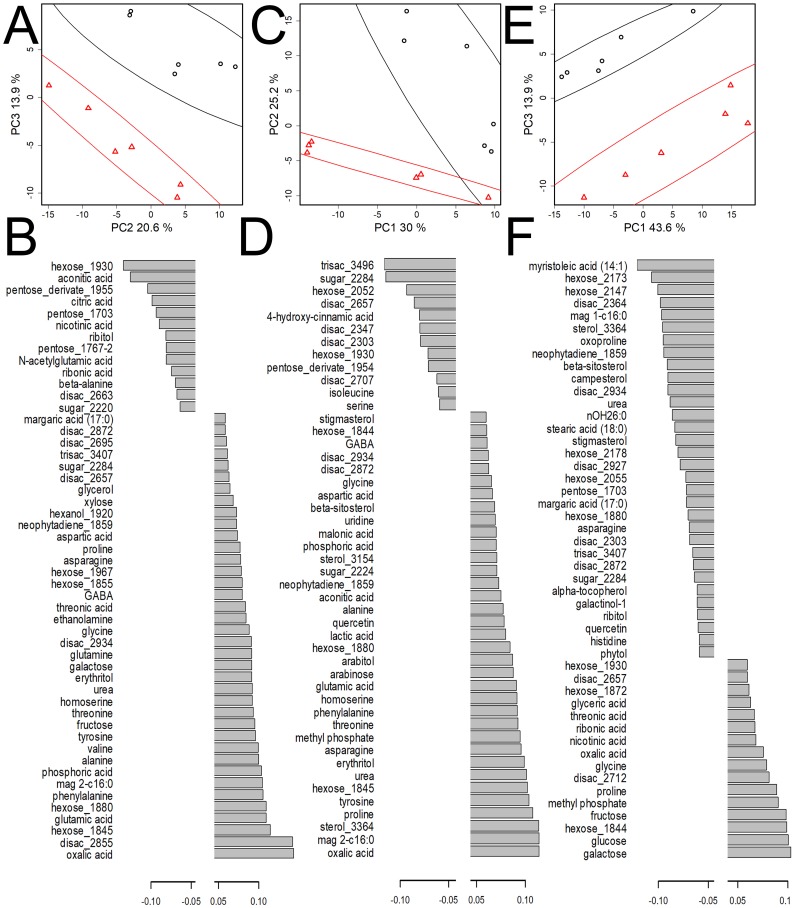
Arbuscular mycorrhiza (AM) is known to be a mutually beneficial plant-fungal symbiosis; however, the effect of mycorrhization is heavily dependent on multiple biotic and abiotic factors. Therefore, for the proper employment of such plant-fungal symbiotic systems in agriculture, a detailed understanding of the molecular basis of the plant developmental response to mycorrhization is needed. The aim of this work was to uncover the physiological and metabolic alterations in pea ( L.) leaves associated with mycorrhization at key plant developmental stages. Plants of pea cv. Finale were grown in constant environmental conditions under phosphate deficiency. The plants were analyzed at six distinct time points, which corresponded to certain developmental stages of the pea: I: 7 days post inoculation (DPI) when the second leaf is fully unfolded with one pair of leaflets and a simple tendril; II: 21 DPI at first leaf with two pairs of leaflets and a complex tendril; III: 32 DPI when the floral bud is enclosed; IV: 42 DPI at the first open flower; V: 56 DPI when the pod is filled with green seeds; and VI: 90-110 DPI at the dry harvest stage. Inoculation with had no effect on the fresh or dry shoot weight, the leaf photochemical activity, accumulation of chlorophyll , or carotenoids. However, at stage III (corresponding to the most active phase of mycorrhiza development), the number of internodes between cotyledons and the youngest completely developed leaf was lower in the inoculated plants than in those without inoculation. Moreover, inoculation extended the vegetation period of the host plants, and resulted in increase of the average dry weight per seed at stage VI. The leaf metabolome, as analyzed with GC-MS, included about three hundred distinct metabolites and showed a strong correlation with plant age, and, to a lesser extent, was influenced by mycorrhization. Metabolic shifts influenced the levels of sugars, amino acids and other intermediates of nitrogen and phosphorus metabolism. The use of unsupervised dimension reduction methods showed that (i) at stage II, the metabolite spectra of inoculated plants were similar to those of the control, and (ii) at stages IV and V, the leaf metabolic profiles of inoculated plants shifted towards the profiles of the control plants at earlier developmental stages. At stage IV the inoculated plants exhibited a higher level of metabolism of nitrogen, organic acids, and lipophilic compounds in comparison to control plants. Thus, mycorrhization led to the retardation of plant development, which was also associated with higher seed biomass accumulation in plants with an extended vegetation period. The symbiotic crosstalk between host plant and AM fungi leads to alterations in several biochemical pathways the details of which need to be elucidated in further studies.
丛枝菌根(AM)是一种互利的植物 - 真菌共生关系;然而,菌根化的效果在很大程度上取决于多种生物和非生物因素。因此,为了在农业中正确应用这种植物 - 真菌共生系统,需要详细了解植物对菌根化发育反应的分子基础。这项工作的目的是揭示豌豆(L.)叶片在关键植物发育阶段与菌根化相关的生理和代谢变化。豌豆品种Finale的植株在缺磷的恒定环境条件下生长。在六个不同的时间点对植株进行分析,这些时间点对应于豌豆的特定发育阶段:I:接种后7天(DPI),此时第二片叶子完全展开,有一对小叶和一个简单的卷须;II:21 DPI,第一片叶子有两对小叶和一个复杂的卷须;III:32 DPI,花芽被包裹;IV:42 DPI,第一朵开放的花;V:56 DPI,豆荚中充满绿色种子;VI:90 - 110 DPI,干收获阶段。接种对地上部鲜重或干重、叶片光化学活性、叶绿素、或类胡萝卜素的积累没有影响。然而,在阶段III(对应菌根发育最活跃的阶段),接种植株子叶和最年轻的完全发育叶片之间的节间数比未接种的植株少。此外,接种延长了寄主植物的营养期,并导致阶段VI时每粒种子的平均干重增加。用气相色谱 - 质谱分析的叶片代谢组包括约三百种不同的代谢物,与植株年龄有很强的相关性,并且在较小程度上受菌根化影响。代谢变化影响了糖、氨基酸以及氮和磷代谢其他中间产物的水平。使用无监督降维方法表明,(i)在阶段II,接种植株的代谢物谱与对照相似,(ii)在阶段IV和V,接种植株的叶片代谢谱向较早发育阶段的对照植株谱转移。在阶段IV,与对照植株相比,接种植株表现出更高水平的氮、有机酸和亲脂性化合物代谢。因此,菌根化导致植物发育延迟,这也与营养期延长的植株中更高的种子生物量积累有关。寄主植物与AM真菌之间的共生相互作用导致几种生化途径发生改变,其细节需要在进一步研究中阐明。