Joint Research Center for Computational Biomedicine, RWTH Aachen University, 52074, Aachen, Germany.
BASF SE, Carl-Bosch-Strasse 38, 67056, Ludwigshafen am Rhein, Germany.
Sci Rep. 2019 Sep 9;9(1):12888. doi: 10.1038/s41598-019-49006-2.
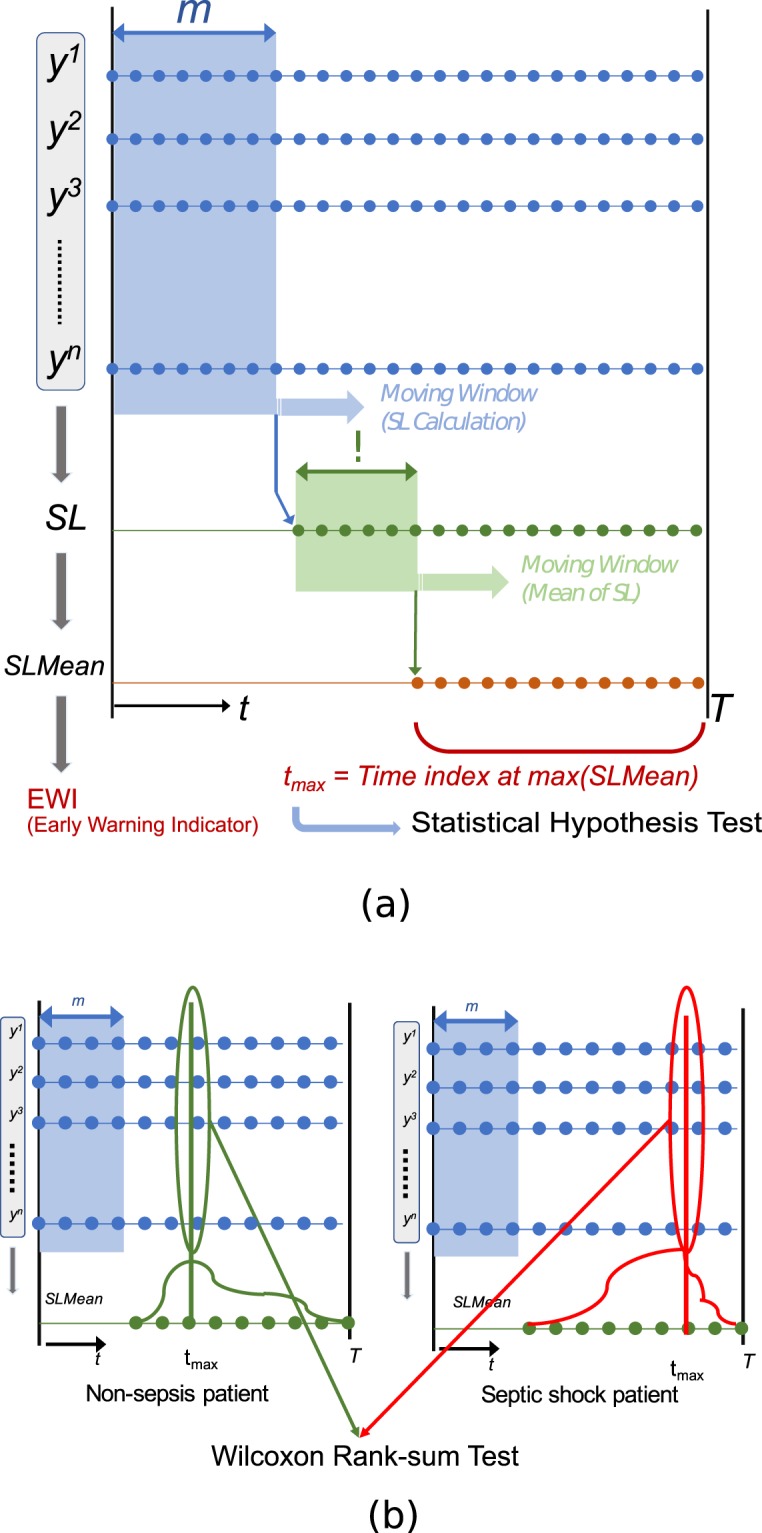
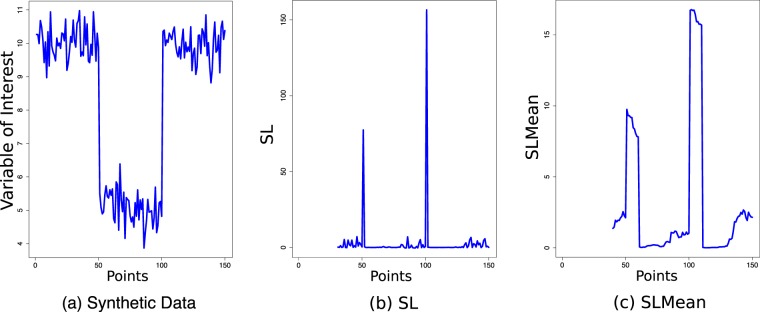
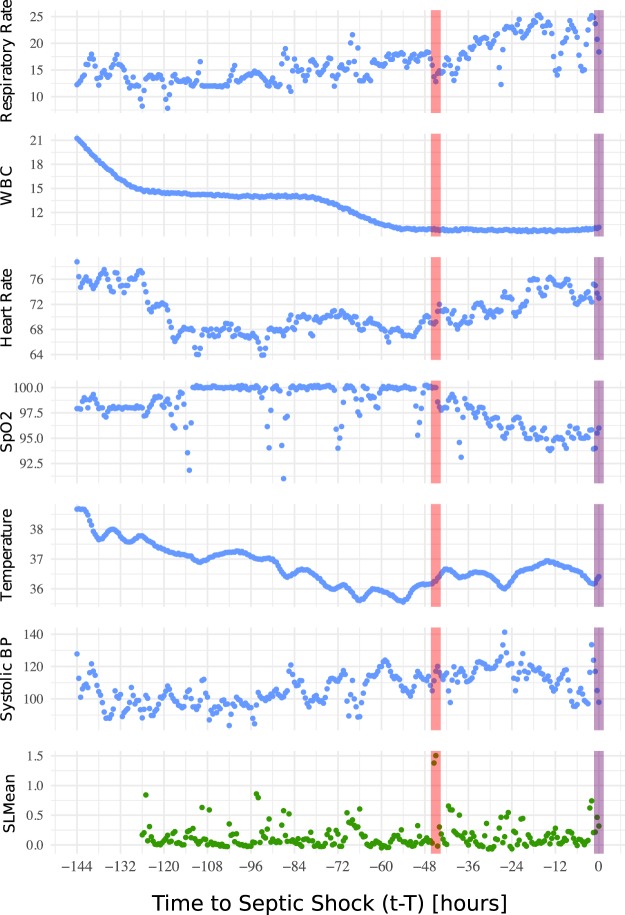
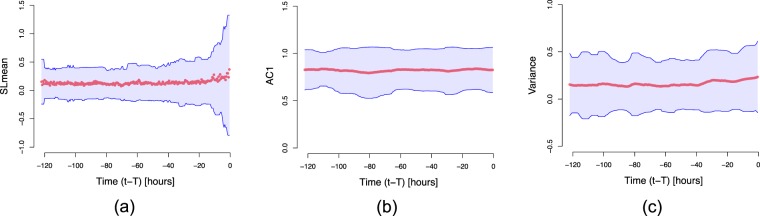
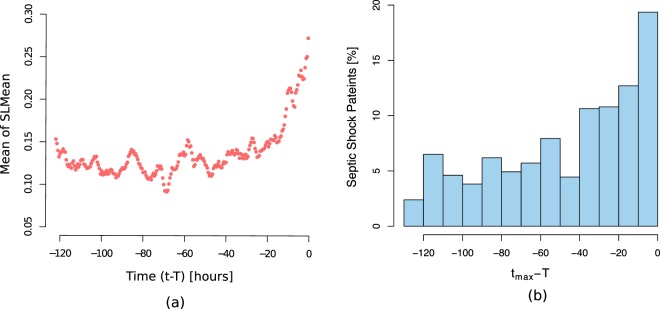
The progression of complex human diseases is associated with critical transitions across dynamical regimes. These transitions often spawn early-warning signals and provide insights into the underlying disease-driving mechanisms. In this paper, we propose a computational method based on surprise loss (SL) to discover data-driven indicators of such transitions in a multivariate time series dataset of septic shock and non-sepsis patient cohorts (MIMIC-III database). The core idea of SL is to train a mathematical model on time series in an unsupervised fashion and to quantify the deterioration of the model's forecast (out-of-sample) performance relative to its past (in-sample) performance. Considering the highest value of the moving average of SL as a critical transition, our retrospective analysis revealed that critical transitions occurred at a median of over 35 hours before the onset of septic shock, which suggests the applicability of our method as an early-warning indicator. Furthermore, we show that clinical variables at critical-transition regions are significantly different between septic shock and non-sepsis cohorts. Therefore, our paper contributes a critical-transition-based data-sampling strategy that can be utilized for further analysis, such as patient classification. Moreover, our method outperformed other indicators of critical transition in complex systems, such as temporal autocorrelation and variance.
复杂人类疾病的进展与动力学状态的关键转变有关。这些转变通常会产生预警信号,并深入了解潜在的疾病驱动机制。在本文中,我们提出了一种基于惊讶损失(SL)的计算方法,以在败血症和非败血症患者队列的多变量时间序列数据集(MIMIC-III 数据库)中发现此类转变的数据驱动指标。SL 的核心思想是在无监督的方式下对时间序列进行数学模型训练,并量化模型的预测(样本外)性能相对于其过去(样本内)性能的恶化。考虑到 SL 的移动平均值的最高值作为关键转变,我们的回顾性分析表明,败血症的关键转变发生在中位数超过 35 小时之前,这表明我们的方法作为预警指标的适用性。此外,我们还表明,在关键转变区域的临床变量在败血症和非败血症组之间存在显著差异。因此,我们的论文提出了一种基于关键转变的数据采样策略,可用于进一步分析,例如患者分类。此外,我们的方法在复杂系统中的其他关键转变指标(如时间自相关和方差)中表现出色。