Molecular Recognition Research Center, Korea Institute of Science and Technology (KIST), Seoul, 02792, South Korea.
Division of Bio-Medical Science and Technology (Biological Chemistry), Korea University of Science and Technology (UST), Daejeon, 34113, South Korea.
Sci Rep. 2019 Sep 9;9(1):12908. doi: 10.1038/s41598-019-49145-6.
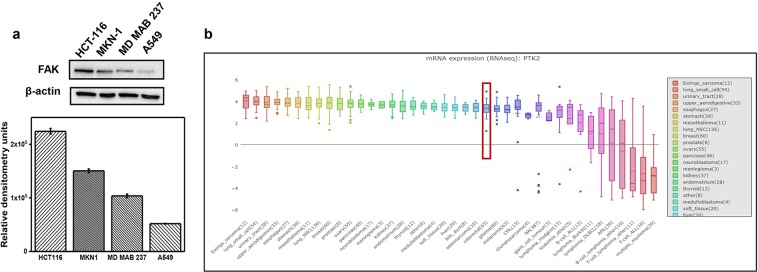
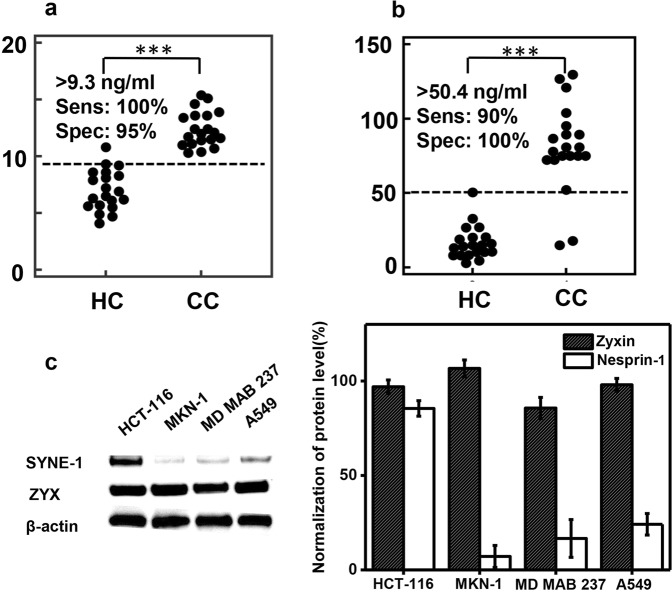
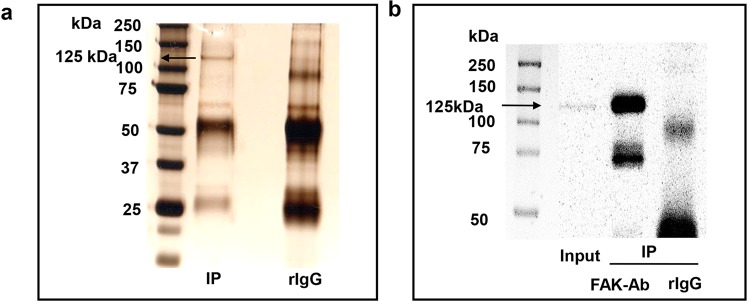
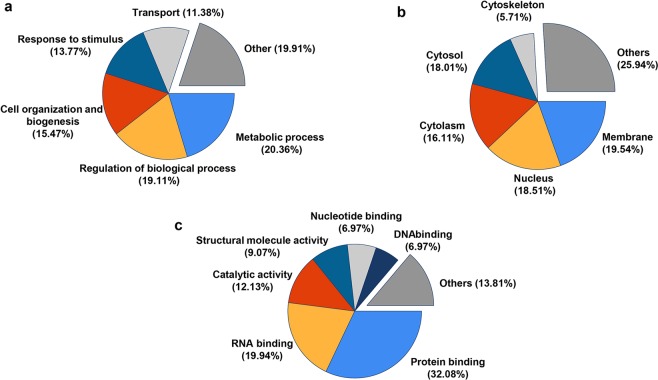
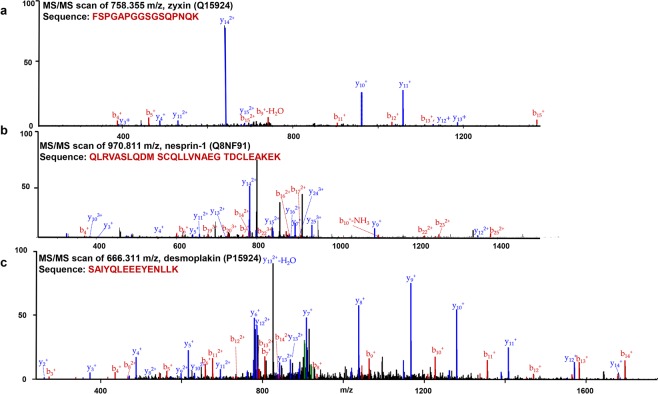
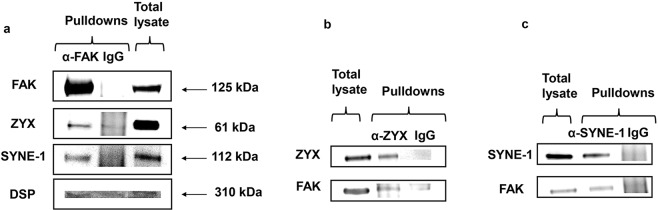
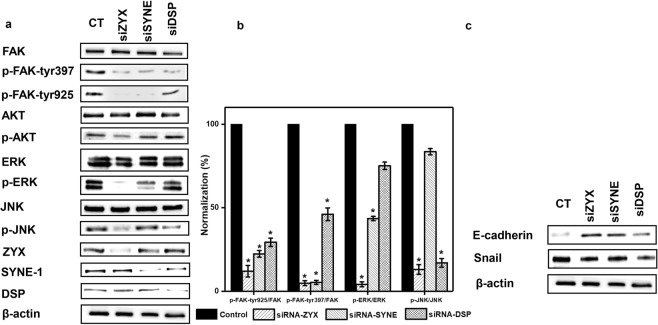
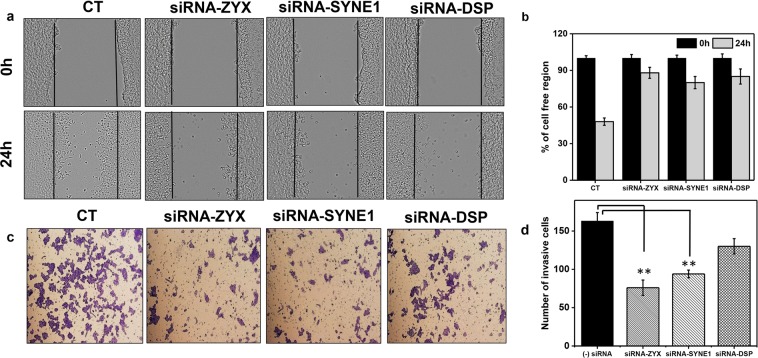
Focal adhesion kinase (FAK) is a 125 kDa protein recruited as a participant in focal adhesion dynamics and serves as a signaling scaffold for the assembly and subsequent maturation of focal contact. Identification of new FAK binding proteins could reveal potential signaling targets and contribute to further development of therapeutic drugs in the treatment of colon cancer. Here, we applied a functional proteomic strategy to identify proteins that interact with FAK in human colon cancer cell line HCT-116. Proteins were targeted by coimmunoprecipitation with an anti-FAK antibody and resolved on 1D-SDS-PAGE. The gel was excised, reduced, alkylated, and trypsin digested. Tryptic peptides were separated by nano-LC-MS/MS by an LTQ-Orbitrap-Velos spectrometer. We identified 101 proteins in the immunocomplex under epithelial growth factor (EGF) stimulation. Three proteins, zyxin, nesprin-1, and desmoplakin, were discovered and validated using reciprocal immunoprecipitation and Western blot analysis. Then, we sought to study the biological relevance of these proteins by siRNA transfection of HCT-116 cells. According to the results, zyxin might play a central role as an upstream regulator to mediate critical cancer-related signaling pathways. Zyxin and nesprin-1 depletion significantly impaired cell migration and invasion capabilities. Additionally, we performed ELISA assays on serum samples from patients with colon cancer instead of cell models to quantify the protein levels of zyxin and nesprin-1. Our results suggested that zyxin and nesprin-1 are not only promising therapeutic targets but also potential diagnostic biomarkers for colon cancer.
黏着斑激酶(FAK)是一种 125kDa 的蛋白质,作为黏着斑动态的参与者被募集,并作为焦点接触组装和随后成熟的信号支架。鉴定新的 FAK 结合蛋白可以揭示潜在的信号靶点,并有助于进一步开发治疗结肠癌的治疗药物。在这里,我们应用功能蛋白质组学策略来鉴定与人结肠癌细胞系 HCT-116 中 FAK 相互作用的蛋白质。用抗 FAK 抗体进行共免疫沉淀来靶向蛋白质,并在 1D-SDS-PAGE 上解析。将凝胶切除、还原、烷基化并进行胰蛋白酶消化。通过 LTQ-Orbitrap-Velos 光谱仪的纳升 LC-MS/MS 分离胰蛋白酶肽。在表皮生长因子(EGF)刺激下,我们在免疫复合物中鉴定出 101 种蛋白质。通过相互免疫沉淀和 Western blot 分析发现并验证了三种蛋白质,zyxin、nesprin-1 和 desmoplakin。然后,我们通过 HCT-116 细胞的 siRNA 转染来研究这些蛋白质的生物学相关性。结果表明,zyxin 可能作为一种上游调节剂发挥核心作用,介导关键的癌症相关信号通路。zyxin 和 nesprin-1 的耗竭显著损害了细胞迁移和侵袭能力。此外,我们使用来自结肠癌患者的血清样本而不是细胞模型进行 ELISA 测定,以定量测定 zyxin 和 nesprin-1 的蛋白水平。我们的结果表明,zyxin 和 nesprin-1 不仅是有前途的治疗靶点,也是结肠癌的潜在诊断生物标志物。