Laboratório de Microbiologia Celular, Instituto Oswaldo Cruz, Fundação Oswaldo Cruz (FIOCRUZ), Rio de Janeiro, Rio de Janeiro, Brazil.
Laboratório de Hanseníase, Instituto Oswaldo Cruz, Fundação Oswaldo Cruz (FIOCRUZ), Rio de Janeiro, Rio de Janeiro, Brazil.
PLoS Negl Trop Dis. 2019 Sep 10;13(9):e0007368. doi: 10.1371/journal.pntd.0007368. eCollection 2019 Sep.
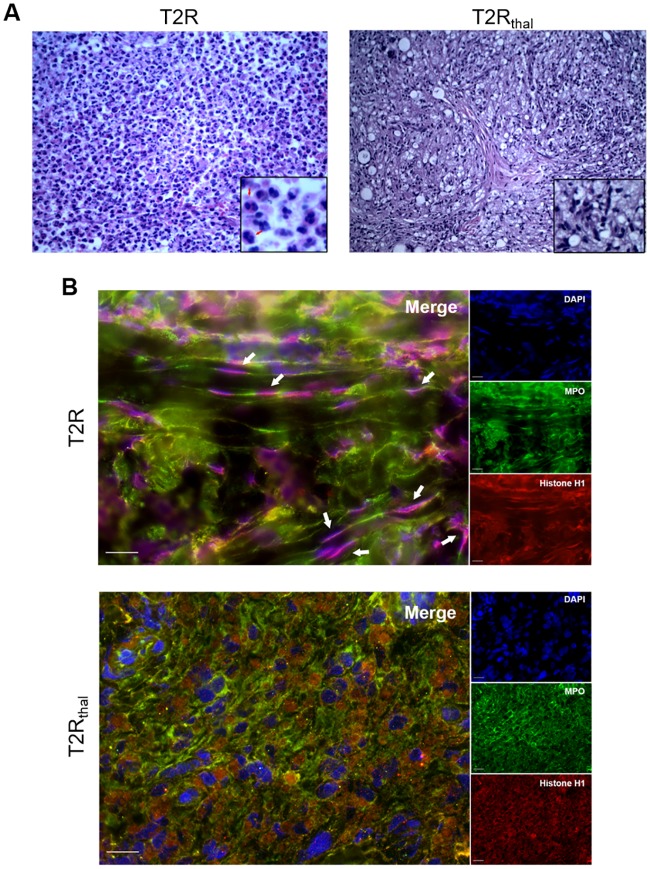
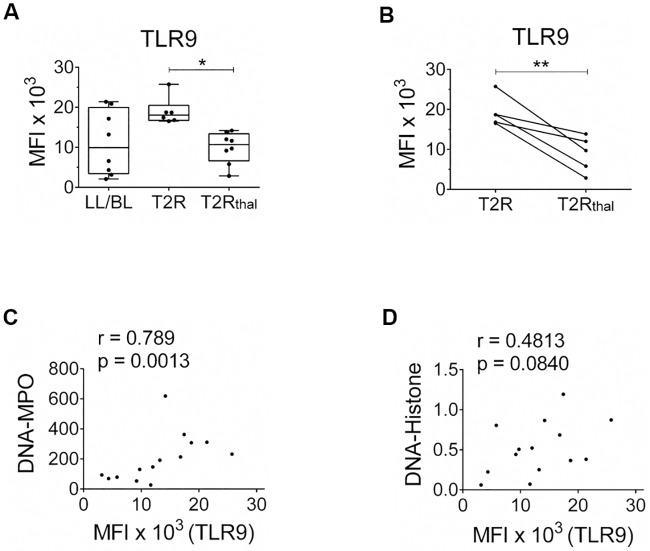
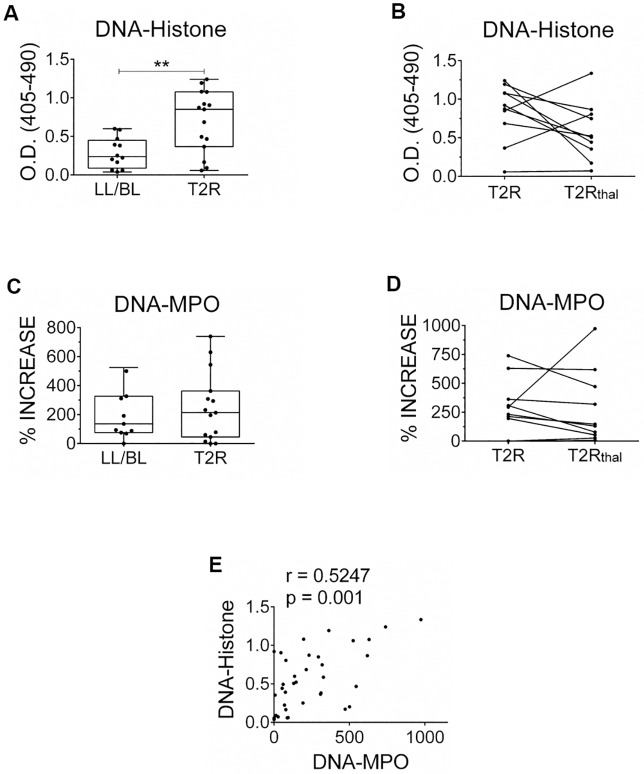
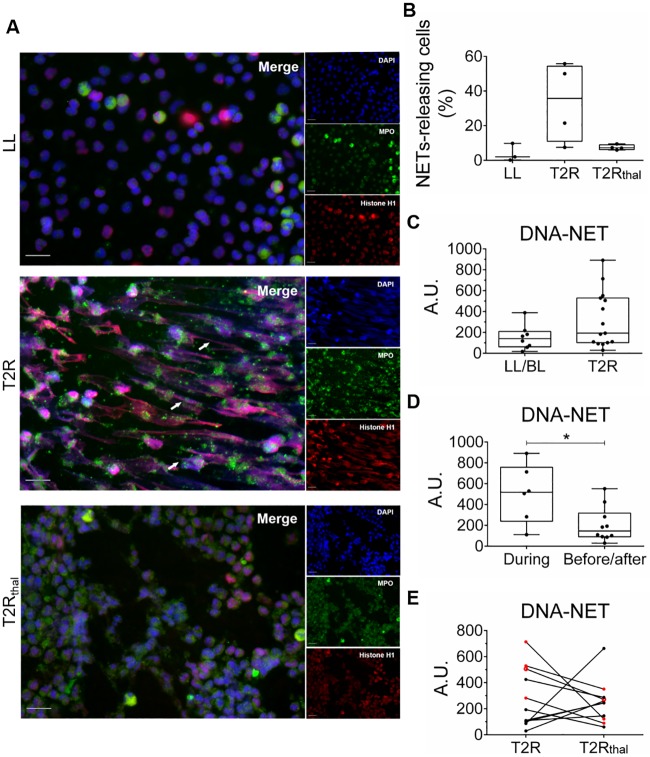
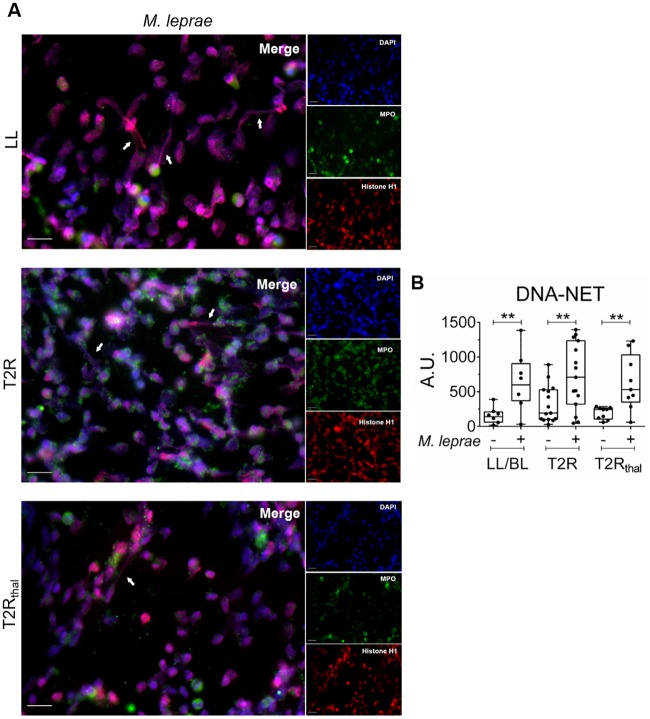
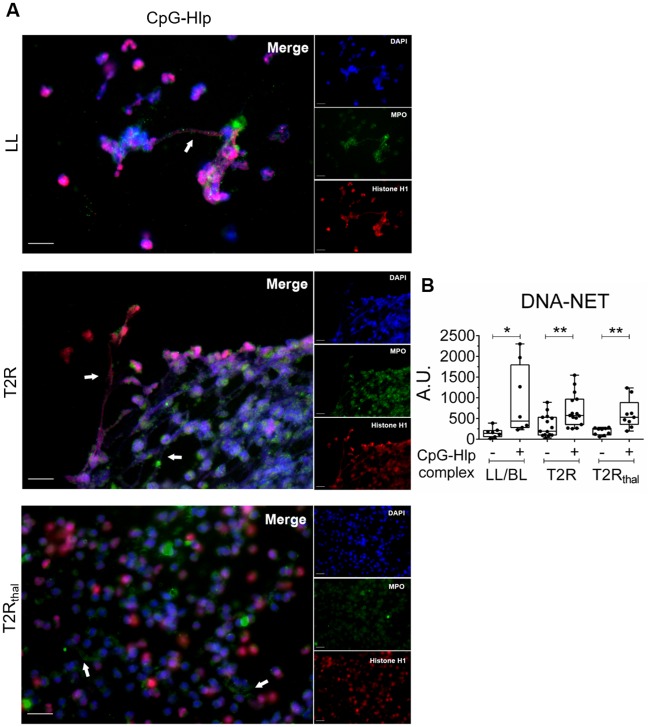
Up to 50% of patients with the multibacillary form of leprosy are expected to develop acute systemic inflammatory episodes known as type 2 reactions (T2R), thus aggravating their clinical status. Thalidomide rapidly improves T2R symptoms. But, due to its restricted use worldwide, novel alternative therapies are urgently needed. The T2R triggering mechanisms and immune-inflammatory pathways involved in its pathology remain ill defined. In a recent report, we defined the recognition of nucleic acids by TLR9 as a major innate immunity pathway that is activated during T2R. DNA recognition has been described as a major inflammatory pathway in several autoimmune diseases, and neutrophil DNA extracellular traps (NETs) have been shown to be a prime source of endogenous DNA. Considering that neutrophil abundance is a marked characteristic of T2R lesions, the objective of this study was to investigate NETs production in T2R patients based on the hypothesis that the excessive NETs formation would play a major role in T2R pathogenesis. Abundant NETs were found in T2R skin lesions, and increased spontaneous NETs formation was observed in T2R peripheral neutrophils. Both the M. leprae whole-cell sonicate and the CpG-Hlp complex, mimicking a mycobacterial TLR9 ligand, were able to induce NETs production in vitro. Moreover, TLR9 expression was shown to be higher in T2R neutrophils, suggesting that DNA recognition via TLR9 may be one of the pathways triggering this process during T2R. Finally, treatment of T2R patients with thalidomide for 7 consecutive days resulted in a decrease in all of the evaluated in vivo and ex vivo NETosis parameters. Altogether, our findings shed light on the pathogenesis of T2R, which, it is hoped, will contribute to the emergence of novel alternative therapies and the identification of prognostic reactional markers in the near future.
多达 50%的多菌型麻风病患者预计会出现急性全身性炎症发作,称为 2 型反应(T2R),从而加重其临床状况。沙利度胺可迅速改善 T2R 症状。但是,由于其在全球范围内的使用受限,因此迫切需要新的替代疗法。T2R 触发机制和涉及的免疫炎症途径在其发病机制中仍未得到明确界定。在最近的一份报告中,我们定义了 TLR9 对核酸的识别是在 T2R 期间被激活的主要先天免疫途径。已经描述了 DNA 识别是几种自身免疫性疾病中的主要炎症途径,并且已经表明中性粒细胞 DNA 细胞外陷阱(NETs)是内源性 DNA 的主要来源。考虑到中性粒细胞的丰富是 T2R 病变的一个显著特征,本研究的目的是基于以下假设来研究 T2R 患者的 NETs 产生,即过量的 NETs 形成将在 T2R 发病机制中起主要作用。在 T2R 皮肤病变中发现了丰富的 NETs,并且在 T2R 外周中性粒细胞中观察到自发 NETs 形成增加。M. leprae 全细胞超声提取物和 CpG-Hlp 复合物(模拟分枝杆菌 TLR9 配体)均可在体外诱导 NETs 的产生。此外,T2R 中性粒细胞中 TLR9 的表达更高,表明通过 TLR9 识别 DNA 可能是触发该过程的途径之一。最后,用沙利度胺连续治疗 T2R 患者 7 天,可降低所有评估的体内和体外 NETosis 参数。总之,我们的研究结果阐明了 T2R 的发病机制,有望为新的替代疗法的出现和未来确定反应性预测标志物做出贡献。