Huang Kai, Liu Xing, Li Yansheng, Wang Qixue, Zhou Junhu, Wang Yunfei, Dong Feng, Yang Chao, Sun Zhiyan, Fang Chuan, Liu Chaoyong, Tan Yanli, Wu Xudong, Jiang Tao, Kang Chunsheng
Tianjin Neurological Institute Key Laboratory of Post-Neurotrauma Neuro-Repair and Regeneration in Central Nervous System Ministry of Education and Tianjin City Tianjin 300052 China.
Department of Neurosurgery Tianjin Medical University General Hospital Tianjin 300052 China.
Adv Sci (Weinh). 2019 Jul 24;6(17):1900782. doi: 10.1002/advs.201900782. eCollection 2019 Sep 4.
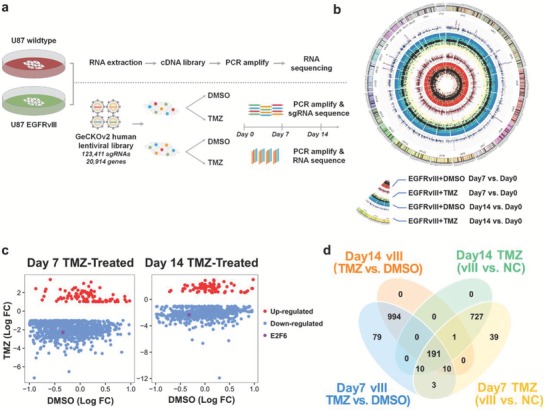
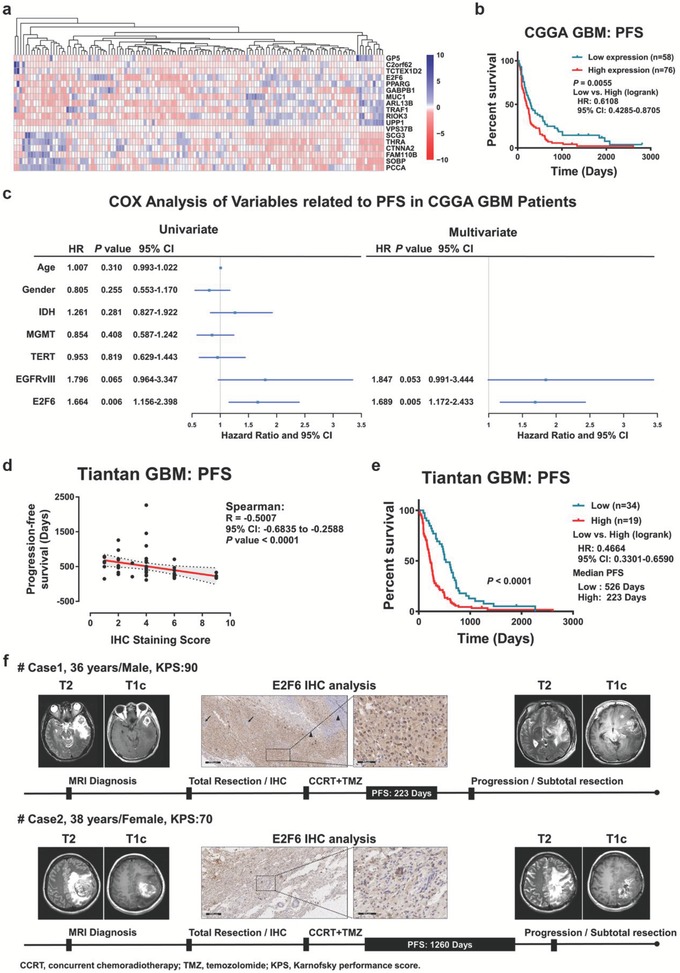
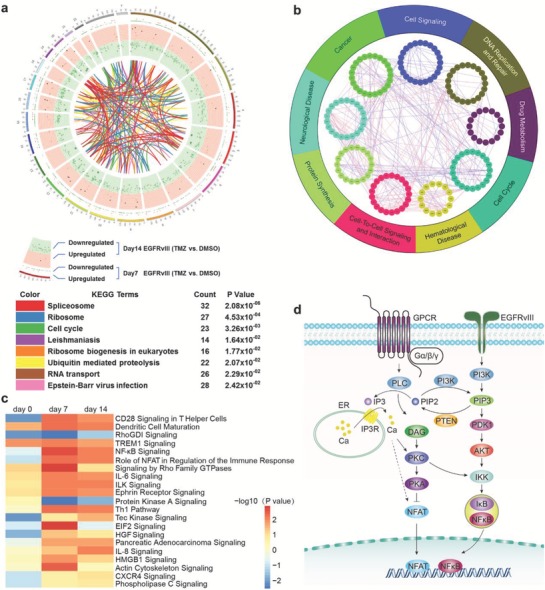
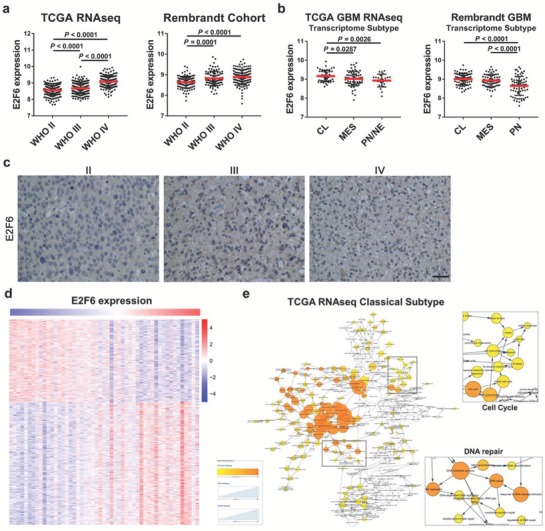
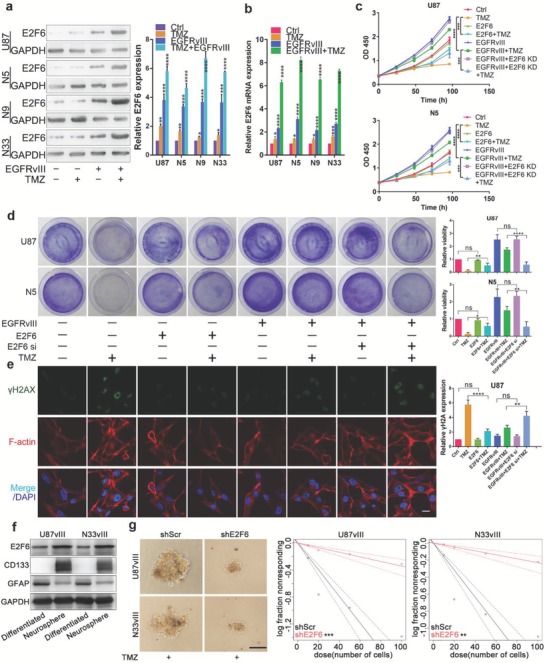
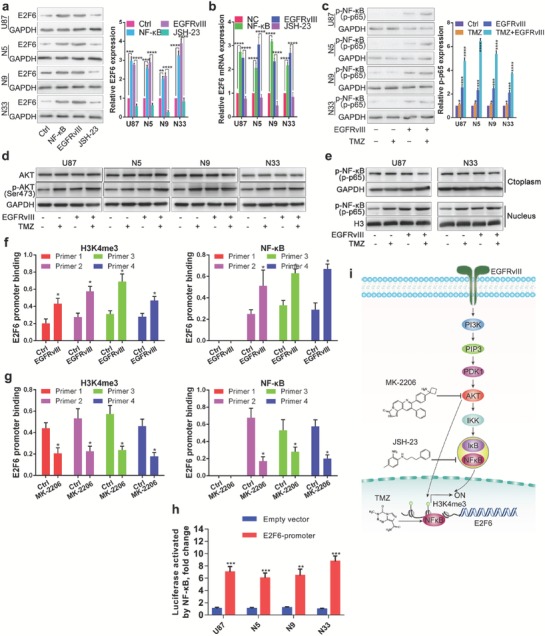
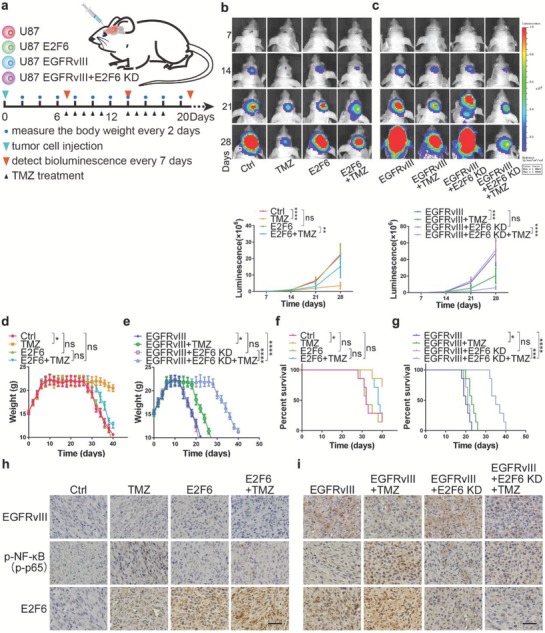
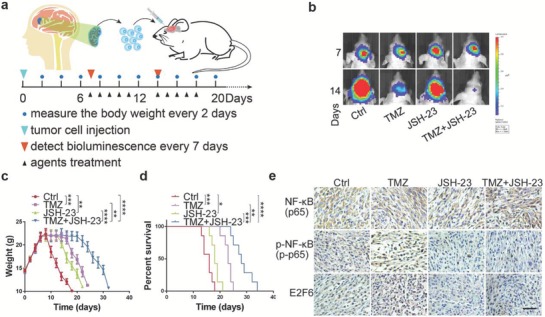
Amplification of epidermal growth factor receptor (EGFR) and active mutant EGFRvIII occurs frequently in glioblastoma (GBM) and contributes to chemo/radio-resistance in various cancers, especially in GBM. Elucidating the underlying molecular mechanism of temozolomide (TMZ) resistance in GBM could benefit cancer patients. A genome-wide screening under a clustered regularly interspaced short palindromic repeats (CRISPR)-Cas9 library is conducted to identify the genes that confer resistance to TMZ in EGFRvIII-expressing GBM cells. Deep sgRNA sequencing reveals 191 candidate genes that are responsible for TMZ resistance in EGFRvIII-expressing GBM cells. Notably, E2F6 is proven to drive a TMZ resistance, and E2F6 expression is controlled by the EGFRvIII/AKT/NF-κB pathway. Furthermore, E2F6 is shown as a promising therapeutic target for TMZ resistance in orthotopic GBM cell line xenografts and GBM patient-derived xenografts models. After integrating clinical data with paired primary-recurrent RNA sequencing data from 134 GBM patients who received TMZ treatment after surgery, it has been revealed that the E2F6 expression level is a predictive marker for TMZ response. Therefore, the inhibition of E2F6 is a promising strategy to conquer TMZ resistance in GBM.
表皮生长因子受体(EGFR)和活性突变体EGFRvIII的扩增在胶质母细胞瘤(GBM)中频繁发生,并导致各种癌症,尤其是GBM中的化学/放射抗性。阐明GBM中替莫唑胺(TMZ)抗性的潜在分子机制可能会使癌症患者受益。在成簇规律间隔短回文重复序列(CRISPR)-Cas9文库的背景下进行全基因组筛选,以鉴定在表达EGFRvIII的GBM细胞中赋予对TMZ抗性的基因。深度sgRNA测序揭示了191个在表达EGFRvIII的GBM细胞中导致TMZ抗性的候选基因。值得注意的是,E2F6被证明可驱动TMZ抗性,并且E2F6的表达受EGFRvIII/AKT/NF-κB途径控制。此外,在原位GBM细胞系异种移植模型和GBM患者来源的异种移植模型中,E2F6被证明是TMZ抗性的一个有前景的治疗靶点。在将临床数据与134名术后接受TMZ治疗的GBM患者的配对原发性-复发性RNA测序数据整合后,发现E2F6表达水平是TMZ反应的预测标志物。因此,抑制E2F6是克服GBM中TMZ抗性的一种有前景的策略。