NIHR Health Protection Research Unit on Evaluation of Interventions, University of Bristol, Bristol, UK.
Field Service, National Infection Service, Public Health England, Bristol, UK.
J Epidemiol Glob Health. 2019 Sep;9(3):169-175. doi: 10.2991/jegh.k.190808.002.
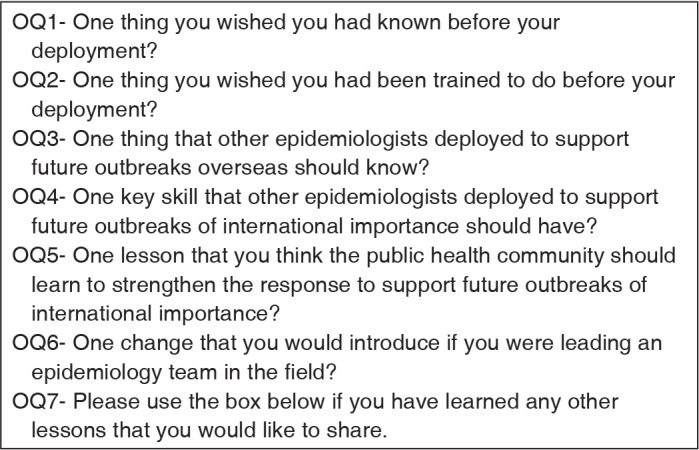
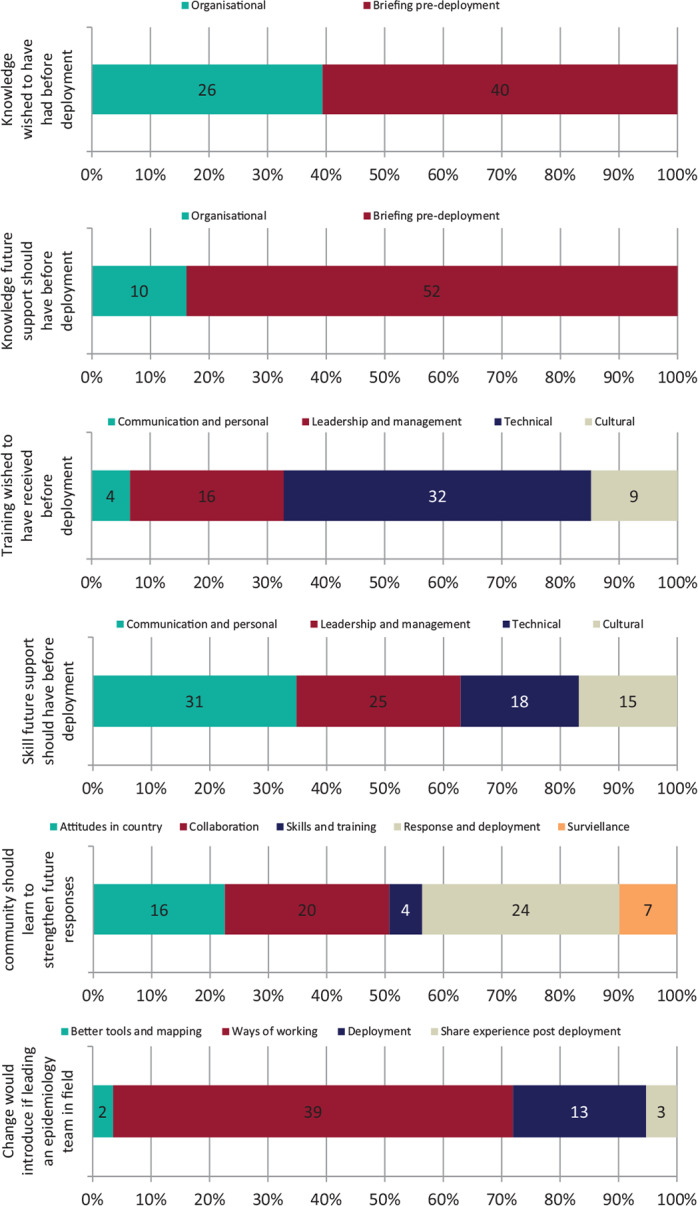
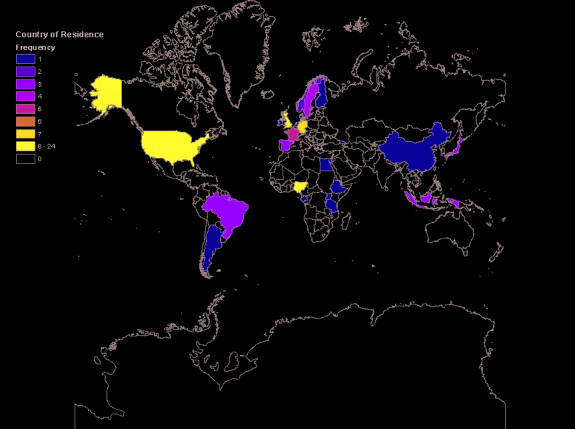
A large international response was needed to bring the 2014/15 West African Ebola virus disease outbreak under control. This study sought to learn lessons from this epidemic to strengthen the response to future outbreaks of international significance by identifying priorities for future epidemiology training and response. Epidemiologists who were deployed to West Africa were recruited through a snowball sampling method and surveyed using an online anonymous questionnaire. Associations between demographics, training, qualifications, and role while in-country were explored alongside respondents' experience during deployment. Of 128 responses, 105 met the inclusion criteria. Respondents originated from 25 countries worldwide, for many (62%), this was their first deployment abroad. The most common tasks carried out while deployed were surveillance, training, contact tracing, and cluster investigation. Epidemiologists would value more detailed predeployment briefings including organizational aspects of the response. Gaps in technical skills reported were mostly about geographical information systems; however, epidemiologists identified the need for those deployed in future to have greater knowledge about roles and responsibilities of organizations involved in the response, better cultural awareness, and leadership and management skills. Respondents felt that the public health community must improve the timeliness of the response in future outbreaks and strengthen collaboration and coordination between organizations.
为了控制 2014-2015 年西非埃博拉病毒病疫情,需要国际社会做出大规模反应。本研究旨在通过确定未来流行病学培训和应对工作的重点,从这次疫情中吸取经验教训,加强对未来具有国际意义的疫情的应对。通过滚雪球抽样法招募了被部署到西非的流行病学家,并通过在线匿名问卷对他们进行了调查。调查了受访者的人口统计学特征、培训、资格和在国内的角色,以及他们在部署期间的经历。在 128 份回复中,有 105 份符合纳入标准。受访者来自全球 25 个国家,对许多人(62%)来说,这是他们第一次在国外部署。在部署期间最常执行的任务是监测、培训、接触者追踪和集群调查。流行病学家将更重视详细的部署前简报,包括应对工作的组织方面。报告的技术技能差距主要是关于地理信息系统;然而,流行病学家认为,未来派往疫区的人员需要更好地了解参与应对的组织的角色和责任、更好的文化意识以及领导和管理技能。受访者认为,公共卫生界必须在未来的疫情中提高应对的及时性,并加强各组织之间的合作与协调。