Laboratory of Cytoskeletal Logistics, Department of Life Science and Medical Bioscience.
Institute for Medical--Oriented Structural Biology, Waseda Research Institute for Science and Engineering, School of Advanced Science and Engineering, Waseda University, TWIns, 2-2 Wakamatsucho, Shinjuku-ku, Tokyo 162-8480, Japan.
Mol Biol Cell. 2019 Oct 15;30(22):2802-2813. doi: 10.1091/mbc.E19-07-0366. Epub 2019 Sep 18.
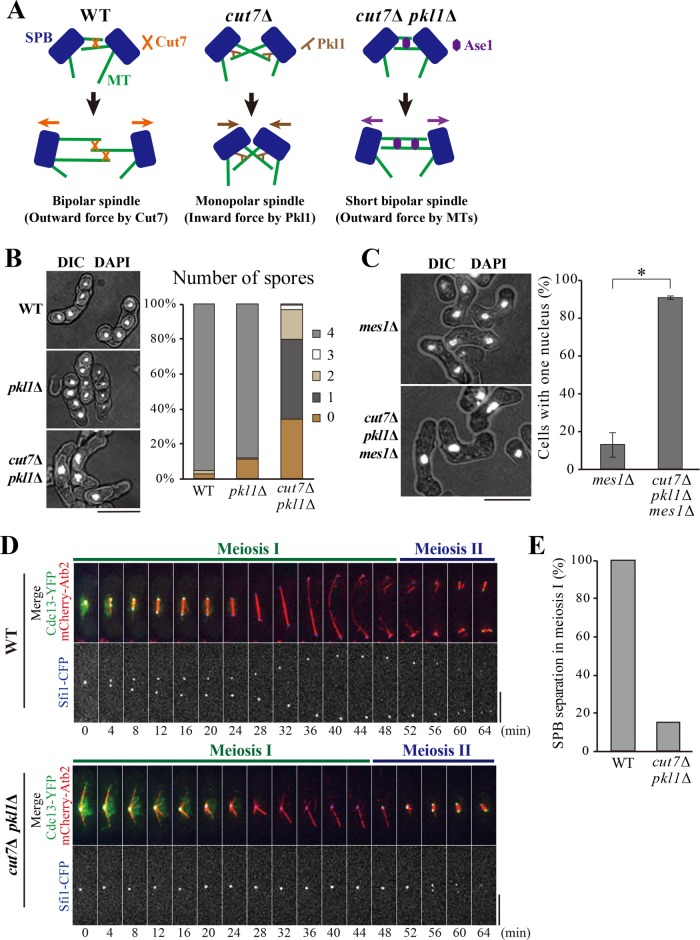
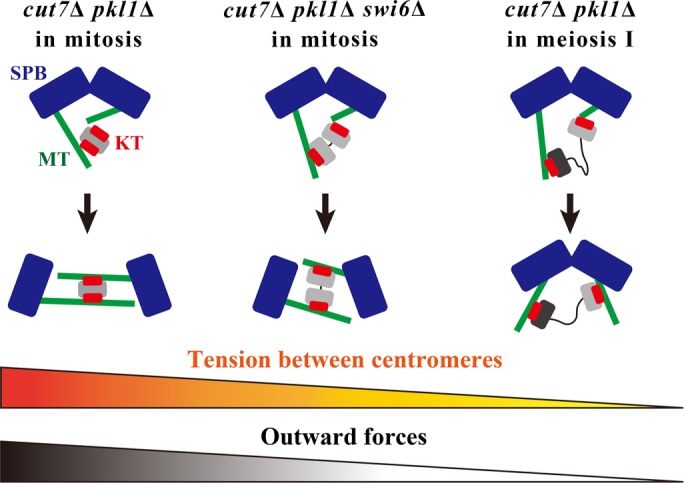
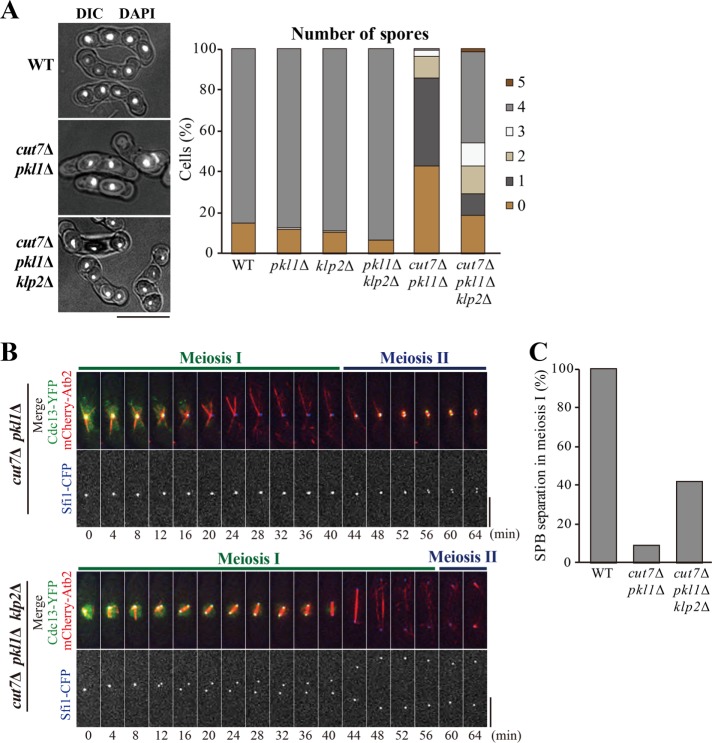
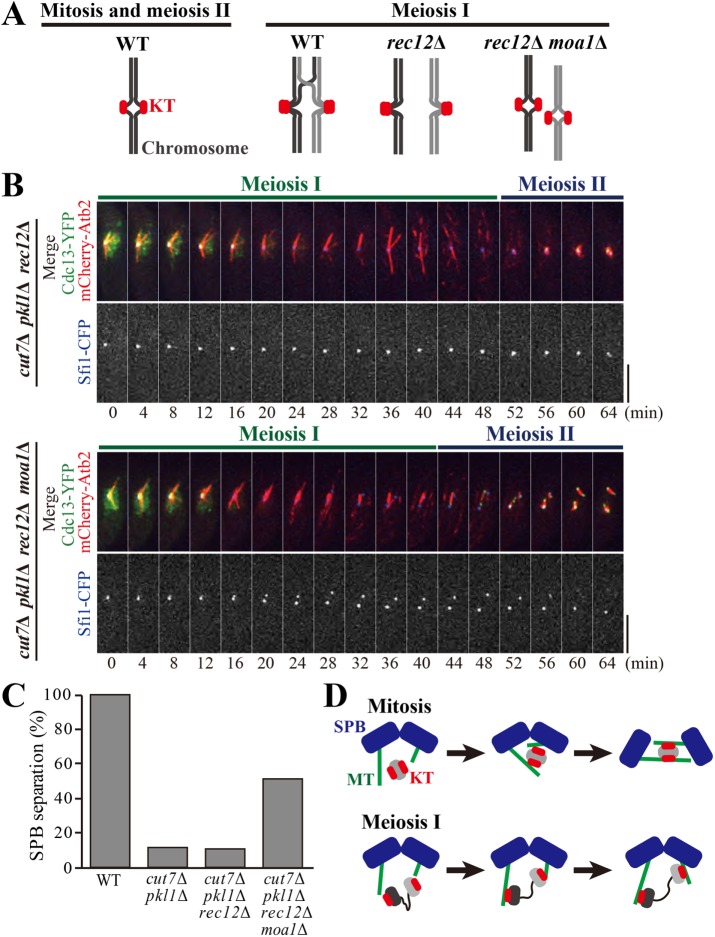
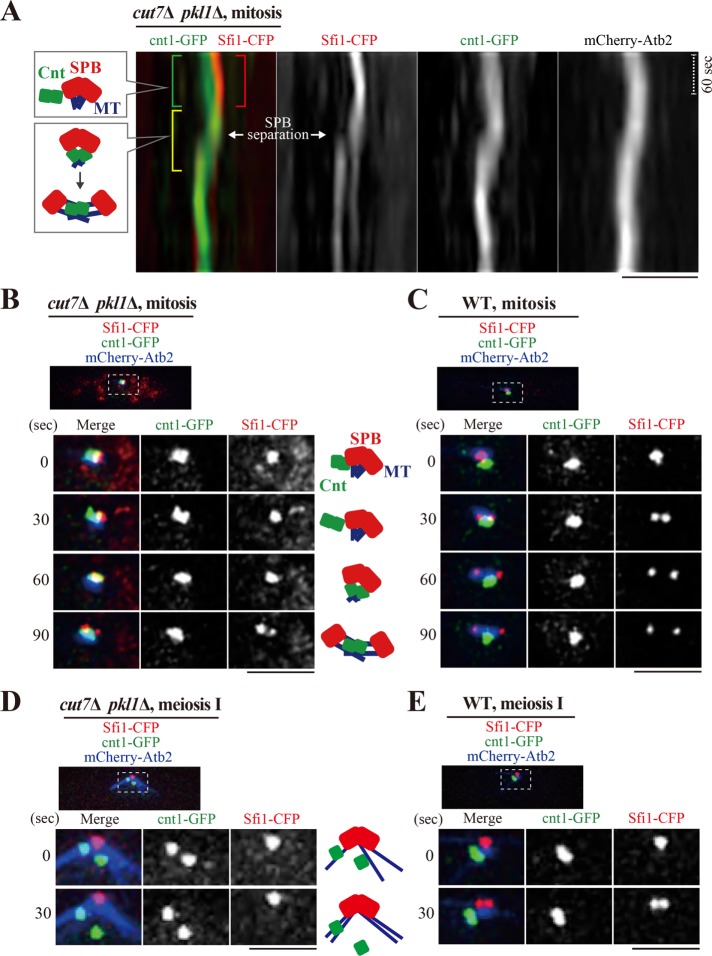
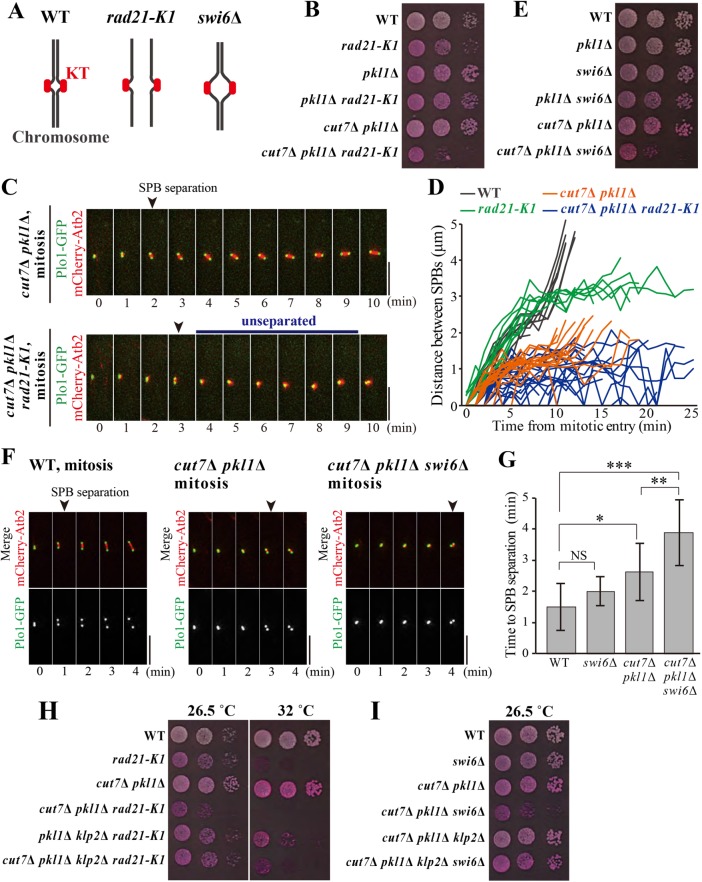
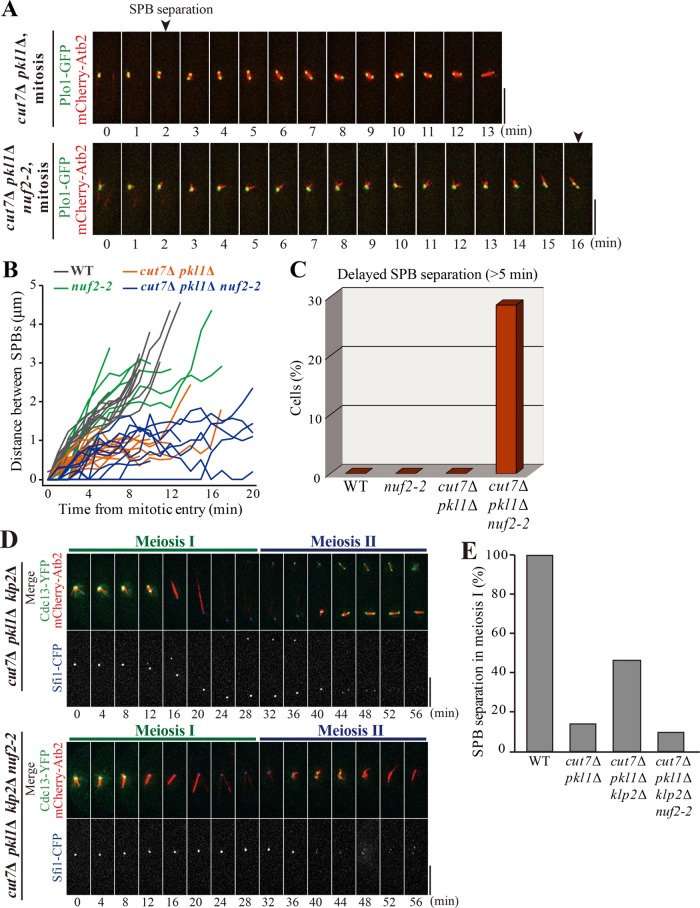
Bipolar spindles are organized by motor proteins that generate microtubule--dependent forces to separate the two spindle poles. The fission yeast Cut7 (kinesin-5) is a plus-end-directed motor that generates the outward force to separate the two spindle poles, whereas the minus-end-directed motor Pkl1 (kinesin-14) generates the inward force. Balanced forces by these antagonizing kinesins are essential for bipolar spindle organization in mitosis. Here, we demonstrate that chromosomes generate another outward force that contributes to the bipolar spindle assembly. First, it was noted that the double knockout failed to separate spindle poles in meiosis I, although the mutant is known to succeed it in mitosis. It was assumed that this might be because meiotic kinetochores of bivalent chromosomes joined by cross-overs generate weaker tensions in meiosis I than the strong tensions in mitosis generated by tightly tethered sister kinetochores. In line with this idea, when meiotic mono-oriented kinetochores were artificially converted to a mitotic bioriented layout, the mutant successfully separated spindle poles in meiosis I. Therefore, we propose that spindle pole separation is promoted by outward forces transmitted from kinetochores to spindle poles through microtubules.
双极纺锤体由产生微管依赖力的马达蛋白组织,以分离两个纺锤体极。裂殖酵母 Cut7(驱动蛋白-5)是一种正向指向的马达蛋白,它产生向外的力来分离两个纺锤体极,而负向指向的马达蛋白 Pkl1(驱动蛋白-14)则产生向内的力。这些拮抗的驱动蛋白产生的平衡力对于有丝分裂中双极纺锤体的组织是必不可少的。在这里,我们证明染色体产生另一种向外的力,有助于双极纺锤体的组装。首先,人们注意到,尽管该突变体在有丝分裂中是成功的,但双敲除突变体在减数分裂 I 中不能分离纺锤体极。这可能是因为交叉连接的二价染色体的减数分裂着丝粒在减数分裂 I 中产生的张力比紧密束缚的姐妹着丝粒在有丝分裂中产生的强张力弱。与这个想法一致的是,当减数分裂单定向着丝粒被人为地转化为有丝分裂双定向时,该突变体在减数分裂 I 中成功地分离了纺锤体极。因此,我们提出,通过微管从着丝粒向纺锤体极传递的向外力促进了纺锤体极的分离。