State Key Laboratory of Developmental Biology of Freshwater Fish, College of Life Science, Hunan Normal University, Changsha, 410081, China.
Key Laboratory of Protein Chemistry and Development Biology of State Education Ministry of China, College of Life Science, Hunan Normal University, Changsha, Hunan, 410081, China.
Theranostics. 2019 Jul 28;9(19):5497-5516. doi: 10.7150/thno.33800. eCollection 2019.
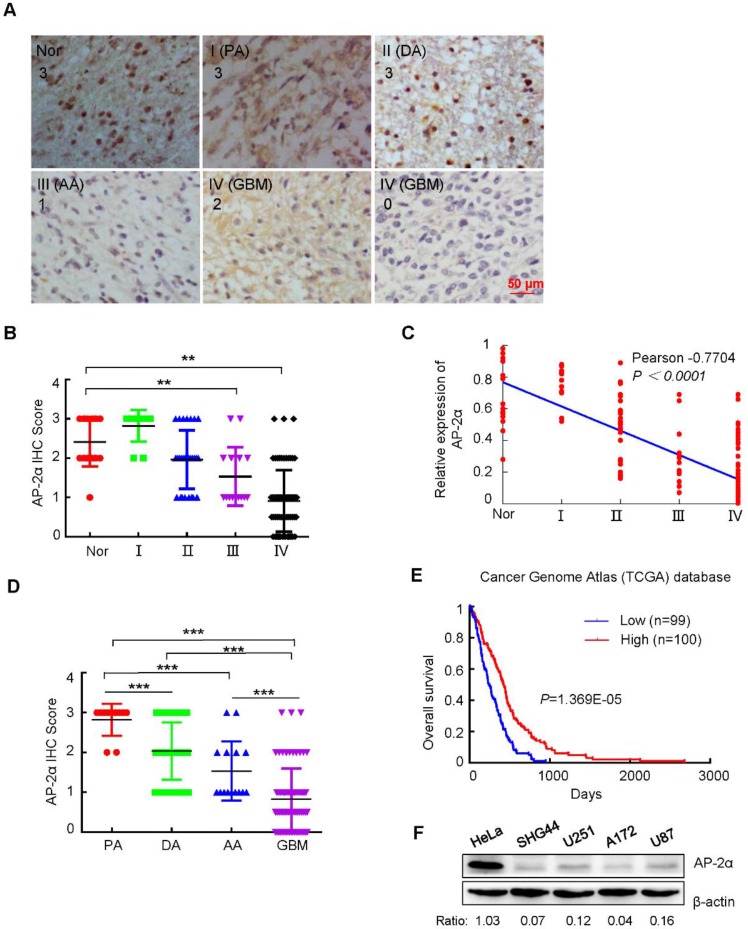
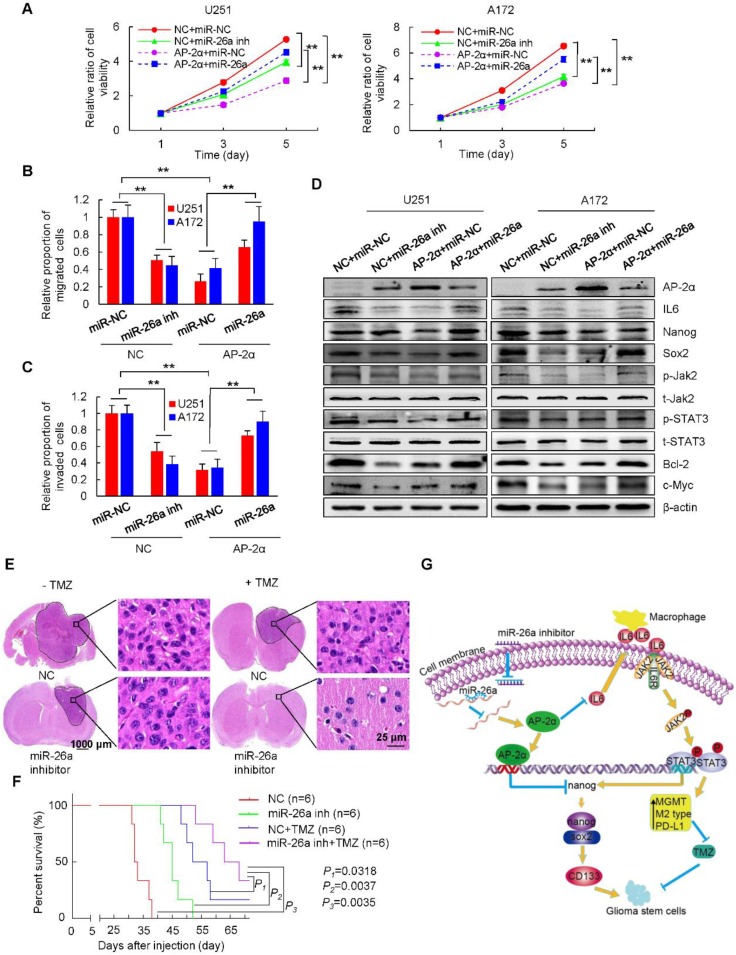
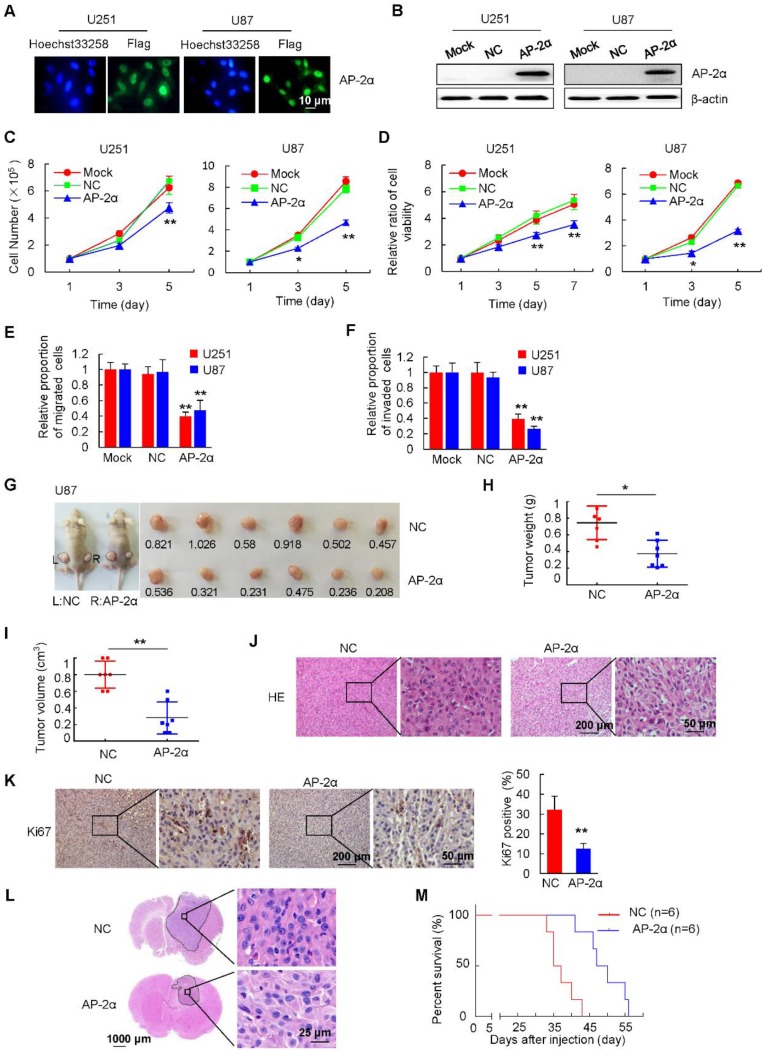
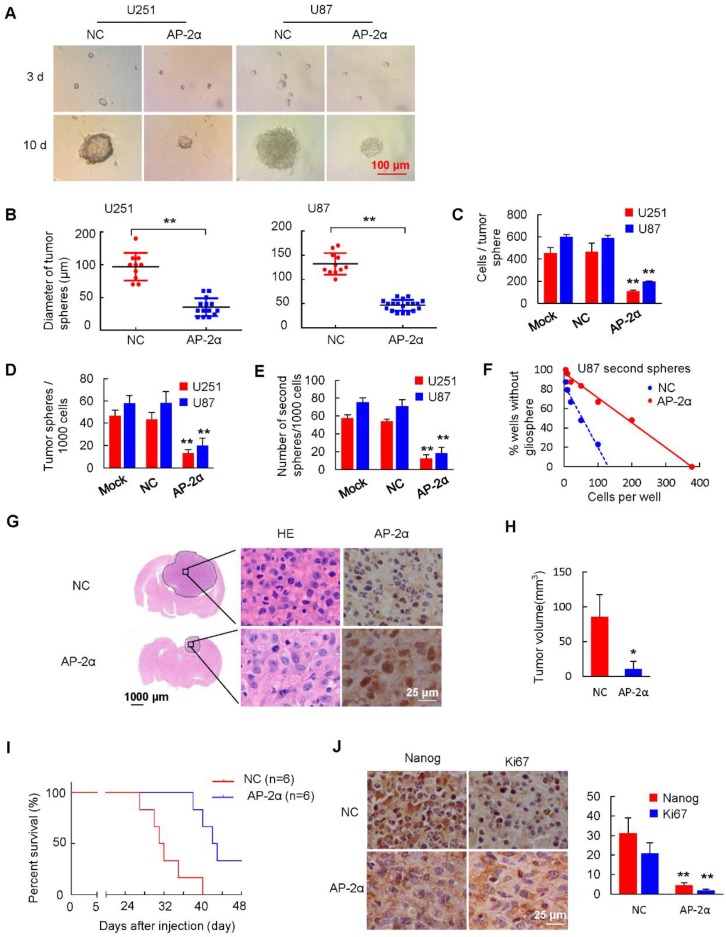
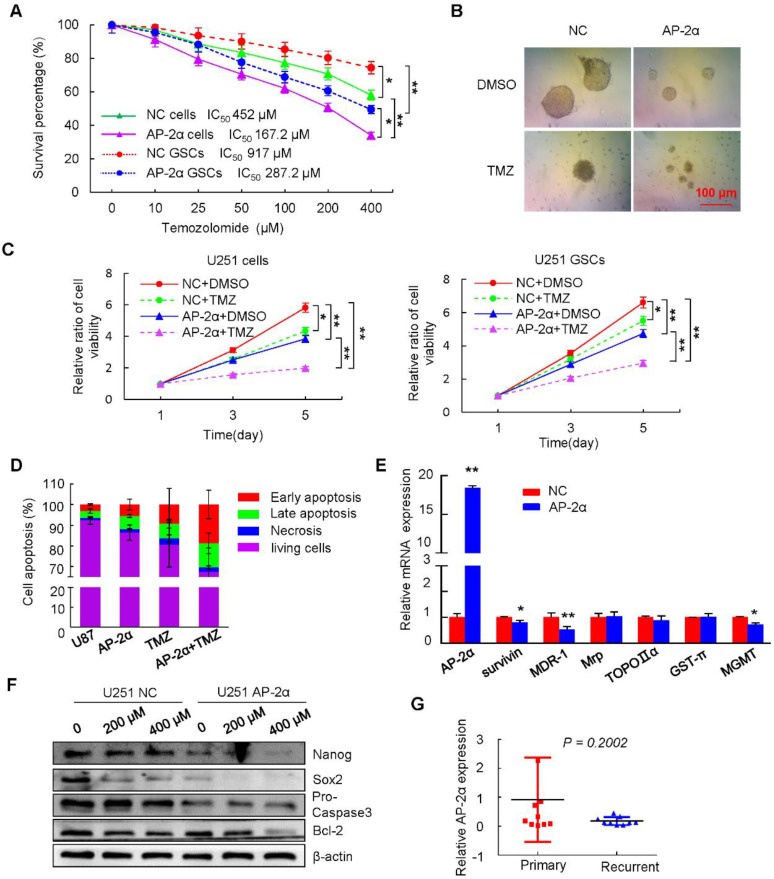
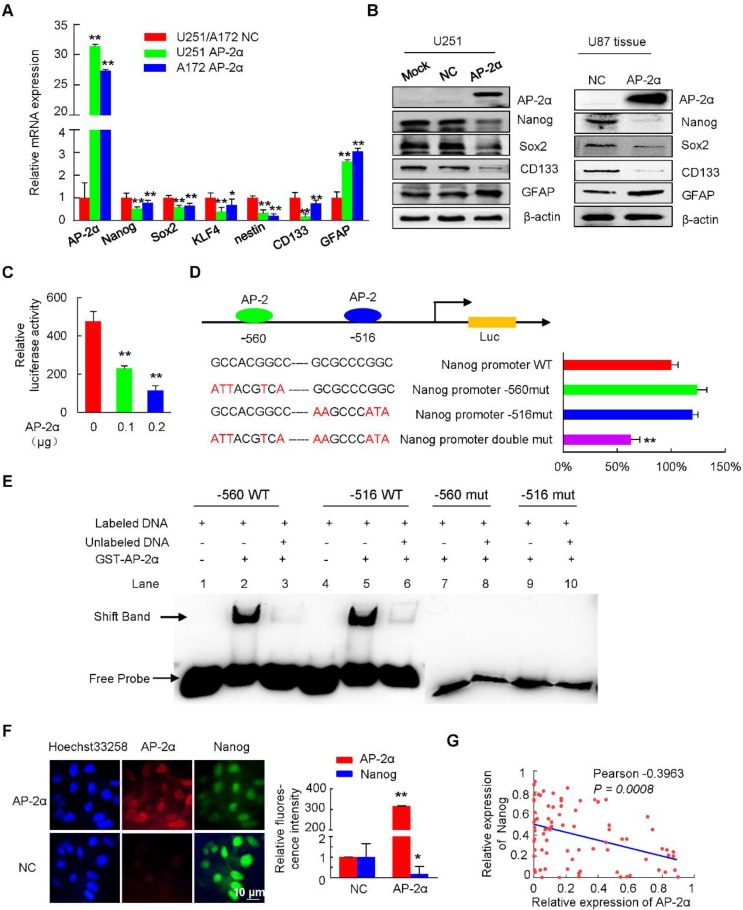
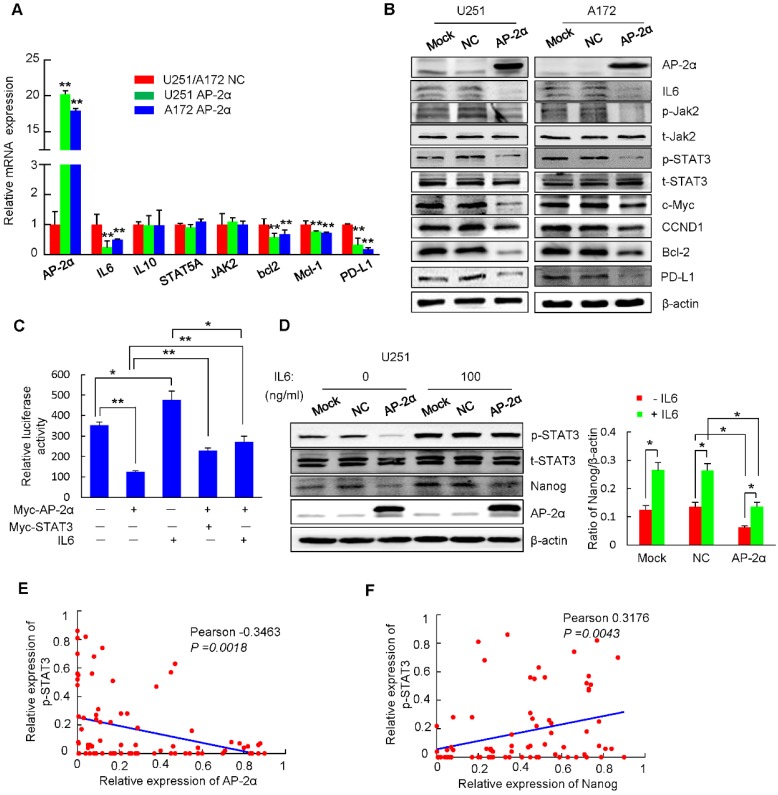
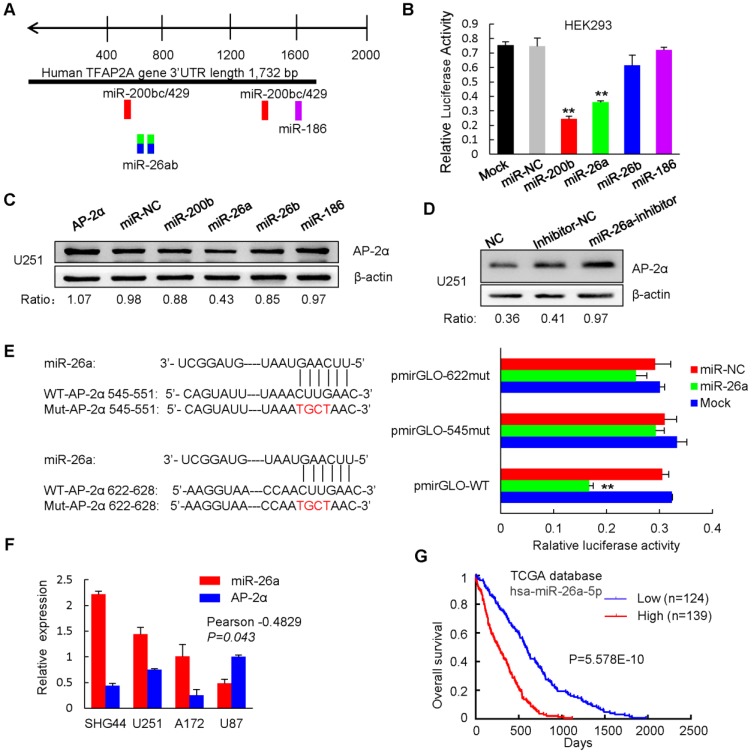
Aberrant expression of transcription factor AP-2α has been functionally associated with various cancers, but its clinical significance and molecular mechanisms in human glioma are largely elusive. AP-2α expression was analyzed in human glioma tissues by immunohistochemistry (IHC) and in glioma cell lines by Western blot. The effects of AP-2α on glioma cell proliferation, migration, invasion and tumor formation were evaluated by the 3-(4,5-dimethyNCthiazol-2-yl)-25-diphenyltetrazolium bromide (MTT) and transwell assays and in nude mouse models . The influence of AP-2α on glioma cell stemness was analyzed by sphere-formation, self-renewal and limiting dilution assays and in intracranial mouse models . The effects of AP-2α on temozolomide (TMZ) resistance were detected by the MTT assay, cell apoptosis, real-time PCR analysis, western blotting and mouse experiments. The correlation between AP-2α expression and the expression of miR-26a, Nanog was determined by luciferase reporter assays, electrophoretic mobility shift assay (EMSA) and expression analysis. AP-2α expression was downregulated in 58.5% of glioma tissues and in 4 glioma cell lines. AP-2α overexpression not only reduced the proliferation, migration and invasion of glioma cell lines but also suppressed the sphere-formation and self-renewal abilities of glioma stem cells . Moreover, AP-2α overexpression inhibited subcutaneous and intracranial xenograft tumor growth . Furthermore, AP-2α enhanced the sensitivity of glioma cells to TMZ. Finally, AP-2α directly bound to the regulatory region of the Nanog gene, reduced Nanog, Sox2 and CD133 expression. Meanwhile, AP-2α indirectly downregulated Nanog expression by inhibiting the interleukin 6/janus kinase 2/signal transducer and activator of transcription 3 (IL6/JAK2/STAT3) signaling pathway, consequently decreasing O6-methylguanine methyltransferase (MGMT) and programmed death-ligand 1 (PD-L1) expression. In addition, miR-26a decreased AP-2α expression by binding to the 3' untranslated region (UTR) of AP-2α and reversed the tumor suppressive role of AP-2α in glioma, which was rescued by a miR-26a inhibitor. TMZ and the miR-26a inhibitor synergistically suppressed intracranial GSC growth. These results suggest that AP-2α reduces the stemness and TMZ resistance of glioma by inhibiting the Nanog/Sox2/CD133 axis and IL6/STAT3 signaling pathways. Therefore, AP-2α and miR-26a inhibition might represent a new target for developing new therapeutic strategies in TMZ resistance and recurrent glioma patients.
转录因子 AP-2α 的异常表达与多种癌症的功能相关,但它在人类神经胶质瘤中的临床意义和分子机制在很大程度上仍是未知的。通过免疫组织化学(IHC)分析人神经胶质瘤组织中 AP-2α 的表达,并通过 Western blot 分析神经胶质瘤细胞系中 AP-2α 的表达。通过 3-(4,5-二甲基噻唑-2-基)-2,5-二苯基四唑溴盐(MTT)和 Transwell 测定评估 AP-2α 对神经胶质瘤细胞增殖、迁移、侵袭和肿瘤形成的影响,并在裸鼠模型中进行评估。通过球体形成、自我更新和有限稀释测定评估 AP-2α 对神经胶质瘤细胞干性的影响,并在颅内小鼠模型中进行评估。通过 MTT 测定、细胞凋亡、实时 PCR 分析、Western blot 和小鼠实验检测 AP-2α 对替莫唑胺(TMZ)耐药的影响。通过荧光素酶报告测定、电泳迁移率变动分析(EMSA)和表达分析确定 AP-2α 表达与 miR-26a、Nanog 表达的相关性。AP-2α 在 58.5%的神经胶质瘤组织和 4 种神经胶质瘤细胞系中表达下调。AP-2α 的过表达不仅降低了神经胶质瘤细胞系的增殖、迁移和侵袭能力,还抑制了神经胶质瘤干细胞的球体形成和自我更新能力。此外,AP-2α 过表达抑制了皮下和颅内异种移植肿瘤的生长。此外,AP-2α 增强了神经胶质瘤细胞对 TMZ 的敏感性。最后,AP-2α 直接结合 Nanog 基因的调节区,降低 Nanog、Sox2 和 CD133 的表达。同时,AP-2α 通过抑制白细胞介素 6/Janus 激酶 2/信号转导和转录激活因子 3(IL6/JAK2/STAT3)信号通路间接下调 Nanog 表达,从而降低 O6-甲基鸟嘌呤甲基转移酶(MGMT)和程序性死亡配体 1(PD-L1)的表达。此外,miR-26a 通过与 AP-2α 的 3'非翻译区(UTR)结合降低 AP-2α 的表达,并逆转了 AP-2α 在神经胶质瘤中的肿瘤抑制作用,该作用被 miR-26a 抑制剂逆转。TMZ 和 miR-26a 抑制剂协同抑制颅内 GSC 生长。这些结果表明,AP-2α 通过抑制 Nanog/Sox2/CD133 轴和 IL6/STAT3 信号通路降低神经胶质瘤的干性和 TMZ 耐药性。因此,AP-2α 和 miR-26a 的抑制可能为开发新的治疗策略提供新的靶点,用于 TMZ 耐药和复发性神经胶质瘤患者。