Department of Neurosurgery, The First Hospital of China Medical University, Shenyang 110001, China.
Department of Neurosurgery, Shanghai First People's Hospital of Shanghai Jiao Tong University School of Medicine, Shanghai 200080, China.
Theranostics. 2019 Aug 14;9(20):6019-6030. doi: 10.7150/thno.35747. eCollection 2019.
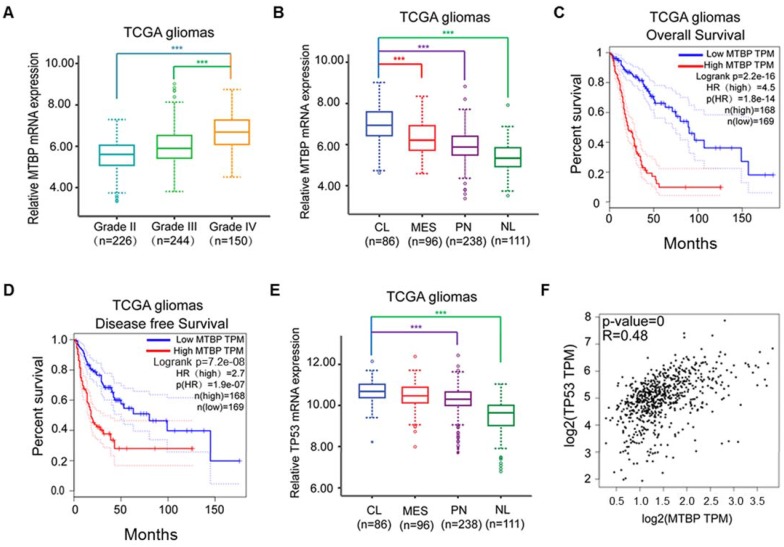
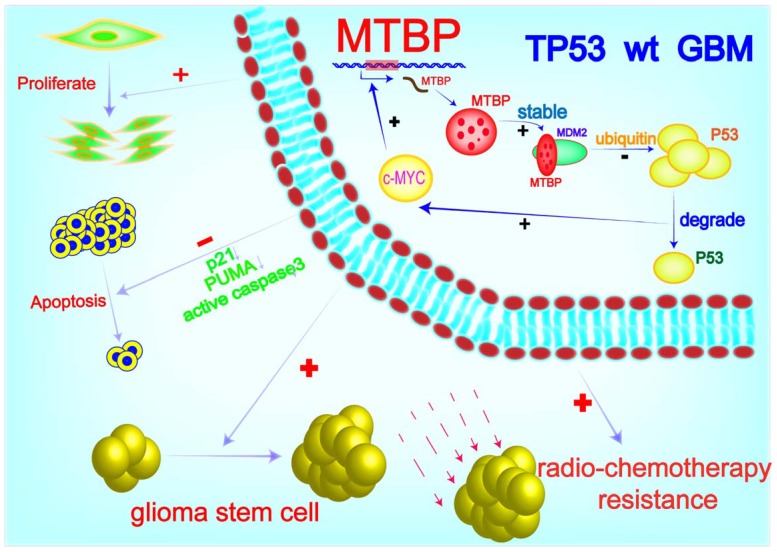
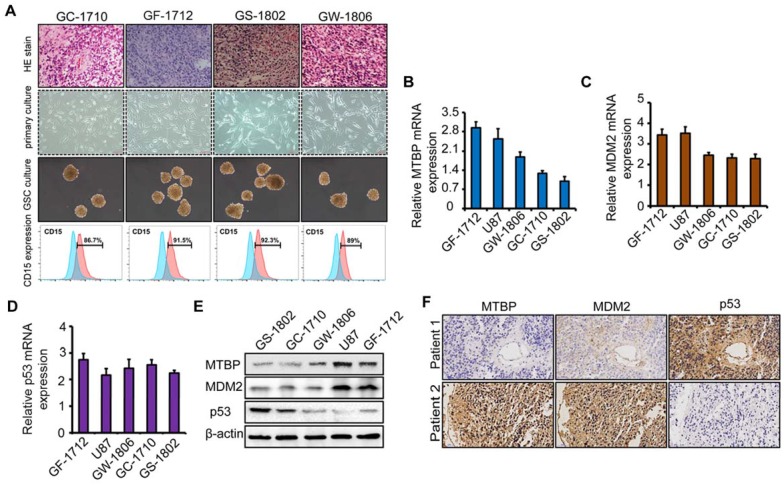
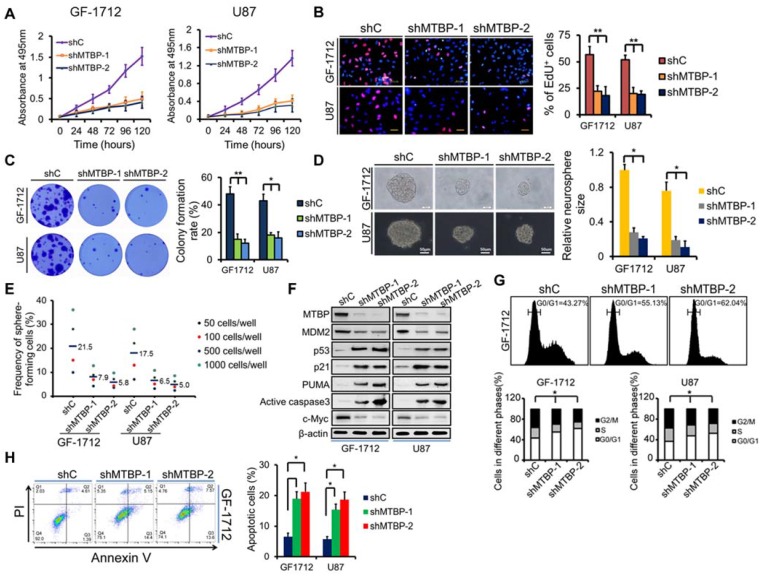
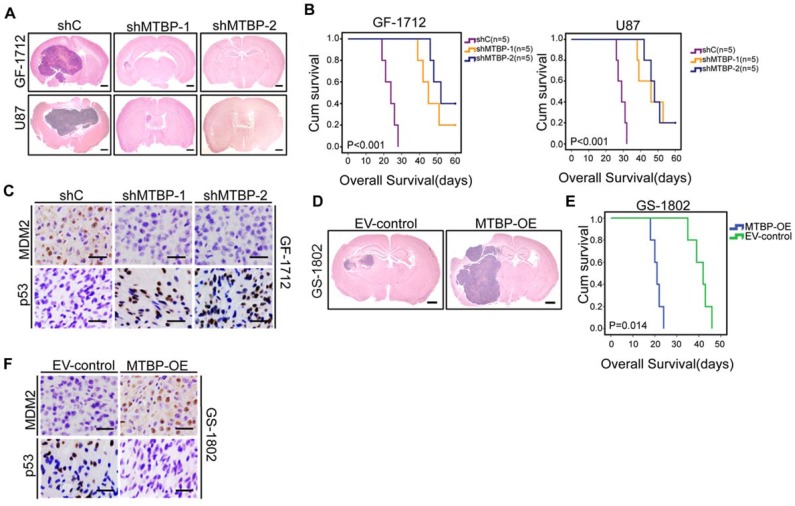
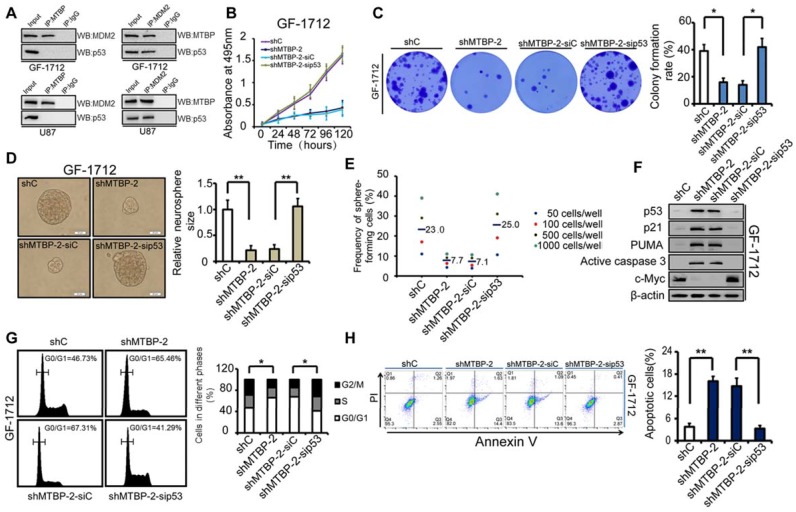
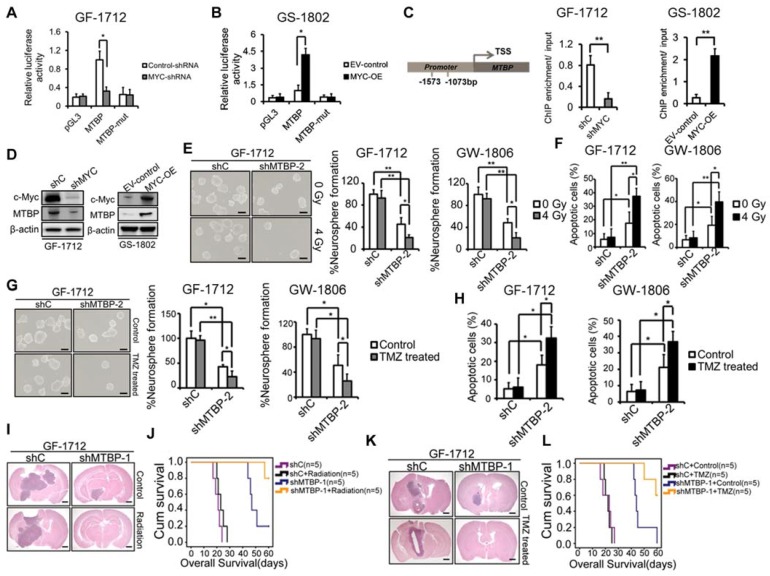
: Glioblastoma (GBM) is highly proliferative and resistant to radio-chemotherapy. Loss of tumor suppressor gene TP53 function frequently occurs at protein level in GBMs. This inhibition is often mediated by other components within the p53 signaling axis, including MDM2, whose binding protein (MTBP) plays an important role in the regulation of MDM2 and p53 activity. We investigated the role of MTBP in the biology of TP53-wildtype (TP53wt) GBMs. : MTBP expression was examined in TCGA and REMBRANDT datasets. MTBP was silenced or overexpressed in TP53wt GBM cells and glioma stem cells (GSCs). The effects on cell viability, apoptosis, and clonogenicity were assessed. The transcriptional regulation of MTBP was investigated. : Upregulation of MTBP was correlated with the Classical molecular subtype, and it predicted poor survival. In TP53wt GBM cells, the protein levels of MTBP were positively associated with those of MDM2 but negatively correlated with those of p53. MTBP knockdown promoted apoptosis and inhibited clonogenicity, while overexpression of this protein enhanced tumorigenicity and . The pro-survival effect of MTBP depended on the activity of MDM2 and p53. MTBP was transcriptionally regulated by c-myc, thereby forming a positive regulatory loop. Finally, MTBP silencing increased the sensitivity of TP53wt GSCs to radiation and TMZ treatment and . : MTBP regulates the cell survival and treatment sensitivity of TP53wt GBMs through MDM2-dependent post-translational modification of p53. MTBP-targeting treatments are potentially useful in increasing patients' survival.
胶质母细胞瘤(GBM)具有高度增殖性和对放化疗的抗性。TP53 肿瘤抑制基因的功能丧失在 GBM 中经常发生在蛋白水平。这种抑制通常由 p53 信号通路中的其他成分介导,包括 MDM2,其结合蛋白(MTBP)在调节 MDM2 和 p53 活性方面发挥着重要作用。我们研究了 MTBP 在 TP53 野生型(TP53wt)GBM 生物学中的作用。
在 TCGA 和 REMBRANDT 数据集中检查了 MTBP 的表达。在 TP53wt GBM 细胞和神经胶质瘤干细胞(GSCs)中沉默或过表达 MTBP。评估了对细胞活力、细胞凋亡和集落形成能力的影响。研究了 MTBP 的转录调节。
MTBP 的上调与经典分子亚型相关,并且预测预后不良。在 TP53wt GBM 细胞中,MTBP 的蛋白水平与 MDM2 的蛋白水平呈正相关,而与 p53 的蛋白水平呈负相关。MTBP 敲低促进细胞凋亡并抑制集落形成能力,而过表达这种蛋白则增强肿瘤形成能力。MTBP 的促生存作用取决于 MDM2 和 p53 的活性。MTBP 受 c-myc 转录调控,从而形成正反馈调节环。最后,MTBP 沉默增加了 TP53wt GSCs 对辐射和 TMZ 治疗的敏感性。
MTBP 通过 MDM2 依赖性的 p53 翻译后修饰调节 TP53wt GBMs 的细胞存活和治疗敏感性。针对 MTBP 的治疗方法可能有助于提高患者的生存率。