Wang Xiaoyan, Jiang Bin, Sun Huiyan, Zheng Dejin, Zhang Zhenwu, Yan Li, Li Enqin, Wu Yaojiong, Xu Ren-He
Center of Reproduction, Development & Aging, and Institute of Translational Medicine, Faculty of Health Sciences, University of Macau, Taipa, Macau, China.
School of Artificial Intelligence, Jilin University, Changchun, China.
Theranostics. 2019 Aug 14;9(21):6112-6128. doi: 10.7150/thno.32982. eCollection 2019.
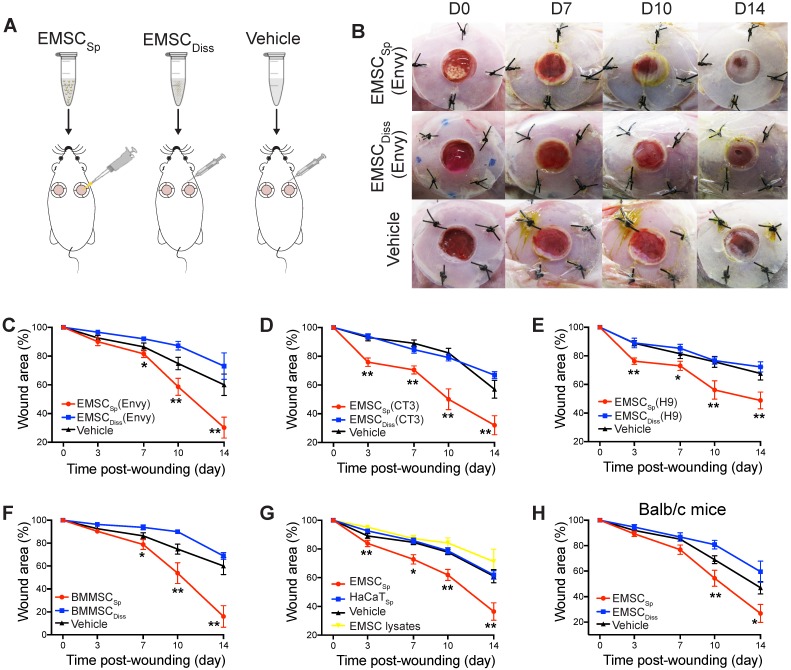
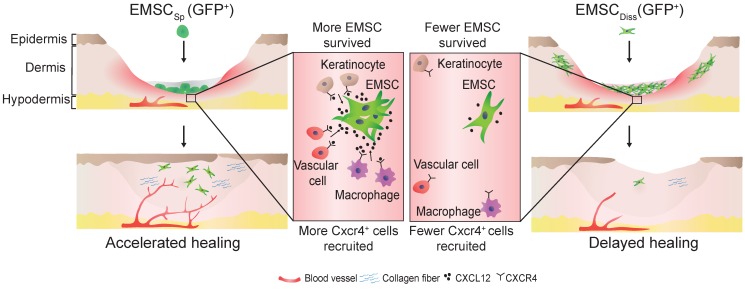
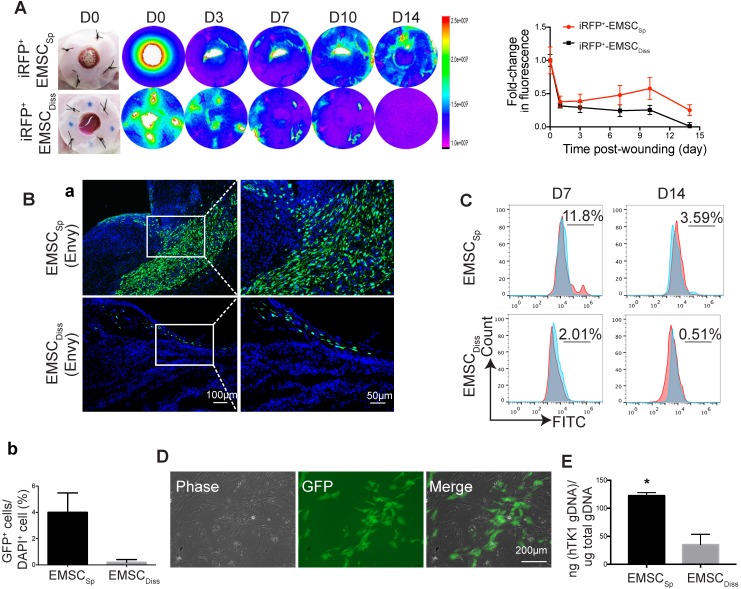
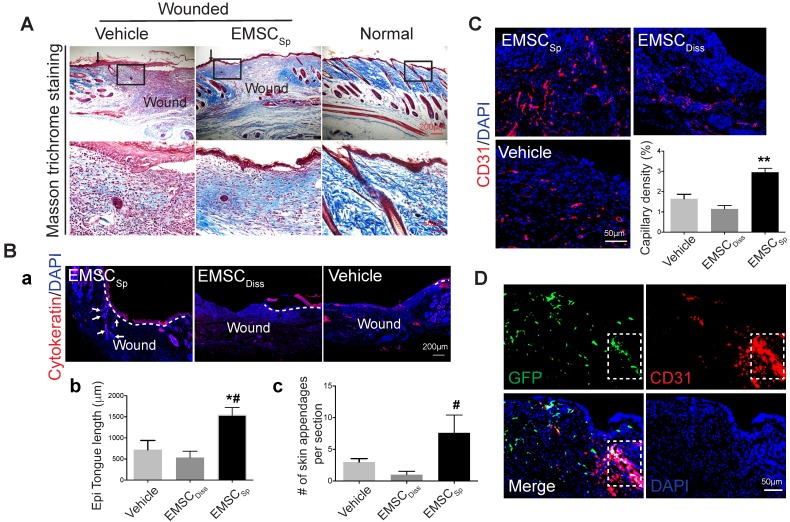
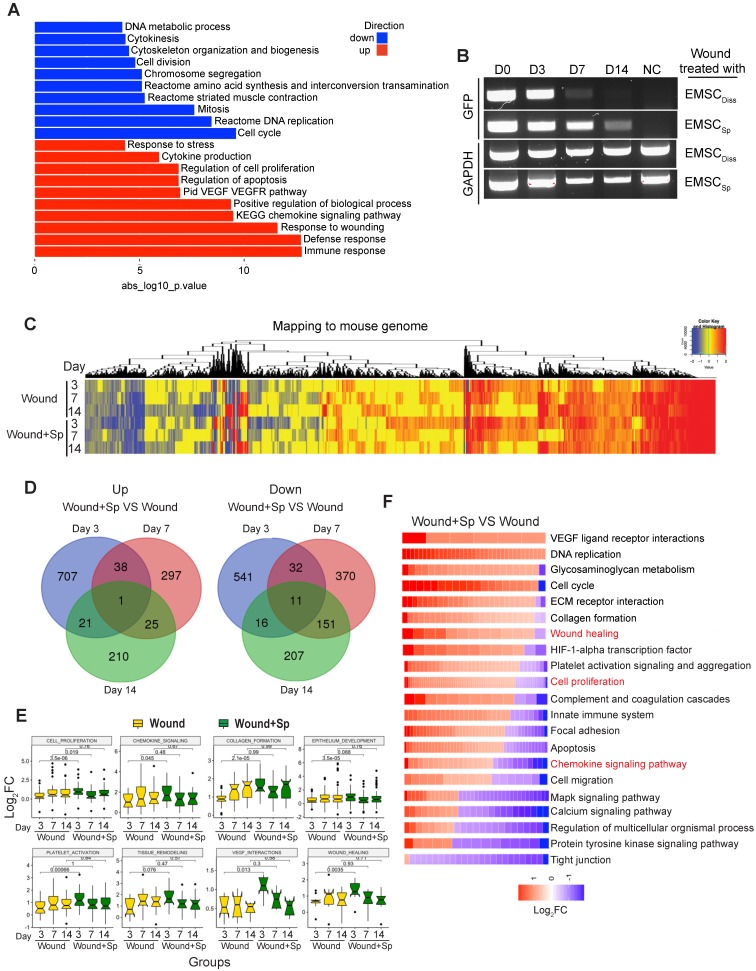
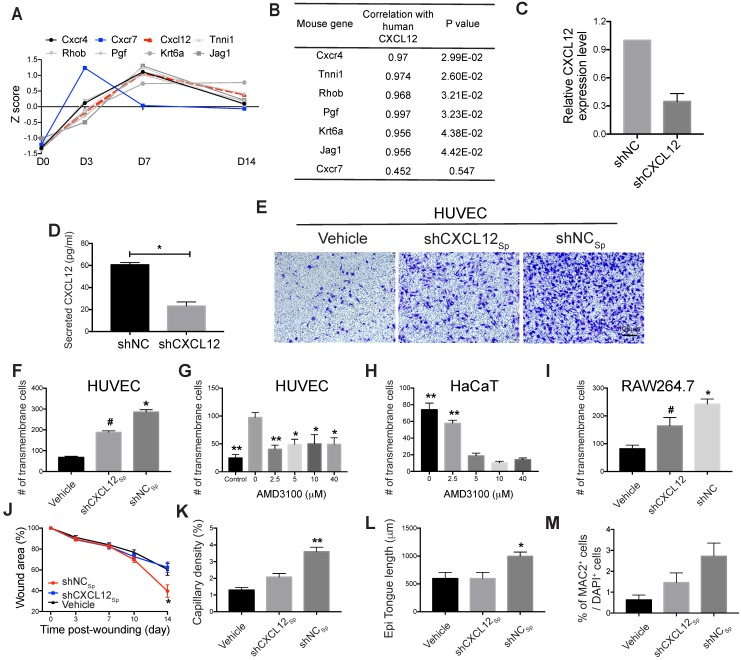
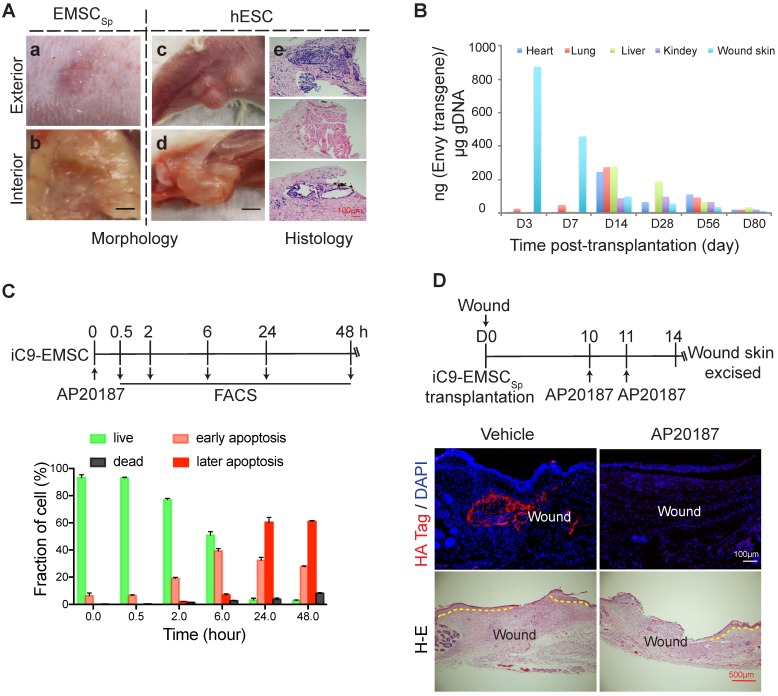
Mesenchymal stem cells (MSC) derived from adult tissues effectively promote wound healing. However, MSC quality varies, and the quantity of MSC is limited, as MSC are acquired through donations. Moreover, the survival and functioning of dissociated MSC delivered to an inflammatory lesion are subject to challenges. : Here, spheres (EMSC) generated from human embryonic stem cell-derived MSC (EMSC) were directly dropped onto excised wounds in mice; the effects of EMSC were compared to those of dissociated EMSC (EMSC). Following transplantation, we measured the extent of wound closure, dissected the histological features of the wounds, determined transcriptomic changes in cells isolated from the treated and control wounds, and evaluated the molecular mechanism of the effects of EMSC. : The application of EMSC onto murine dermal wounds substantially increased survival and efficacy of EMSC compared to the topical application of EMSC. RNA sequencing (RNA-Seq) of cells isolated from the wounds highlighted the involvement of CXCL12-CXCR4 signaling in the effects of EMSC, which was verified in EMSC via CXCL12 knockdown and in target cells (vascular endothelial cells, epithelial keratinocytes, and macrophages) via CXCR4 inhibition. Finally, we enhanced the biosafety of EMSC by engineering cells with an inducible suicide gene. : Together, these data suggest the topical application of EMSC as an unlimited, quality-assured, safe, and noninvasive therapy for wound healing and the CXCL12-CXCR4 axis as a key player in this treatment.
源自成人组织的间充质干细胞(MSC)能有效促进伤口愈合。然而,MSC的质量参差不齐,且由于需通过捐赠获取,其数量有限。此外,递送至炎症损伤部位的解离MSC的存活和功能也面临挑战。在此,将人胚胎干细胞来源的MSC所生成的球体(EMSC)直接滴加至小鼠的切除伤口上;将EMSC的效果与解离的EMSC(dEMSC)的效果进行比较。移植后,我们测量了伤口闭合的程度,剖析了伤口的组织学特征,确定了从处理过的伤口和对照伤口分离出的细胞中的转录组变化,并评估了EMSC作用的分子机制。与局部应用dEMSC相比,将EMSC应用于小鼠皮肤伤口可显著提高EMSC的存活率和功效。对从伤口分离出的细胞进行的RNA测序(RNA-Seq)突出显示了CXCL12-CXCR4信号传导参与了EMSC的作用,这在通过CXCL12基因敲低的EMSC以及通过CXCR4抑制的靶细胞(血管内皮细胞、上皮角质形成细胞和巨噬细胞)中得到了验证。最后,我们通过用可诱导自杀基因改造细胞来提高EMSC的生物安全性。总之,这些数据表明,局部应用EMSC是一种用于伤口愈合的无限、质量有保证、安全且非侵入性的治疗方法,而CXCL12-CXCR4轴是该治疗中的关键参与者。