Sang Mangmang, Luo Renjie, Bai Yidan, Dou Jun, Zhang Zhongtao, Liu Fulei, Feng Feng, Xu Jian, Liu Wenyuan
Department of Pharmaceutical Analysis, China Pharmaceutical University, Nanjing 210009, China.
Department of Natural Medicinal Chemistry, China Pharmaceutical University, Nanjing 211198, China.
Theranostics. 2019 Aug 14;9(21):6209-6223. doi: 10.7150/thno.36283. eCollection 2019.
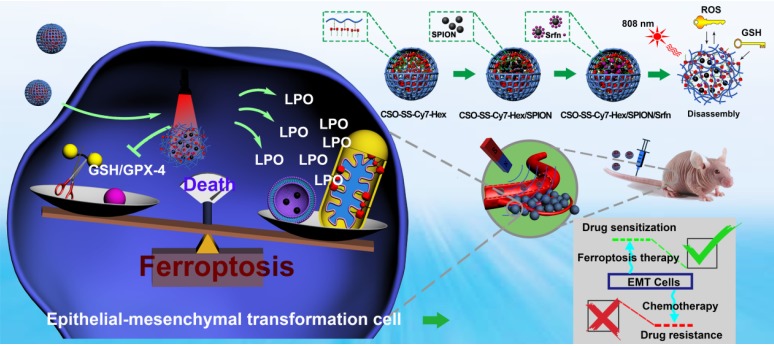
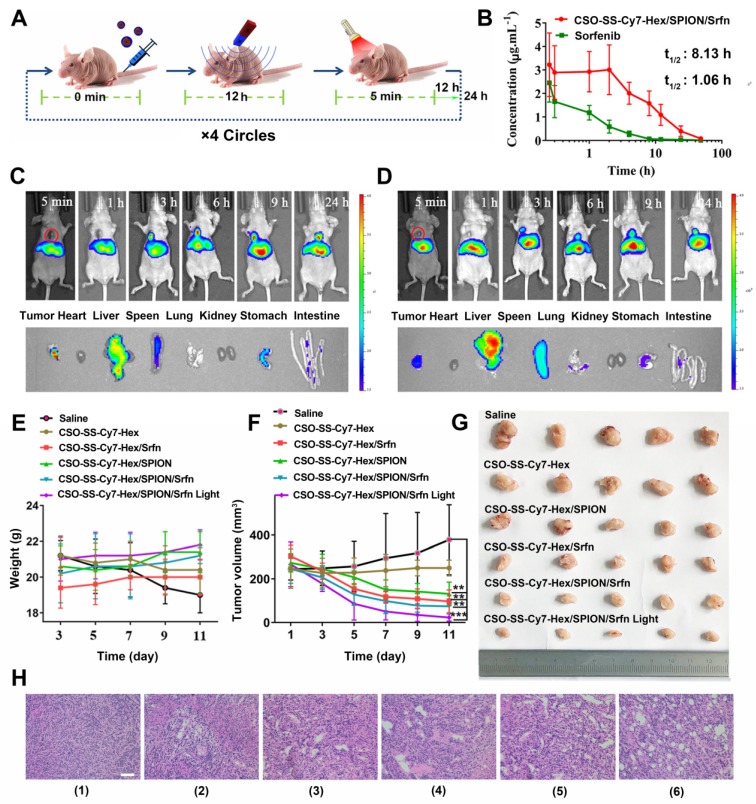
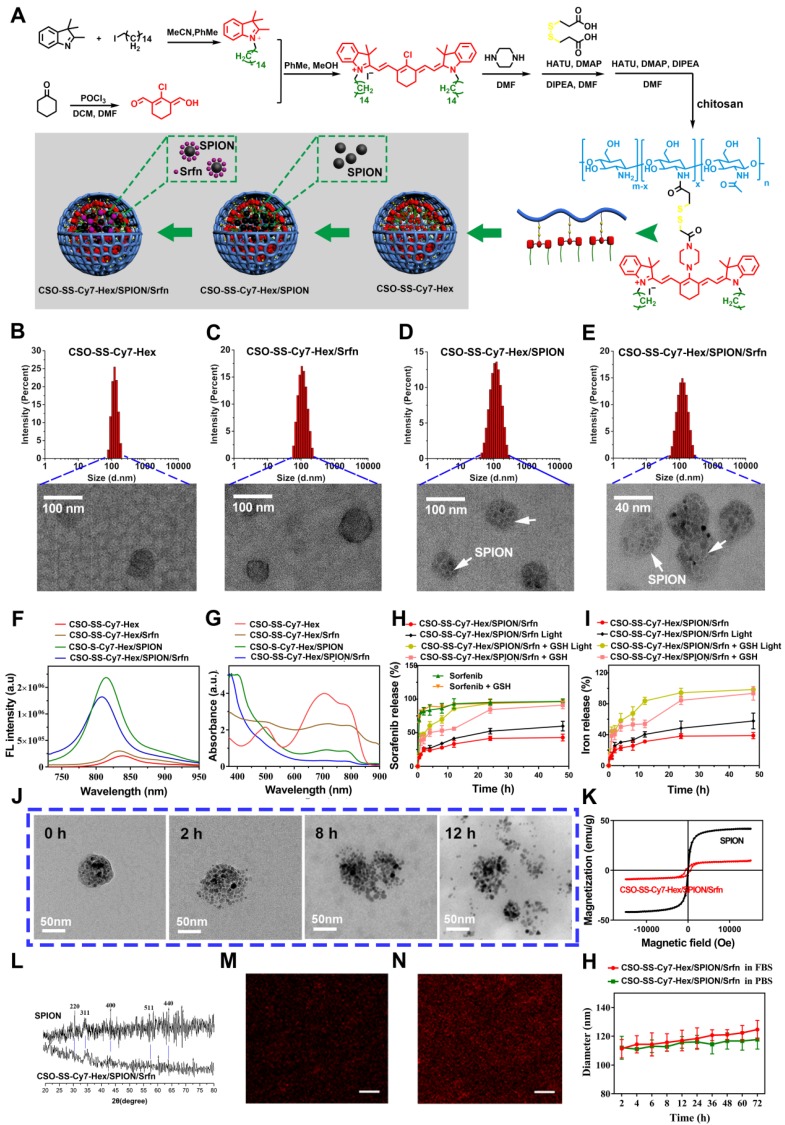
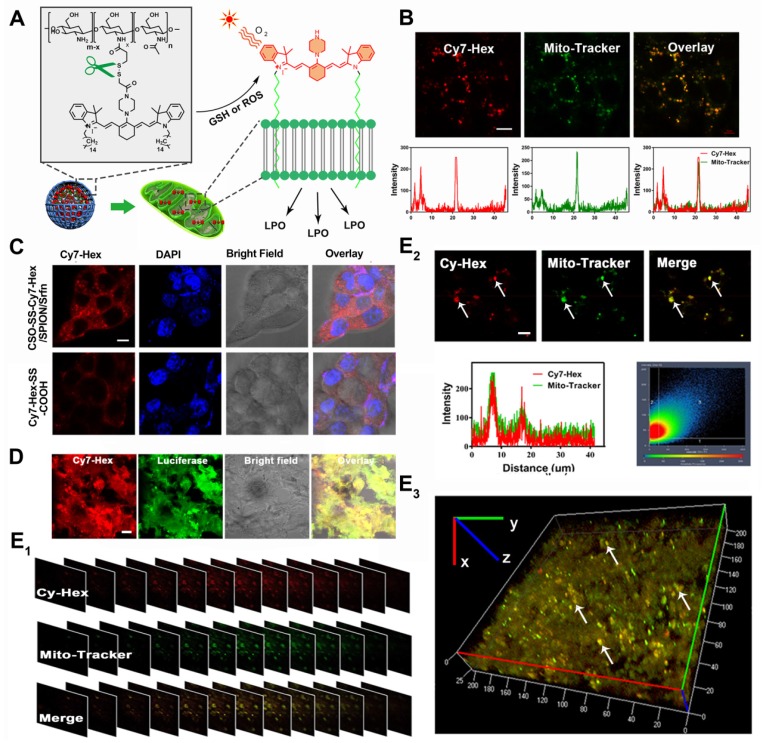
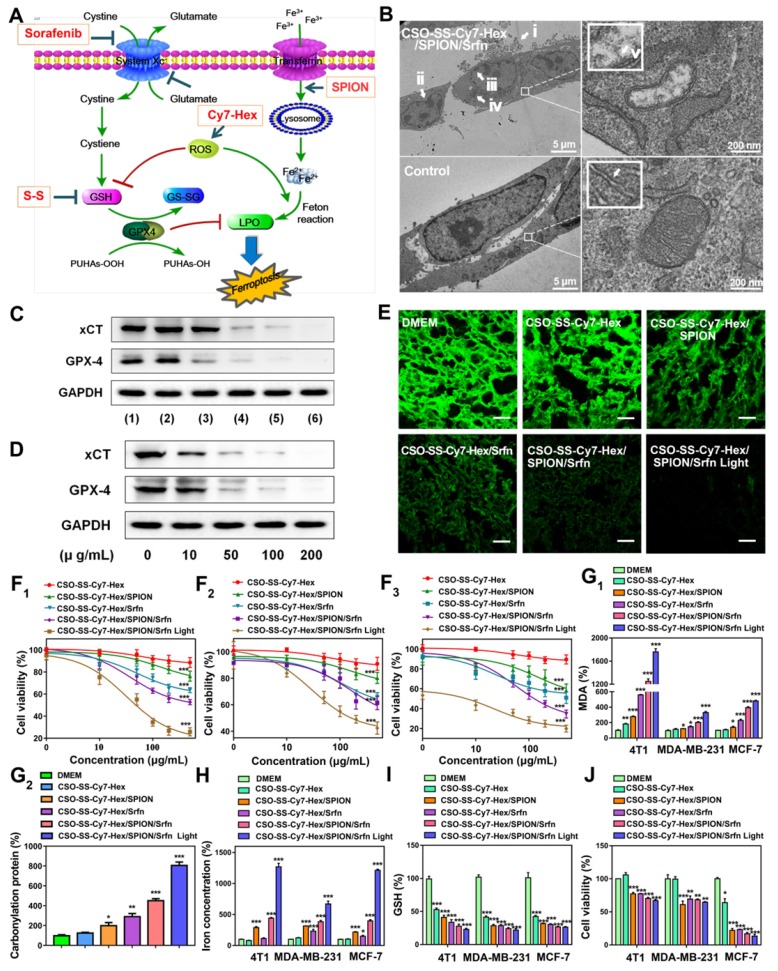
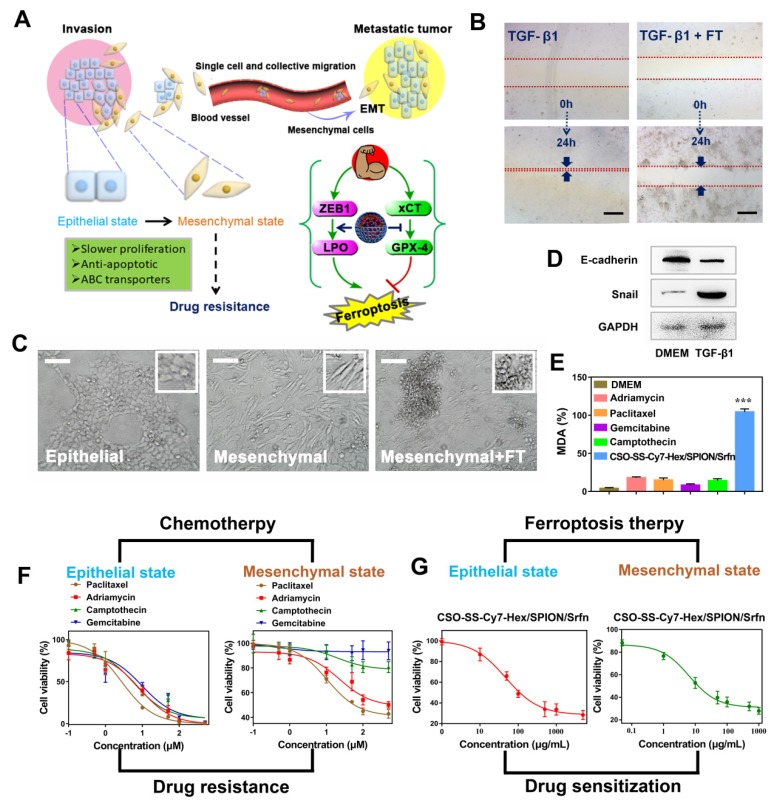
: Ferroptosis is a regulated process of cell death caused by iron-dependent accumulation of lipid hydroperoxides (LPO). It is sensitive to epithelial-to-mesenchymal transition (EMT) cells, a well-known therapy-resistant state of cancer. Previous studies on nanomaterials did not investigate the immense value of ferroptosis therapy (FT) in epithelial cell carcinoma during EMT. Herein, we describe an EMT-specific nanodevice for a comprehensive FT strategy involving LPO burst. : Mitochondrial membrane anchored oxidation/reduction response and Fenton-Reaction-Accelerable magnetic nanophotosensitizer complex self-assemblies loading sorafenib (CSO-SS-Cy7-Hex/SPION/Srfn) were constructed in this study for LPO produced to overcome the therapy-resistant state of cancer. Both and experiments were performed using breast cancer cells to investigate the anti-tumor efficacy of the complex self-assemblies. : The nano-device enriched the tumor sites by magnetic targeting of enhanced permeability and retention effects (EPR), which were disassembled by the redox response under high levels of ROS and GSH in FT cells. Superparamagnetic iron oxide nanoparticles (SPION) released Fe and Fe in the acidic environment of lysosomes, and the NIR photosensitizer Cy7-Hex anchored to the mitochondrial membrane, combined sorafenib (Srfn) leading to LPO burst, which was accumulated ~18-fold of treatment group in breast cancer cells. pharmacodynamic test results showed that this nanodevice with small particle size and high cytotoxicity increased Srfn circulation and shortened the period of epithelial cancer treatment. : Ferroptosis therapy had a successful effect on EMT cells. These findings have great potential in the treatment of therapy-resistant epithelial cell carcinomas.
铁死亡是一种由脂质氢过氧化物(LPO)的铁依赖性积累引起的细胞死亡调控过程。它对上皮-间质转化(EMT)细胞敏感,EMT细胞是一种众所周知的癌症治疗耐药状态。以往关于纳米材料的研究并未探讨铁死亡疗法(FT)在EMT过程中对上皮细胞癌的巨大价值。在此,我们描述了一种用于涉及LPO爆发的综合FT策略的EMT特异性纳米装置。本研究构建了线粒体膜锚定的氧化/还原响应和芬顿反应可加速的磁性纳米光敏剂复合物自组装体负载索拉非尼(CSO-SS-Cy7-Hex/SPION/Srfn),以产生LPO来克服癌症的治疗耐药状态。使用乳腺癌细胞进行了体内和体外实验,以研究复合物自组装体的抗肿瘤疗效。该纳米装置通过增强的渗透和滞留效应(EPR)的磁靶向作用富集肿瘤部位,在FT细胞中高水平的活性氧(ROS)和谷胱甘肽(GSH)作用下,通过氧化还原反应使其解体。超顺磁性氧化铁纳米颗粒(SPION)在溶酶体的酸性环境中释放Fe²⁺和Fe³⁺,而近红外光敏剂Cy7-Hex锚定在线粒体膜上,与索拉非尼(Srfn)结合导致LPO爆发,在乳腺癌细胞中其积累量比治疗组高约18倍。药效学测试结果表明,这种粒径小、细胞毒性高的纳米装置增加了Srfn的循环并缩短了上皮癌的治疗周期。铁死亡疗法对EMT细胞有成功的治疗效果。这些发现对于治疗耐药性上皮细胞癌具有巨大潜力。