Das Theerthankar, Paino Denis, Manoharan Arthika, Farrell Jessica, Whiteley Greg, Kriel Frederik H, Glasbey Trevor, Manos Jim
Department of Infectious Diseases and Immunology, Central Clinical School, Faculty of Medicine and Health, The University of Sydney, Sydney, NSW, Australia.
Whiteley Corporation, North Sydney, NSW, Australia.
Front Microbiol. 2019 Aug 30;10:2000. doi: 10.3389/fmicb.2019.02000. eCollection 2019.
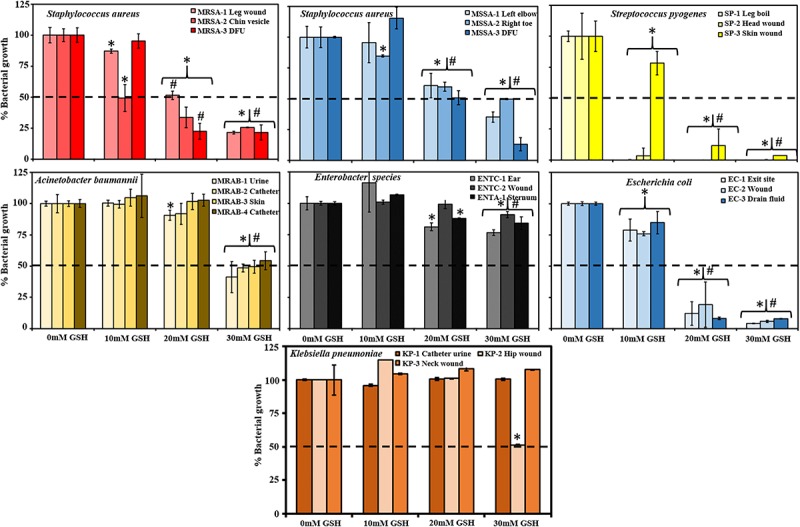
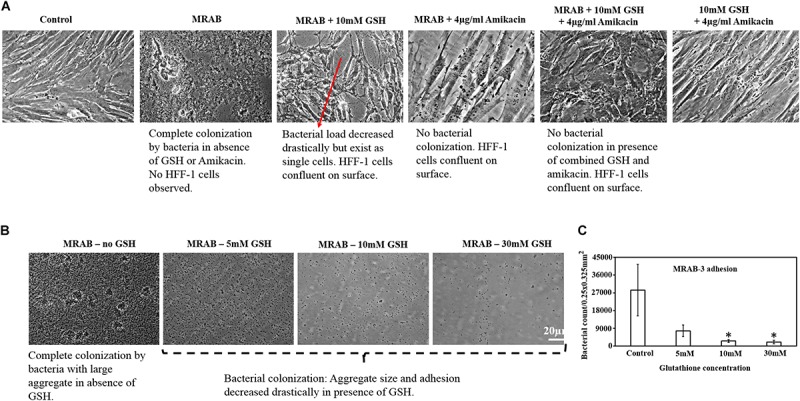
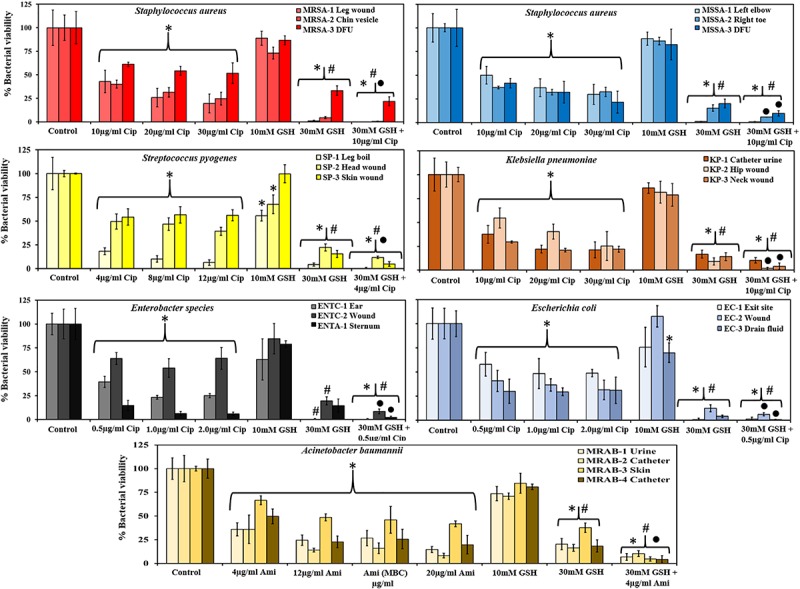
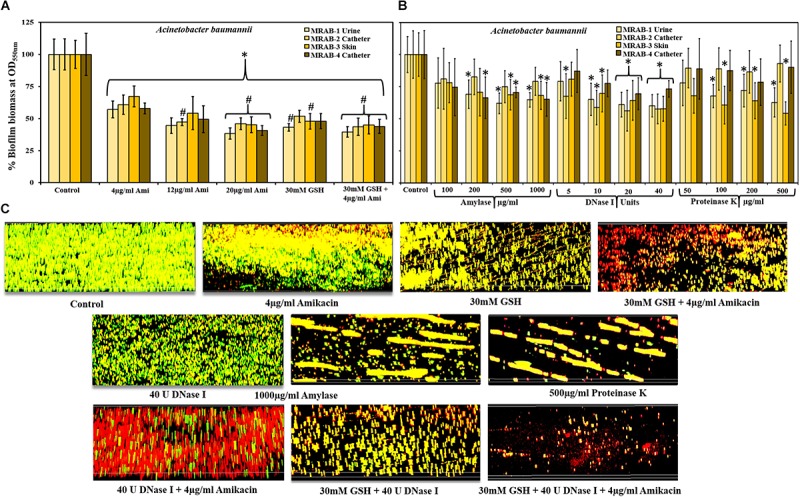
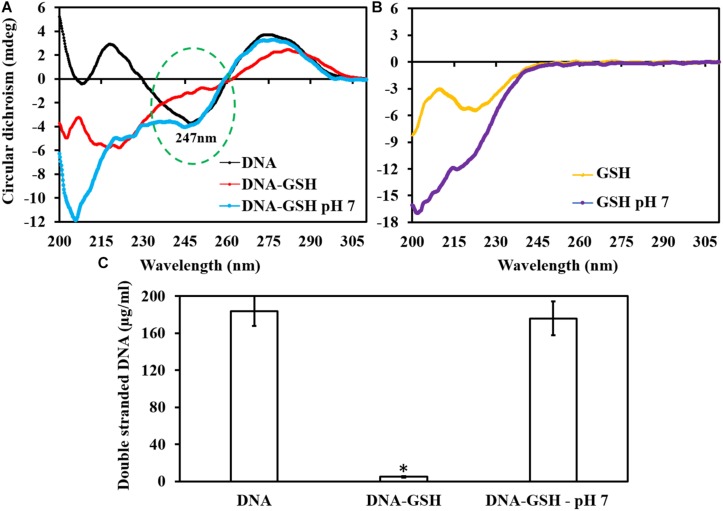
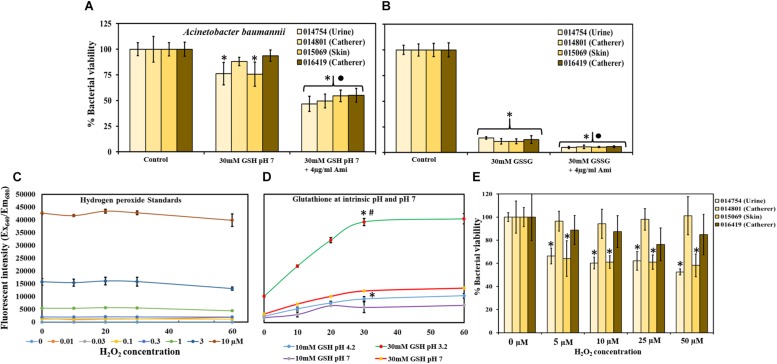
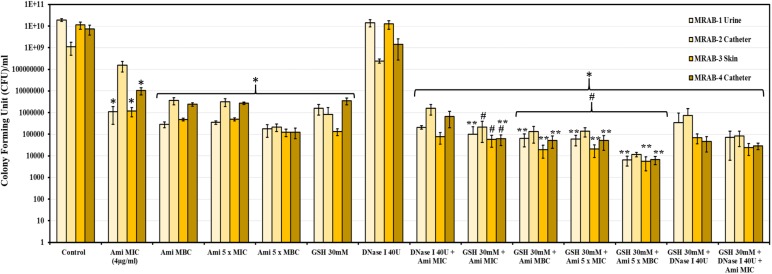
Bacterial antibiotic resistance has increased in recent decades, raising concerns in hospital and community settings. Novel, innovative strategies are needed to eradicate bacteria, particularly within biofilms, and diminish the likelihood of recurrence. In this study, we investigated whether glutathione (GSH) can act as a biofilm disruptor, and enhance antibiotic effectiveness against various bacterial pathogens. Biological levels (10 mM) of GSH did not have a significant effect in inhibiting growth or disrupting the biofilm in four out of six species tested. However, exposure to 30 mM GSH showed >50% decrease in growth for all bacterial species, with almost 100% inhibition of and an average of 94-52% inhibition for , Methicillin-resistant (MRSA) and Methicillin-sensitive (MSSA) and multi-drug resistant (MRAB) isolates, respectively. and sp. isolates were however, highly resistant to 30 mM GSH. With respect to biofilm viability, all species exhibited a >50% decrease in viability with 30 mM GSH, with confocal imaging showing considerable change in the biofilm architecture of MRAB isolates. The mechanism of GSH-mediated biofilm disruption is possibly due to a concentration-dependent increase in GSH acidity that triggers cleaving of the matrix components. Enzymatic treatment of MRAB revealed that eDNA and polysaccharides are essential for biofilm stability and eDNA removal enhanced amikacin efficiency. Combination of GSH, amikacin and DNase-I showed the greatest reduction in MRAB biofilm viability. Additionally, GSH alone and in combination with amikacin fostered human fibroblast cell (HFF-1) growth and confluence while inhibiting MRAB adhesion and colonization.
近几十年来,细菌的抗生素耐药性有所增加,这在医院和社区环境中引发了担忧。需要新颖、创新的策略来根除细菌,尤其是生物膜内的细菌,并降低复发的可能性。在本研究中,我们调查了谷胱甘肽(GSH)是否可以作为生物膜破坏剂,并增强抗生素对各种细菌病原体的有效性。在所测试的六个物种中,有四个物种的生物水平(10 mM)的GSH在抑制生长或破坏生物膜方面没有显著作用。然而,暴露于30 mM GSH后,所有细菌物种的生长均下降了50%以上,其中 的抑制率几乎达到100%,耐甲氧西林金黄色葡萄球菌(MRSA)、甲氧西林敏感金黄色葡萄球菌(MSSA)和多重耐药鲍曼不动杆菌(MRAB)分离株的平均抑制率分别为94%-52%。然而, 和 分离株对30 mM GSH具有高度抗性。关于生物膜活力,所有物种在30 mM GSH作用下活力均下降了50%以上,共聚焦成像显示MRAB分离株的生物膜结构发生了显著变化。GSH介导的生物膜破坏机制可能是由于GSH酸度的浓度依赖性增加,从而触发了基质成分的裂解。对MRAB的酶处理表明,胞外DNA(eDNA)和多糖对生物膜稳定性至关重要,去除eDNA可提高阿米卡星的效率。GSH、阿米卡星和DNase-I的组合显示MRAB生物膜活力的降低最为显著。此外,单独使用GSH以及将其与阿米卡星联合使用,在抑制MRAB粘附和定植的同时,促进了人成纤维细胞(HFF-1)的生长和汇合。