Institute of Genetics, University of Bern, 3012 Bern, Switzerland.
Dermfocus, University of Bern, 3012 Bern, Switzerland.
Genes (Basel). 2019 Sep 21;10(10):731. doi: 10.3390/genes10100731.
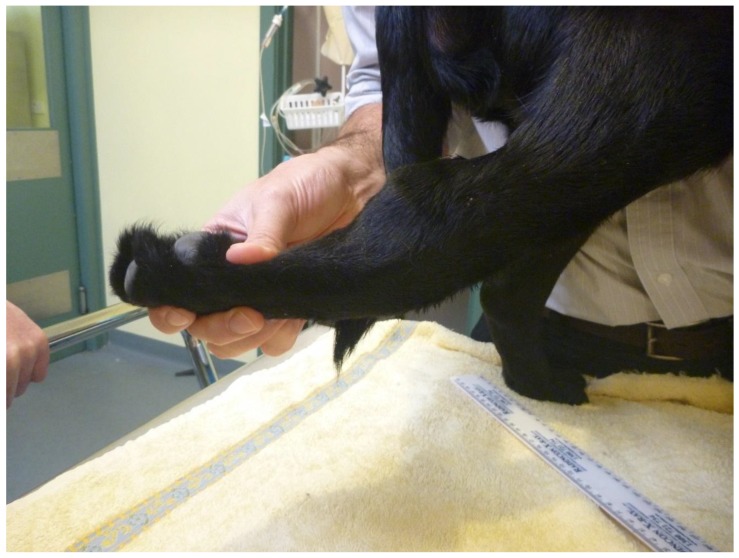
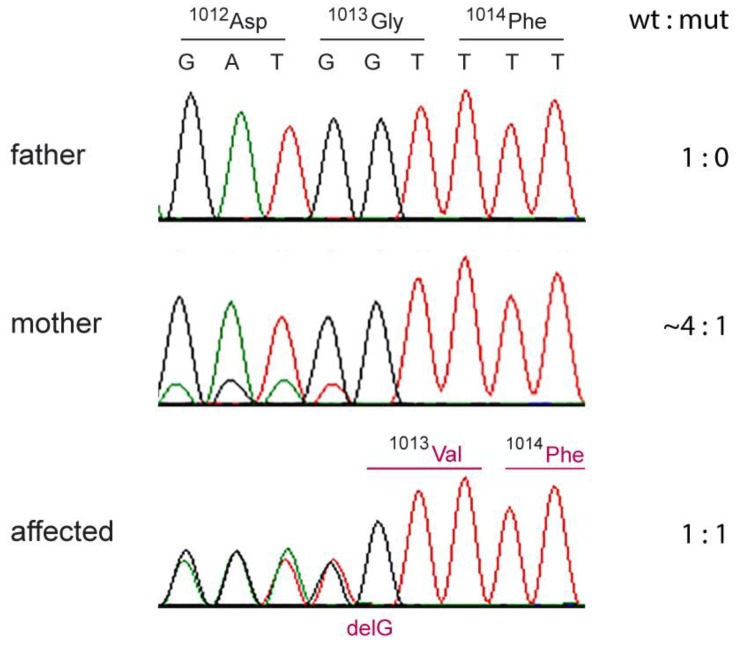
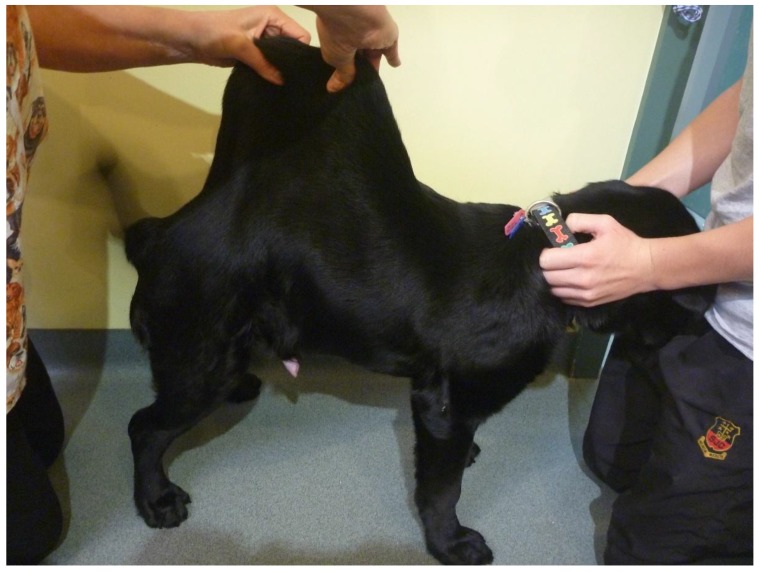
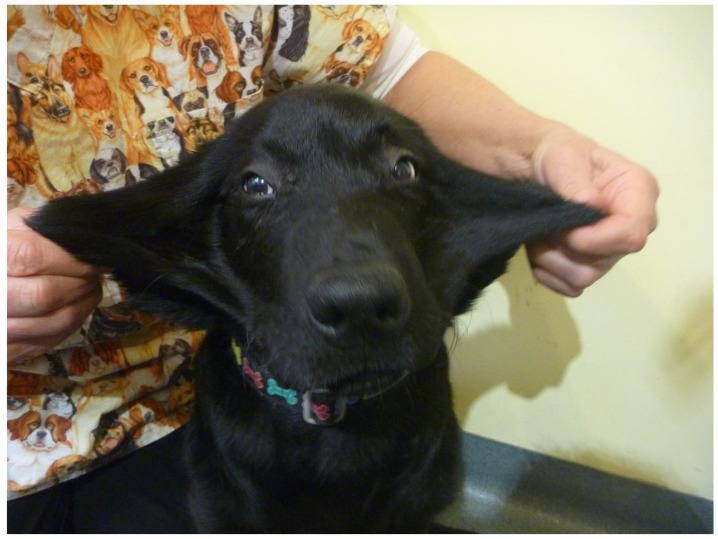
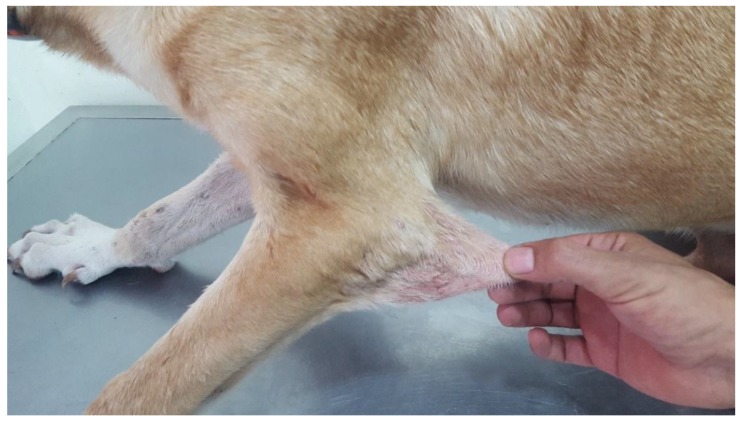
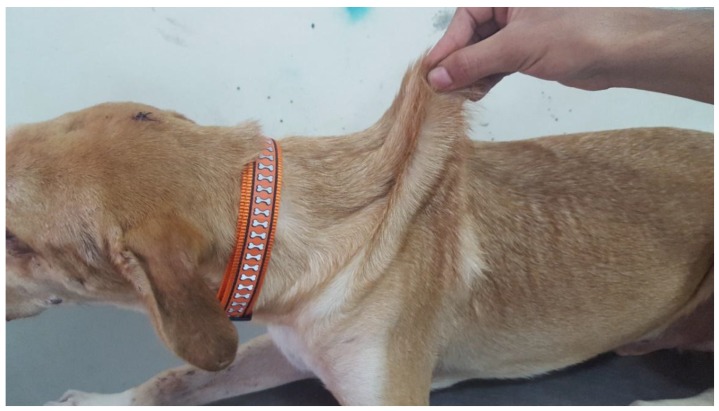
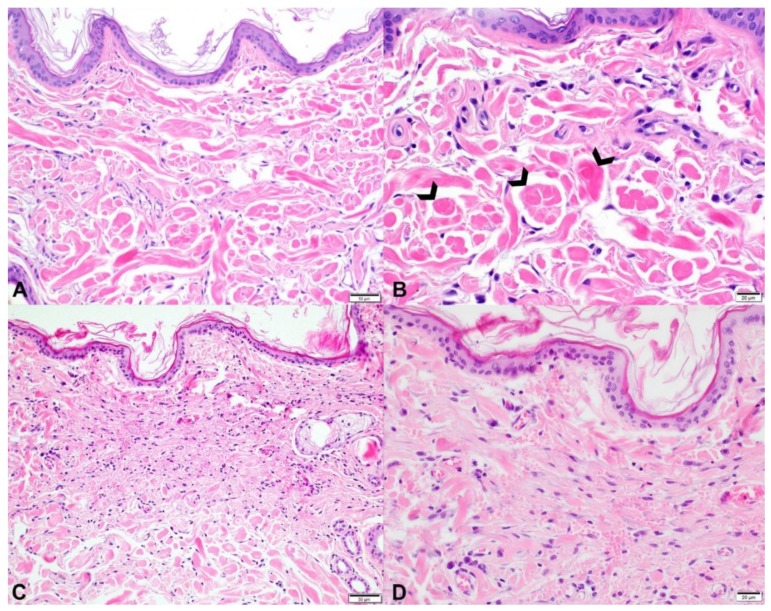
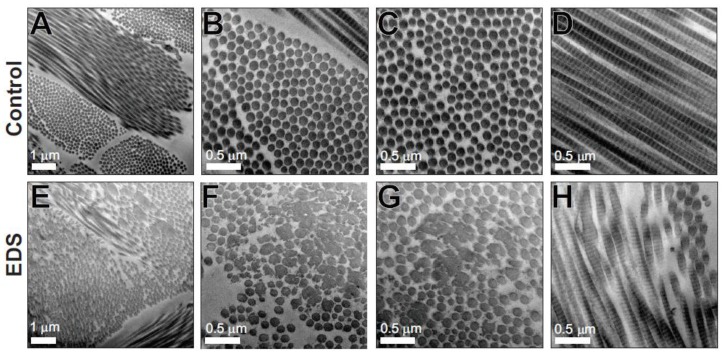
The Ehlers-Danlos syndromes (EDS) are a heterogeneous group of heritable disorders affecting connective tissues. The mutations causing the various forms of EDS in humans are well characterized, but the genetic mutations causing EDS-like clinical pathology in dogs are not known, thus hampering accurate clinical diagnosis. Clinical analysis of two independent cases of skin hyperextensibility and fragility, one with pronounced joint hypermobility was suggestive of EDS. Whole-genome sequencing revealed de novo mutations of in both cases, confirming the diagnosis of the classical form of EDS. The heterozygous p.Gly1013ValfsTer260 mutation characterized in case 1 introduced a premature termination codon and would be expected to result in α1(V) mRNA nonsense-mediated mRNA decay and collagen V haploinsufficiency. While mRNA was not available from this dog, ultrastructural analysis of the dermis demonstrated variability in collagen fibril diameter and the presence of collagen aggregates, termed 'collagen cauliflowers', consistent with mutations underlying classical EDS. In the second case, DNA sequencing demonstrated a p.Gly1571Arg missense variant in the gene. While samples were not available for further analysis, such a glycine substitution would be expected to destabilize the strict molecular structure of the collagen V triple helix and thus affect protein stability and/or integration of the mutant collagen into the collagen V/collagen I heterotypic dermal fibrils. This is the first report of genetic variants in the gene causing the clinical presentation of EDS in dogs. These data provided further evidence of the important role of collagen V in dermal collagen fibrillogenesis. Importantly, from the clinical perspective, we showed the utility of DNA sequencing, combined with the established clinical criteria, in the accurate diagnosis of EDS in dogs.
埃勒斯-当洛斯综合征(EDS)是一组影响结缔组织的遗传性疾病,具有异质性。导致人类各种形式 EDS 的突变已得到很好的描述,但导致犬类具有 EDS 样临床病理的基因突变尚不清楚,从而阻碍了准确的临床诊断。对 2 例皮肤过度伸展和脆弱、1 例关节明显过度活动的独立病例进行临床分析,提示 EDS。全基因组测序显示,这两例均存在 的从头突变,确诊为经典型 EDS。在病例 1 中发现的杂合 p.Gly1013ValfsTer260 突变引入了一个终止密码子,预计会导致α1(V)mRNA 无意义介导的 mRNA 衰减和胶原 V 单倍不足。虽然无法从这只狗身上获得 mRNA,但对真皮的超微结构分析表明胶原纤维直径存在变异性,并存在胶原聚集,称为“胶原菜花”,与经典 EDS 相关的 突变一致。在第二个病例中,DNA 测序显示 基因中的 p.Gly1571Arg 错义变异。虽然没有进一步分析的样本,但这种甘氨酸取代预计会破坏胶原 V 三聚体的严格分子结构,从而影响突变胶原的稳定性和/或整合到胶原 V/胶原 I 异质真皮纤维中。这是第一个报道 基因中的遗传变异导致犬类 EDS 临床表现的报告。这些数据进一步证明了胶原 V 在真皮胶原纤维发生中的重要作用。重要的是,从临床角度来看,我们展示了 DNA 测序与既定临床标准相结合在犬 EDS 准确诊断中的应用。