Douksouna Youmma, Masanga Joel, Nyerere Andrew, Runo Steven, Ambang Zachée
Institute for Basic Sciences Technology and Innovation, Pan African University, P.O. Box 62000-00200 Nairobi, Kenya.
Department of Biochemistry, Microbiology and Biotechnology, Kenyatta University, P.O. Box 43844-00100 Nairobi, Kenya.
Toxins (Basel). 2019 Sep 19;11(9):544. doi: 10.3390/toxins11090544.
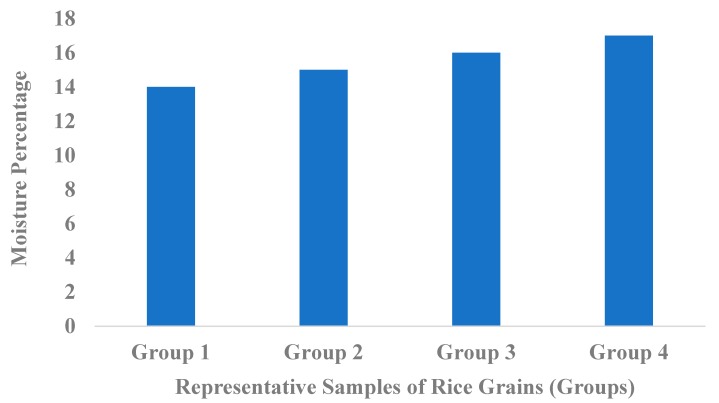
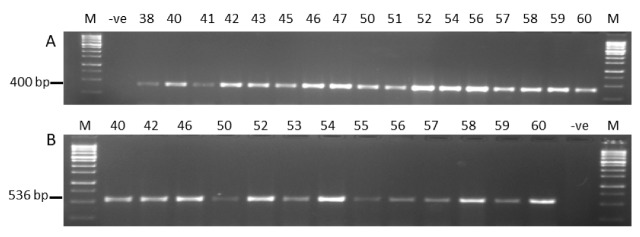
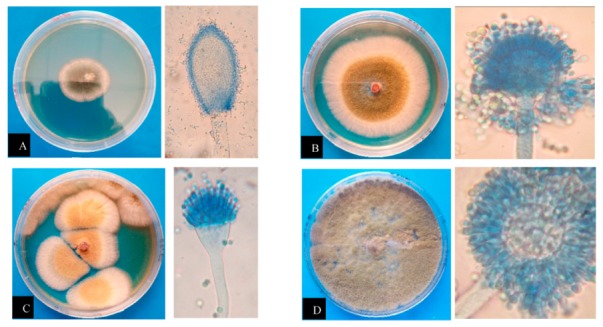
Rice grains can be attacked by a range of pathogens, including species, which can cause the accumulation of aflatoxins and represent a serious threat to the consumers. Aflatoxins are secondary metabolites synthesized by species and naturally occur in various foodstuffs. In this study, we sought to analyze the prevalence of aflatoxin-producing spp. in rice grains currently sold in Kenyan local markets. We analyzed a total of 98 samples randomly collected and primarily analyzed to observe moisture content and fungal growth. We then isolated species, characterized them morphologically and using the Internal transcribed spacer (ITS) primers. Finally, we screened them for aflatoxin-producing isolates targeting Norsolorinic Acid () and () specific genes involved in aflatoxin biosynthesis. We observed that all tested samples were contaminated. The highest prevalence of species and aflatoxigenic fungal species, had values of 66% and 36.4% for and , respectively. In total, 66% of all isolates were confirmed to be aflatoxin producers. The occurrence of high contamination levels of species points to the possibility of production of aflatoxins in rice grains. This work provides a baseline for future studies on the occurrence of mycotoxigenic fungal species in rice grains being sold in local markets and strategies to control these aflatoxigenic strains at pre- and post-harvest levels.
稻谷可能受到多种病原体的侵袭,包括能导致黄曲霉毒素积累的菌种,这对消费者构成严重威胁。黄曲霉毒素是由某些菌种合成的次生代谢产物,天然存在于各种食品中。在本研究中,我们试图分析肯尼亚当地市场目前销售的稻谷中产生黄曲霉毒素的特定菌种的流行情况。我们总共分析了随机收集的98个样本,首先分析其水分含量和真菌生长情况。然后我们分离出特定菌种,通过形态学特征以及使用内转录间隔区(ITS)引物对其进行鉴定。最后,我们针对参与黄曲霉毒素生物合成的诺索洛林酸(NA)和聚酮合酶(PKS)特定基因,筛选产生黄曲霉毒素的分离株。我们观察到所有测试样本均受到污染。特定菌种和产黄曲霉毒素真菌种类的最高流行率,分别在[具体菌种1]和[具体菌种2]中达到66%和36.4%。总体而言,所有分离株中有66%被确认为黄曲霉毒素生产者。特定菌种的高污染水平表明稻谷中可能产生黄曲霉毒素。这项工作为今后研究当地市场销售的稻谷中产生霉菌毒素的真菌种类以及在收获前和收获后控制这些产黄曲霉毒素菌株的策略提供了基线。