Almaani Salem, Prokopec Stephenie D, Zhang Jianying, Yu Lianbo, Avila-Casado Carmen, Wither Joan, Scholey James W, Alberton Valeria, Malvar Ana, Parikh Samir V, Boutros Paul C, Rovin Brad H, Reich Heather N
Division of Nephrology, The Ohio State University, Columbus, OH 43210, USA.
Ontario Institute for Cancer Research, Toronto, ON M5G 0A3, Canada.
J Clin Med. 2019 Sep 23;8(10):1524. doi: 10.3390/jcm8101524.
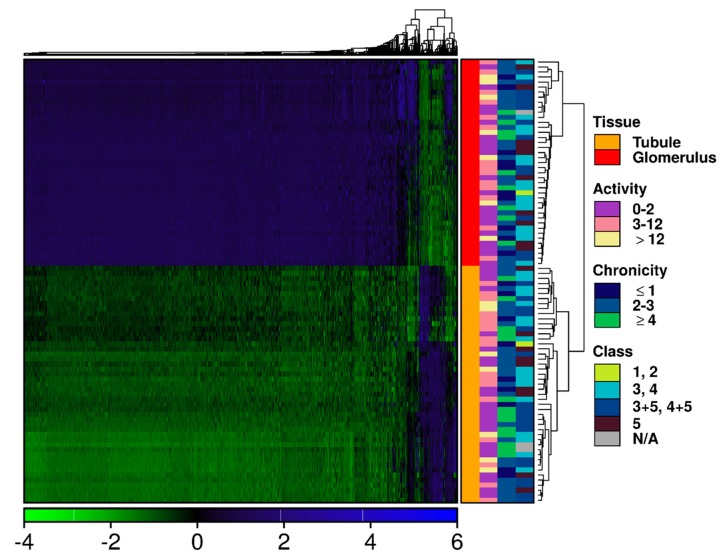
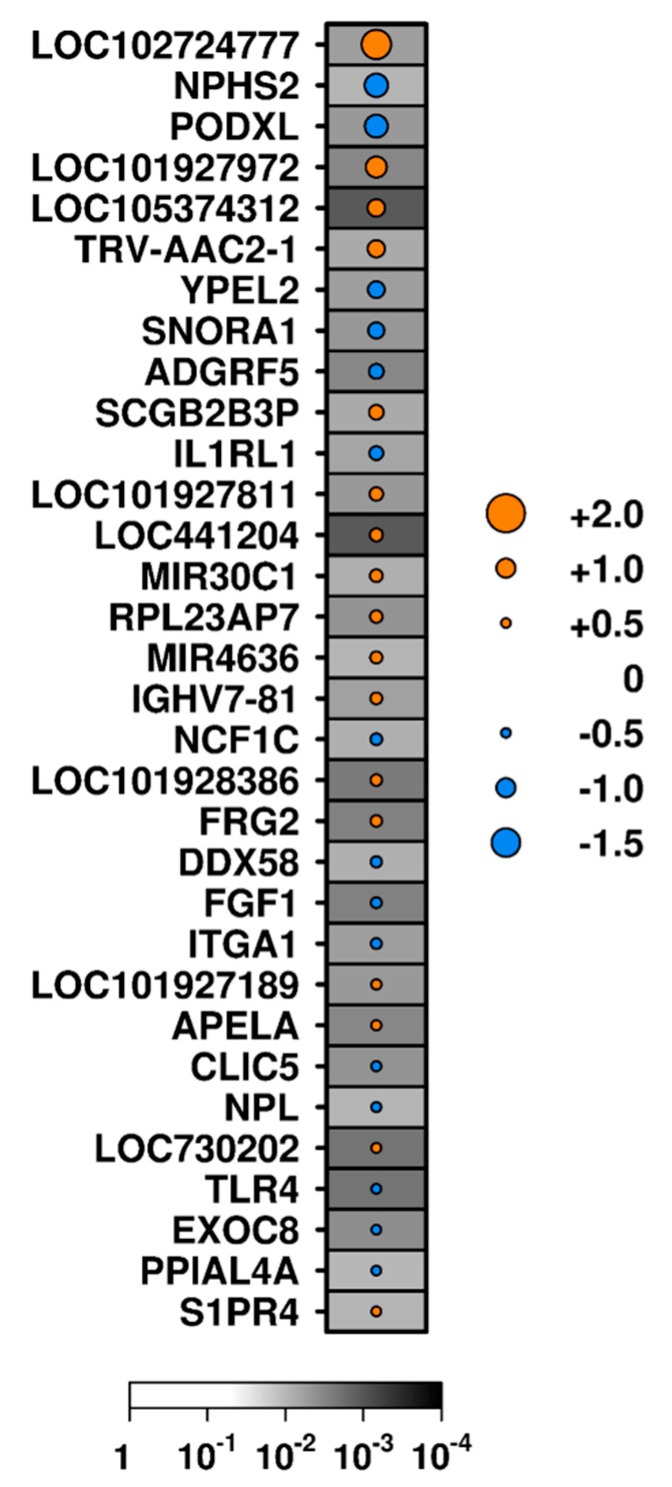
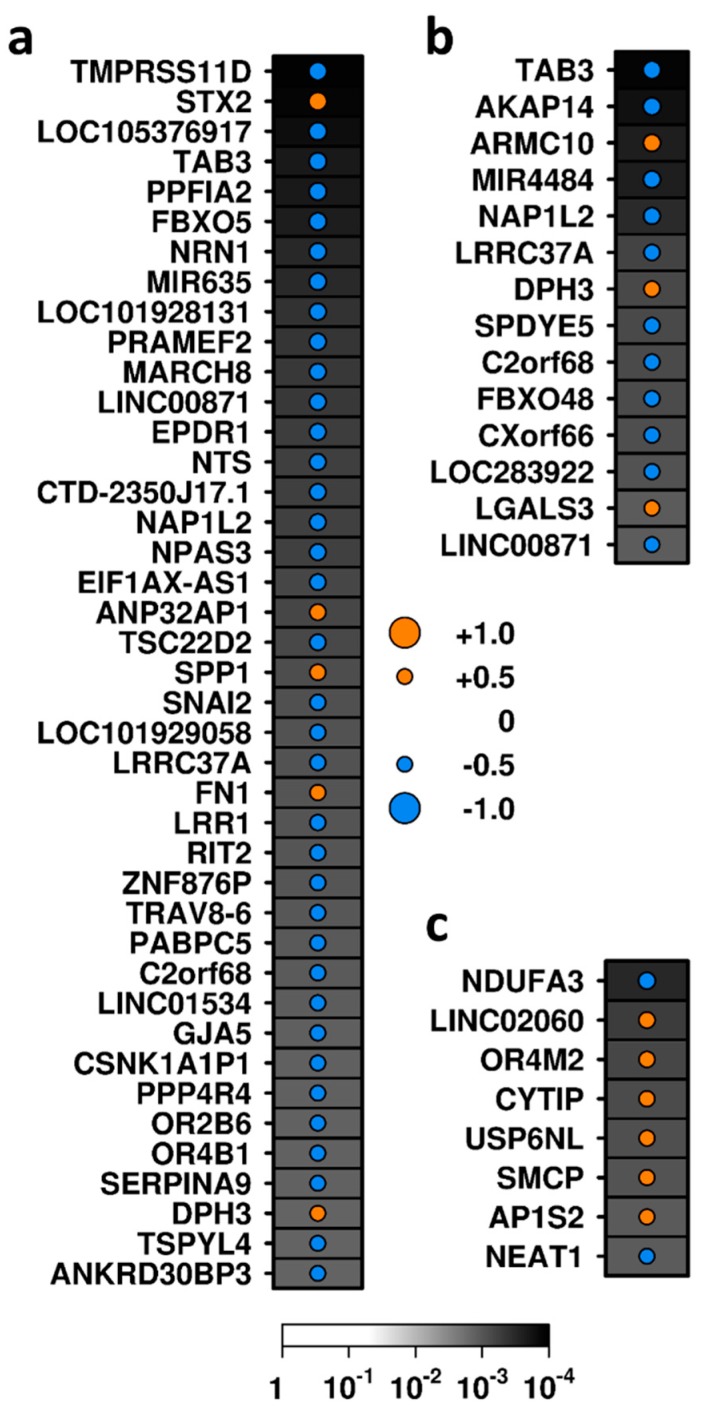
The International Society of Nephrology/Renal Pathology Society (ISN/RPS) lupus nephritis (LN) classification is under reconsideration, given challenges with inter-rater reliability and resultant inconsistent relationship with treatment response. Integration of molecular classifiers into histologic evaluation can improve diagnostic precision and identify therapeutic targets. This study described the relationship between histological and molecular phenotypes and clinical responses in LN. Renal compartmental mRNA abundance was measured in 54 biopsy specimens from LN patients and correlated to ISN/RPS classification and individual histologic lesions. A subset of transcripts was also evaluated in sequential biopsies of a separate longitudinal cohort of 36 patients with paired samples obtained at the time of flare and at follow up. Unsupervised clustering based on mRNA abundance did not demonstrate a relationship with the (ISN/RPS) classification, nor did univariate statistical analysis. Exploratory analyses suggested a correlation with individual histologic lesions. Glomerular FN1 (fibronectin), SPP1 (secreted phosphoprotein 1), and LGALS3 (galectin 3) abundance correlated with disease activity and changed following treatment. Exploratory analyses suggested relationships between specific transcripts and individual histologic lesions, with the important representation of interferon-regulated genes. Our findings suggested that the current LN classification could be refined by the inclusion of molecular descriptors. Combining molecular and pathologic kidney biopsy phenotypes may hold promise to better classify disease and identify actionable treatment targets and merits further exploration in larger cohorts.
鉴于国际肾脏病学会/肾脏病理学会(ISN/RPS)狼疮性肾炎(LN)分类在评分者间可靠性方面存在挑战,且与治疗反应的关系不一致,该分类正在重新审议。将分子分类器整合到组织学评估中可提高诊断准确性并确定治疗靶点。本研究描述了LN的组织学和分子表型与临床反应之间的关系。在54例LN患者的肾活检标本中测量肾区mRNA丰度,并将其与ISN/RPS分类和个体组织学病变相关联。在另一组36例患者的纵向队列的序贯活检中,也对一部分转录本进行了评估,这些患者在病情发作时和随访时获取了配对样本。基于mRNA丰度的无监督聚类未显示与(ISN/RPS)分类有关,单变量统计分析也未显示相关性。探索性分析表明与个体组织学病变存在相关性。肾小球纤连蛋白(FN1)、分泌性磷蛋白1(SPP1)和半乳糖凝集素3(LGALS3)丰度与疾病活动相关,并在治疗后发生变化。探索性分析表明特定转录本与个体组织学病变之间存在关联,其中干扰素调节基因有重要表现。我们的研究结果表明,当前的LN分类可通过纳入分子描述符来完善。结合分子和病理肾活检表型可能有望更好地对疾病进行分类并确定可采取行动的治疗靶点,值得在更大的队列中进一步探索。