Ménétré Eric, Laganaro Marina
Faculty of Psychology and Educational Sciences, University of Geneva, Geneva, Switzerland.
Front Psychol. 2019 Sep 6;10:2028. doi: 10.3389/fpsyg.2019.02028. eCollection 2019.
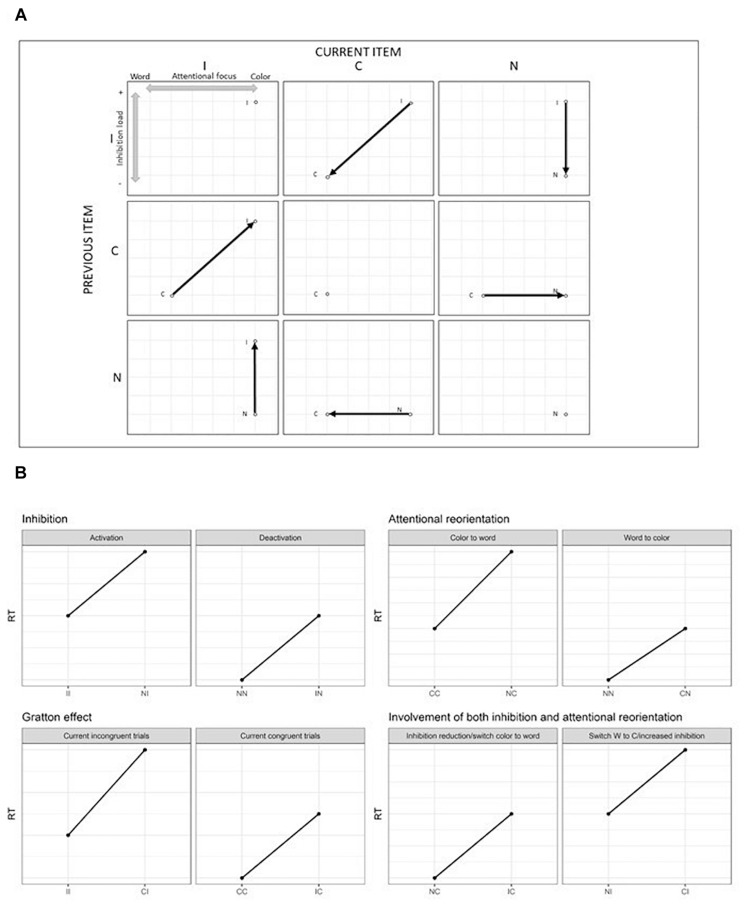
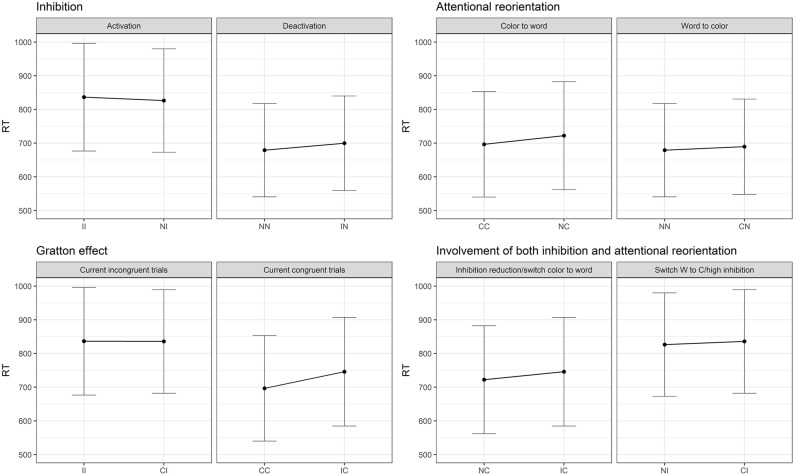
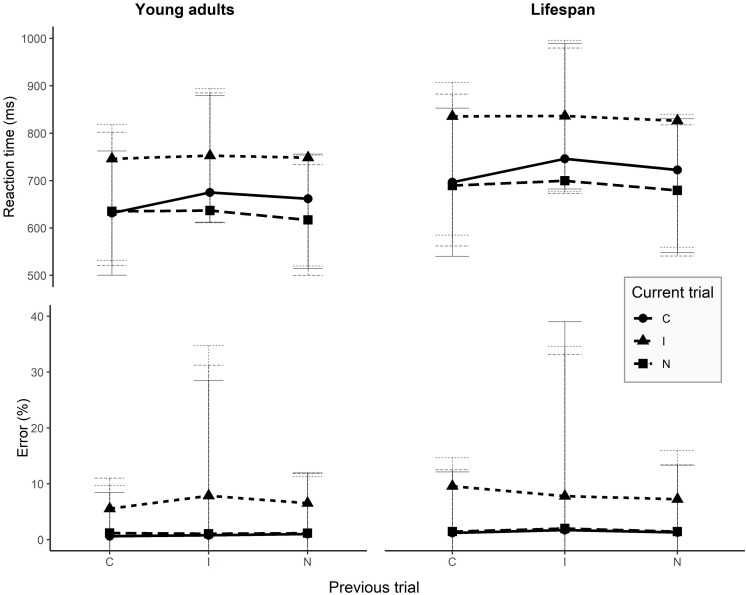
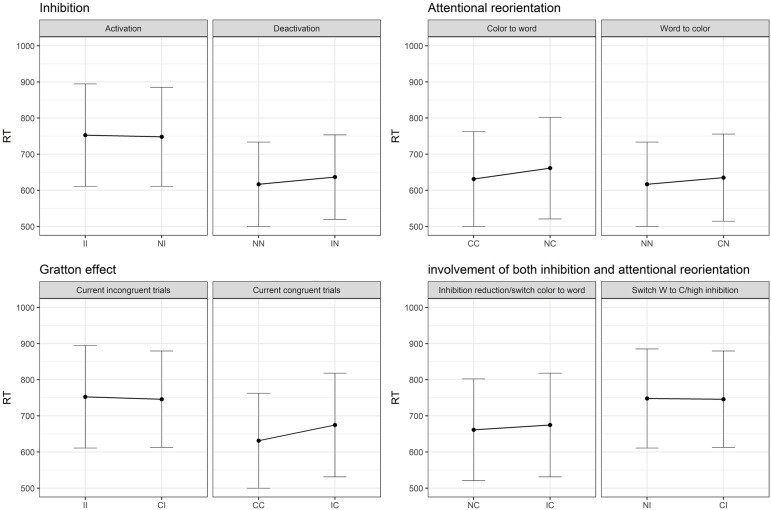
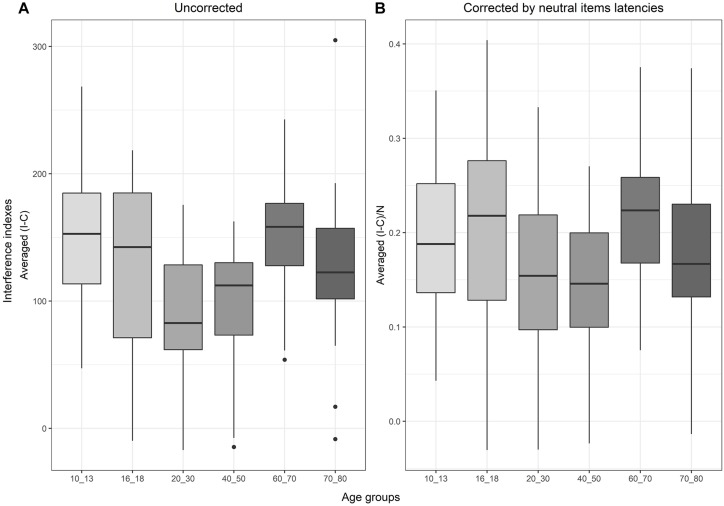
Several parameters influence the interference effect elicited in a Stroop task, especially contextual information. Contextual effects in the Stroop paradigms are known as the or (SCE). This research aims at isolating two processes contributing to the SCE in a Stroop paradigm, namely attentional reorientation from the color to the word and vice-versa, as well as inhibition (engagement/disengagement from one trial to the next one). To this end, in Study 1 subprocesses of the SCE were isolated. Specifically, attentional reorientation and inhibition were segregated by submitting young adults to a discrete verbal Stroop task including neutral trials. In Study 2, the same procedure was applied to 124 participants aged from 10 to 80 years old to analyze how interference, SCE, and the aforementioned decomposition of attention and inhibition change across the lifespan. In both studies, the Gratton effect was only partially replicated, while both attentional reorientation and inhibition effects were observed, supporting the idea that these two processes contribute to SCE on top of conflict monitoring and of other processes highlighted in different theories (contingency learning, feature integration, and repetition expectancy). Finally, the classical age-related evolution was replicated in Study 2 on raw interference scores, but no age effect was observed when processing speed was taken into account, nor on the isolated attentional reorientation and inhibition processes, which is in line with the hypothesis of stability of the inhibition processes over age.
有几个参数会影响在斯特鲁普任务中引发的干扰效应,尤其是情境信息。斯特鲁普范式中的情境效应被称为 或 (情境一致性效应)。本研究旨在分离出在斯特鲁普范式中促成情境一致性效应的两个过程,即注意力从颜色到单词以及从单词到颜色的重新定向,以及抑制(从一次试验到下一次试验的参与/脱离)。为此,在研究1中分离出了情境一致性效应的子过程。具体而言,通过让年轻人进行包括中性试验的离散言语斯特鲁普任务,将注意力重新定向和抑制区分开来。在研究2中,对124名年龄在10岁至80岁之间的参与者应用了相同的程序,以分析干扰、情境一致性效应以及上述注意力和抑制的分解在整个生命周期中是如何变化的。在两项研究中,格拉顿效应仅得到部分重复,同时观察到了注意力重新定向和抑制效应,这支持了以下观点:除了冲突监测以及不同理论中强调的其他过程(偶然性学习、特征整合和重复预期)之外,这两个过程也促成了情境一致性效应。最后,在研究2中,原始干扰分数重现了经典的年龄相关演变,但在考虑处理速度时未观察到年龄效应,在分离出的注意力重新定向和抑制过程中也未观察到年龄效应;这与抑制过程随年龄保持稳定的假设一致。