Bruno Katelyn Ann, Mathews Jessica Elizabeth, Yang Alex Lingyun, Frisancho J Augusto, Scott Ashley Jennie, Greyner Henry David, Molina Frank Anthony, Greenaway Merci Shekinah, Cooper George Maxwell, Bucek Adriana, Morales-Lara Andrea Carolina, Hill Anneliese Ruth, Mease Anna Alisa, Di Florio Damian Nicolas, Sousou John Michael, Coronado Alexandria Christine, Stafford Allison Ray, Fairweather DeLisa
Department of Cardiovascular Medicine, Mayo Clinic, Jacksonville, FL, United States.
Center for Clinical and Translational Science, Mayo Clinic, Jacksonville, FL, United States.
Front Endocrinol (Lausanne). 2019 Sep 4;10:598. doi: 10.3389/fendo.2019.00598. eCollection 2019.
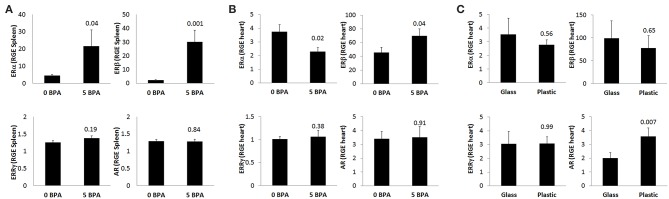
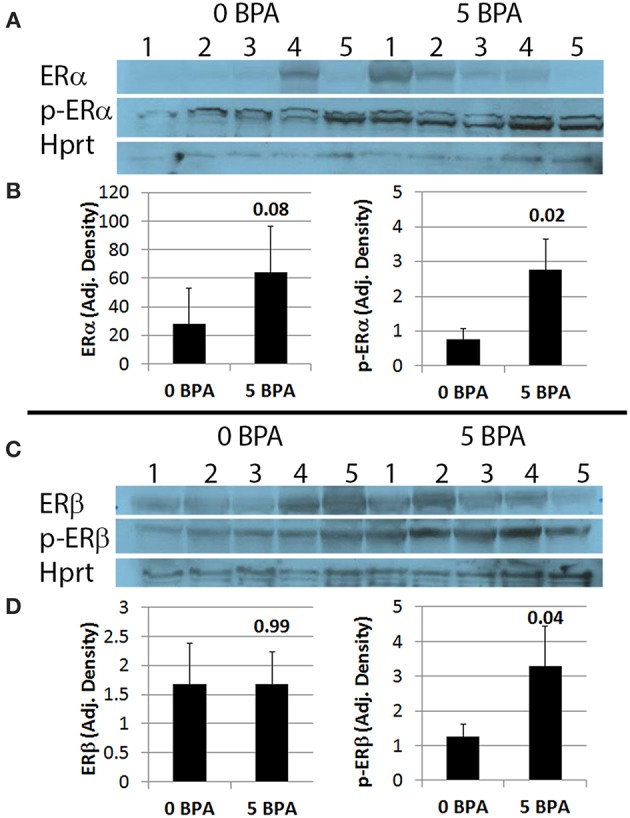
Myocarditis is an inflammatory heart disease that leads to dilated cardiomyopathy (DCM) and heart failure. Sex hormones play an important role in the development of myocarditis with testosterone driving disease in males and estrogen being cardioprotective in females. The human population is widely exposed to the endocrine disruptor bisphenol A (BPA) from plastics such as water bottles, plastic food containers, copy paper, and receipts. Several clinical and numerous animal studies have found an association between elevated BPA levels and cardiovascular disease. A recent report found elevated levels of BPA in the serum of patients with DCM compared to healthy controls. In this study we examined whether exposure to BPA for 2 weeks prior to viral infection and leading up to myocarditis at day 10 altered inflammation in female BALB/c mice housed in standard plastic cages/water bottles with soy-free food and bedding. We found that a human relevant dose of BPA (25 μg/L) in drinking water, with an estimated exposure of 5 μg BPA/kg BW, significantly increased myocarditis and pericarditis compared to control water without altering viral genome levels in the heart. BPA exposure activated ERα and ERβ in the spleen 24 h after infection and phosphorylated ERα and ERβ during myocarditis, but decreased ERα and increased ERβ mRNA in the heart as measured by qRT-PCR. Exposure to BPA significantly increased CD4 T cells, IFNγ, IL-17A, TLR4, caspase-1, and IL-1β in the heart. BPA exposure also increased cardiac fibrosis compared to controls. Mast cells, which are associated with cardiac remodeling, were found to increase in number and degranulation, particularly along the pericardium. Interestingly, plastic caging/water bottle exposure alone led to increased mast cell numbers, pericardial degranulation and fibrosis in female BALB/c mice compared to animals housed in glass cages/water bottles with soy-free food and bedding. These data suggest that BPA exposure may increase the risk of developing myocarditis after a viral infection in women.
心肌炎是一种炎症性心脏病,可导致扩张型心肌病(DCM)和心力衰竭。性激素在心肌炎的发展中起重要作用,睾酮促使男性发病,而雌激素对女性具有心脏保护作用。人类广泛接触来自水瓶、塑料食品容器、复印纸和收据等塑料制品中的内分泌干扰物双酚A(BPA)。多项临床研究和大量动物研究发现,BPA水平升高与心血管疾病之间存在关联。最近一份报告发现,与健康对照相比,DCM患者血清中的BPA水平升高。在本研究中,我们检测了在病毒感染前2周直至第10天发生心肌炎期间,暴露于BPA是否会改变饲养在标准塑料笼/水瓶中、食用无大豆食物和垫料的雌性BALB/c小鼠的炎症反应。我们发现,饮用水中与人类相关剂量的BPA(25μg/L),估计暴露量为5μg BPA/kg体重,与对照水相比,显著增加了心肌炎和心包炎的发生,同时并未改变心脏中的病毒基因组水平。感染后24小时,BPA暴露激活了脾脏中的ERα和ERβ,并在心肌炎期间使ERα和ERβ磷酸化,但通过qRT-PCR检测发现,心脏中的ERα mRNA减少,ERβ mRNA增加。暴露于BPA显著增加了心脏中的CD4 T细胞、IFNγ、IL-17A、TLR4、caspase-1和IL-1β。与对照相比,BPA暴露还增加了心脏纤维化。发现与心脏重塑相关的肥大细胞数量增加且脱颗粒,特别是在心包周围。有趣的是,与饲养在玻璃笼/水瓶中、食用无大豆食物和垫料的动物相比,仅塑料笼/水瓶暴露就导致雌性BALB/c小鼠的肥大细胞数量增加、心包脱颗粒和纤维化。这些数据表明,BPA暴露可能会增加女性病毒感染后发生心肌炎的风险。